
Loading, please wait...
LOT 0488
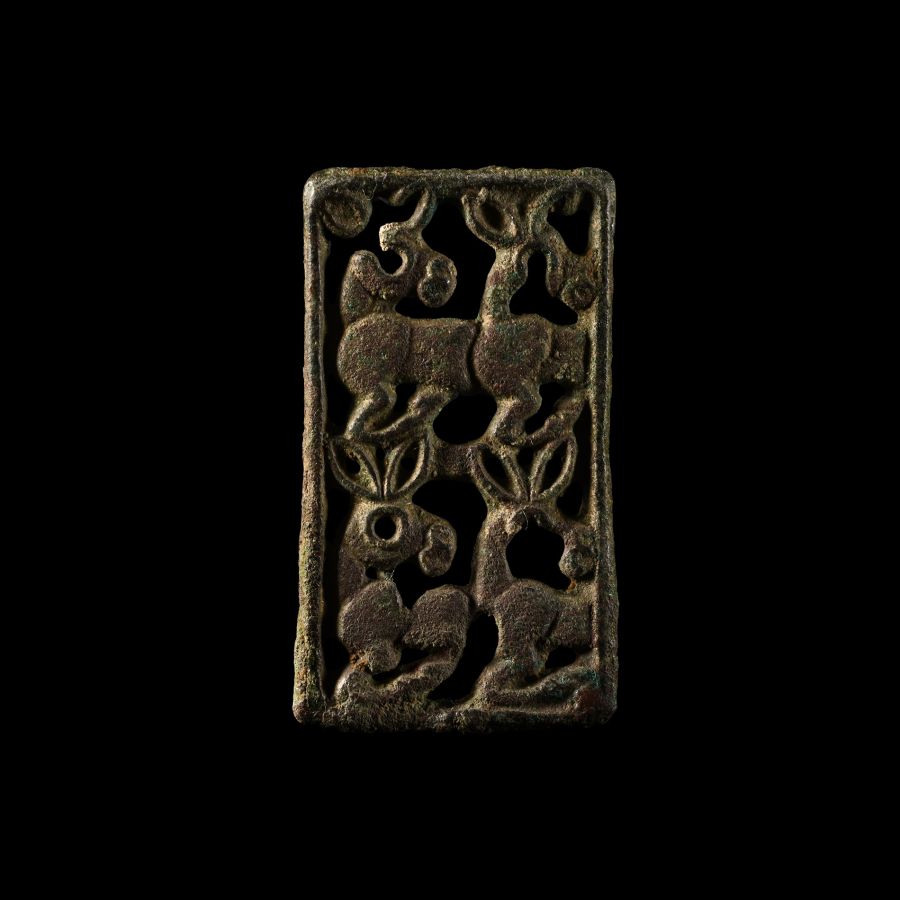
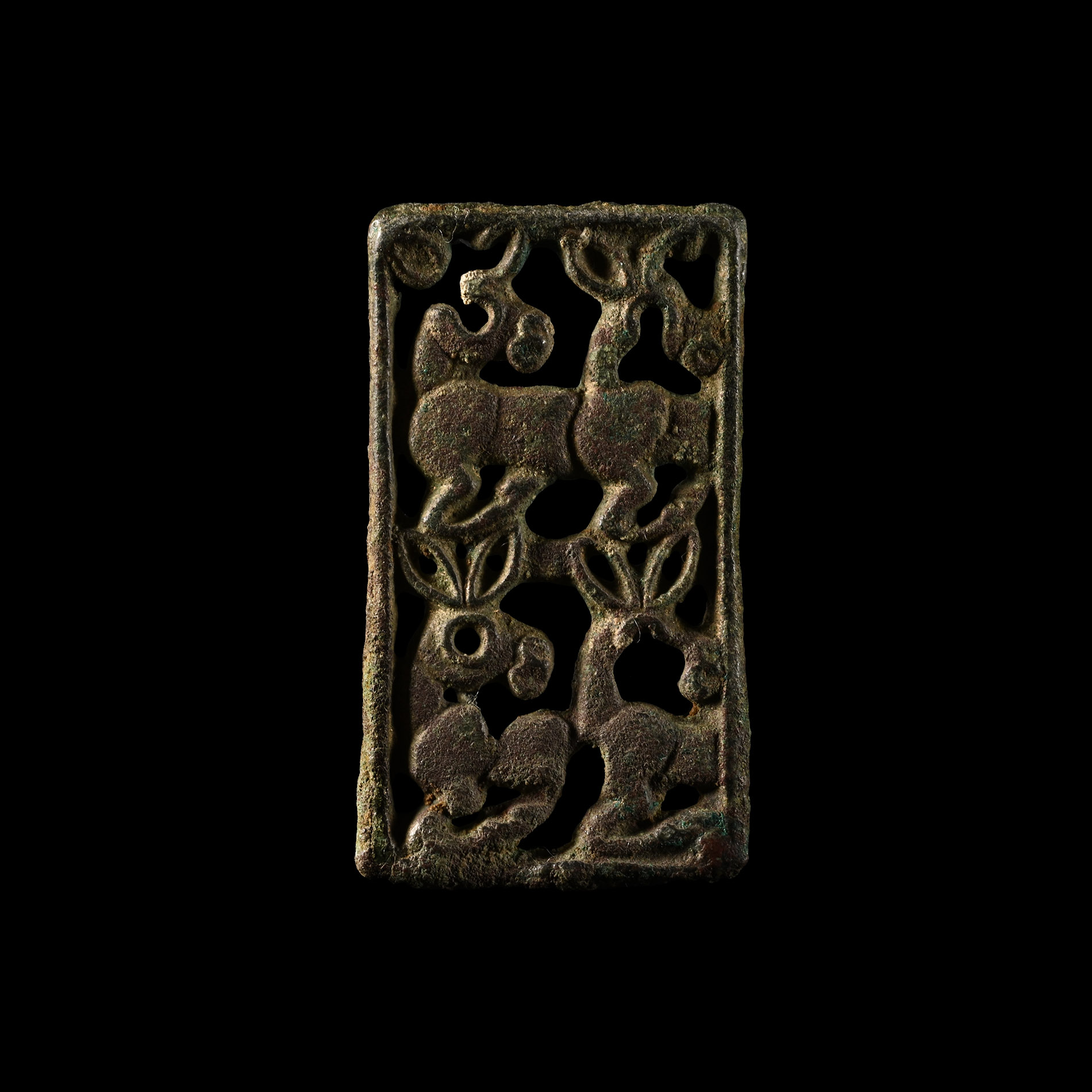
Scythian Fretwork Bronze Mount
LATE 1ST MILLENNIUM B.C.
2 in. (16.8 grams, 51 mm).
Rectangular frame with openwork design of two tiered horses with legs folded beneath the body and head turned to the rear; pierced eyes and ears for attachment.
ProvenanceEx S. collection, London UK, 1970-1990s.
Examined by Professor Wilfrid George Lambert FBA (1926-2011), historian, archaeologist, and specialist in Assyriology and Near Eastern archaeology, in the 1990s with collection reference no.V 447.
See Simpson, S. & Pankova, S., Scythians: Warriors of Ancient Siberia, London, 2017.
CONDITIONTimeLine Auctions follows a vetting process to ensure the authenticity and legality of all items, reinforcing our commitment to integrity and responsible trading. Each antiquity, antique, and coin lot undergoes thorough examination by a vetting committee of at least ten external specialists, professional trade association members, scientists, and archaeologists: Our Vetting Process
AUCTIONS:
TimeLine is a leading auction house specialising in antiquities, ancient art, collectables, natural history, coins, medals, and books. Our auctions offer museums, collectors, historians, and enthusiasts the opportunity to acquire unique and historically significant pieces.
-
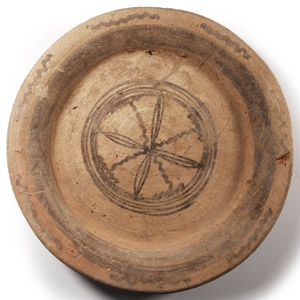
Eastern Mediterranean Terracotta Plate with Star
Late 1st millennium B.C.Sold for (Inc. bp): £117
With painted rosette motif to the centre, with concentric rings and other motifs. 740 grams, 25 cm wide
London, UK, collection, 1990s. -
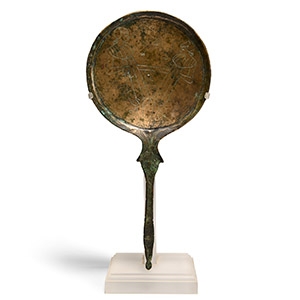
Etruscan Bronze Handled Mirror with Robed Female Dancers
Circa 5th century B.C.Sold for (Inc. bp): £2,080
Disc mirror with handle comprising: slightly dished mirror with thick rim and low-relief image of two females dancing with a sash connecting them; punched crescents in the field; reverse with dentilled border; D-section handle with angled junction and knop finial; provided with a custom-made stand; later engraving. 300 grams, 26 cm including stand
Acquired Sotheby's, New York, U.S.A., early 1980s. Private New York City collection. Acquired from Arte Primitivo, New York City, U.S.A., 7 December 2016, lot 342. Private collection of Professor Kenneth Graham, London, UK. Accompanied by the original catalogue page and a print-out of the online listing. -
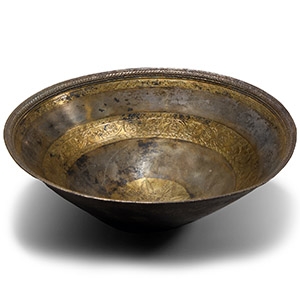
Hellenistic Decorated Silver-Gilt Bowl
Late 2nd-early 1st century B.C.Estimate: £15,000 - 20,000 (+bp*)
Opening Bid: £7,500
The bell-shaped bowl with everted flaring rim, raised from a single sheet with parcel-gilding; the inner rim with raised wreath ornament, a band of geometric motifs below; central band composed of an elaborate garland of leaves and flowers flanked by bands of volutes; the base with an eight-petalled flower with radiating large leaves; small repair. 246 grams, 20.2 wide (1.58 kg total, 28.5 x 28 cm including case)
From the collection of George Ortiz (1927-2013). with Mansour Gallery, early 2000s. Subsequently in a French collection. Accompanied by an academic report by Dr Raffaele D’Amato. This lot has been checked against the Interpol Database of stolen works of art and is accompanied by search certificate number no.11936-210132.
Similar segment-shaped silver bowls with partial gilding, decorated on the inside with friezes in the form of garlands or wickerwork on the bottom, have been found in many nomad mounds of the Caucasus and in the territories once dominated by the Arsacid Empire. They are attributed to Parthian workshops by Pfrommer and M. Treister.
