
Loading, please wait...
LOT 0074
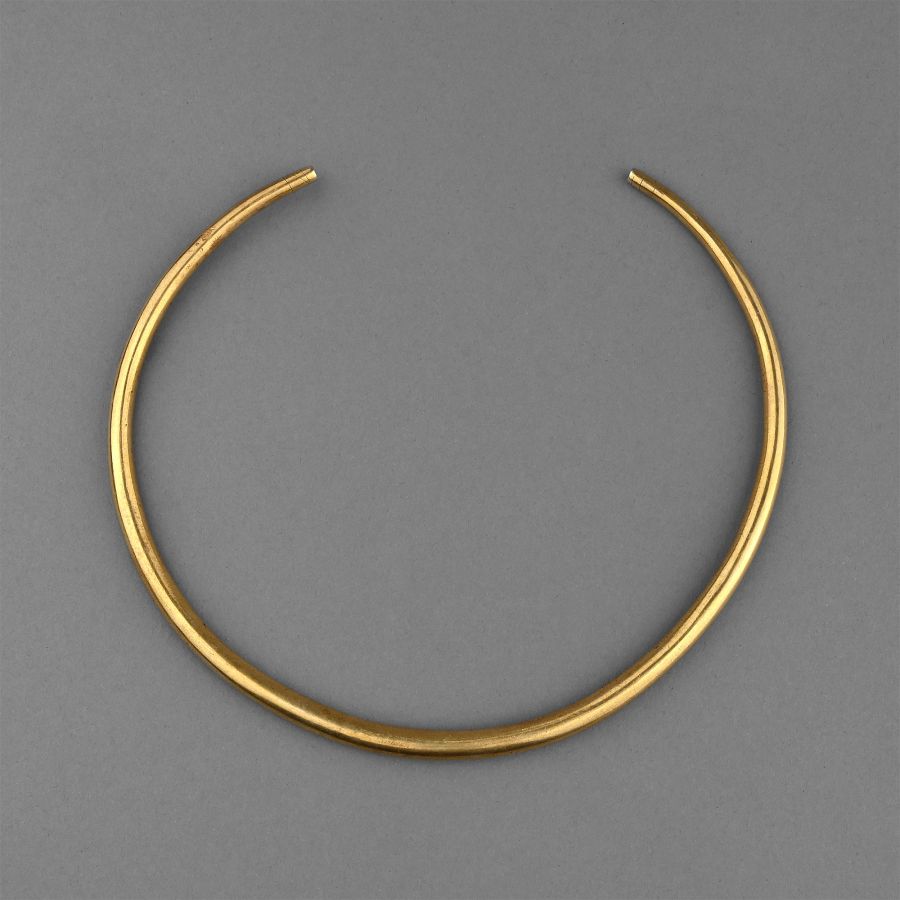
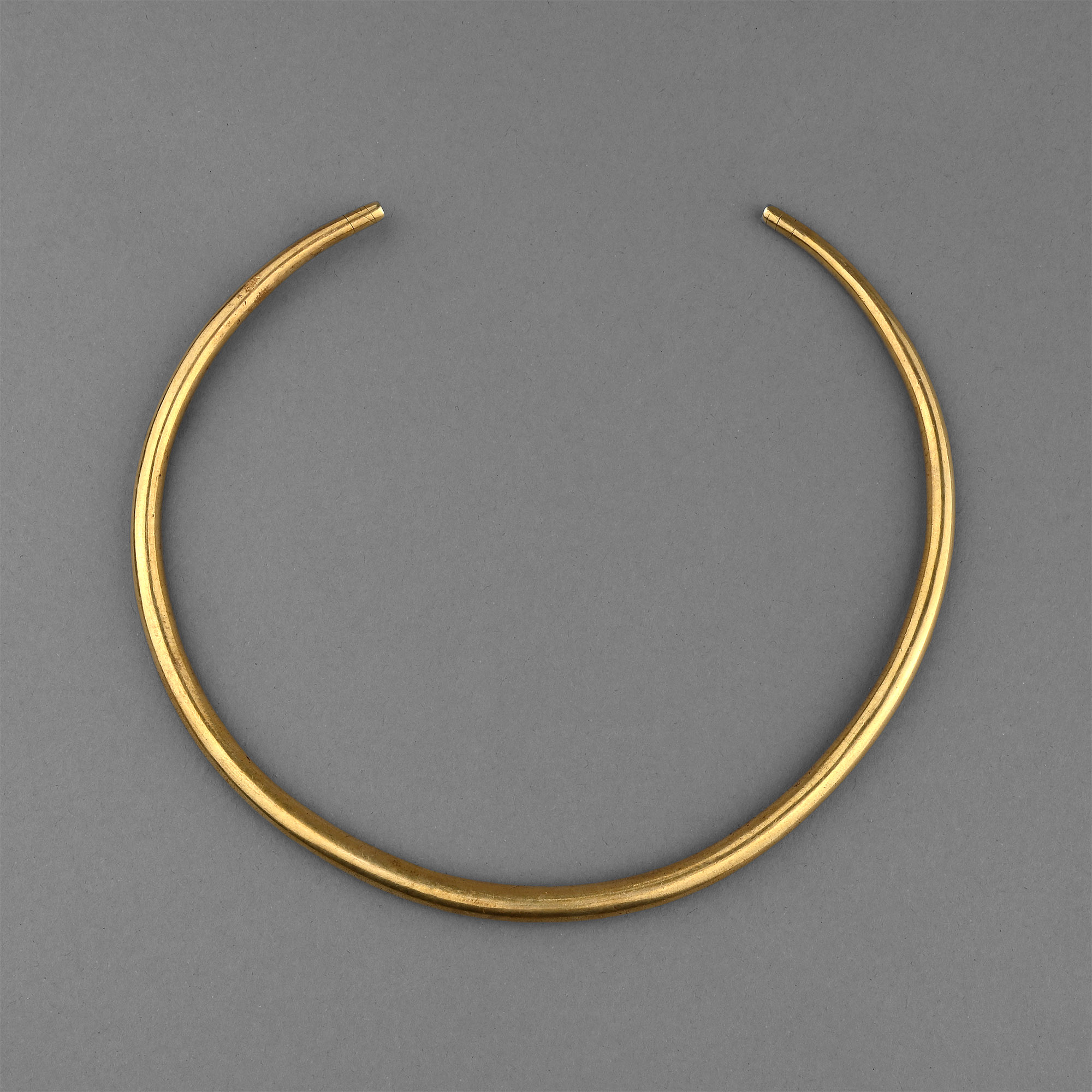
Scythian Electrum Torc
7TH-5TH CENTURY B.C.
6 1/2 in. (169 grams, 16.5 cm diameter).
Formed as a simple penannular hoop from a single piece of electrum, tapering towards the terminals.
ProvenanceEx Jack Ogden, 1990s.
Accompanied by an expertise from Striptwist Ltd, a London-based company run by historical precious metal specialist Dr Jack Ogden, reference number [191101].
This lot has been checked against the Interpol Database of stolen works of art and is accompanied by search certificate number no.13106-248042.
Cf. The Metropolitan Museum of Art, accession Number: 47.100.13, for similar.
FootnotesPortable X-ray fluorescence (XRF) analysis confirms the alloy to be electrum, with an average composition of approximately 62% gold, 34% silver, and 3% copper. The purity and metal ratios are consistent with ancient manufacture. The restrained form, lacking figural ornament, is characteristic of early Scythian metalwork and suggests a date prior to the 5th century BC.
CONDITIONTimeLine Auctions follows a vetting process to ensure the authenticity and legality of all items, reinforcing our commitment to integrity and responsible trading. Each antiquity, antique, and coin lot undergoes thorough examination by a vetting committee of at least ten external specialists, professional trade association members, scientists, and archaeologists: Our Vetting Process
AUCTIONS:
TimeLine is a leading auction house specialising in antiquities, ancient art, collectables, natural history, coins, medals, and books. Our auctions offer museums, collectors, historians, and enthusiasts the opportunity to acquire unique and historically significant pieces.
-
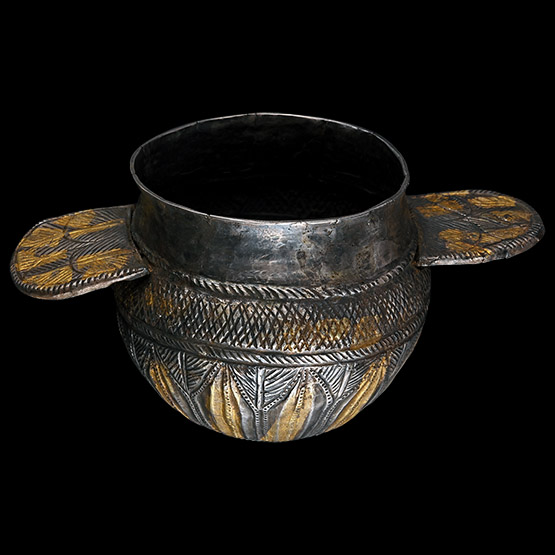
Greek Silver-Gilt Wine Cup with Handles
Hellenistic, 2nd-1st century B.C.Sold for (Inc. bp): £6,240
Comprising a globular body with a rounded underside, a repoussé rosette with ropework border, segmented band with leaf detailing, hatched shoulder framed by ropework bands, scooped neck with chamfered rim; two D-shaped ledge handles with recessed rim, ropework border, hatched panels; accompanied by a custom-made display case. 179 grams, 15.5 cm wide
Acquired on the US art market, early 1990s. Private collection, North America. Ex private collection, USA. TimeLine Auctions, 23 February 2023, no.48. Private collection, London. Accompanied by an academic report by Dr Raffaele D'Amato. This lot has been checked against the Interpol Database of stolen works of art and is accompanied by a search certificate number no.13037-247507. -
.jpg)
Eastern Greek Marble Figure of Aphrodite
1st century B.C.-1st century A.D.Estimate: £5,000 - 7,000 (‡+bp*)
Opening Bid: £2,778
Carved in the round figure of the goddess standing nude with one hand raised and the other on her pudendum, her hair gathered into a chignon with lateral bunches on the crown and with voids to allow for the suspension of small gold earrings; putto at her left knee; left hand partly absent; remounted on a socle base. 1.2 kg, 32.7 cm
Acquired in the 1992. Private collection, Switzerland, thence by descent. Private collection, since the late 1990s. This lot has been checked against the Interpol Database of stolen works of art and is accompanied by a search certificate number no.12860-241669. -
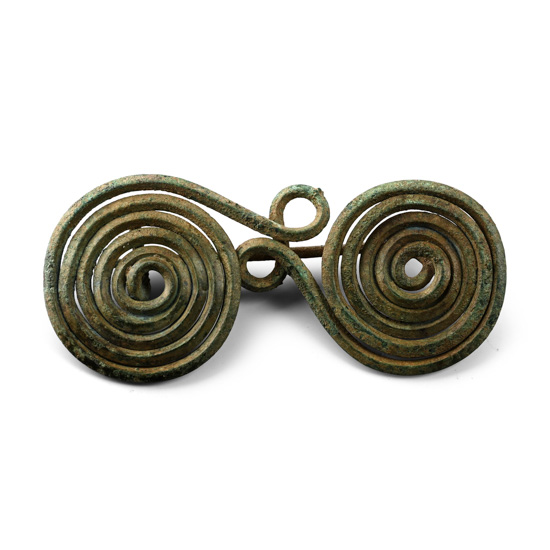
Greek Bronze Spiral Fibula
Geometric, 8th-6th century B.C.Sold for (Inc. bp): £416
Formed from a single filament rolled into two 'spectacle' discs; one of the spirals terminating in a long pin, the other in a hook serving as the catch; openwork figure-of-eight at the centre. 25.8 grams, 80 mm
Ex collection Mr. K.H., Germany, Private collection, acquired in 2012.
