
Loading, please wait...
LOT 0050
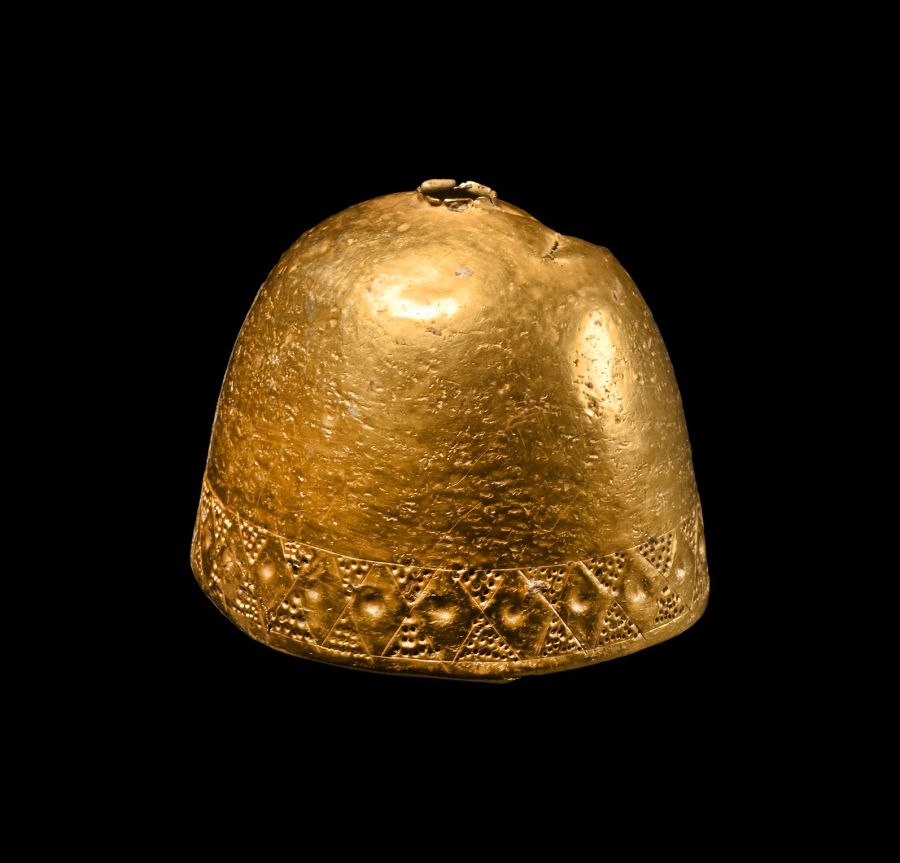
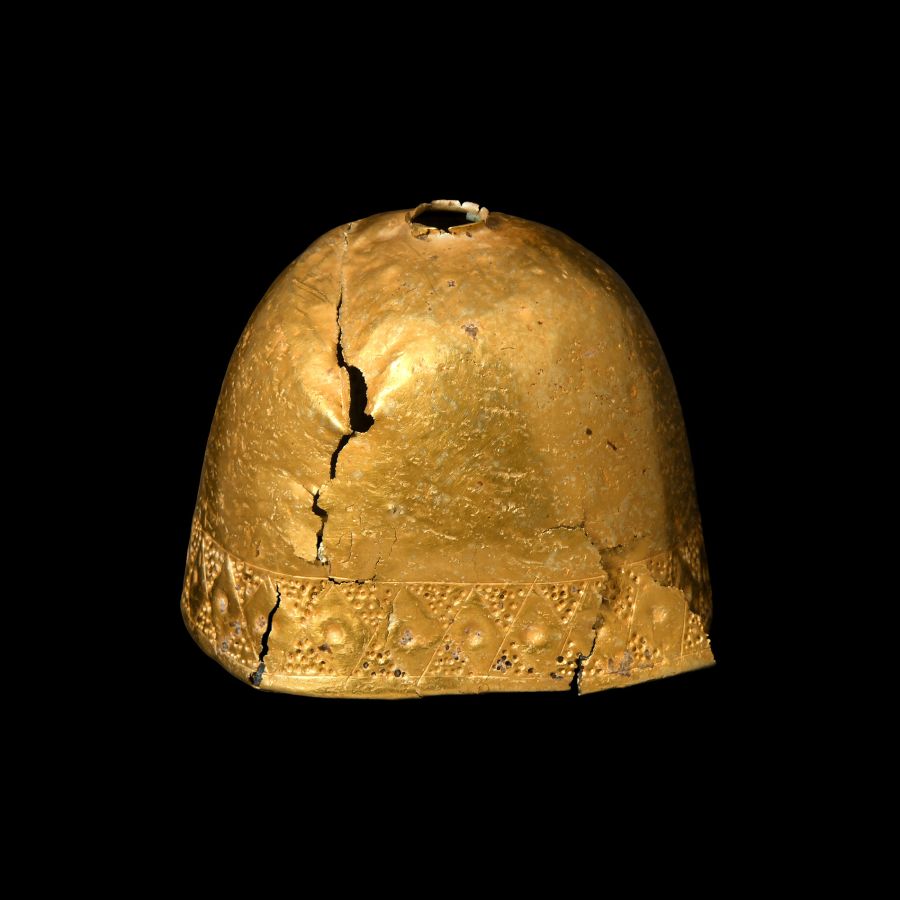
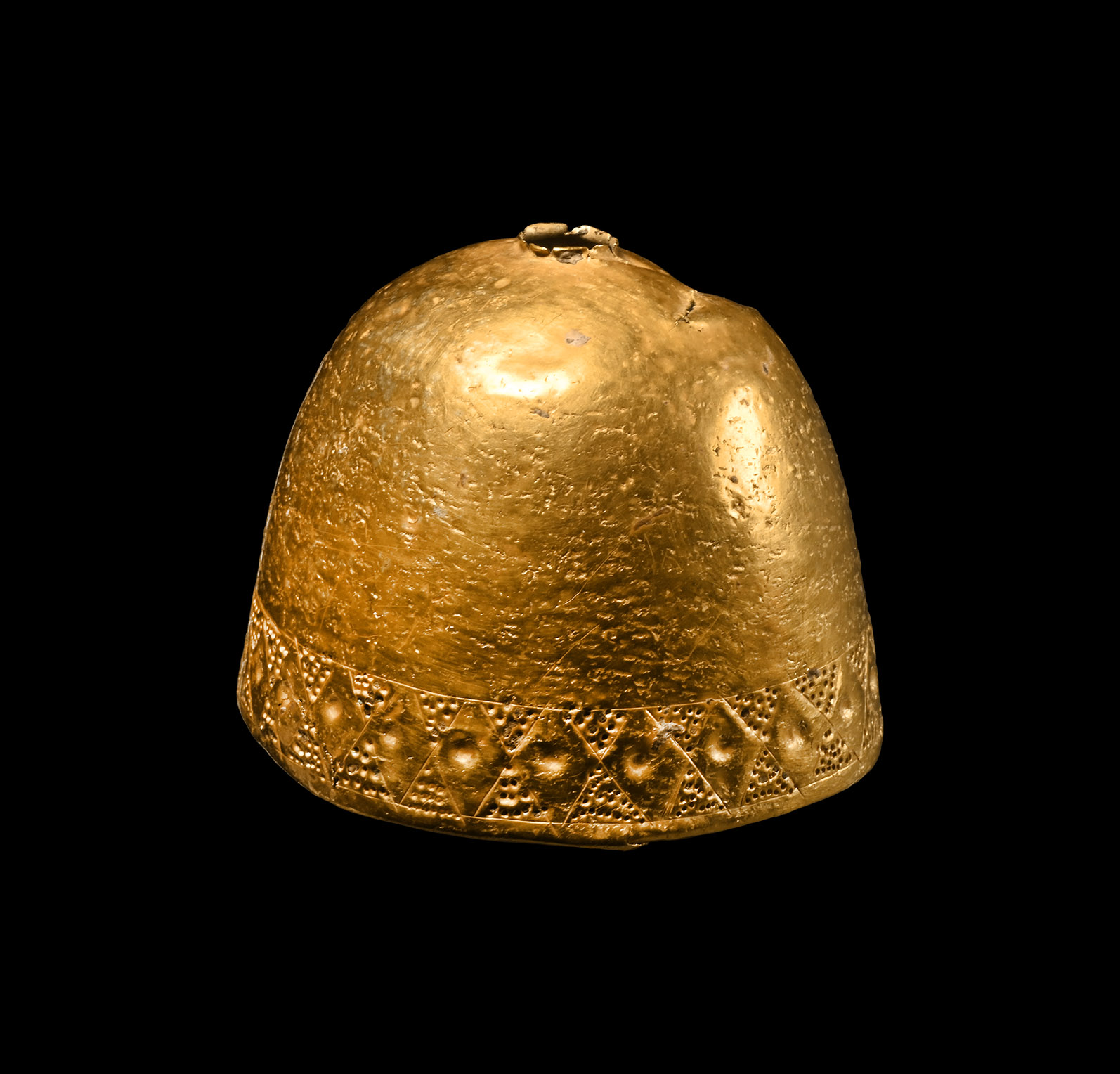
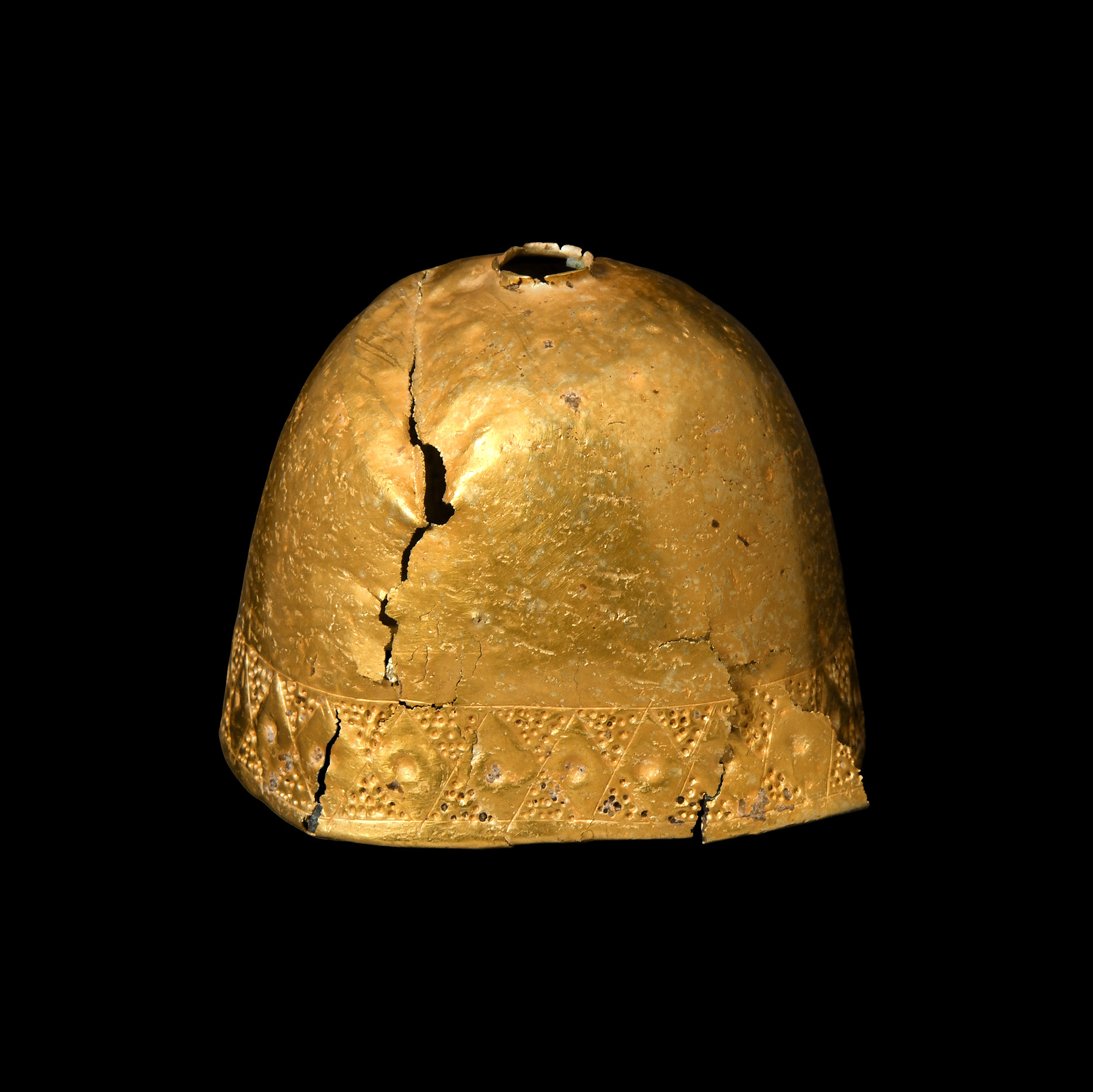
Scythian Decorated Gold Bell
1ST MILLENNIUM B.C.
1 7/8 in. (19.47 grams, 48 mm).
A sheet-gold bell, domed with a rolled rim and vent at the apex; decorative band above the rim with reserved lozenges on a pounced field each with an impressed dimple to the centre; crack to one side.
ProvenanceAcquired early 1990s.
Ex private American collection; thence by descent.
Private Swiss collection since 1998.
See Makhortykh, S., Bronze bells of the 7th –6th century BC from the Scythian burial – mounds in the south of Eastern Europe, in СТАРОДАВНЄ ПРИЧОРНОР΄Я, vol.11, Odessa, 2016, for discussion.
CONDITIONTimeLine Auctions follows a vetting process to ensure the authenticity and legality of all items, reinforcing our commitment to integrity and responsible trading. Each antiquity, antique, and coin lot undergoes thorough examination by a vetting committee of at least ten external specialists, professional trade association members, scientists, and archaeologists: Our Vetting Process
AUCTIONS:
TimeLine is a leading auction house specialising in antiquities, ancient art, collectables, natural history, coins, medals, and books. Our auctions offer museums, collectors, historians, and enthusiasts the opportunity to acquire unique and historically significant pieces.
LOT 0050
Scythian Decorated Gold Bell
Estimate £1,000 - 1,400€1,160 - 1,620 (for guidance only)$1,350 - 1,890 (for guidance only)
-
Greek Heavy Bronze Bracelet with Central Bar
1st millennium B.C.Sold for (Inc. bp): £72
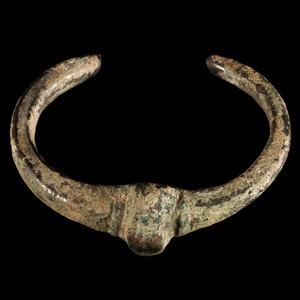
A penannular bronze bracelet with a facetted convex hoop, the arms tapering to an expanded bezel with raised vertical bar. 27.7 grams, 64 mm
Acquired 1990s. English private collection. Property of an Essex gentleman. -
Greek Seal Ring with Large Bird
4th-3rd century B.C.Sold for (Inc. bp): £169
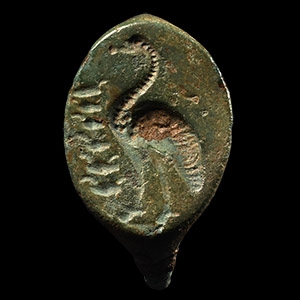
A copper-alloy ring composed of a slender hoop and elliptical bezel, engraved with a swan or other large standing bird. 3.57 grams, 21.24 mm overall, 19.57 x 17.46 mm internal diameter (approximate size British Q, USA 8, Europe 17.49, Japan 16)
Acquired before 2000. From the collection of a European gentleman living in the UK. -
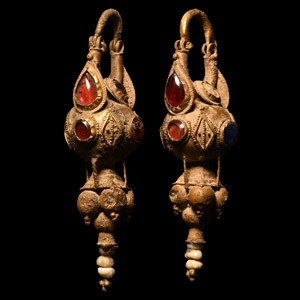
Parthian Gold and Garnet Earrings
2nd-3rd century A.D.Estimate: £2,500 - 3,500 (+bp*)
Opening Bid: £1,300
A matched pair of gold earrings each a hinged hoop with lateral teardrop cells set with cabochon garnets and disc cells to the apex with similar; bulbous central section with filigree and granulation detailing, cells with lapis lazuli and garnet cloisons; attached with four vertical filigree stringers to a stepped octahedral lower section with applied bosses and pearl seed-beads, granule cluster finial. 9.6 grams total, 57 mm each
Acquired in the late 1980s-early 1990s. Important North West London collection. This lot has been checked against the Interpol Database of stolen works of art and is accompanied by search certificate no.11609-199711.
