
Loading, please wait...

LOT 0262
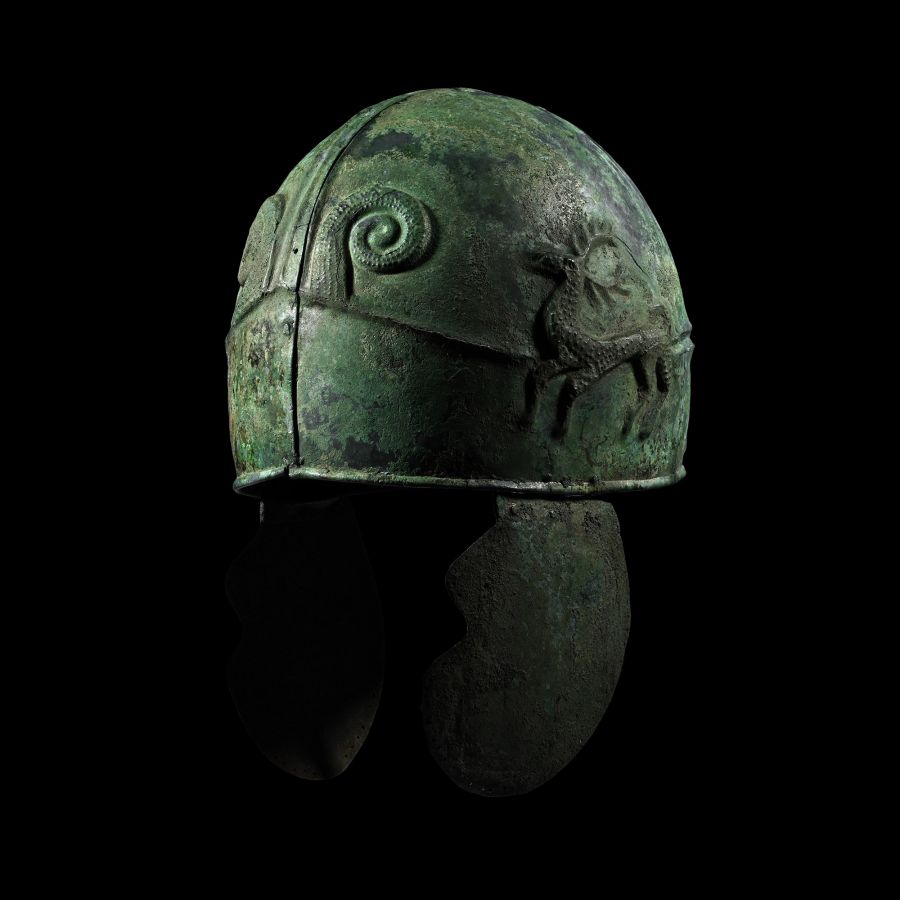
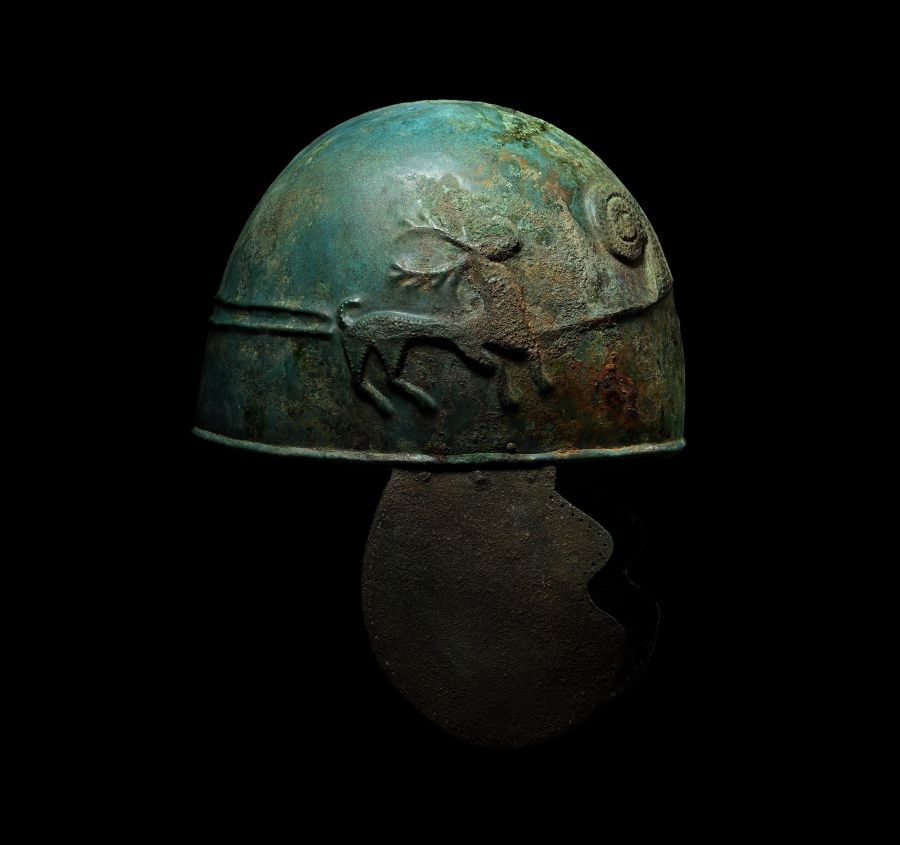
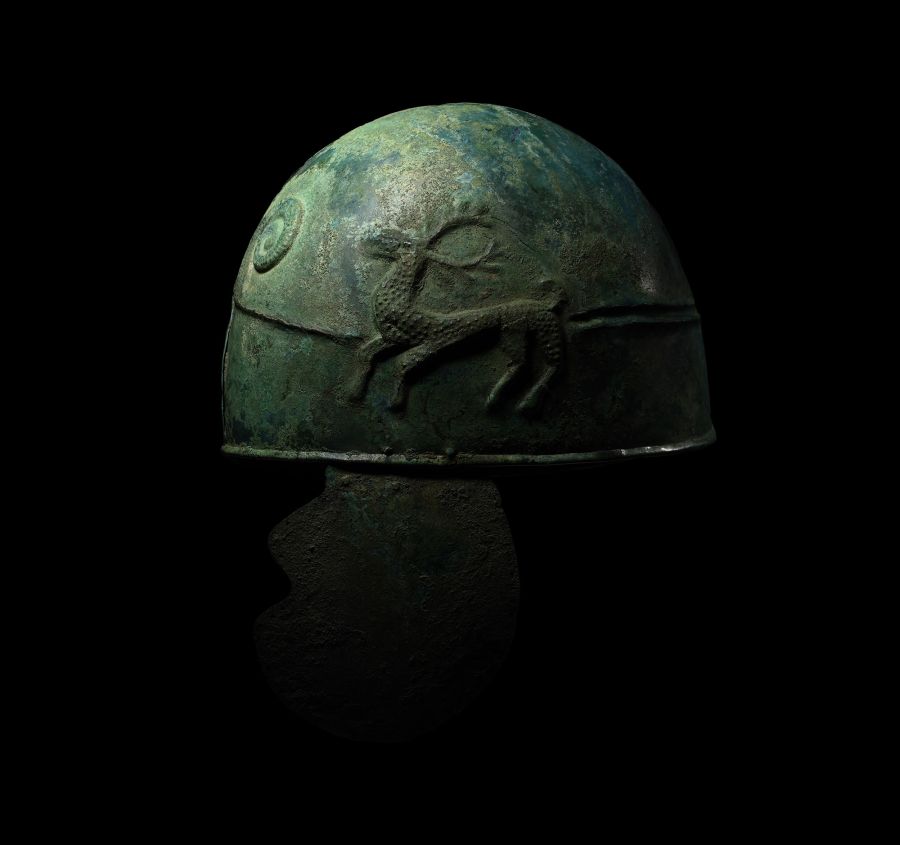
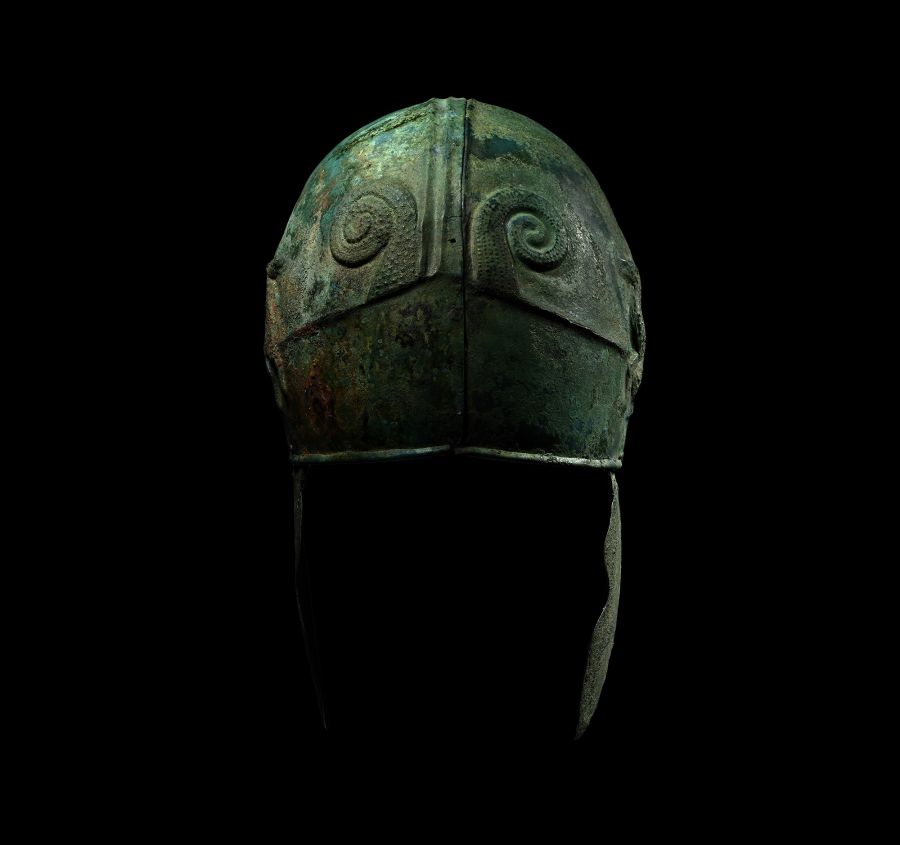
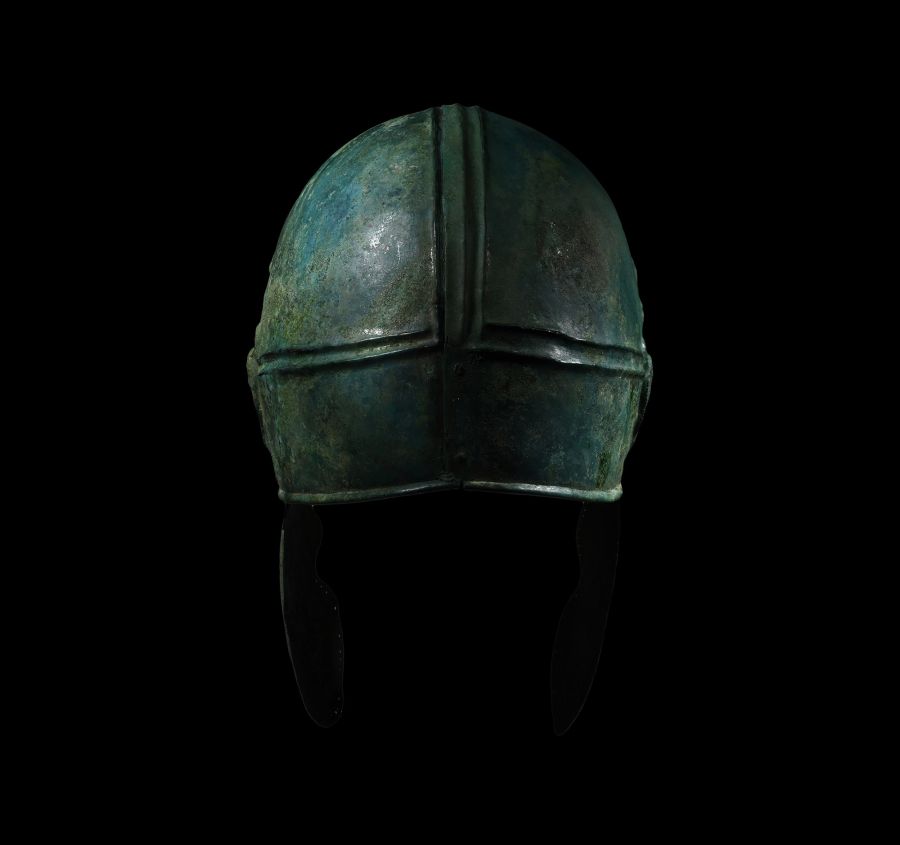
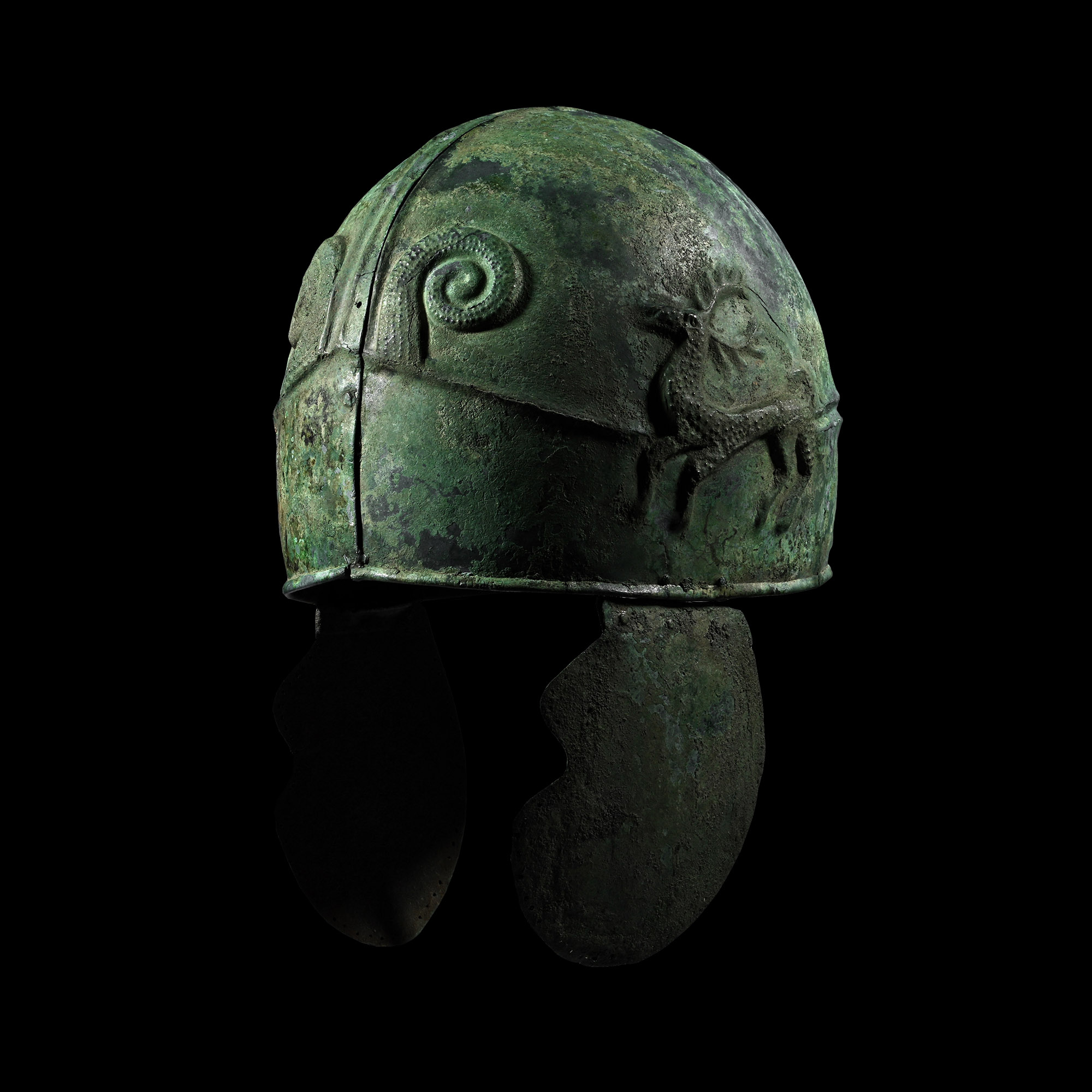
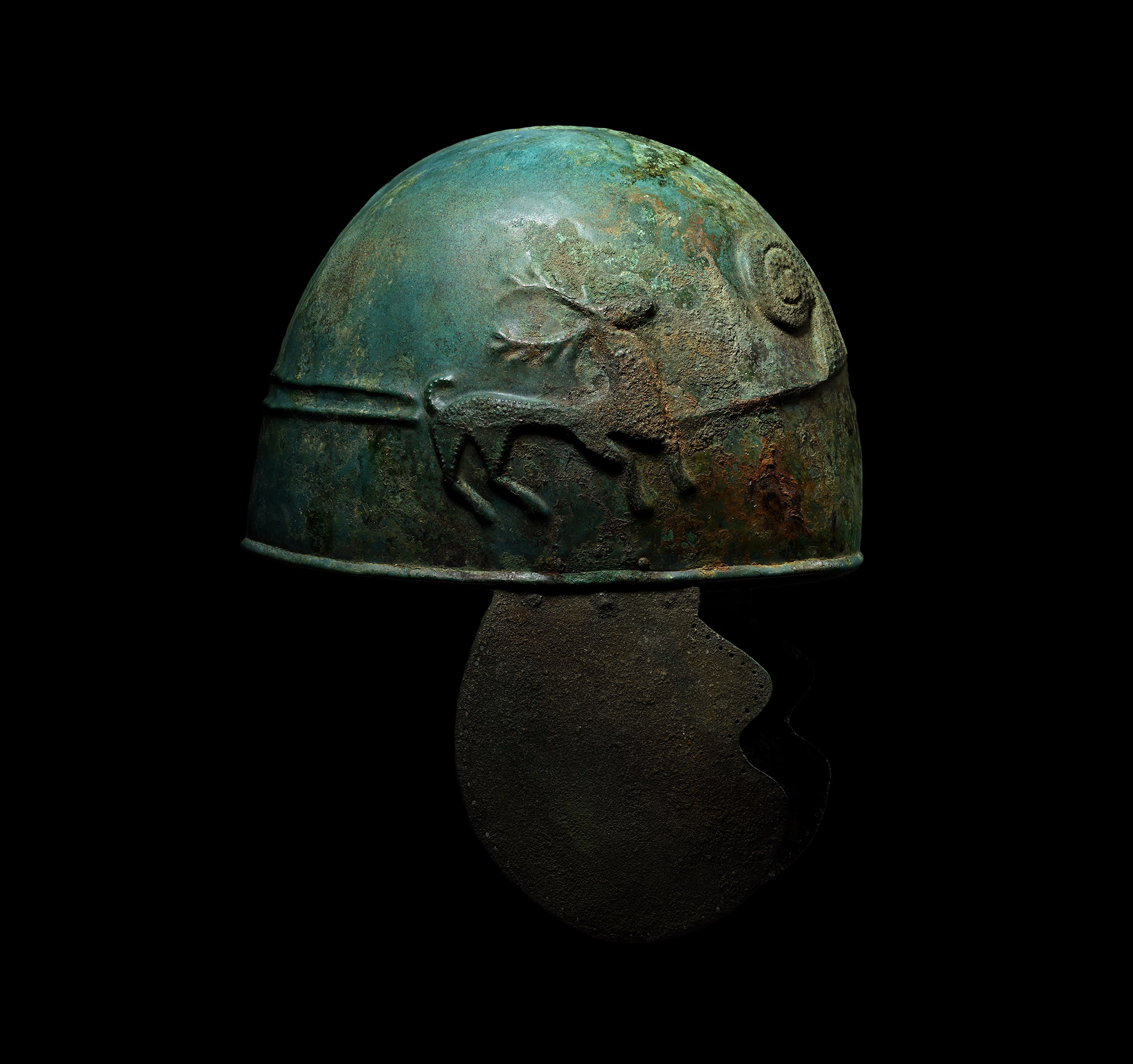
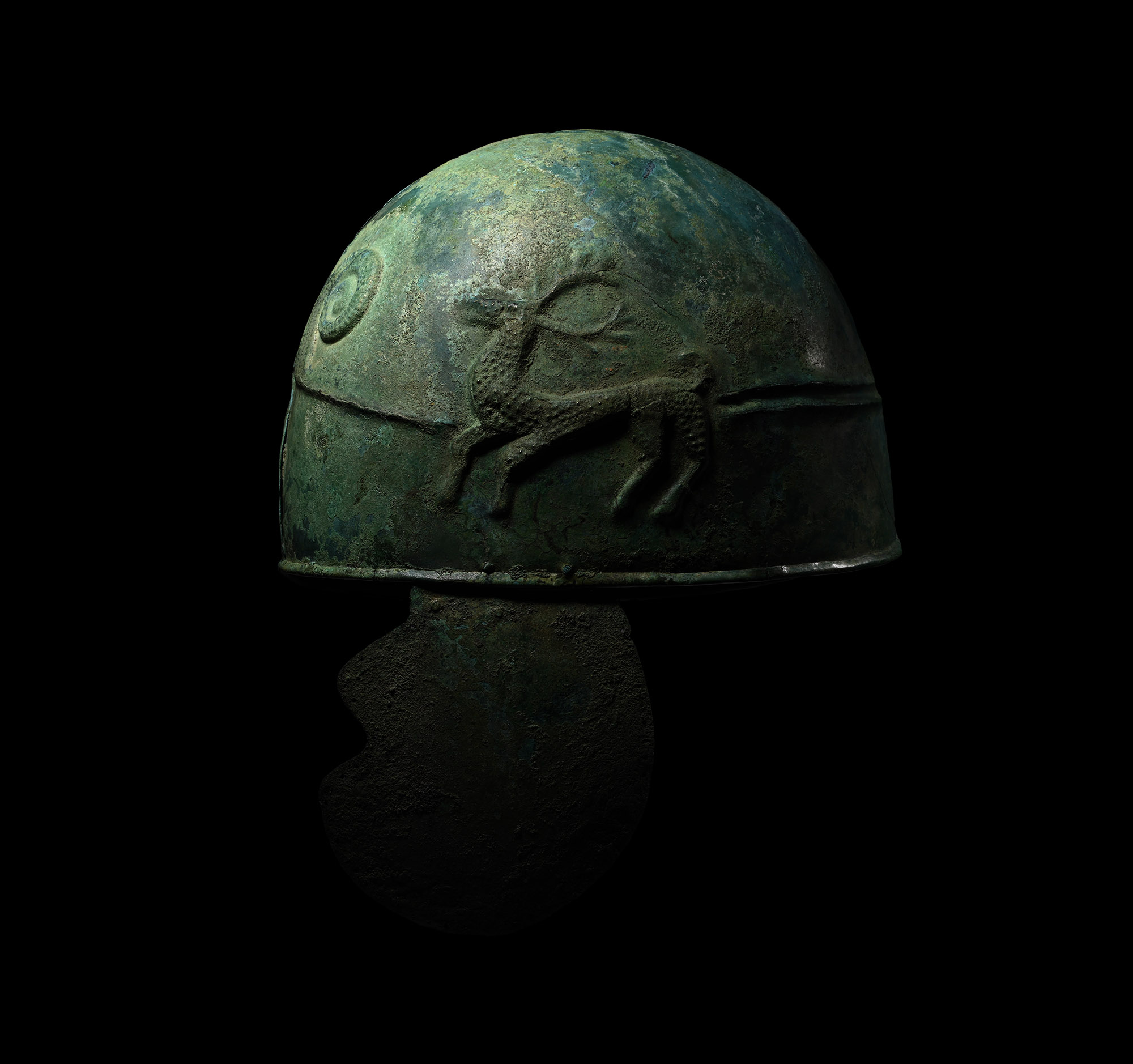
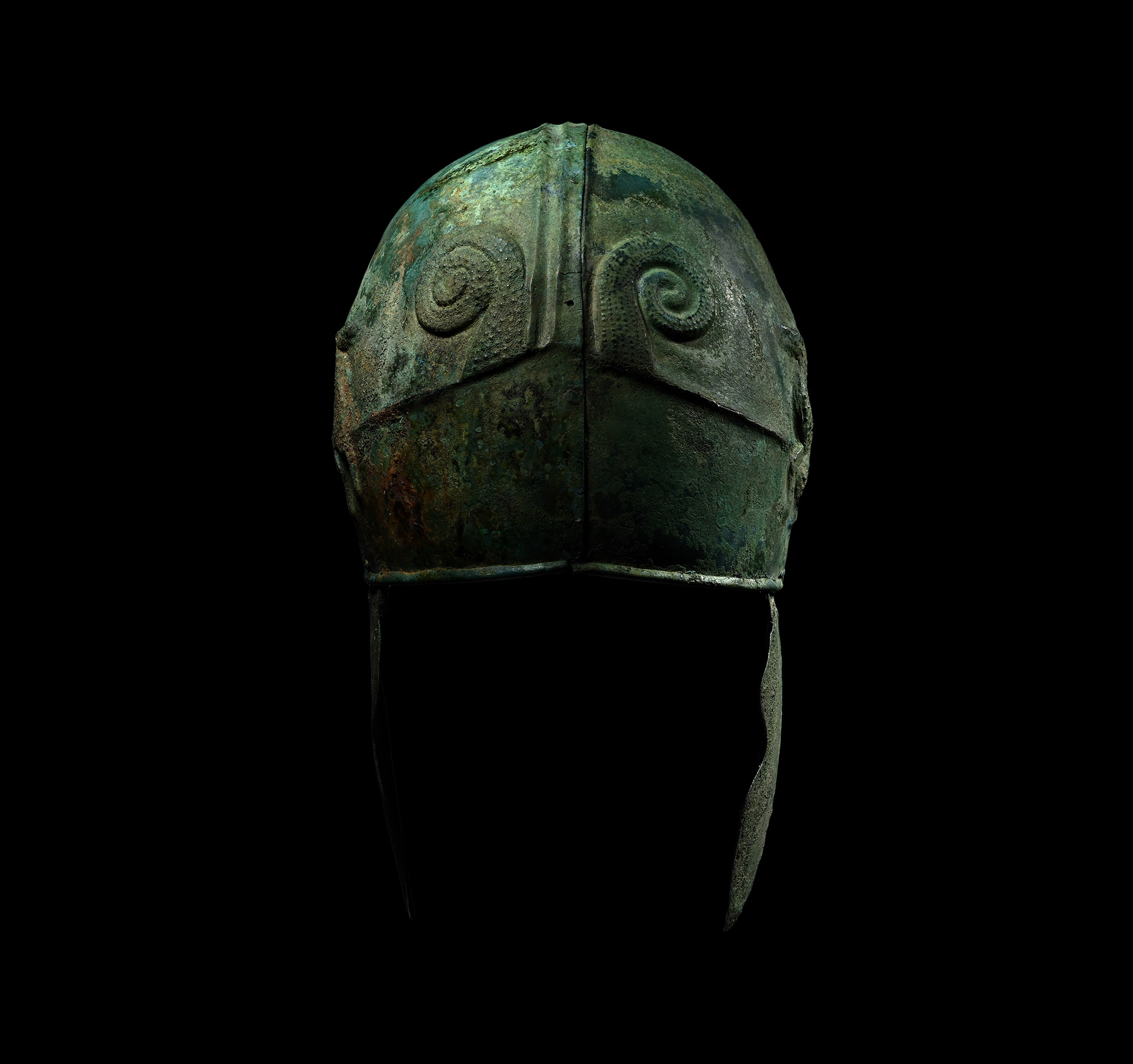
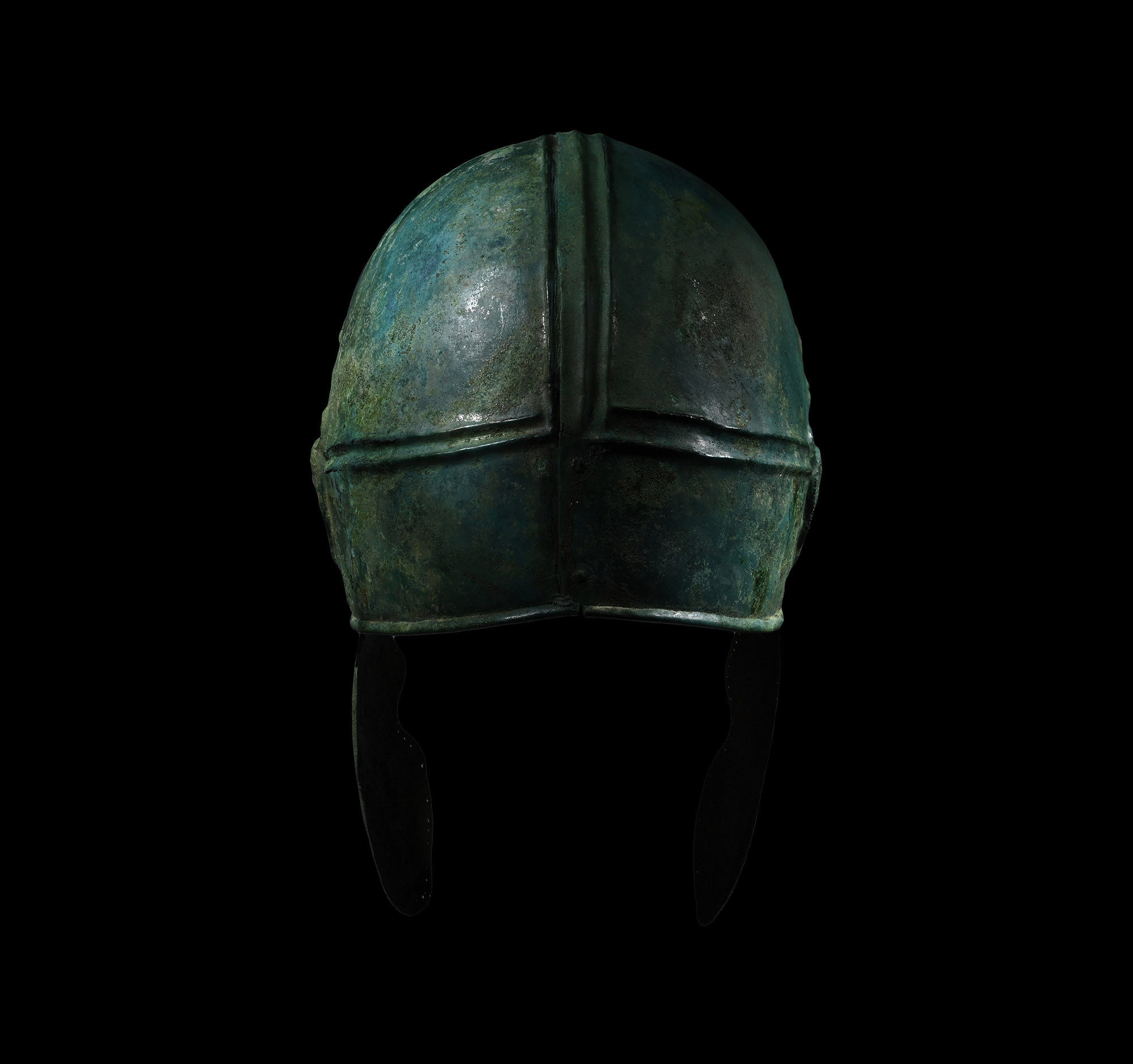
Scythian Chalcidian Helmet with Embossed Stags
3RD-1ST CENTURY B.C.
9 1/8 in. (696 grams, 31cm high).
Chalcidian or Illyrian variant (Caucasian type), constructed from two halves with the right side overlapping the left, embossed ram horns on the brow, with a profile image of a stag to both sides; hinged cheek-pieces with regularly disposed holes to the outer edges; some restoration.
ProvenanceAcquired on the European art market, mid-1980s.
Private collection, Oxford, UK.
From the collection of a London doctor.
Accompanied by an academic report by Dr Raffaele D’Amato.
This lot has been checked against the Interpol Database of stolen works of art and is accompanied by search certificate number no.12339-228100.
This lot has been cleared against the Art Loss Register database, and is accompanied by an illustrated lot declaration signed by the Head of the Antiquities Department, Dr Raffaele D’Amato.
Cf. Rabinovich, B. Z., Trudy Otdela istorii pervobytnoi kul’tury Gosudarstvennogo Ermitazha (Works of the Department of history of prehistoric culture of the State Hermitage) I, Leningrad, 1941, pp. 99-171; Erlikh, V. R., Rossiiskaia Arkheologiia (Russian Archaeology) (3), 1996, pp.176-179 (in Russian); Chernenko, E.V., The Scythians 700-300 BC, Hong Kong, 1998; Shevchenko, N.F., Zaitsev, Yu. P., Mordvintseva V. I. in Vestnik drevnei istorii (Bulletin of Ancient History) (1), 2011, pp.115-152 (in Russian); Симоненко А. В., 'Шлемы сарматского времени из Восточной Европы (Sarmatian Age Helmets from Eastern Europe)', in Stratum Plus, no. 4, 2014, pp.249-284; Negin, A.E., Negin, A. E., 'Pozdnerimskie shlemy s prodol'nym grebnem', in Germania-Sarmatia II, Kaliningrad-Kursk, 2010, pp.343–58; Hixenbaugh, R., Ancient Greek Helmets, a complete guide and catalogue, New York, 2019, nos.H303-H304.
FootnotesThe cultural interchange and the military contacts between the Nomads of Kuban and the Hellenic peoples allowed the Sindo-Meothic, Scythian, or Sarmatian noblemen to equip themselves with such beautiful defensive equipment. The helmet finds its closest parallel in a specimen published by A.E. Negin, belonging to the Puskin Fine Arts Museum of Moscow, originally in the collection of S. Karakowskij (Negin, 2010, p.354 no.6; Hixenbaugh H304). Some of the helmets of this type were modified according to the nomadic (Scythian or Sarmatian) taste, being decorated with religious elements, like the deer.
CONDITIONTimeLine Auctions follows a vetting process to ensure the authenticity and legality of all items, reinforcing our commitment to integrity and responsible trading. Each antiquity, antique, and coin lot undergoes thorough examination by a vetting committee of at least ten external specialists, professional trade association members, scientists, and archaeologists: Our Vetting Process
AUCTIONS:
TimeLine is a leading auction house specialising in antiquities, ancient art, collectables, natural history, coins, medals, and books. Our auctions offer museums, collectors, historians, and enthusiasts the opportunity to acquire unique and historically significant pieces.
-
Post Medieval Cased 'Manchester Area' Militaria and Other Artefact Collection
18th-20th century A.D.Sold for (Inc. bp): £33
Including cap badges, cartwheel pennies, snake-buckle, buttons and other items, mounted in a glazed wooden frame. 1.1 kg, 29.5 x 35 cm
From the private collection of a Manchester, UK, detectorist, 1990s. This lot is accompanied by an illustrated lot declaration signed by the Head of the Antiquities Department, Dr Raffaele D’Amato. -
Turco-Mongol 'Greek Fire' Ceramic Fire Bomb or Hand Grenade
13th-15th century A.D.Sold for (Inc. bp): £78
A hollow vessel with cylindrical body, short neck and domed mouth, impressed linear decoration to the body; intended to be filled with explosive liquid and a wick, and used as a hand grenade. 630 grams, 16.4 cm
From an important specialist collection, London, UK, 1990s onwards. Academic report by Dr Raffaele D'Amato. This lot is accompanied by an illustrated lot declaration signed by the Head of the Antiquities Department, Dr Raffaele D’Amato. -
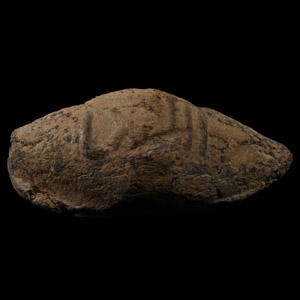
Roman Legion XIII 'Battle of Munda' Lead Slingshot
1st century B.C.Sold for (Inc. bp): £650
Fusiform with reserved legend 'LXIII' (for LEGIO XIII = 13th Legion). 50.3 grams, 41 mm
Acquired on the UK art market. Property of a gentleman collector. This lot is accompanied by an illustrated lot declaration signed by the Head of the Antiquities Department, Dr Raffaele D’Amato.
The shot (Völling type 1C) is marked with the abbreviated name of Legion XIII, and was probably used at the Battle of Monda (or Munda) against Julius Caesar, 17th March 45 B.C., or against the sons of Pompey, because both the generals (Pompey sons and Caesar) had in their army a Legio with the numeral XIII on that day. Interestingly, other glandes of the same typology from the same battlefield bear the name of Pompey, so that it is much possible that the glans belongs to the Legio XIII of Pompey, who was destroyed during the battle and whose survivors were massacred among the 22,000 defenders of Cordoba by the troops of Caesar (D'Amato, 2021, pp.421 and 424). The projectiles were made of different materials: lead (glandes) or in pottery or stone (lapides missiles).
