
Loading, please wait...
LOT 0540
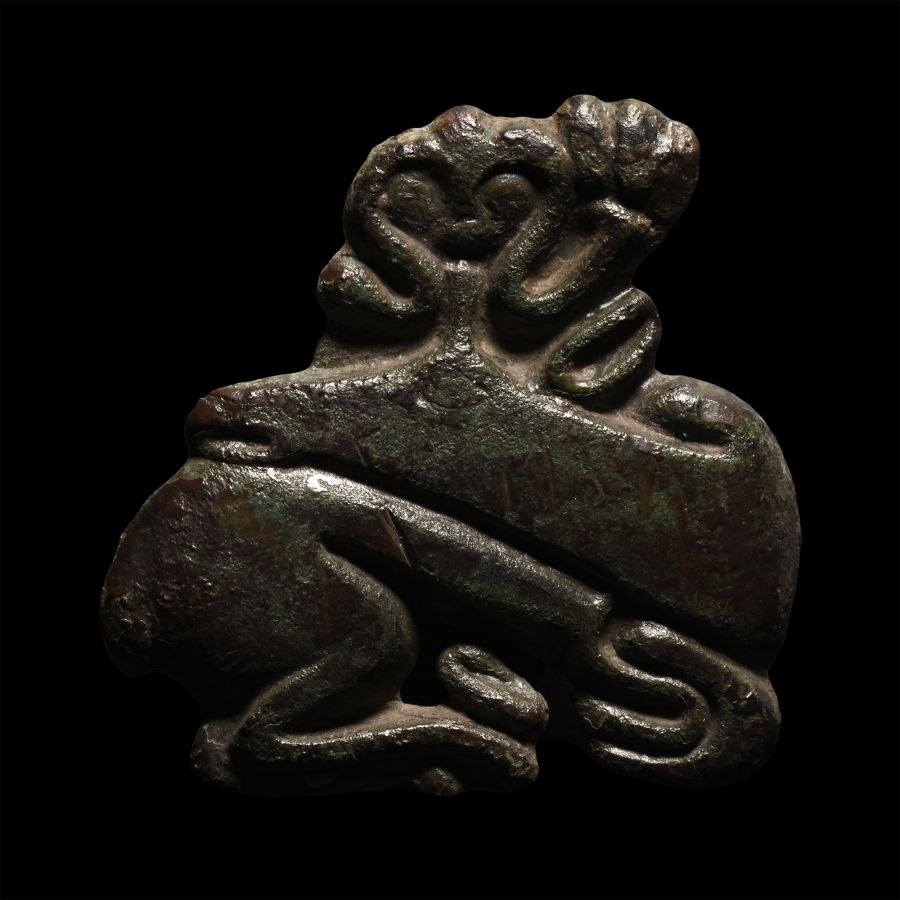
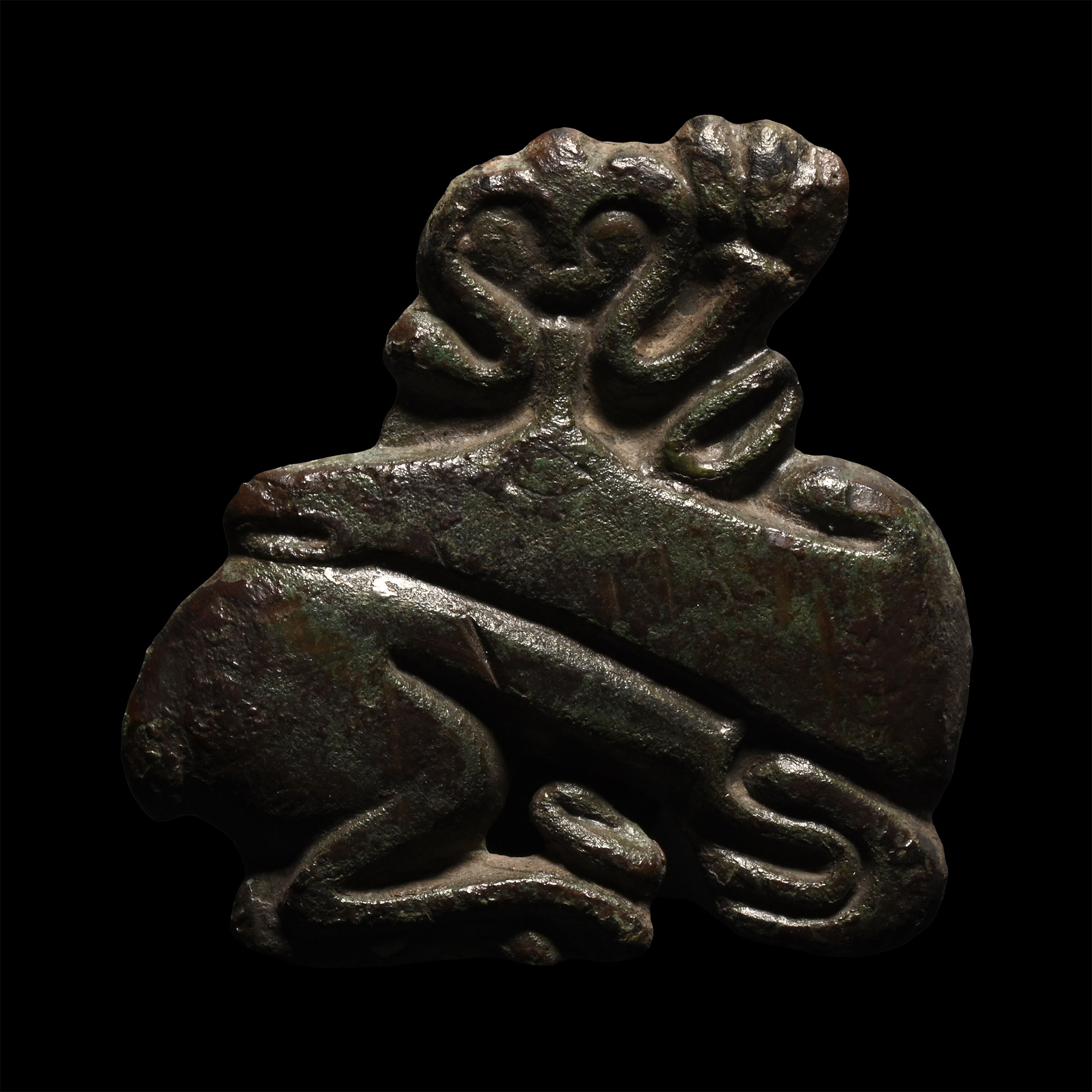
Scythian Bronze Stag Facing Back Mount
CIRCA 6TH-4TH CENTURY B.C.
1 5/8 in. (23.6 grams, 40.8 mm).
Formed as a crouching stag with its legs tucked underneath the body, head turned back and resting against the body, scrolled horns. [No Reserve]
ProvenanceFrom the private collection of a European gentleman (1942-2024), formed since the 1970s.
CONDITIONTimeLine Auctions follows a vetting process to ensure the authenticity and legality of all items, reinforcing our commitment to integrity and responsible trading. Each antiquity, antique, and coin lot undergoes thorough examination by a vetting committee of at least ten external specialists, professional trade association members, scientists, and archaeologists: Our Vetting Process
AUCTIONS:
TimeLine is a leading auction house specialising in antiquities, ancient art, collectables, natural history, coins, medals, and books. Our auctions offer museums, collectors, historians, and enthusiasts the opportunity to acquire unique and historically significant pieces.
-
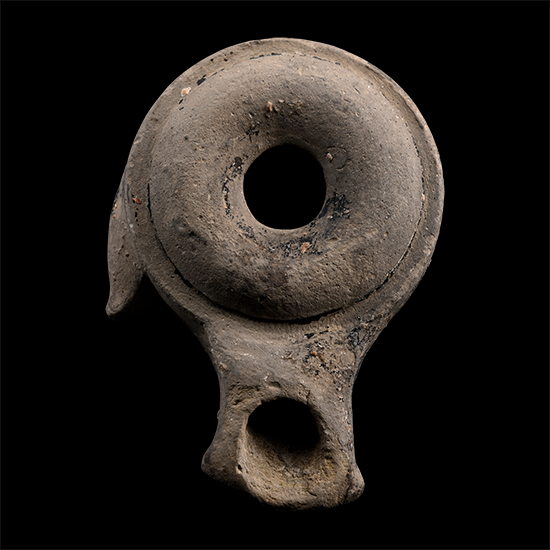
Greek Terracotta Oil Lamp
Circa 3rd-2nd century B.C.Sold for (Inc. bp): £91
Drum-shaped body with raised rim on the filler hole, long flared nozzle, lateral spur to sidewall. 68.5 grams, 84.4 mm
From the private collection of Mr Brian Edwards, New Malden, Surrey, UK, formed from the late 1970s-early 1980s; thence by descent. -
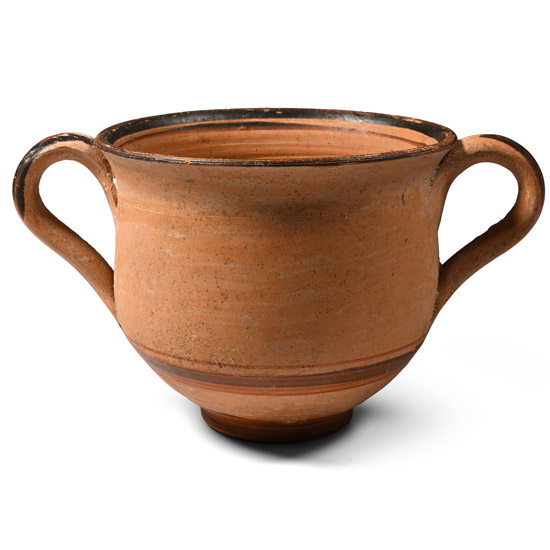
Daunian Terracotta Twin-Handled Cup
5th-4th century B.C.Sold for (Inc. bp): £312
Comprising a bell-shaped thin-walled body with two strap handles and an everted rim, dark lip with a thin circumferential band below; each handle with a lentoid motif; narrow foot with two circumferential bands above. 206 grams, 16 cm wide
From the estate of a Swiss gentleman, Ticino, before 1970. with Galerie Rhéa, Zurich, Switzerland.
Daunian pottery is characterised by unique shapes and decorative motifs, which include geometric patterns, plant and animal motifs, and human figures. The pottery is typically made from a coarse clay, and it is decorated with black or dark brown slip, a type of liquid clay that is applied to the surface of the pottery before firing. -
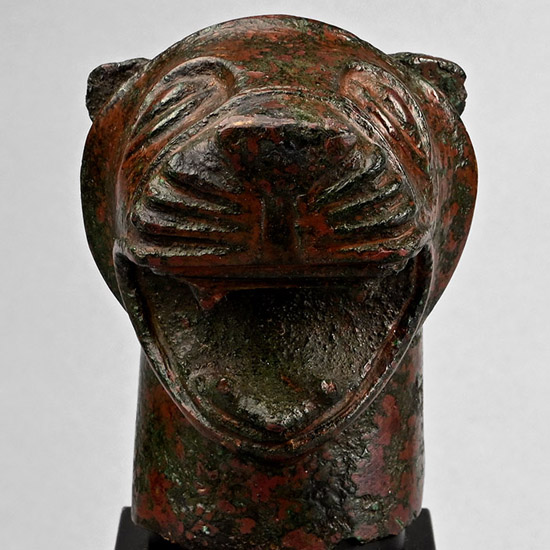
Etruscan Bronze Lion Head
Central Italy, late 6th century B.C.Estimate: £7,000 - 9,000 (‡+bp*)
Opening Bid: £3,600
A decorative fitting with roaring mouth and protruding fangs and tongue, the whiskers depicted in raised radiating ridges, with lidded, elongated almond-shaped eyes and small, round ears; mounted on a custom-made display stand. 1.11 kg total, 17.5 cm including stand
with Christie’s, New York, 8 June 2001, no.58. Donati collection, Lugano, prior to 1982. Collection of Banca della Svizzera Italiana, Lugano, prior to 1986. Formerly in the Bourgknecht collection, Switzerland. Accompanied by Art Loss certificate no.S00123227. This lot has been checked against the Interpol Database of stolen works of art and is accompanied by a search certificate number no.13230-249992.
This head was probably, as was the parallel head of the Barberini Tomb, originally attached to a magnificent bronze cauldron. These large cauldrons of hammered bronze were realised with the heads and necks of two lions and two gryphons attached to the rim. The cauldrons were spherical in form and rested on a stand.
