
Loading, please wait...
LOT 0098
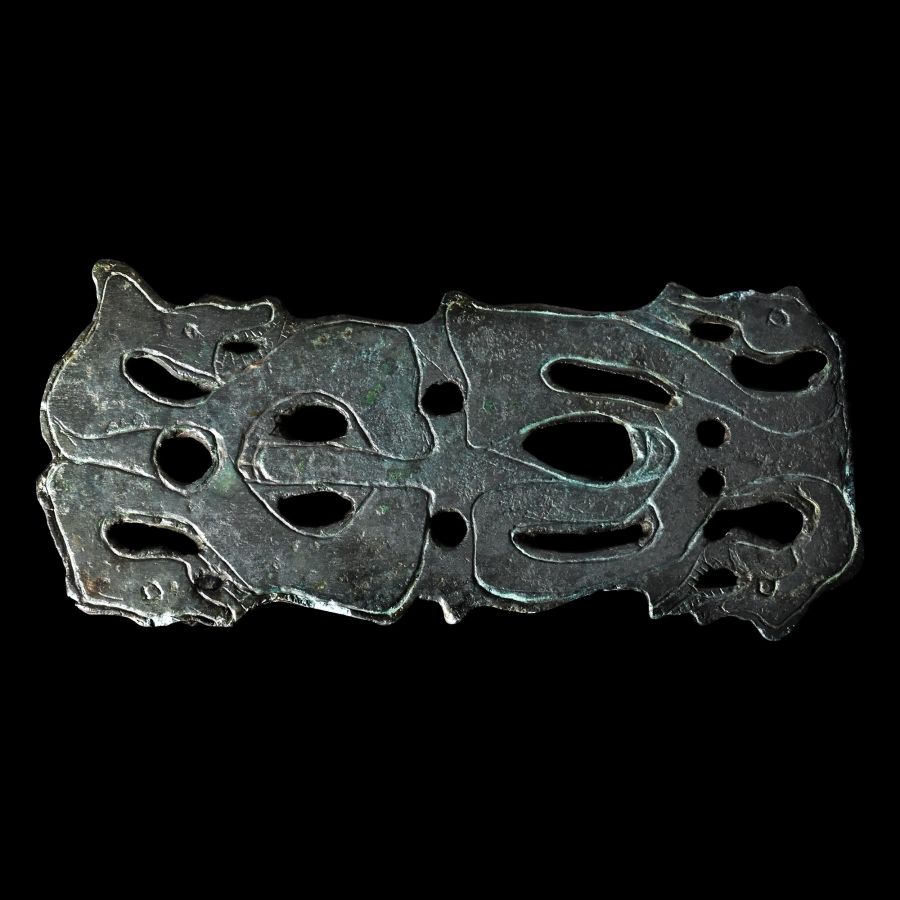
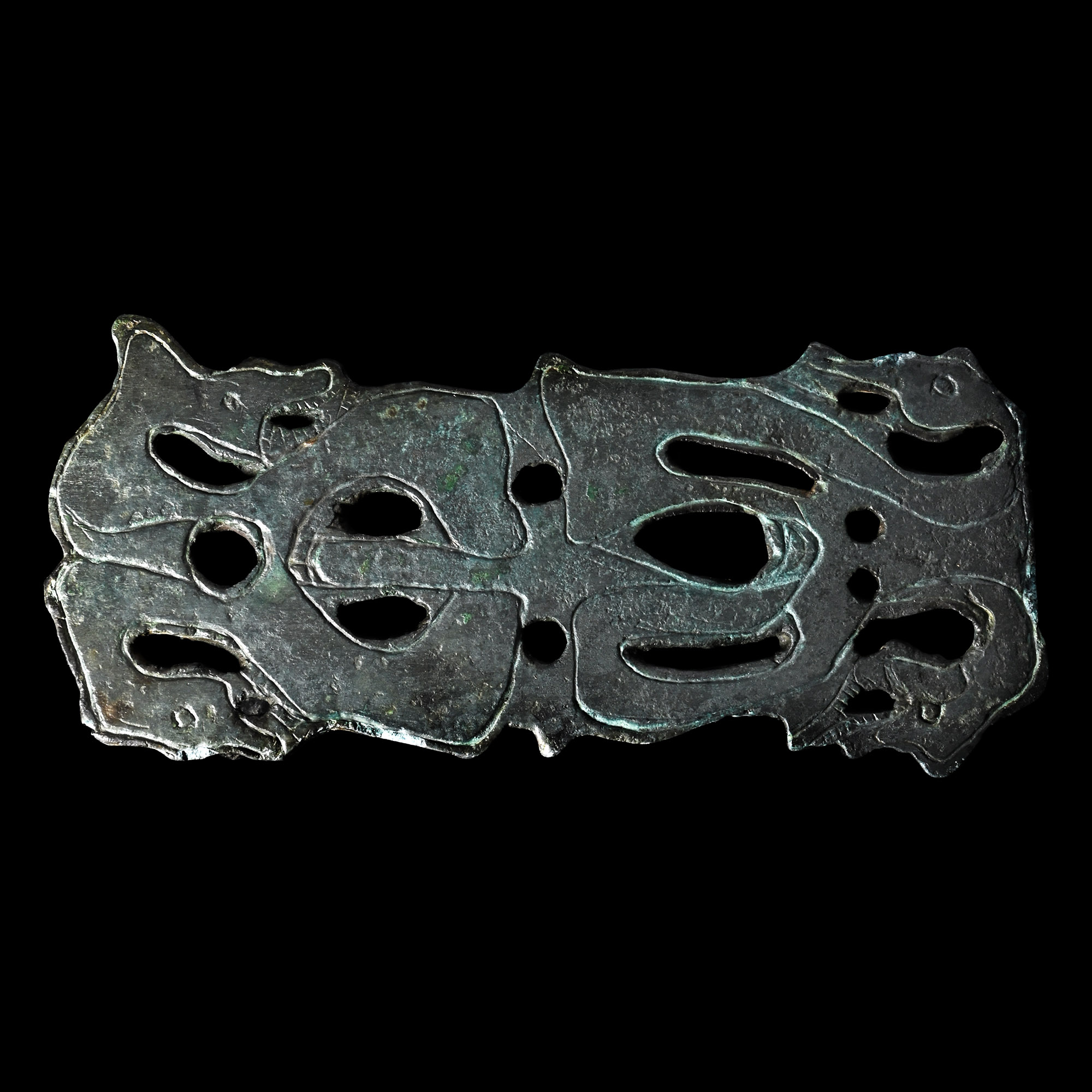
Scythian Bronze Harness Fitting
5TH-4TH CENTURY B.C.
5 1/4 in. (170 grams, 13.4 cm).
Sub-rectangular flat panel with attachment loop to reverse; openwork design comprising two D-shaped panels, each with voids to the centre extending to two addorsed long-necked beasts with incised outline, eye and mouth detailing.
ProvenancePrivate European collection, 1990s.
Private collection, London, UK.
TimeLine Auctions follows a vetting process to ensure the authenticity and legality of all items, reinforcing our commitment to integrity and responsible trading. Each antiquity, antique, and coin lot undergoes thorough examination by a vetting committee of at least ten external specialists, professional trade association members, scientists, and archaeologists: Our Vetting Process
AUCTIONS:
TimeLine is a leading auction house specialising in antiquities, ancient art, collectables, natural history, coins, medals, and books. Our auctions offer museums, collectors, historians, and enthusiasts the opportunity to acquire unique and historically significant pieces.
LOT 0098
Scythian Bronze Harness Fitting
Estimate £700 - 900€810 - 1,040 (for guidance only)$950 - 1,220 (for guidance only)
-
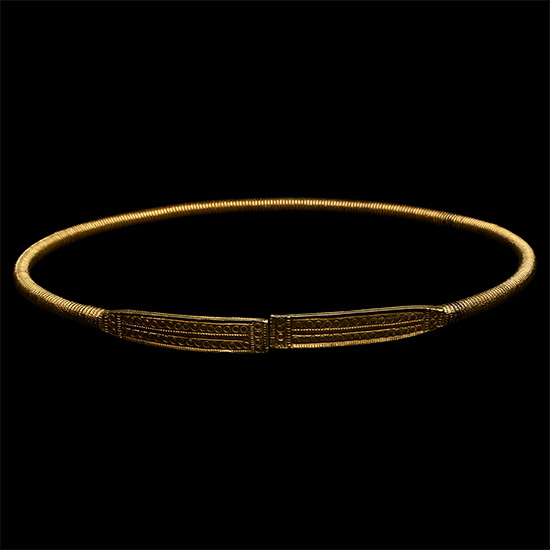
Scythian Gold-Clad Ribbed Torc with Decorated Terminals
4th-3rd century B.C.Sold for (Inc. bp): £9,360
Round in section with ribbing, rectangular finials with billeting to the borders and edges, and rows of impressed roundels. 481 grams, 28 cm
Private collection, Wagner family, Germany, 1955. Private collection, London. This lot has been checked against the Interpol Database of stolen works of art and is accompanied by a search certificate number no.12389-226870. -
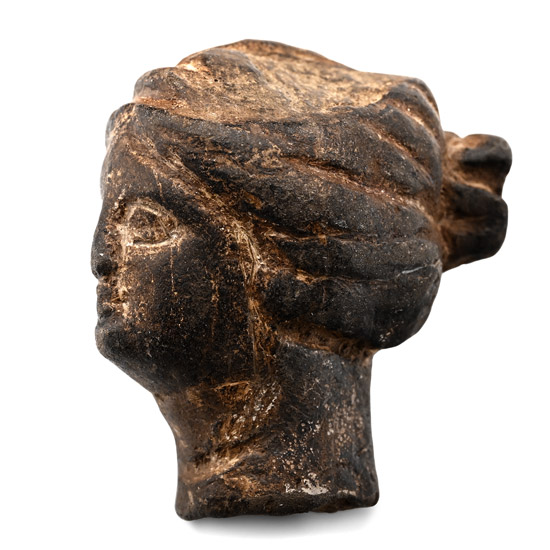
Greek Terracotta Head of a Goddess
Circa 4th-3rd century B.C.Sold for (Inc. bp): £117
With her hair pulled back in a voluminous chignon, large almond-shaped eyes and small pursed lips. 20.3 grams, 36 mm
Ex German art market, 2000s. Acquired from an EU collector living in London. From the collection of a Surrey, UK, gentleman. -
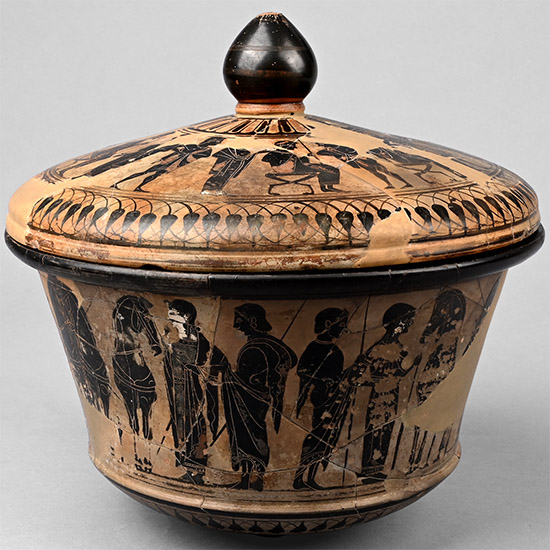
Greek Terracotta Black-Figure Pyxis with Chariot
Attic, 6th century B.C.Estimate: £40,000 - 60,000 (‡+bp*)
Opening Bid: £20,000
Squat vessel with rounded foot and carination with band of tendrils, flared sidewall with carination and rim, broad watchglass lid with central knop handle; blackware frieze to the sidewall, chariot with four horses and attendants carrying spears and dressed in chitons and himatia, among them a noblewoman dressed in a long chiton and chlamys; lid with frieze of profile figures seated on folding chairs with attendants and petitioners, and two women in long robes within a band of coiled tendrils; repaired and restored. 1.05 kg, 22.5 cm wide
Private collection, Mrs Lambelet, Neuchâtel, Switzerland, acquired before 1972; thence by descent. Private collection N.S., acquired in 2012. Accompanied by an academic report by Dr Raffaele D'Amato. This lot has been checked against the Interpol Database of stolen works of art and is accompanied by search certificate number no.13223-249242.
Many Athenian vases depict a quadriga, often in racing or military scenes, but in this case, the depicted scene is peaceful and could be linked to a wedding. The painting can be divided into two scenes: the first, on the sides, is the bridal procession, where the bride is conducted on the chariot which will bring her to the groom, accompanied by her father and relatives; the second, the lid painting, where the nuptial feast is prepared, and the conversing guests are waiting for the bride.
