
Loading, please wait...
LOT 0504
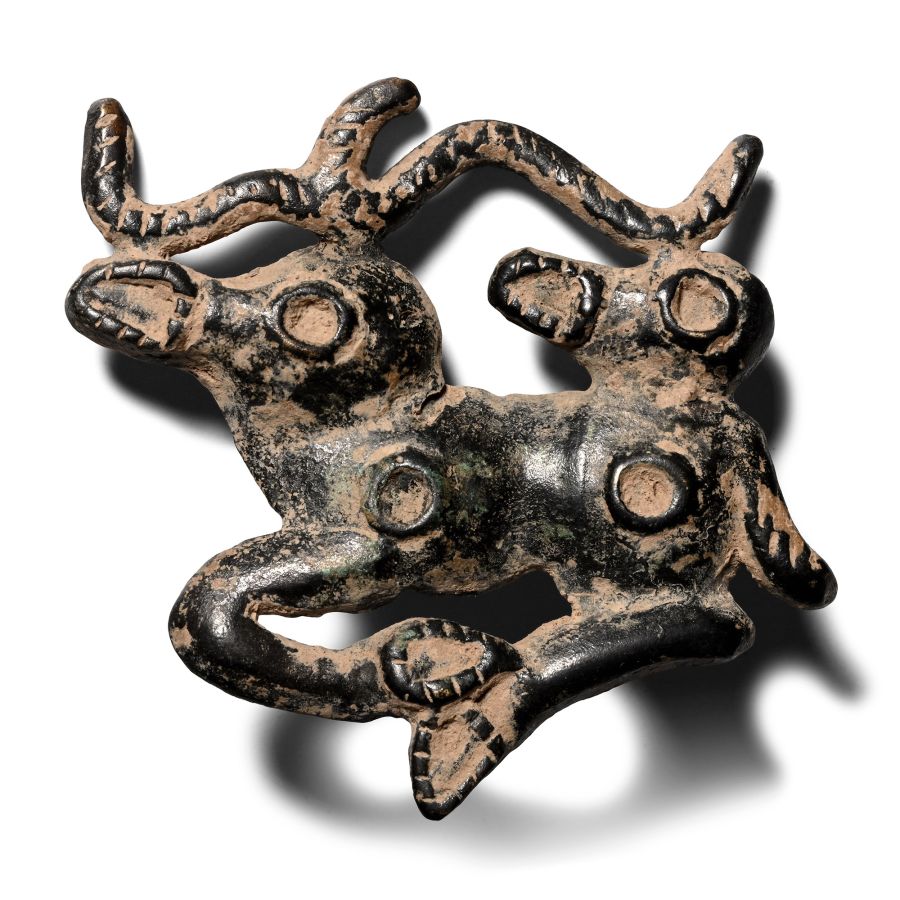
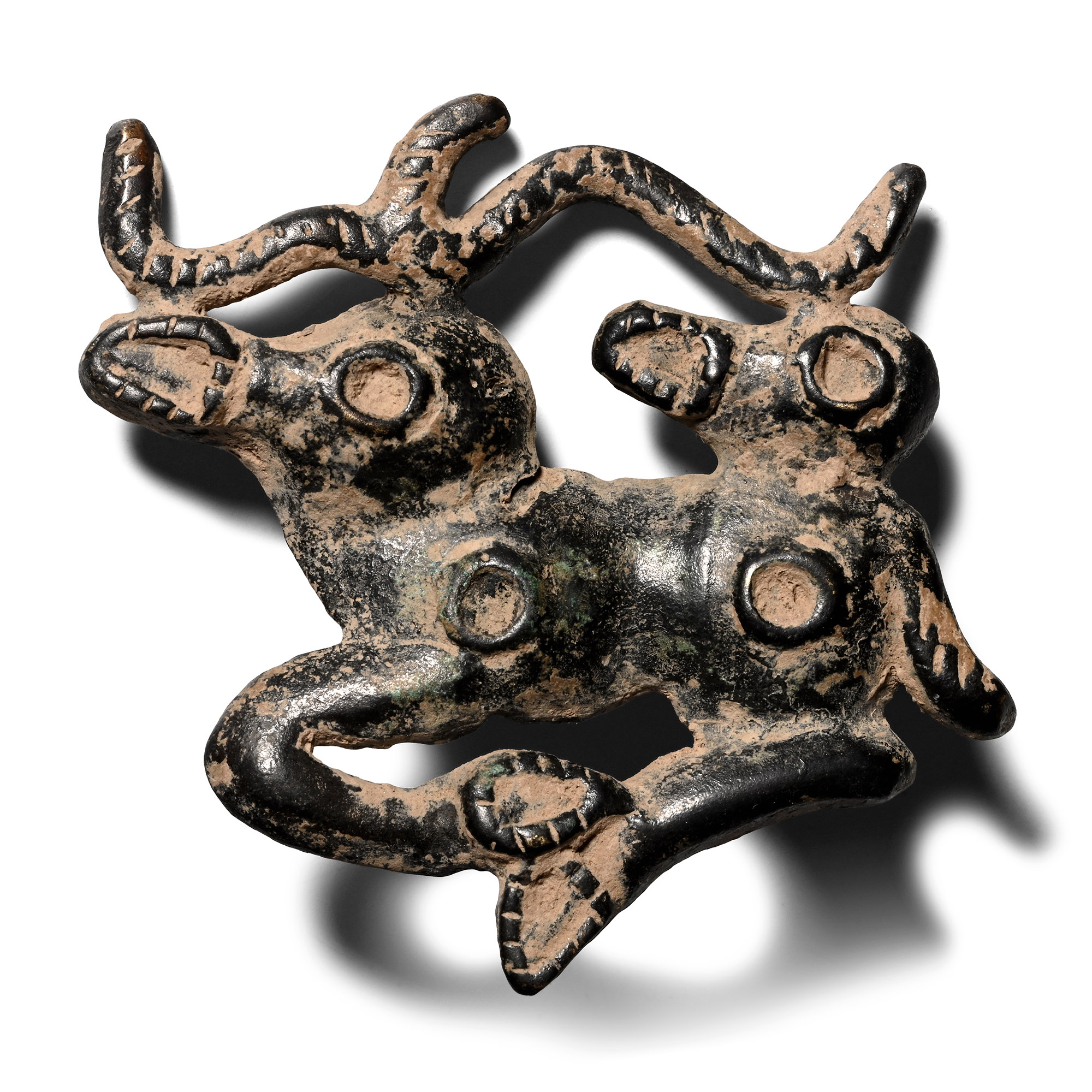
Scythian Bronze Galloping Stag Strap Decoration
CIRCA 5TH-3RD CENTURY B.C.
2 in. (24.3 grams, 51 mm).
Modelled as a stylised quadruped with its legs folded beneath the body, long curving horns and circular cells on the body and eye, two lugs on the reverse.
ProvenanceEx Abelita collection, 1990s.
CONDITIONTimeLine Auctions follows a vetting process to ensure the authenticity and legality of all items, reinforcing our commitment to integrity and responsible trading. Each antiquity, antique, and coin lot undergoes thorough examination by a vetting committee of at least ten external specialists, professional trade association members, scientists, and archaeologists: Our Vetting Process
AUCTIONS:
TimeLine is a leading auction house specialising in antiquities, ancient art, collectables, natural history, coins, medals, and books. Our auctions offer museums, collectors, historians, and enthusiasts the opportunity to acquire unique and historically significant pieces.
LOT 0504
Scythian Bronze Galloping Stag Strap Decoration
Estimate £200 - 300€230 - 350 (for guidance only)$270 - 410 (for guidance only)
-
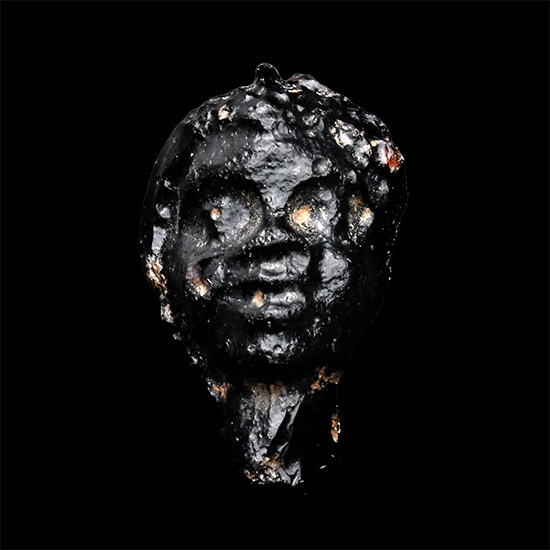
Greek Glass Head of an African Male
Carthaginian, 2nd century B.C.Sold for (Inc. bp): £117
Moulded in the round in black glass with short hair, casting seam around the edges. 1.57 grams, 17 mm
Ex private collection of the late Mr S.M., London, UK, acquired 1979-1999, thence by descent. Accompanied by a previously illustrated catalogue card with provenance. -
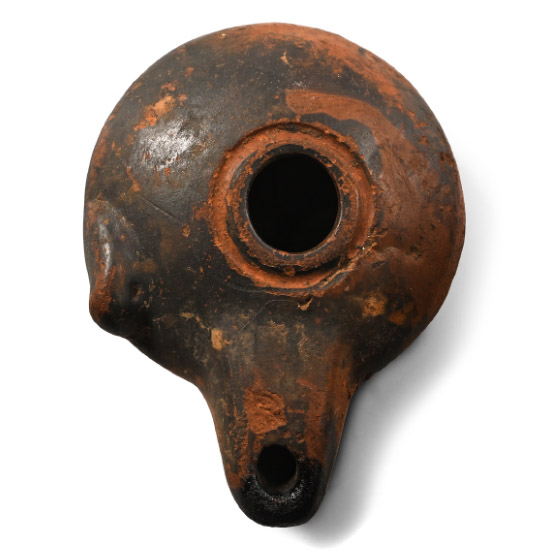
Greek Terracotta Oil Lamp
Hellenistic, circa 3rd-2nd century B.C.Sold for (Inc. bp): £59
Rounded body with large central filler hole and pointed lug on the shoulder, the rim with a low-relief ovolo decoration, elongated nozzle with scooped nozzle; low basal ring. 103 grams, 99 mm
From a UK collection formed in the 1980s. Property of an Essex, UK, gentleman. -
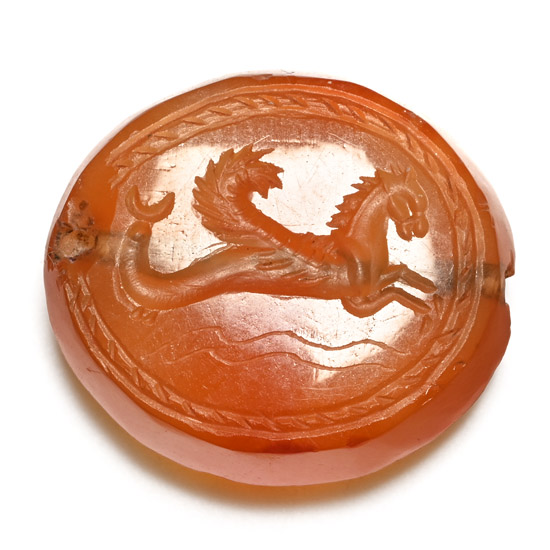
Greek Carnelian Gemstone with Hippocamp
4th century B.C.Sold for (Inc. bp): £650
Scaraboid type with incuse design to the underside of a winged hippocamp inside a ropework border, possibly later engraved water waves; supplied with a museum-quality impression. 2.29 grams 16 mm
From the private collection of a European gentleman (1942-2024), formed since the 1970s.
