
Loading, please wait...
LOT 0525
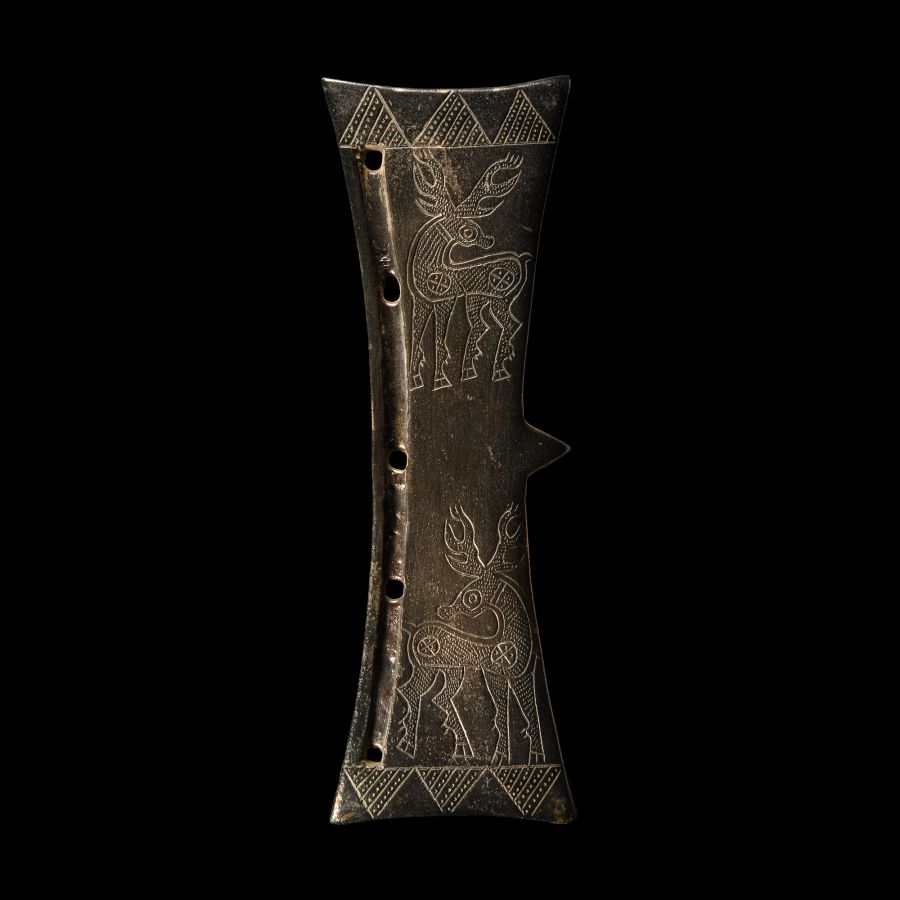
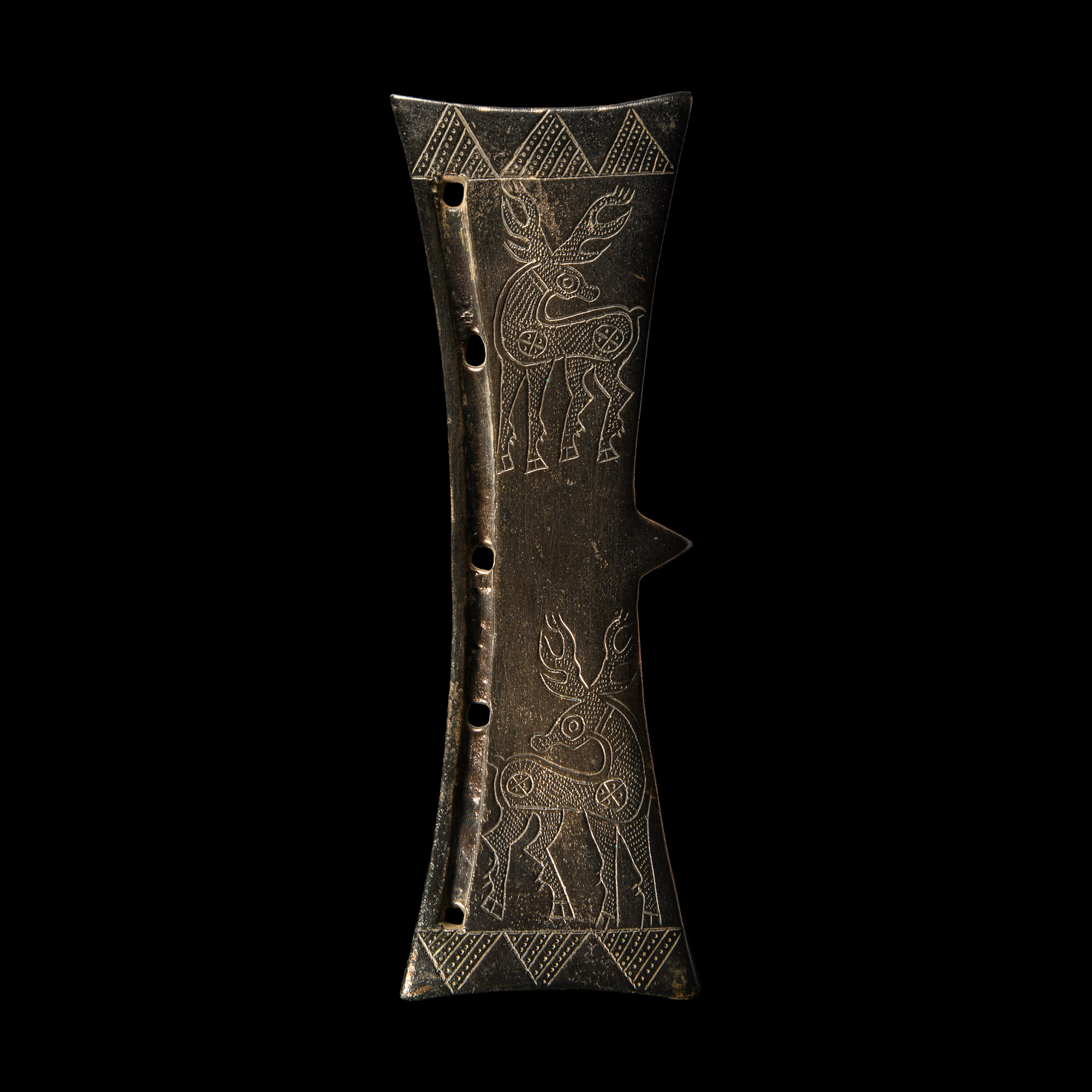
Scythian Bronze Belt Fitting
3RD-2ND CENTURY B.C.
5 1/4 in. (138 grams, 13.5 cm).
Composed of a bow-tie-shaped body with a central triangular plaque to one edge forming a hook to reverse; series of piercings to the opposite edge; two regardant stags and bars of hatched triangles engraved to one face.
ProvenanceEx old English collection.
London art market, 1980s.
TimeLine Auctions follows a vetting process to ensure the authenticity and legality of all items, reinforcing our commitment to integrity and responsible trading. Each antiquity, antique, and coin lot undergoes thorough examination by a vetting committee of at least ten external specialists, professional trade association members, scientists, and archaeologists: Our Vetting Process
AUCTIONS:
TimeLine is a leading auction house specialising in antiquities, ancient art, collectables, natural history, coins, medals, and books. Our auctions offer museums, collectors, historians, and enthusiasts the opportunity to acquire unique and historically significant pieces.
-
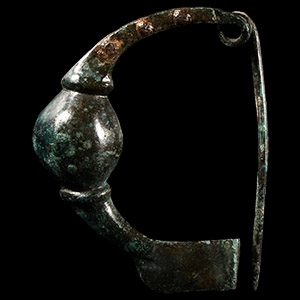
Greek Bronze Bow Brooch
8th-7th century B.C.Sold for (Inc. bp): £156
The keeled bow with a large central boss, integral pin and rectangular footplate. 55.9 grams, 72 mm
From the family collection of a Surrey gentleman since before 1960.
The distinctive form of this fibula seems to be an Italic variant of characteristic Geometric period examples from Thessaly that have been discovered in large numbers, for example in the sanctuary of Zeus Thaulios near Pharos. It belongs to the category of Greek catch plate brooches, although the rectangular footplate is substantially reduced compared to the Greek prototypes. -
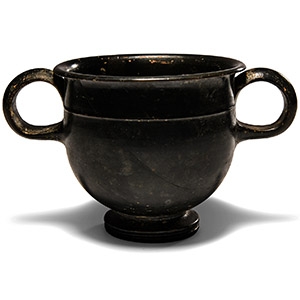
Greek High-Glazed Cup with Handles
5th-3rd century B.C.Estimate: £1,500 - 2,000 (‡+bp*)
Opening Bid: £750
The body with an inverted bell shape, foot with channeled sidewall, two loop handles with carinated upper faces; repaired. 96 grams, 12.8 cm wide
Acquired in Europe before 2001. European collection. -
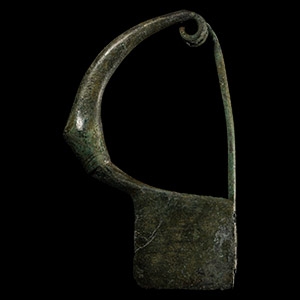
Greek Geometric Period Bow Fibula
8th-7th century B.C.Sold for (Inc. bp): £111
Central bulb to the keeled bow, integral pin and large catch-plate. 42 grams, 95 mm
From the family collection of a Surrey gentleman since before 1960.
The function of the catch-plate fibulae was utilitarian and decorative, they were used for woollen clothing (Herodotus V, 87) and they have been found in houses, tombs and as votive offerings in sanctuaries. This typology was introduced in South Italy by the Greeks, and was widespread in the Magna Graecia. Like all female fibulae, it functioned as a clothing fastener, usually worn as a pair on each shoulder.
