
Loading, please wait...
LOT 1712
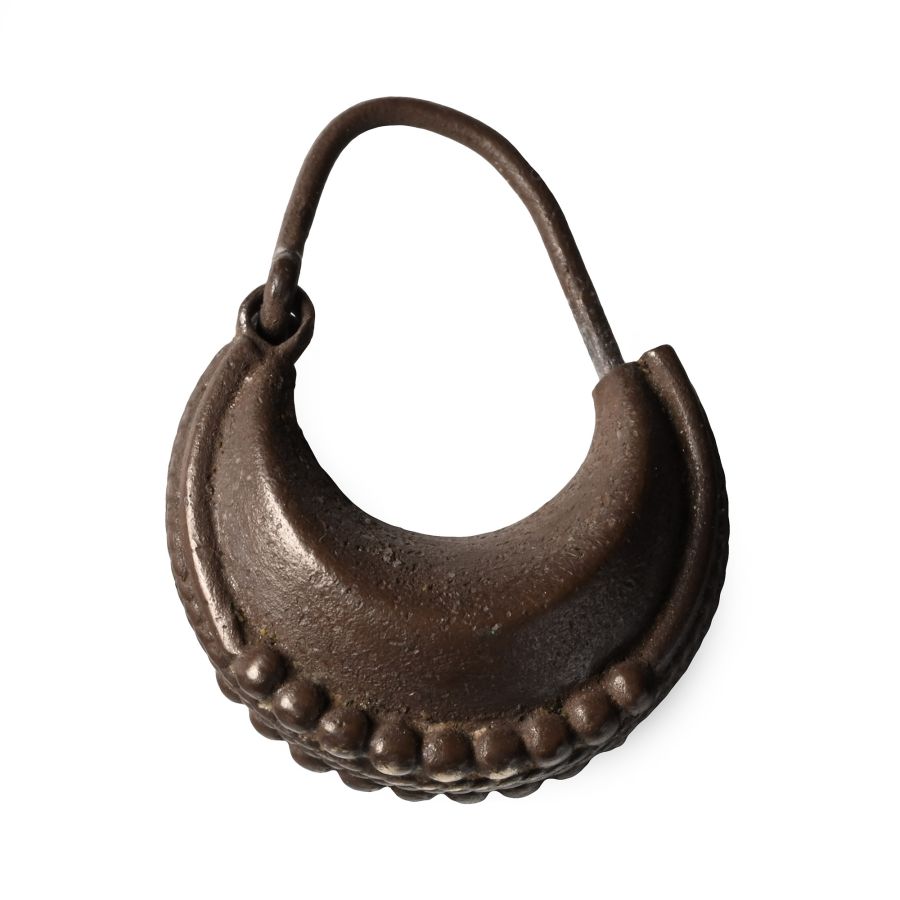
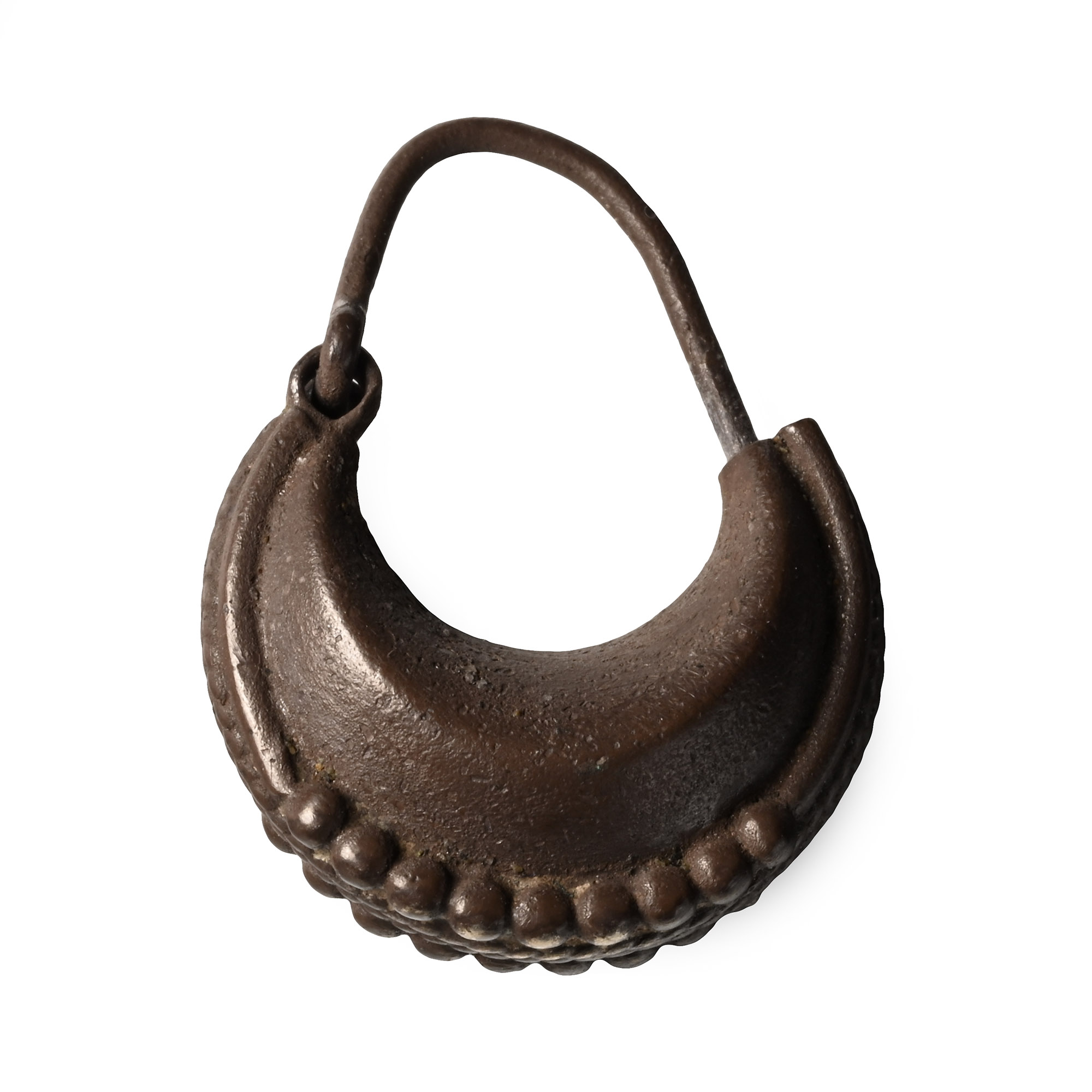
Scandinavian Viking Silver Earring
CIRCA 9TH-11TH CENTURY A.D.
7/8 in. (2.65 grams, 22 mm).
Comprising a hinged loop and hollow-formed crescent with granulated edges, hatched detailing. [No Reserve]
ProvenanceFrom the collection of a Buckinghamshire, UK, collection established from the earlier 1960s.
LiteratureCf. Makarov, N.A. (ed.), Rus v IX-X Vekach: Archeologicheskaya Panorama Moscow, 2012, p.332, items 5-8, for type.
CONDITIONTimeLine Auctions follows a vetting process to ensure the authenticity and legality of all items, reinforcing our commitment to integrity and responsible trading. Each antiquity, antique, and coin lot undergoes thorough examination by a vetting committee of at least ten external specialists, professional trade association members, scientists, and archaeologists: Our Vetting Process
AUCTIONS:
TimeLine is a leading auction house specialising in antiquities, ancient art, collectables, natural history, coins, medals, and books. Our auctions offer museums, collectors, historians, and enthusiasts the opportunity to acquire unique and historically significant pieces.
-
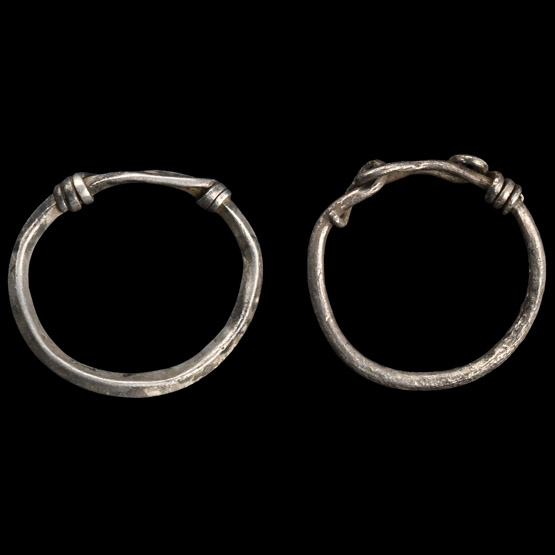
Viking Age Silver Earring Group
Circa 8th-11th century A.D.Sold for (Inc. bp): £98
Each a wire hoop with hook-and-eye fastening, ends wrapped round the shank. 2.14 grams total, 19-20 mm
Ex German art market, 2000s. Acquired from an EU collector living in London. From the collection of a Surrey, UK, gentleman. -
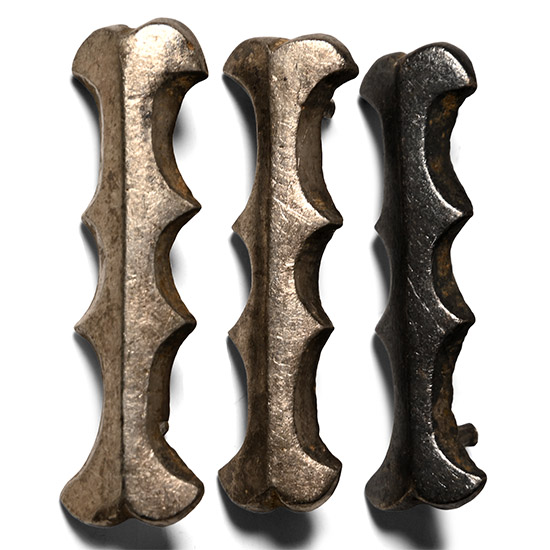
Viking Age Silver Belt Stiffeners
9th-11th century A.D.Sold for (Inc. bp): £78
Group of three mounts each with scalloped lateral edges, carinated section, everted ends; two mounting pegs to reverse. 29.2 grams total, 43-45 mm
Acquired on the UK art market before 2000. Property of an Essex, UK, gentleman. -
.jpg)
Viking Age Silver Decorated Ring
Circa 9th-11th century A.D.Sold for (Inc. bp): £260
With a slightly domed hoop expanding at the bezel, tapering ends butted to the reverse; decorated with punched pellets and other detailing. 9.4 grams, 24.13 mm overall, 19.6 mm internal diameter (approximate size British S 1/2, USA 9 1/4, Europe 20.63, Japan 19)
From the private collection of a London gentleman, from his grandfather's collection formed before the early 1970s.
