
Loading, please wait...
LOT 1256
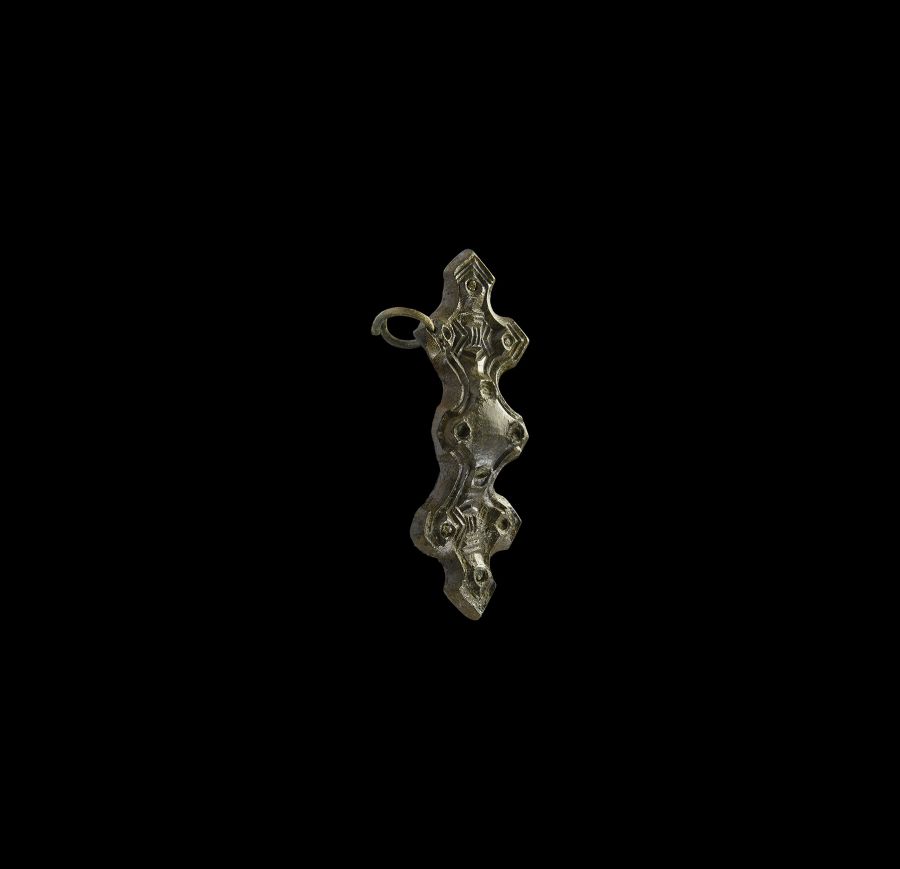
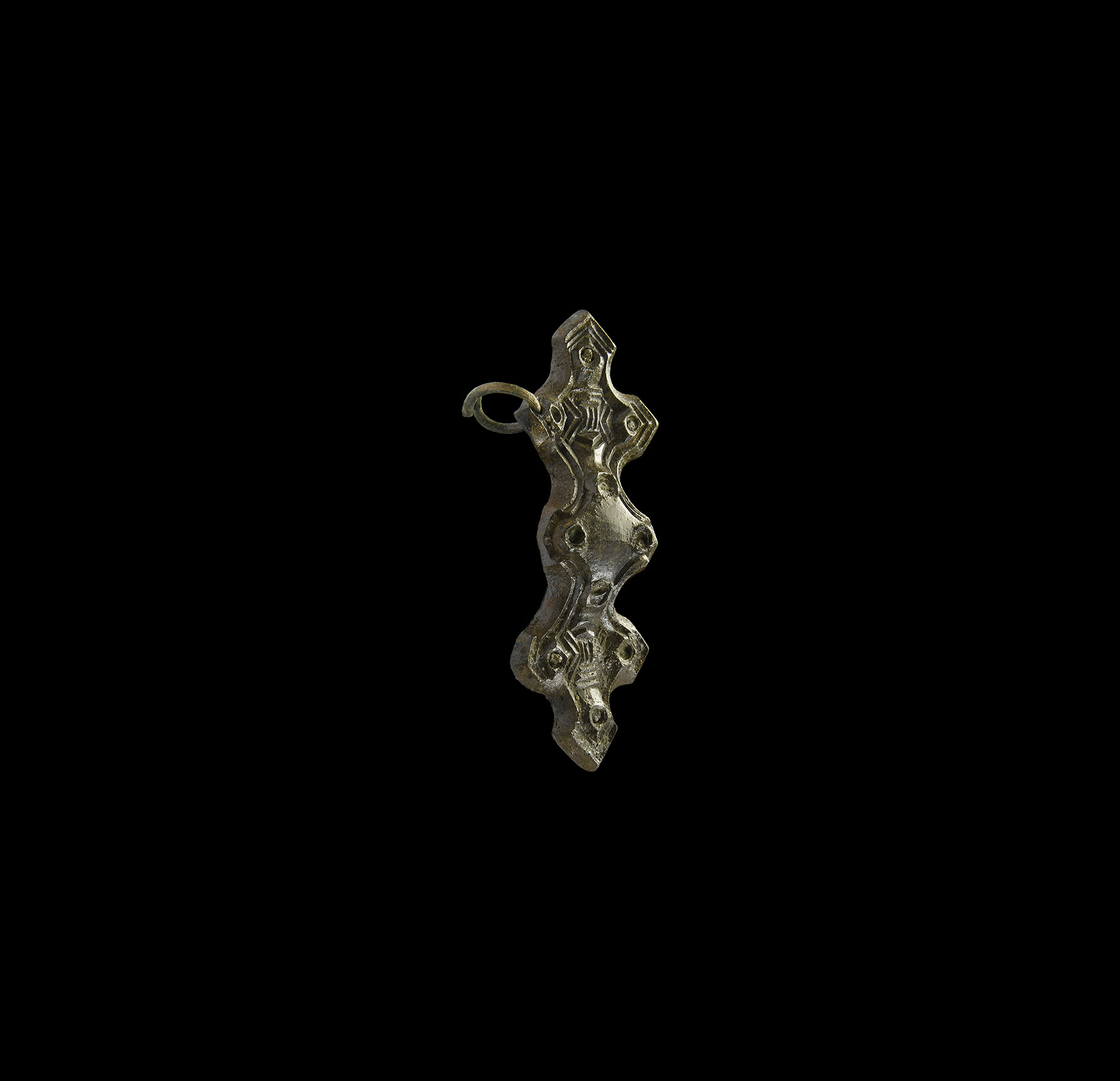
Scandinavian Viking Equal-Arm Brooch
9TH CENTURY A.D.
3 in. (21.5 grams, 79 mm).
A bronze equal-arm brooch of Aargård Type III A, with central lozenge, symmetrical scooped flanges with low-relief geometric ornament and trefoil finial, raised circular sockets, remains of ferrous pin to the reverse with lugs and catch, copper-alloy suspension ring attached to a loop to one pierced socket. [No Reserve]
ProvenanceAcquired before 1960.
From the family collection of a UK gentleman, by descent in the early 1970s.
See Aargaard, G.B., Gleivasrmige Spangen in Arwidsson, G. (ed.), Systemastische Analysen der Graberfunde Birka II:2, Stockholm, 1986; Kershaw, J.F., Viking Identities. Scandinavian Jewellery in England, Oxford, 2013, item 3.50.
CONDITIONTimeLine Auctions follows a vetting process to ensure the authenticity and legality of all items, reinforcing our commitment to integrity and responsible trading. Each antiquity, antique, and coin lot undergoes thorough examination by a vetting committee of at least ten external specialists, professional trade association members, scientists, and archaeologists: Our Vetting Process
AUCTIONS:
TimeLine is a leading auction house specialising in antiquities, ancient art, collectables, natural history, coins, medals, and books. Our auctions offer museums, collectors, historians, and enthusiasts the opportunity to acquire unique and historically significant pieces.
-
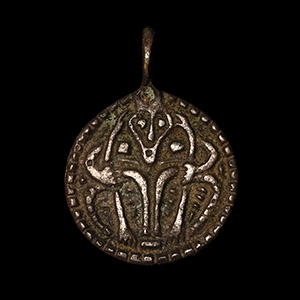
Viking Age Silver Odin Pendant with Ravens
9th-10th century A.D.Sold for (Inc. bp): £1,430
A discoid silver pendant with integral loop, beaded border enclosing a low-relief image of a male facing mask between two birds embraced at the necks. 3.03 grams, 25.8 mm
Private collection formed in Europe in the 1980s. Westminster collection, central London, UK. -
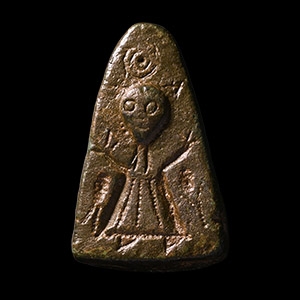
Viking Age Patrix Die with Figure
Circa 9th century A.D.Sold for (Inc. bp): £286
A Moravian sub-triangular copper-alloy patrix die displaying a stylised standing figure to the upper face, inorans pose, ring-and-dot and other symbols in the field. 41.5 grams, 43 mm
Acquired before 2000. From the collection of a European gentleman living in the UK.
The Great Moravian Empire, Christianised by East Frankish missionaries and later experienced significant cultural development under King Rastislav, with the arrival of the mission of Saints Cyril and Methodius in 863 A.D., developed its own artistic style under the influence of Carolingian Empire and Eastern Roman Empire. The images of praying saints, similar to our figure, are evident on belt plate decorations, where the image of the suppliant with open hands and long talaris tunica is often repeated. If the two stylised figures are interpreted as lions, the patrix die could possibly represent the Biblical story of Daniel in the lion’s cave. -

Viking Age Stamped Silver Pendant
Circa 8th-10th century A.D. or laterSold for (Inc. bp): £312
A discoid silver pendant decoratively stamped with blank triangles, triangles containing trefoil pellets and annulets containing pellets; ribbed tubular suspension loop; Latvian workmanship. 11.8 grams, 55 mm
Acquired in the 1990s. From a North Yorkshire private collection, UK.
