
Loading, please wait...
LOT 1781
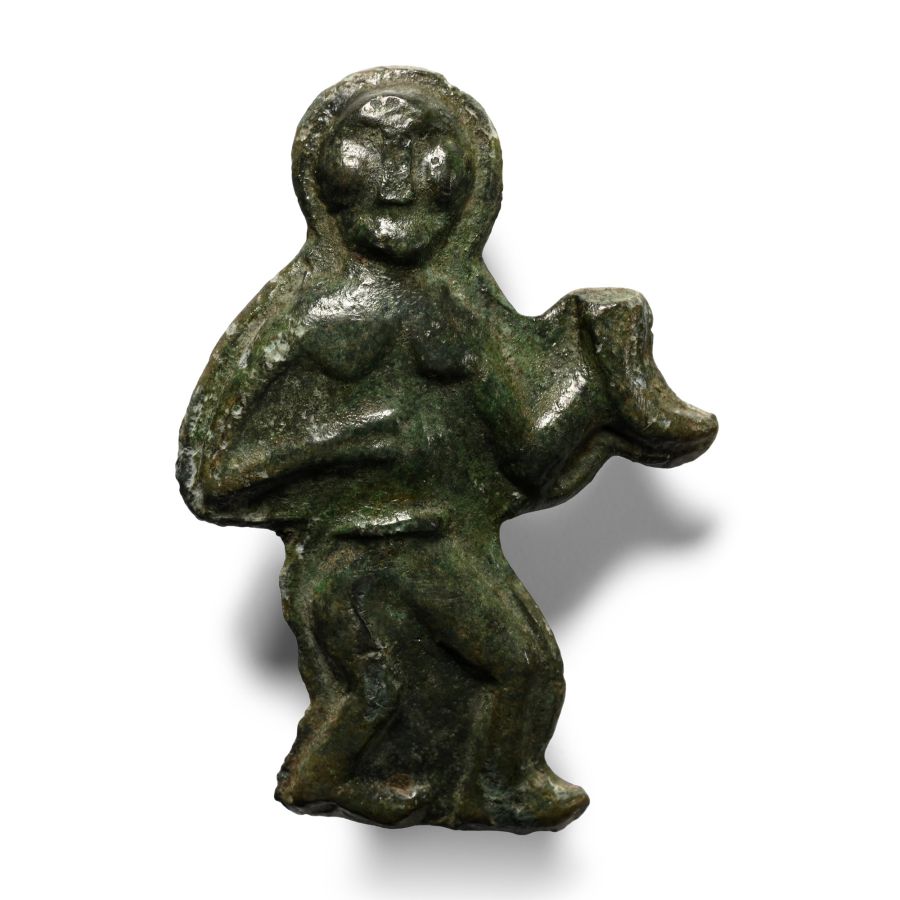
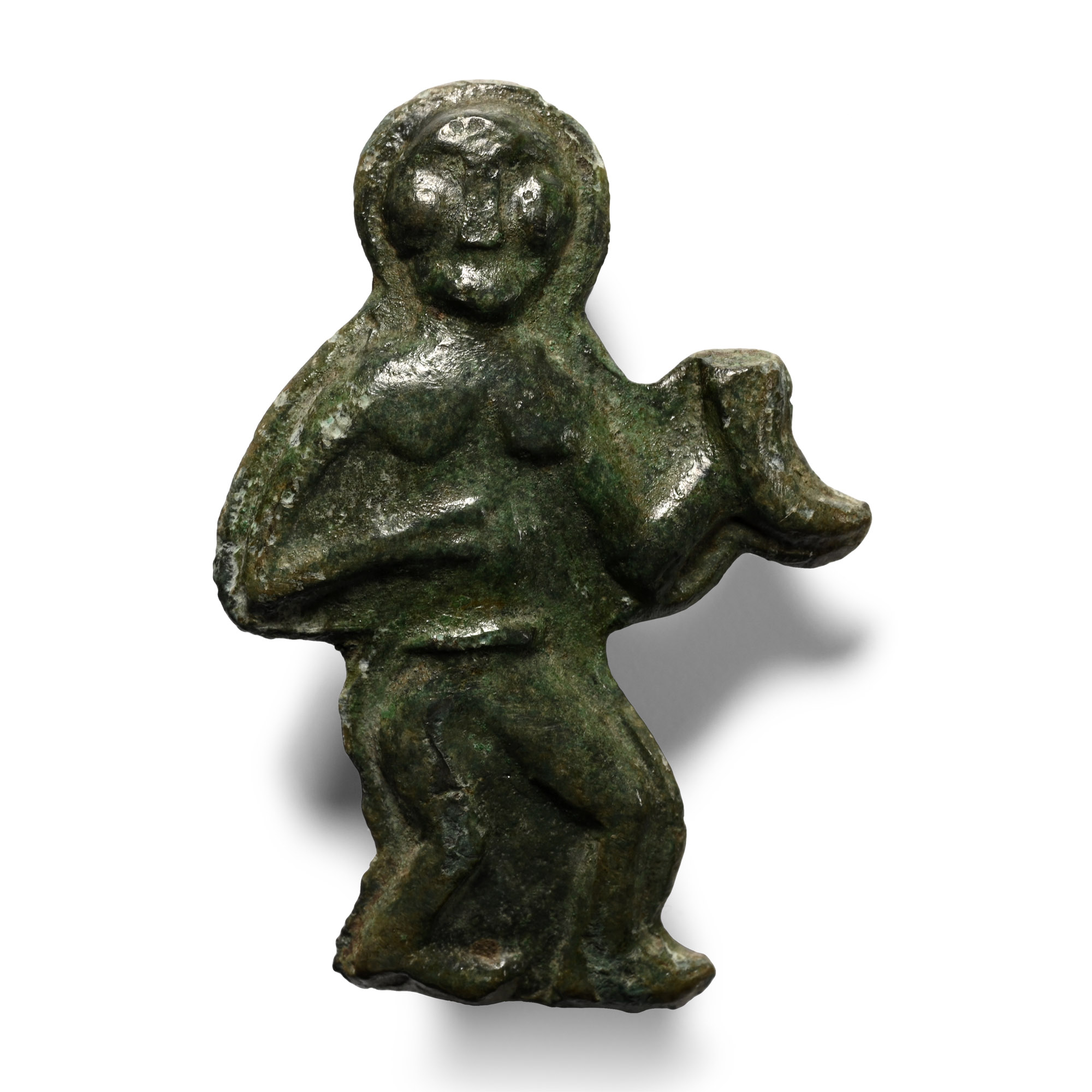
Scandinavian Pre-Viking Bronze Patrix Die with God and Drinking Horn
4TH-5TH CENTURY A.D.
1 3/8 in. (7.62 grams, 37 mm).
Modelled in the half-round, advancing figure with bent legs and holding a drinking horn.
ProvenanceFrom the private collection of a London gentleman, from his grandfather's collection formed before the early 1970s.
LiteratureCf. Sedov, B.B., Finno-Ugri i Balti v Epokhi Srednevekovija, Moscow, 1987, plate XCVIII, for similar examples.
CONDITIONTimeLine Auctions follows a vetting process to ensure the authenticity and legality of all items, reinforcing our commitment to integrity and responsible trading. Each antiquity, antique, and coin lot undergoes thorough examination by a vetting committee of at least ten external specialists, professional trade association members, scientists, and archaeologists: Our Vetting Process
AUCTIONS:
TimeLine is a leading auction house specialising in antiquities, ancient art, collectables, natural history, coins, medals, and books. Our auctions offer museums, collectors, historians, and enthusiasts the opportunity to acquire unique and historically significant pieces.
LOT 1781
Scandinavian Pre-Viking Bronze Patrix Die with God and Drinking Horn
Estimate £400 - 600€460 - 700 (for guidance only)$540 - 810 (for guidance only)
-
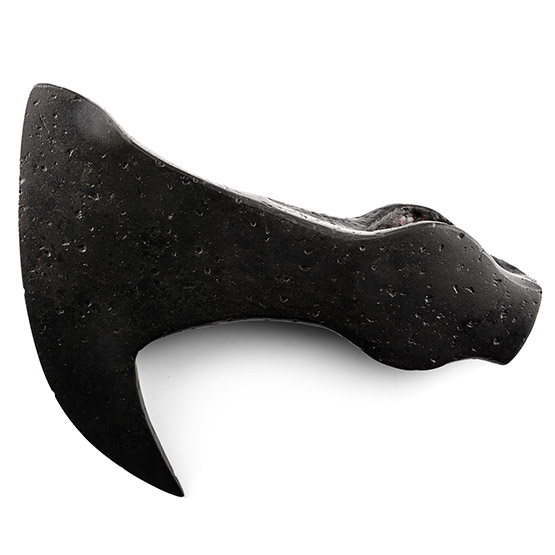
Viking Age Iron Socketted Hook-Billed Axehead
Circa 9th-11th century A.D.Sold for (Inc. bp): £286
With a long, deeply curved blade, short neck, socket with slightly curved wings above and below, and hammer-face to rear; professionally cleaned, conserved, and restored. 618 grams, 15.2 cm
From the family collection of a South East London collector; formerly acquired in the late 1950s.
These axes are typical of Baltic workmanship. During this age, the axes were the favourite weapons of many Baltic people, including the Curonian army, which included lightly armed soldiers who fought with spears, shields, fighting knives and axes. A heavily armed soldier could also carry a sword, a helmet, a shield, and a wide-bladed axe. -
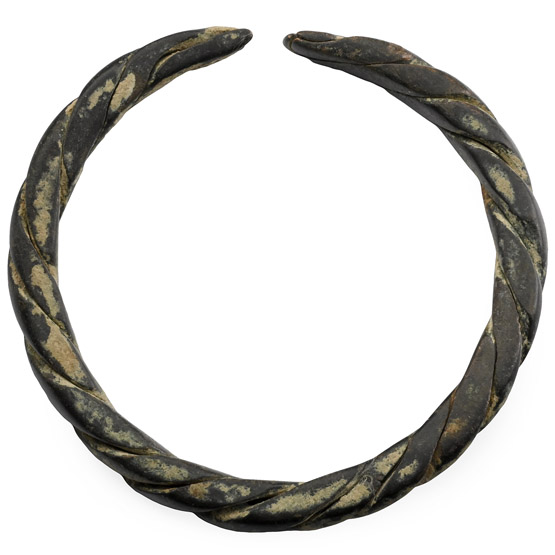
Viking Age Bronze Twisted Bar Bracelet
Circa 9th-11th century A.D.Sold for (Inc. bp): £72
Penannular in form with tapering ends, twisted-rod construction. 33 grams, 66 mm
Ex East Sussex private collection, 1970s-1980s. -
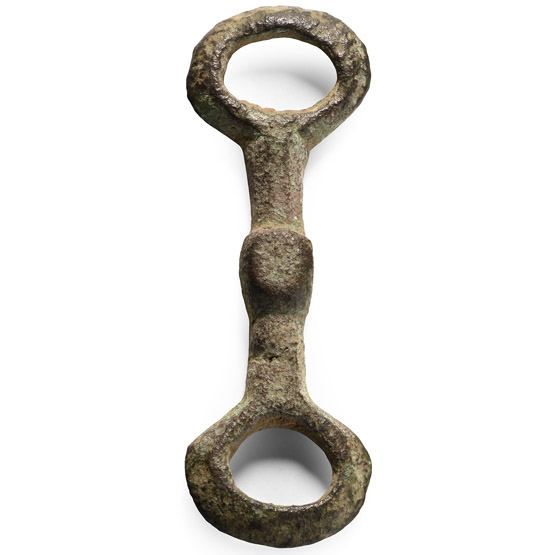
Anglo-Scandinavian Viking Bronze Strap Junction
11th century A.D.Sold for (Inc. bp): £65
Comprising a narrow shank with thick ellipsoid loop at each end. 18.52 grams, 64 mm
Found Norfolk, UK.
