
Loading, please wait...
LOT 1252
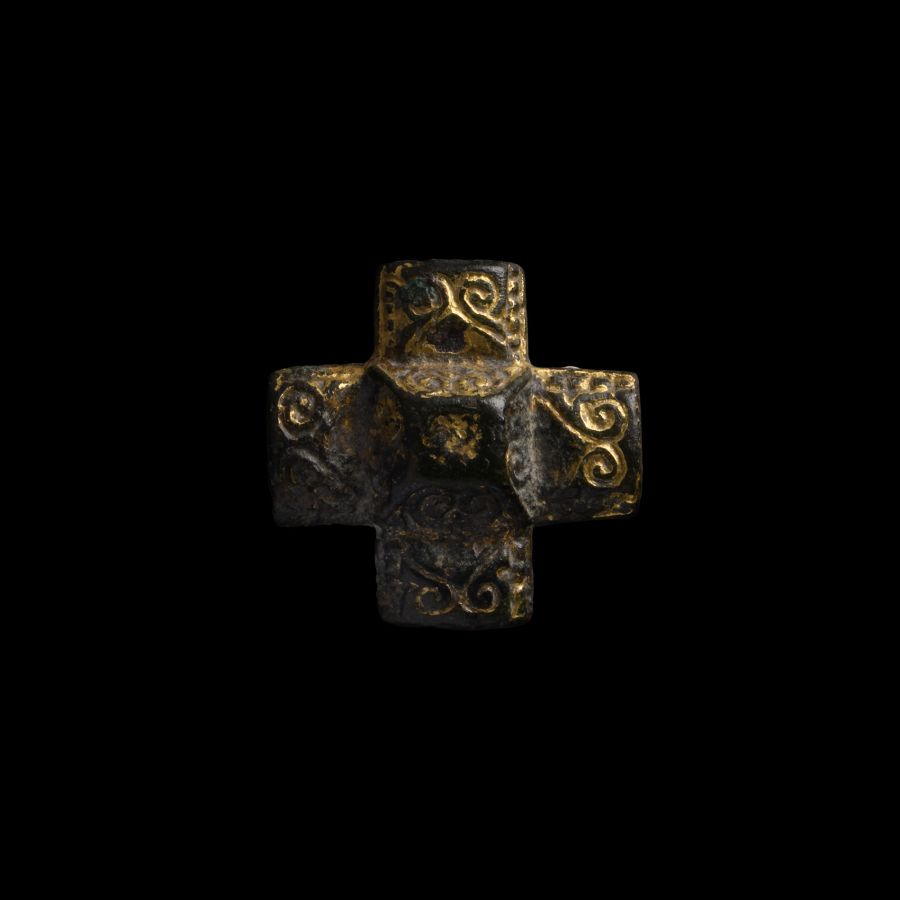
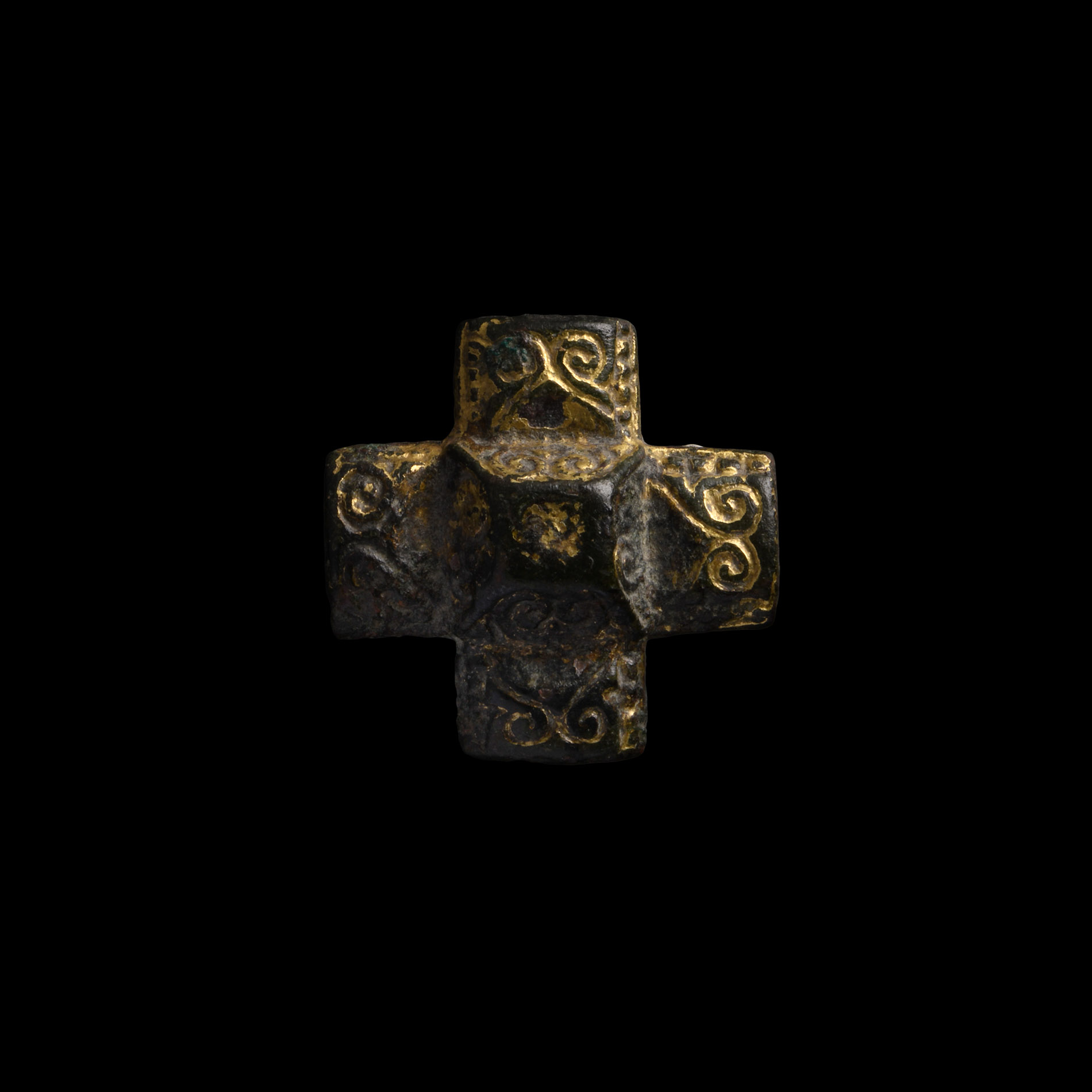
Saxon Gilt Cruciform Pyramid Mount
7TH-9TH CENTURY A.D.
3/4 in. (7.1 grams, 21 mm).
Displaying incised scroll decoration to the arms and pyramidal faces; four attachment lugs to the reverse. [No Reserve]
ProvenanceAcquired on the UK art market before 2016.
Ex property of an American collector.
Cf. Youngs, S. (ed.), The Work of Angels. Masterpieces of Celtic Metalwork, 6th-9th centuries AD, London, 1989, item 113.
CONDITIONTimeLine Auctions follows a vetting process to ensure the authenticity and legality of all items, reinforcing our commitment to integrity and responsible trading. Each antiquity, antique, and coin lot undergoes thorough examination by a vetting committee of at least ten external specialists, professional trade association members, scientists, and archaeologists: Our Vetting Process
AUCTIONS:
TimeLine is a leading auction house specialising in antiquities, ancient art, collectables, natural history, coins, medals, and books. Our auctions offer museums, collectors, historians, and enthusiasts the opportunity to acquire unique and historically significant pieces.
-
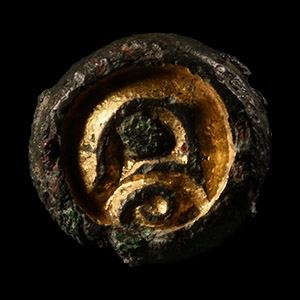
Anglo-Saxon Gilt Bronze Stud with Profile Head
Circa 6th-7th century A.D.Sold for (Inc. bp): £111
Discoid plate with rivet to the rear, chip-carved Style I head motif in profile. 2.8 grams, 13 mm
Ex David Winter collection, Kent, UK. Acquired on the UK art market in 2012. Property of a Kent lady collector. -
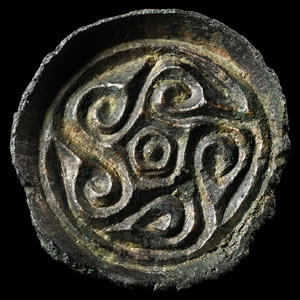
Anglo-Saxon Bronze Saucer Brooch with Running Spirals
6th century A.D.Sold for (Inc. bp): £176
Plaque with central pellet and raised pentagon developing to five running spirals; carinated ridge and flared lip; remains of catch and pin-lug to the reverse. 12.4 grams, 32 mm
Found Southern England. Acquired on the UK art market in the 1980s. From an East Anglian private collection. -
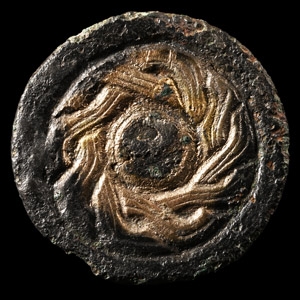
Anglo-Saxon Gold Chip-Carved Bronze Roundel
6th century A.D.Estimate: £100 - 140 (+bp*)
Opening Bid: £50
Roundel with central disc and surrounding band of three-strand guilloche; possibly the 'button' from a shield-boss. 9.24 grams, 28.45 mm
Found Norfolk, Southern England. Acquired on the UK art market in the 1980s. From an East Anglian private collection. Accompanied by an old Norfolk Castle Museum record slip.
The item is described on the museum's accompanying slip as a 'disk brooch' but it lacks any sign of having had a catch or pin-lug attached.
