
Loading, please wait...
LOT 1778
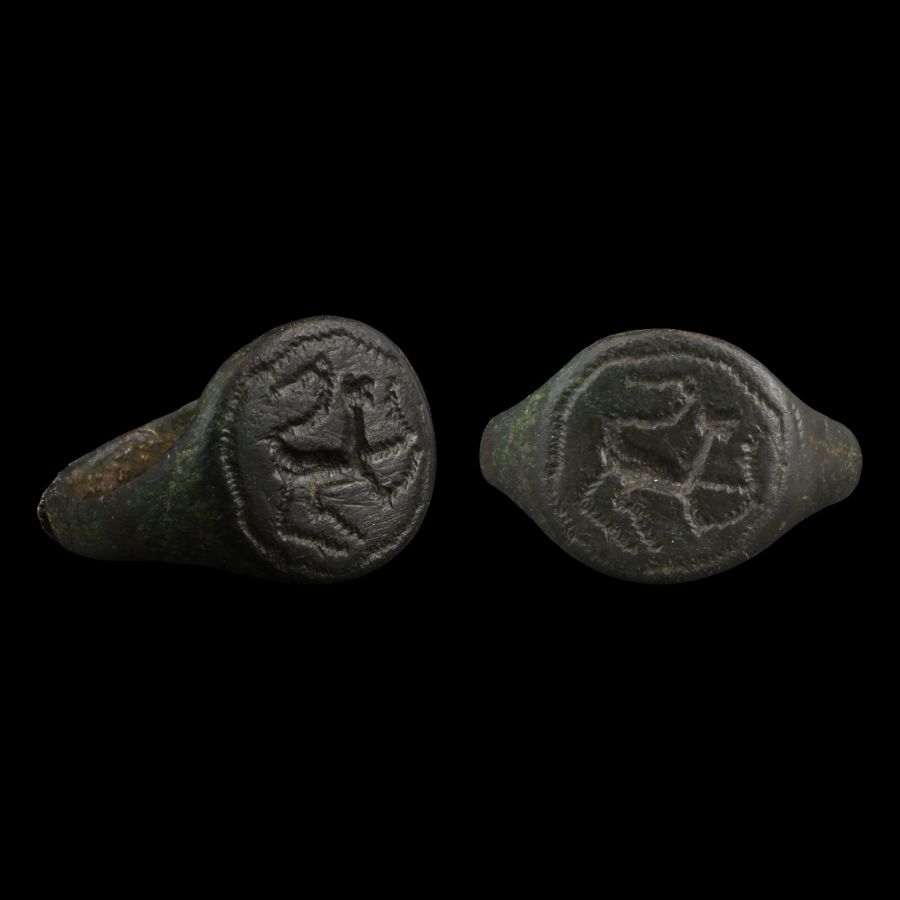
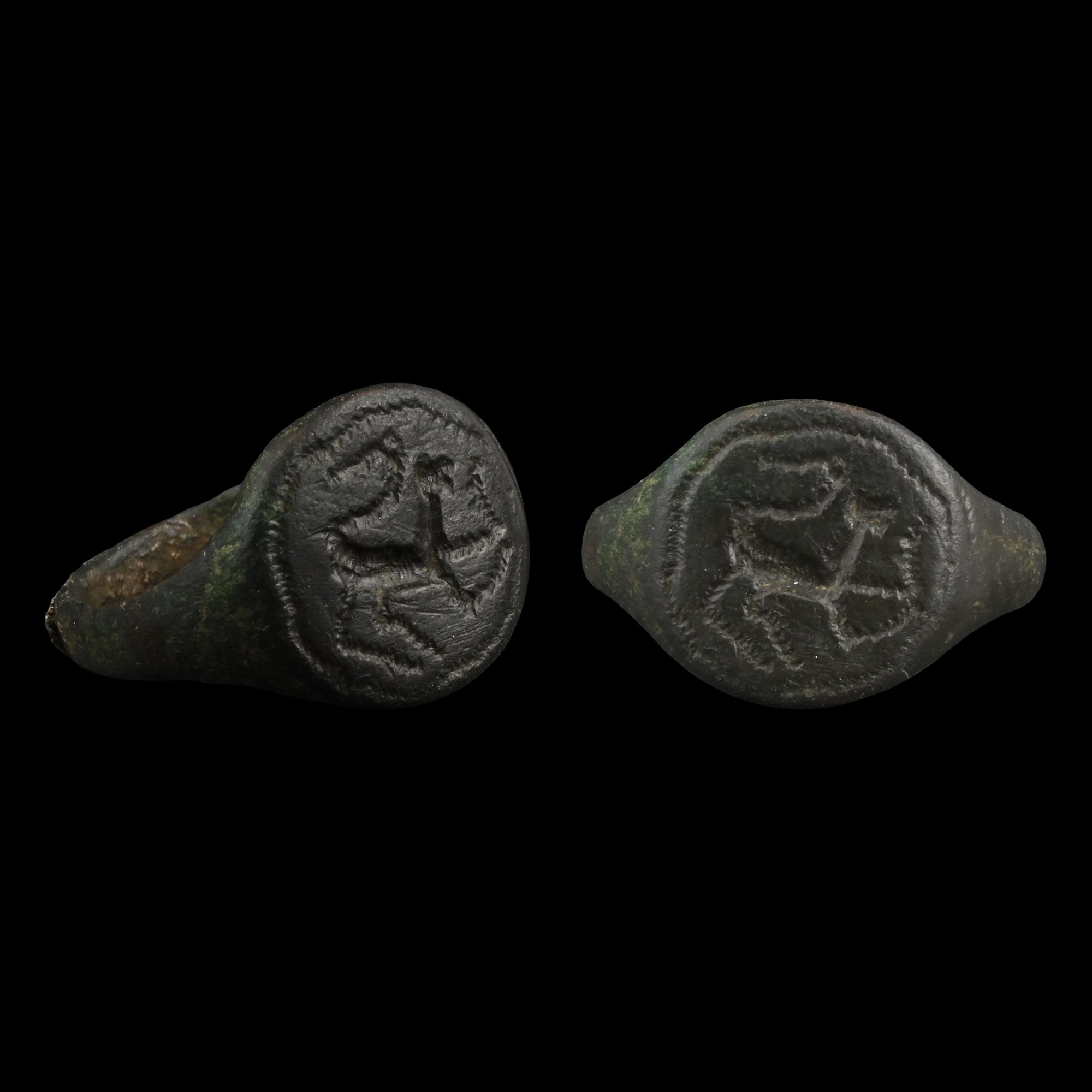
Saxon Bronze Ring with Lion
7TH-8TH CENTURY A.D.
3/4 in. (3.38 grams, 19.76 mm overall, 16.40 mm internal diameter (approximate size British L, USA 5 3/4, Europe 11.24, Japan 10)).
Comprising a D-section hoop and discoid bezel with incuse lion walking right, similar to Anglo-Saxon coins of King Eadberht of Northumbria. [No Reserve]
ProvenanceAcquired on the UK and EU art market before 2000.
From the private collection of a Surrey, UK, gentleman.
Cf. Wamser, L., Die Welt von Byzanz - Europas Östliches Erbe, München, 2004, item 668, for the type.
FootnotesAlthough the main themes represented on the bezels of Dark Ages rings were inspired by Christian themes, sometimes images of animals were also depicted. The lions were connected with Biblical interpretations and episodes in Byzantium as well as in the West.
CONDITIONTimeLine Auctions follows a vetting process to ensure the authenticity and legality of all items, reinforcing our commitment to integrity and responsible trading. Each antiquity, antique, and coin lot undergoes thorough examination by a vetting committee of at least ten external specialists, professional trade association members, scientists, and archaeologists: Our Vetting Process
AUCTIONS:
TimeLine is a leading auction house specialising in antiquities, ancient art, collectables, natural history, coins, medals, and books. Our auctions offer museums, collectors, historians, and enthusiasts the opportunity to acquire unique and historically significant pieces.
-
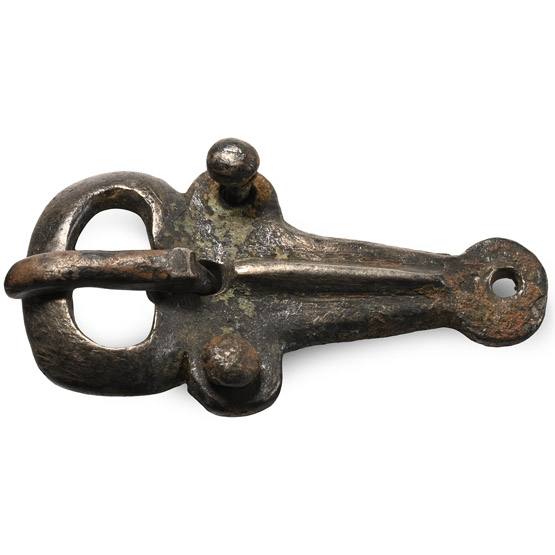
Saxon Silver Buckle
Circa 6th century A.D.Sold for (Inc. bp): £117
Triangular plate with integral loop, three mounting pins; narrow curved tongue. 19.5 grams, 54 mm
London, UK, collection, 1990s. -
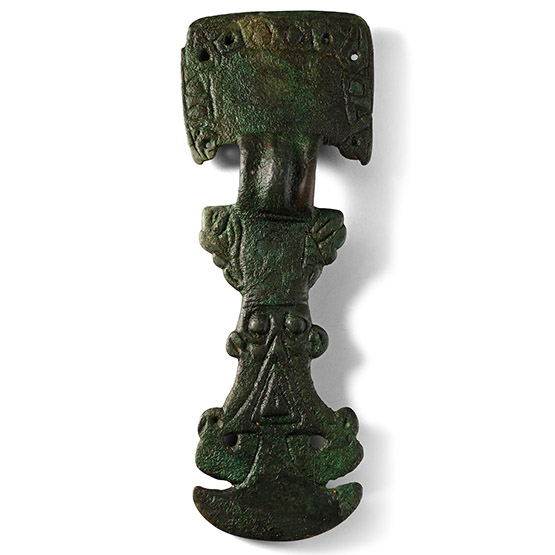
Large Anglo-Saxon Bronze Great Square-Headed Brooch
Late 5th-6th century A.D.Sold for (Inc. bp): £910
Comprising a rectangular headplate with openwork masks to the outer edge, imprint of fabric to the central panel; shallow bow with three vertical ribs; lappets below the bow, footplate developing to a triangular facing mask with domed eyes and concentric triangles, openwork finial with pelta-shaped panel; pin-lug and catch with ancient repair to the reverse. 72 grams, 13.9 cm
Found Seaham, Co Durham, UK. Property of a Durham private collector. -
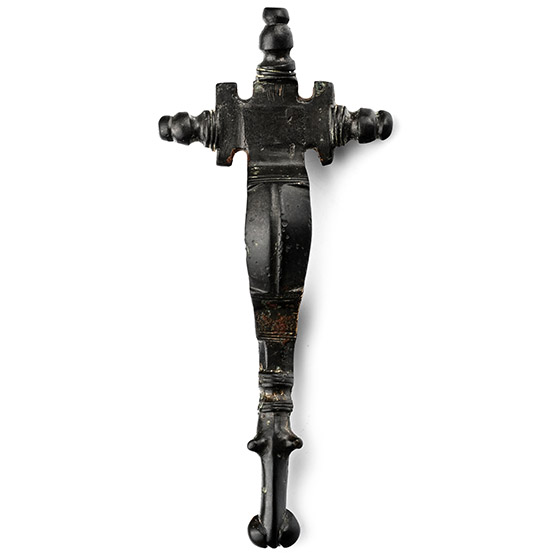
Anglo-Saxon Bronze Cruciform Long Brooch
6th century A.D.Sold for (Inc. bp): £351
Comprising a rectangular headplate and three radiating knops, broad bow and horse-head footplate with scrolled nostril, suspension loop to the reverse; accompanied with note reading: 'Anglo-Saxon, Bronze Cruciform Brooch, C. 6th century AD, Bronze cruciform brooch of fine quality. Features an integral top & side with semi-circular knobs & moulded collars. it has short wings & a high arched bow with a central groove & faceted corners, with a fine zoomorphic foot. Provenance: M. O'Bee collection, found in Lincolnshire in the 1970's.' 19.2 grams, 80 mm
Found in Lincolnshire, UK, in the 1970s. M. O'Bee collection. Accompanied by a previous catalogue information ticket.
