
Loading, please wait...
LOT 0283
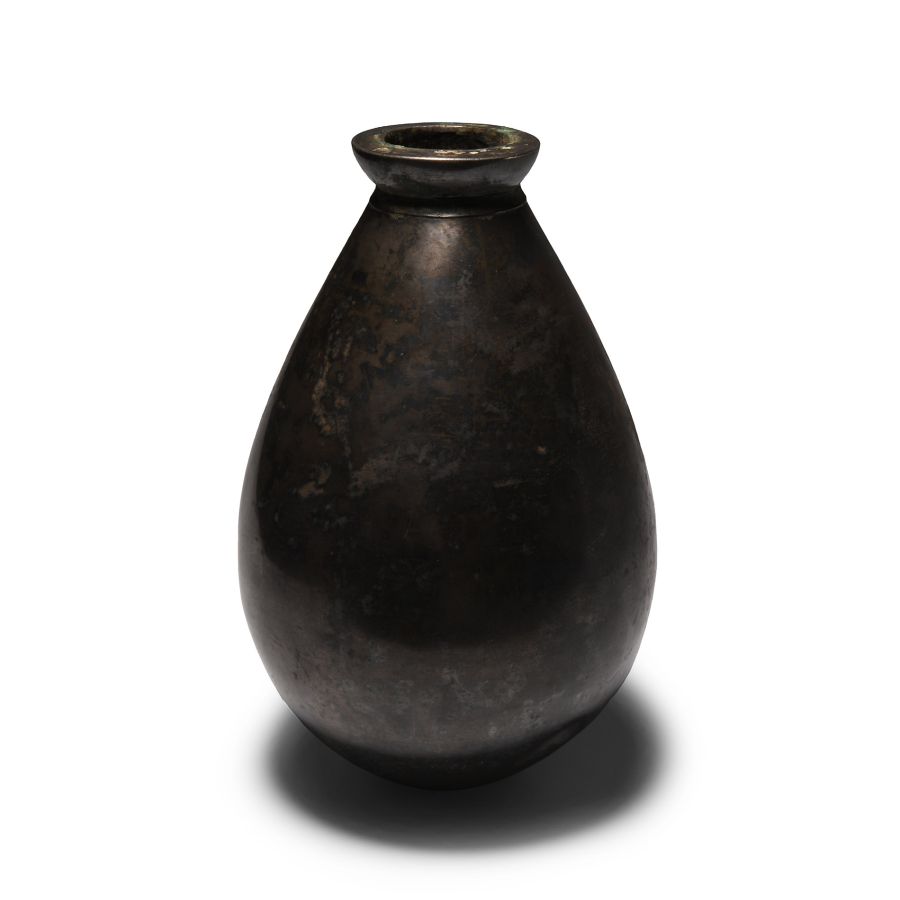
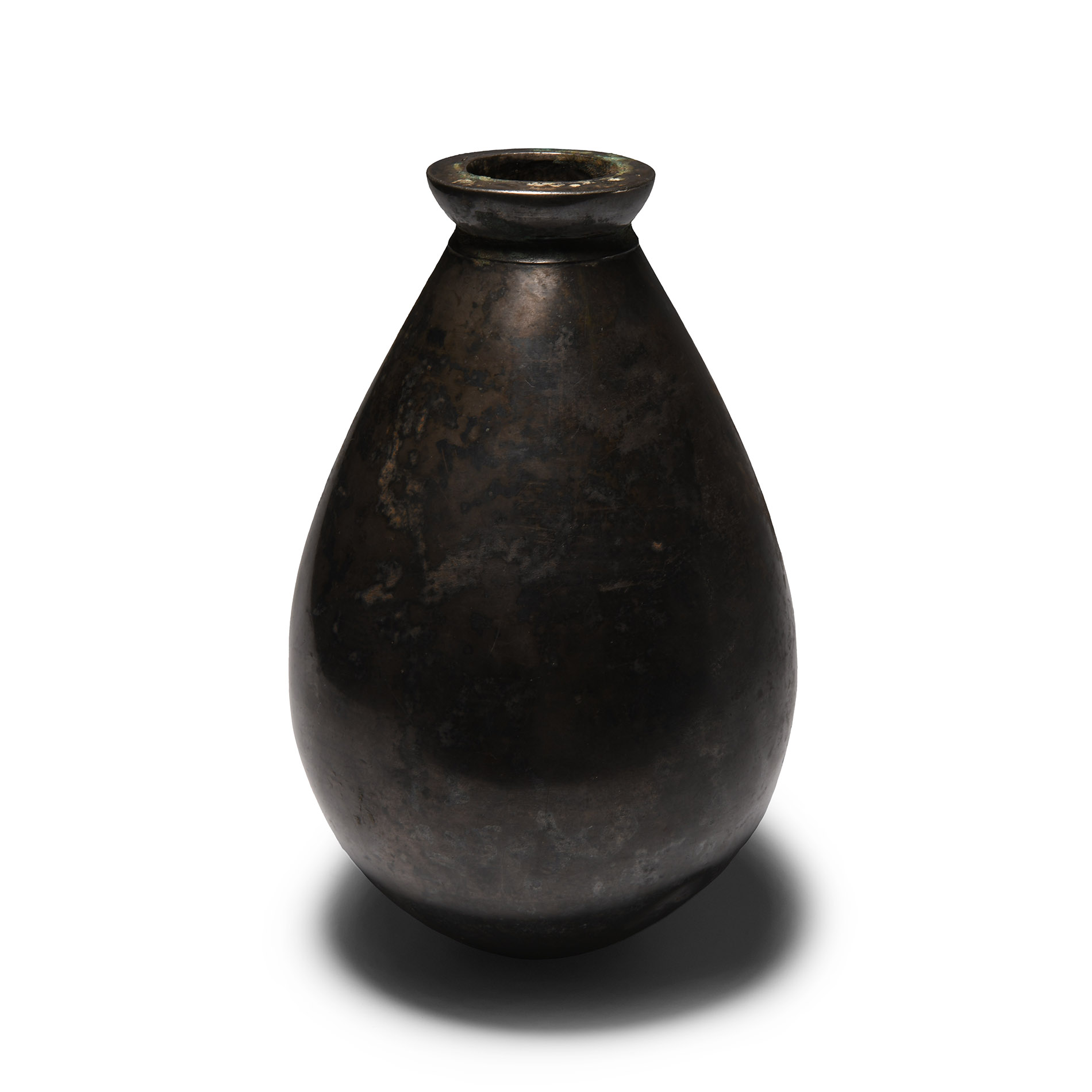
Sassanian Bulbous Silver Rhyton
7TH CENTURY A.D.
6 3/4 in. (485 grams, 17 cm).
Piriform body with applied thick-rimmed mouth, pierced at the base.
ProvenanceLondon, UK gallery, 1971-early 2000s.
This lot has been checked against the Interpol Database of stolen works of art and is accompanied by search certificate no.10947-181165.
TimeLine Auctions follows a vetting process to ensure the authenticity and legality of all items, reinforcing our commitment to integrity and responsible trading. Each antiquity, antique, and coin lot undergoes thorough examination by a vetting committee of at least ten external specialists, professional trade association members, scientists, and archaeologists: Our Vetting Process
AUCTIONS:
TimeLine is a leading auction house specialising in antiquities, ancient art, collectables, natural history, coins, medals, and books. Our auctions offer museums, collectors, historians, and enthusiasts the opportunity to acquire unique and historically significant pieces.
LOT 0283
Sassanian Bulbous Silver Rhyton
Estimate £7,000 - 9,000€8,120 - 10,440 (for guidance only)$9,450 - 12,150 (for guidance only)
-
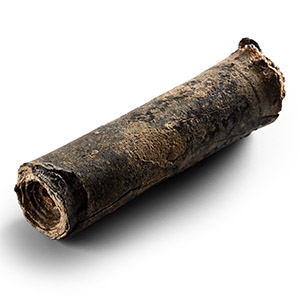
Aramaic Jewish Lead Magic Scroll
2nd-8th century A.D.Sold for (Inc. bp): £1,950
Rectangular lead sheet tightly coiled into a scroll with inked Aramaic text to one face. 59 grams, 58 mm
Collected from 1970-1999. From the collection of the late Mr S.M., London, UK. -
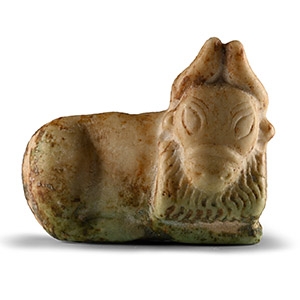
Sumerian Marble Bull Amulet
2nd millennium B.C.Sold for (Inc. bp): £2,340
Carved as a recumbent bull with head turned facing, band to the muzzle and dewlap beneath; pierced vertically at the shoulders for suspension. 38.9 grams, 51 mm
Dr S. McCutcheon, Houston, Texas, USA, prior to 1980. Acquired by the current owner from the above. This lot has been checked against the Interpol Database of stolen works of art and is accompanied by search certificate no.11964-209617. -
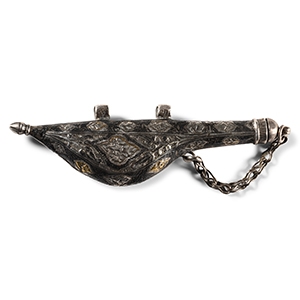
Safavid Silver and Niello Perfume Bottle
16th-17th century A.D.Estimate: £300 - 400 (+bp*)
Opening Bid: £150
With facetted neck, asymmetrical body and knop finial; two polyhedral suspension loops, domed stopper on a short chain; nielloed and parcel-gilt surface with reserved foliate panels. 16.2 grams, 96 mm
London, UK gallery, 1971-early 2000s.
