
Loading, please wait...
LOT 0928
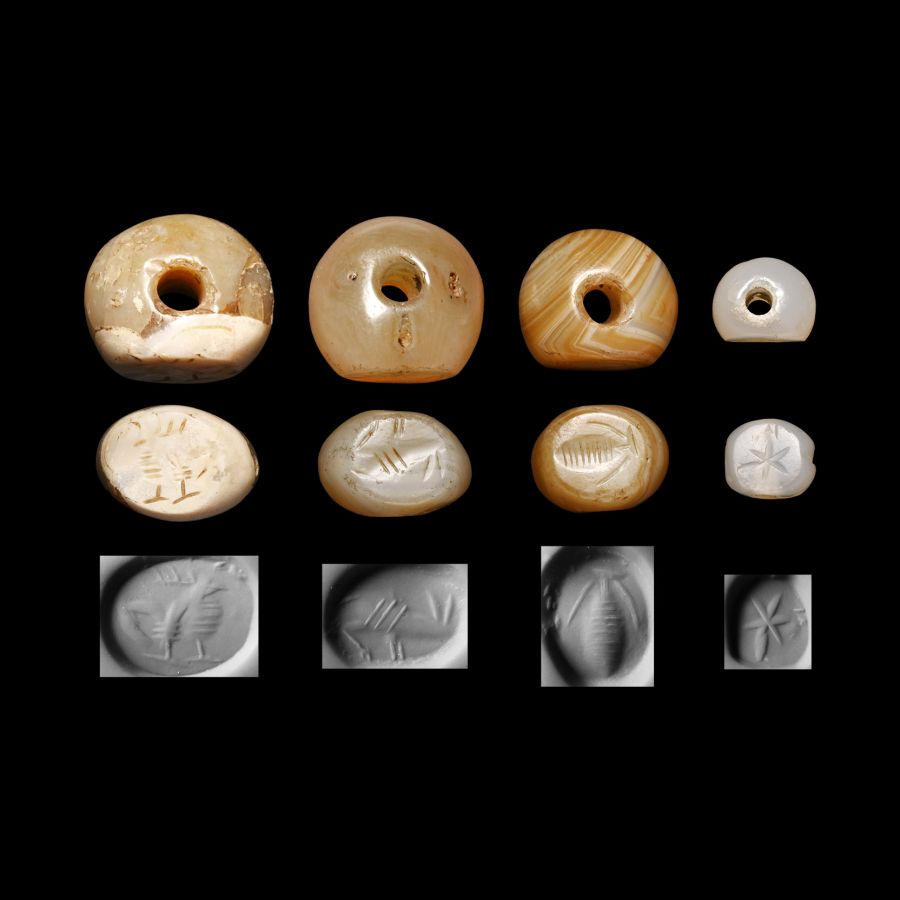
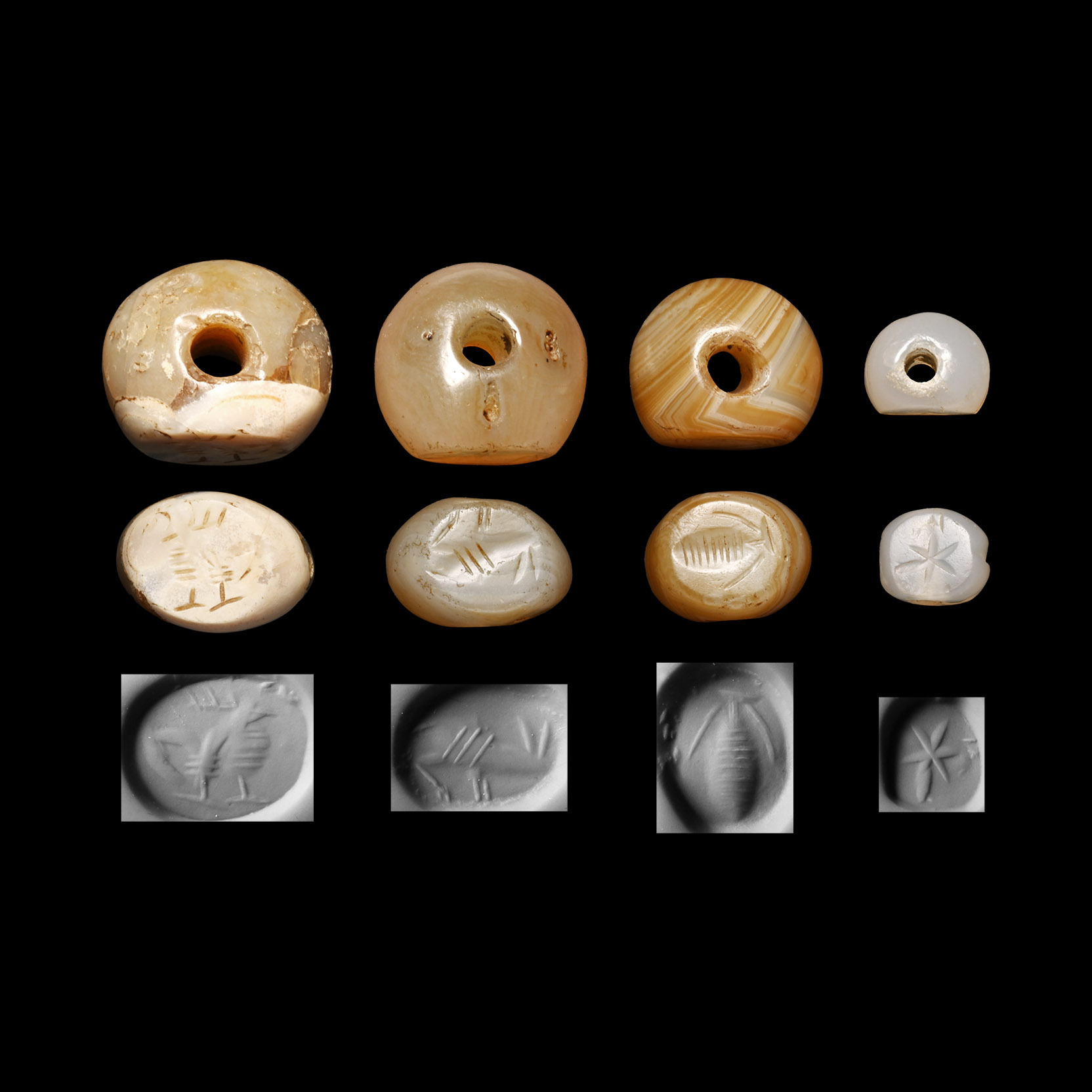
Sassanian Agate Stamp Seal Collection
3RD-7TH CENTURY A.D.
3/8 - 3/4 in. (22.1 grams total, 11-21 mm).
Each with pierced body; engraved to the underside with an amphora, a hare, a bird and a star. [4, No Reserve]
ProvenanceAcquired 1970s-1996.
Property of a North American collector.
London collection, 2016.
See Gyselen, R., Sasanian Seals and Sealings in the A. Saeedi Collection, Acta Iranica 44, Herent, 2007.
CONDITIONTimeLine Auctions follows a vetting process to ensure the authenticity and legality of all items, reinforcing our commitment to integrity and responsible trading. Each antiquity, antique, and coin lot undergoes thorough examination by a vetting committee of at least ten external specialists, professional trade association members, scientists, and archaeologists: Our Vetting Process
AUCTIONS:
TimeLine is a leading auction house specialising in antiquities, ancient art, collectables, natural history, coins, medals, and books. Our auctions offer museums, collectors, historians, and enthusiasts the opportunity to acquire unique and historically significant pieces.
-
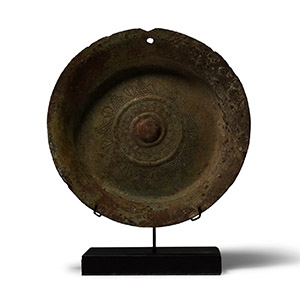
Western Asiatic Bronze Decorated Dish
3rd-2nd century B.C.Estimate: £400 - 600 (+bp*)
Opening Bid: £222
With carinated sidewall and everted rim, central boss, incised rosette and surrounding hatched panels and palmettes; mounted on a custom-made stand. 217 grams, 16 cm wide (390 grams total, 19.5 cm including high including stand)
Collected from 1979-1999. From the collection of the late Mr S.M., London, UK. -
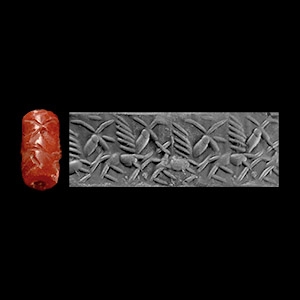
Western Asiatic Carnelian Cylinder Seal with Animals
Circa 1st millennium B.C.Sold for (Inc. bp): £131
Engraved with a frieze of advancing winged quadrupeds; drilled vertically for suspension; accompanied by a museum-quality impression. 1.88 grams, 16 mm
Acquired on the UK art market. Property of a Ruislip, UK, gentleman, by inheritance. -
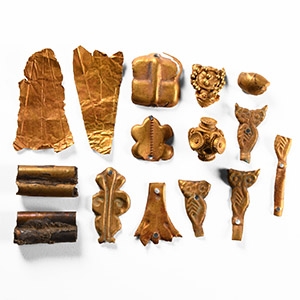
Western Asiatic Gold Artefact Collection
1st millennium B.C. and laterSold for (Inc. bp): £286
Mainly comprising sheet-gold beads and decorative elements, including double tubular beads, domes, lotiform ornaments, a spherical bead with spool-shaped and filigree ornament, together with other types. 6.45 grams total, 8-30 mm
UK gallery, early 2000s.
