
Loading, please wait...


LOT 1788
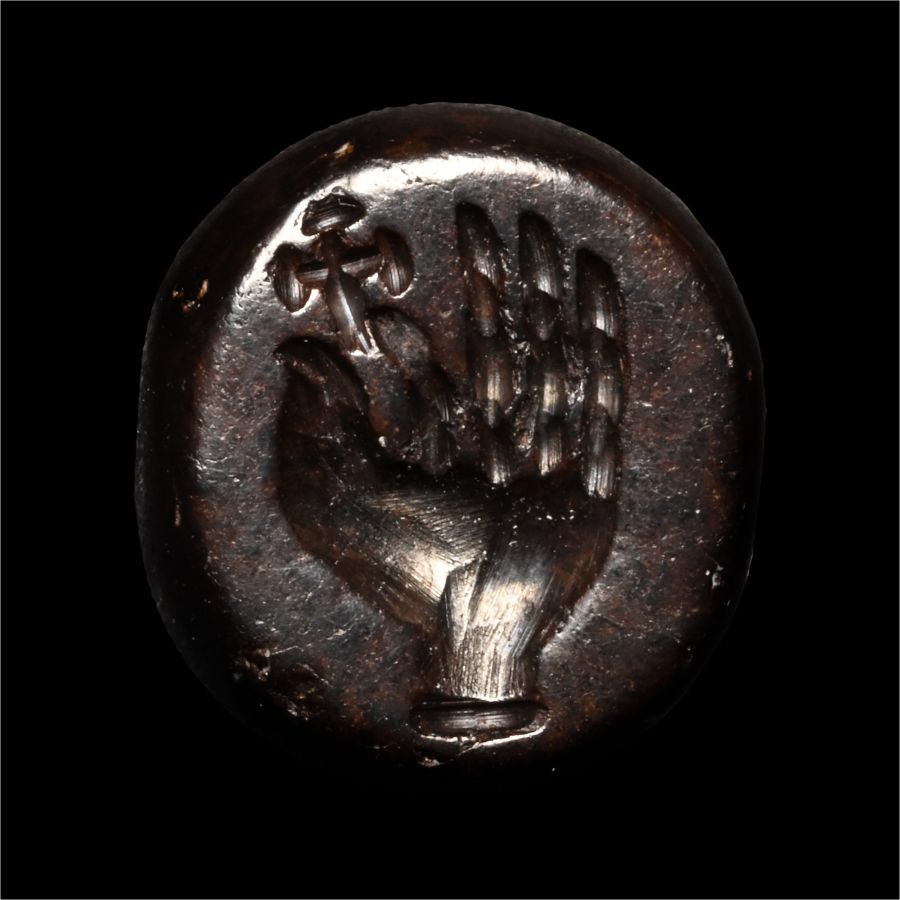
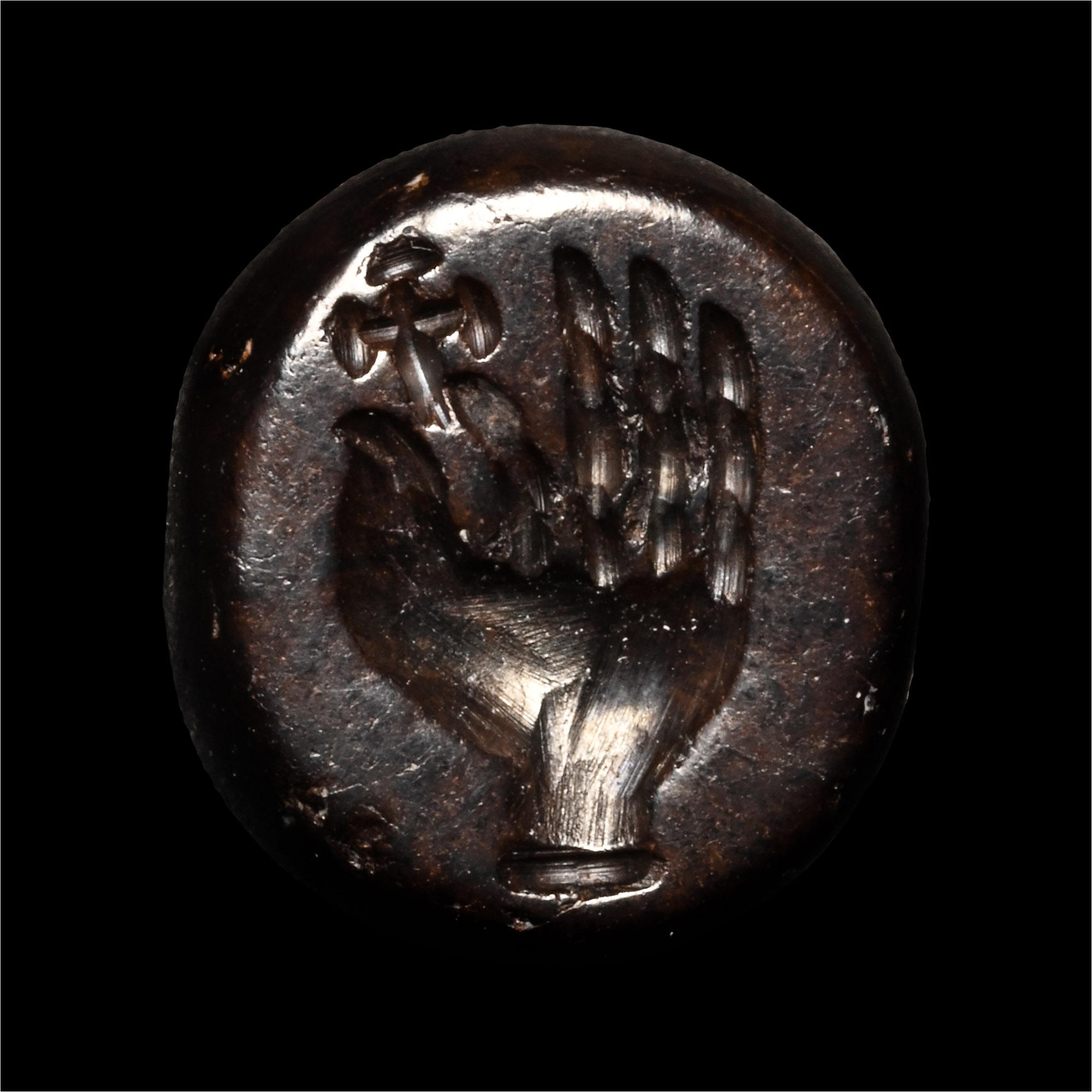
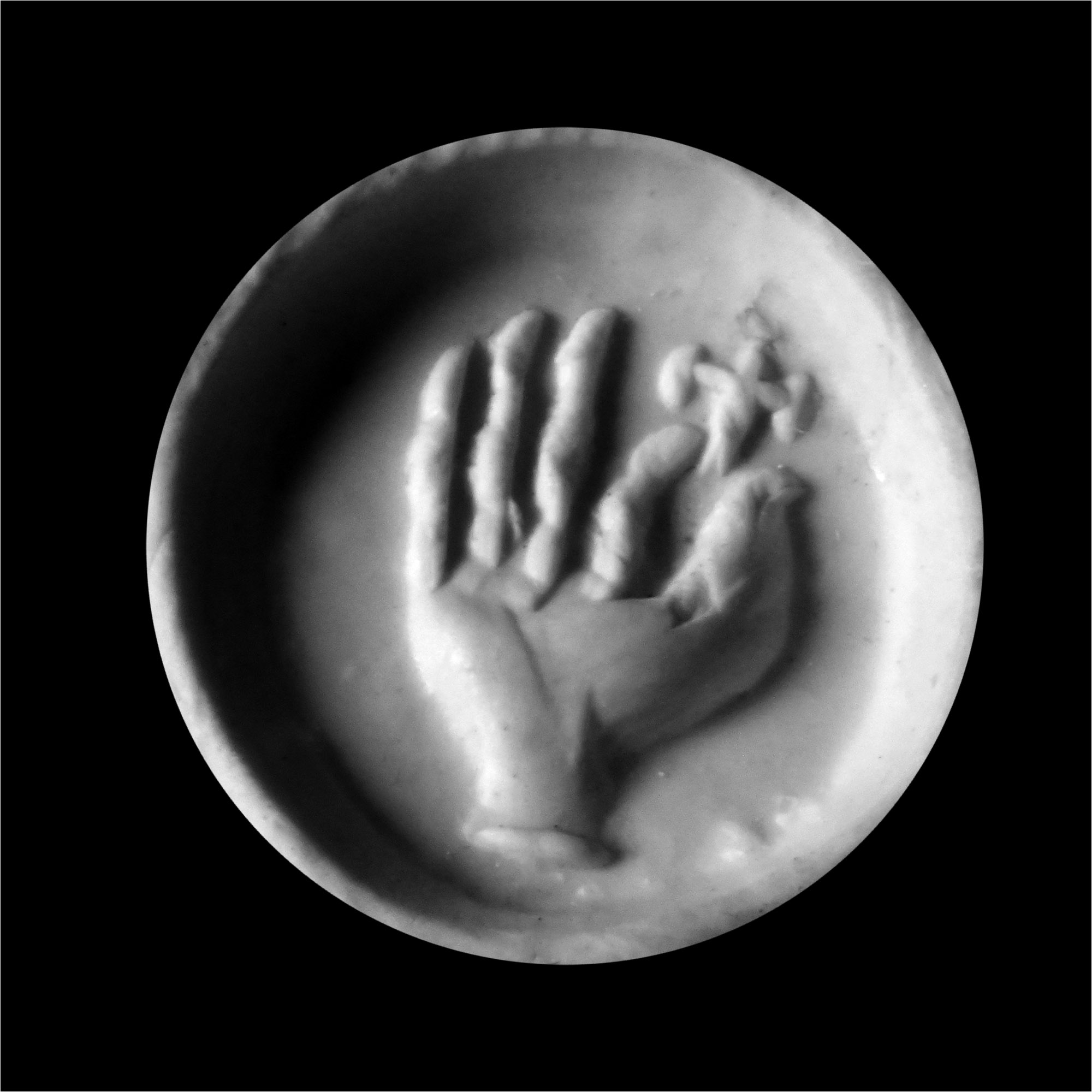
Sasanian Stone Stamp Seal with Hand
CIRCA 8TH CENTURY A.D.
1/2 in. (3.84 grams, 13 mm).
Plano-convex in section with lateral transverse piercing; incuse motif of a hand with thumb and forefinger holding a cross potent; supplied with an impression.
ProvenancePrivate collection of Kal Noselson, New York, acquired between 1976 and the late 1990s; thence by descent.
CONDITIONTimeLine Auctions follows a vetting process to ensure the authenticity and legality of all items, reinforcing our commitment to integrity and responsible trading. Each antiquity, antique, and coin lot undergoes thorough examination by a vetting committee of at least ten external specialists, professional trade association members, scientists, and archaeologists: Our Vetting Process
AUCTIONS:
TimeLine is a leading auction house specialising in antiquities, ancient art, collectables, natural history, coins, medals, and books. Our auctions offer museums, collectors, historians, and enthusiasts the opportunity to acquire unique and historically significant pieces.
LOT 1788
Sasanian Stone Stamp Seal with Hand
Estimate £100 - 140€120 - 160 (for guidance only)$140 - 190 (for guidance only)
-
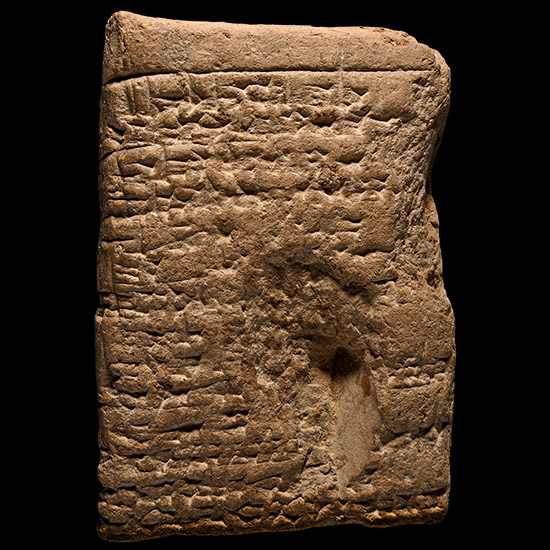
Sumerian Cuneiform Tablet with Hymn to the Sun God Utu
3rd millennium B.C.Estimate: £4,000 - 6,000 (+bp*)
Opening Bid: £2,000
An important tablet displaying a total of thirty lines of cuneiform text across both faces; reverse with an otherwise unknown hymn to the Sumerian sun-god, Utu; the text on the obverse also a hymn and probably to the same sun-god; supplied with a typed and signed scholarly note by W.G. Lambert, late Professor of Assyriology, University of Birmingham, 1970- 1993, which states 'Clay Tablet, 86 x 61 mm., with a total of 30 lines of Sumerian cuneiform on obverse and reverse. The obverse has 14 lines followed by a ruling. The reverse has an uninscribed upper portion, then a section of 16 lines, ending on the upper edge. This section is quite well preserved, that on the obverse is more damaged. The second section is part of a hymn to the Sumerian sun-god Utu, apparently not otherwise known. The text on the obverse is also a hymn, perhaps to the same sun-god.'; in a custom-made presentation case replicating an old quarter-bound book with marbled boards. 199 grams, 86 mm
Part of a specialised collection of cuneiform texts, the property of a London gentleman; examined by Professor Wilfrid George Lambert FBA (1926-2011), historian, archaeologist, and specialist in Assyriology and Near Eastern archaeology, in the late 1980s and early 1990s; this small collection is exceptional for the variety of types, including some very rare and well-preserved examples. TimeLine Auctions, 25 February 2020, no.223 (Sold for (Inc. bp): £6,875). Private collection, Europe. Accompanied by a copy of Professor Lambert’s notes and a two-page cataloguing report. This lot has been checked against the Interpol Database of stolen works of art and is accompanied by search certificate no.13427-259928.
Shamash (Utu in Sumerian) was the Mesopotamian sun god who, alongside the moon god Sin (Sumerian: Nanna) and Ishtar (Sumerian: Inanna), the goddess of love, formed an astral triad of deities. Utu was the son of Sin, and his consort was originally Aya, though she was later identified with Ishtar. As a solar deity, Utu wielded the power of light over darkness and evil. In this capacity, he was worshipped as the god of justice and equity, serving as judge to both gods and men. According to legend, the Babylonian king Hammurabi received his code of laws from Shamash. His emblems include the solar disc - featuring an inner four-pointed star from which beams of light radiate and a standard bearing this same disc atop a pole, often held by a bull-man. At night, Utu became the judge of the underworld. -
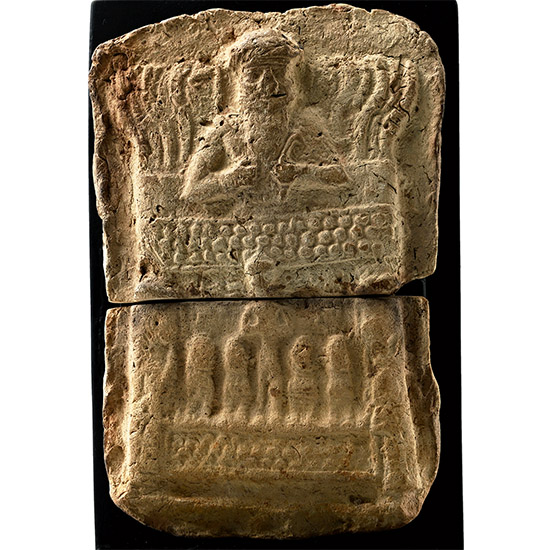
Old Babylonian Terracotta Plaque with God in Chariot Drawn by Lions
Early 2nd millennium B.C.Estimate: £400 - 600 (+bp*)
Bids: 3 | Current Bid: £160
Rectangular in plan with raised and moulded design: facing bearded figure with headdress and weapons gripped in his hands on his chest, joined at his waist to a three-tier band of pellets, and flanked by undulating flames; beneath the band a smaller facing bust above a line of four figures on a dais; mounted on a custom-made stand. 655 grams total, 15.6 cm high including stand
London, UK, art market, 1980s. Private collection, London, UK. -
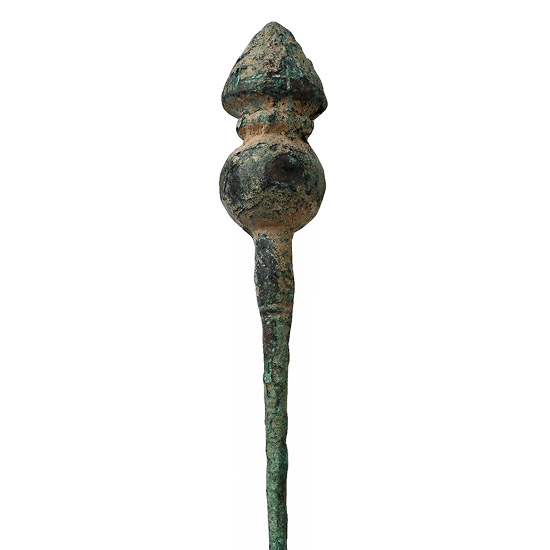
Large Luristan Bronze Poppy-Headed Cloak Pin
8th-7th century B.C.Estimate: £60 - 80 (+bp*)
Opening Bid: £5
Comprising a substantial round-sectioned pin with a bulbous poppy-shaped conical head. 145 grams, 30.3 cm
Acquired on the UK art market since the 1960s. From the private collection of Mr J.P.H., a Woolwich, UK, collector, his collection formed since the 1960s.
