
Loading, please wait...


LOT 1580
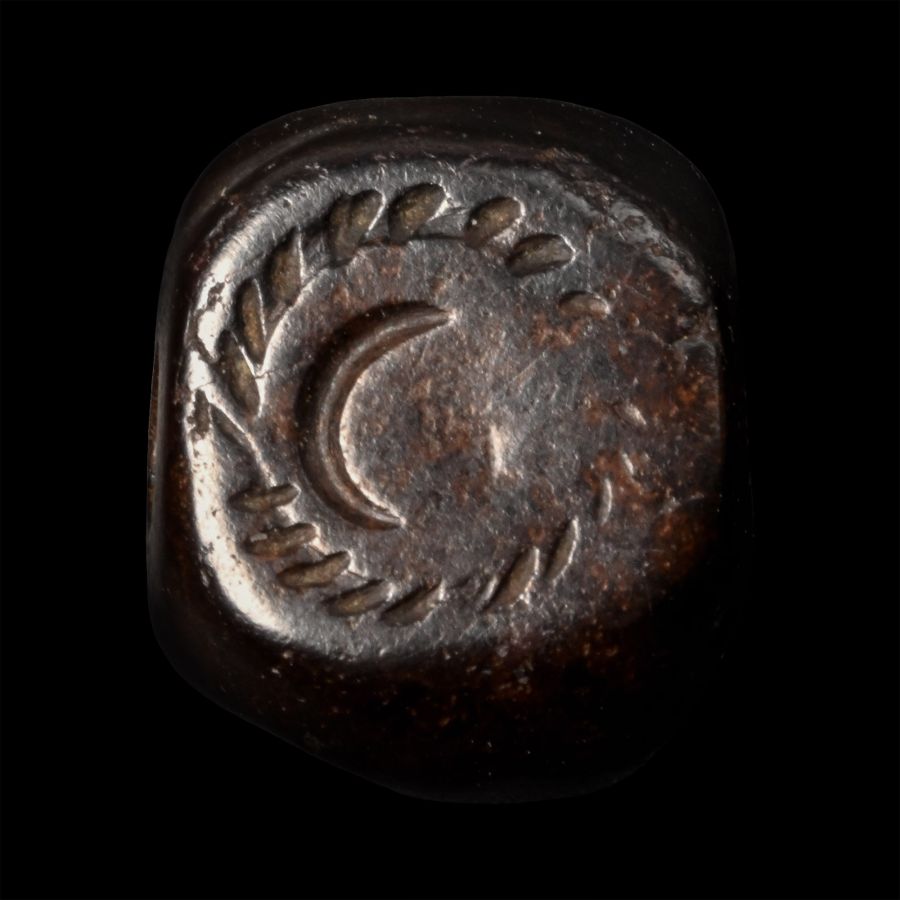
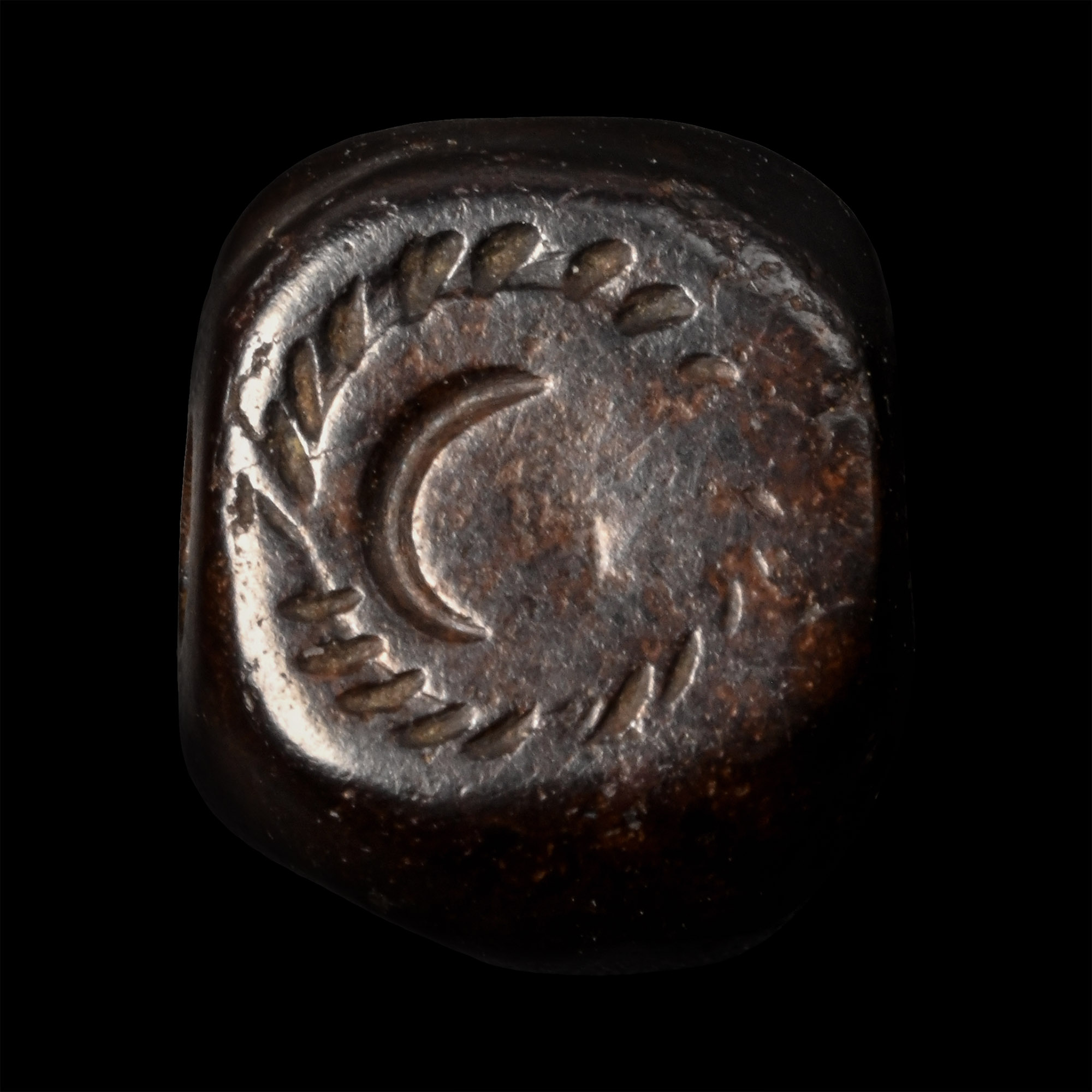
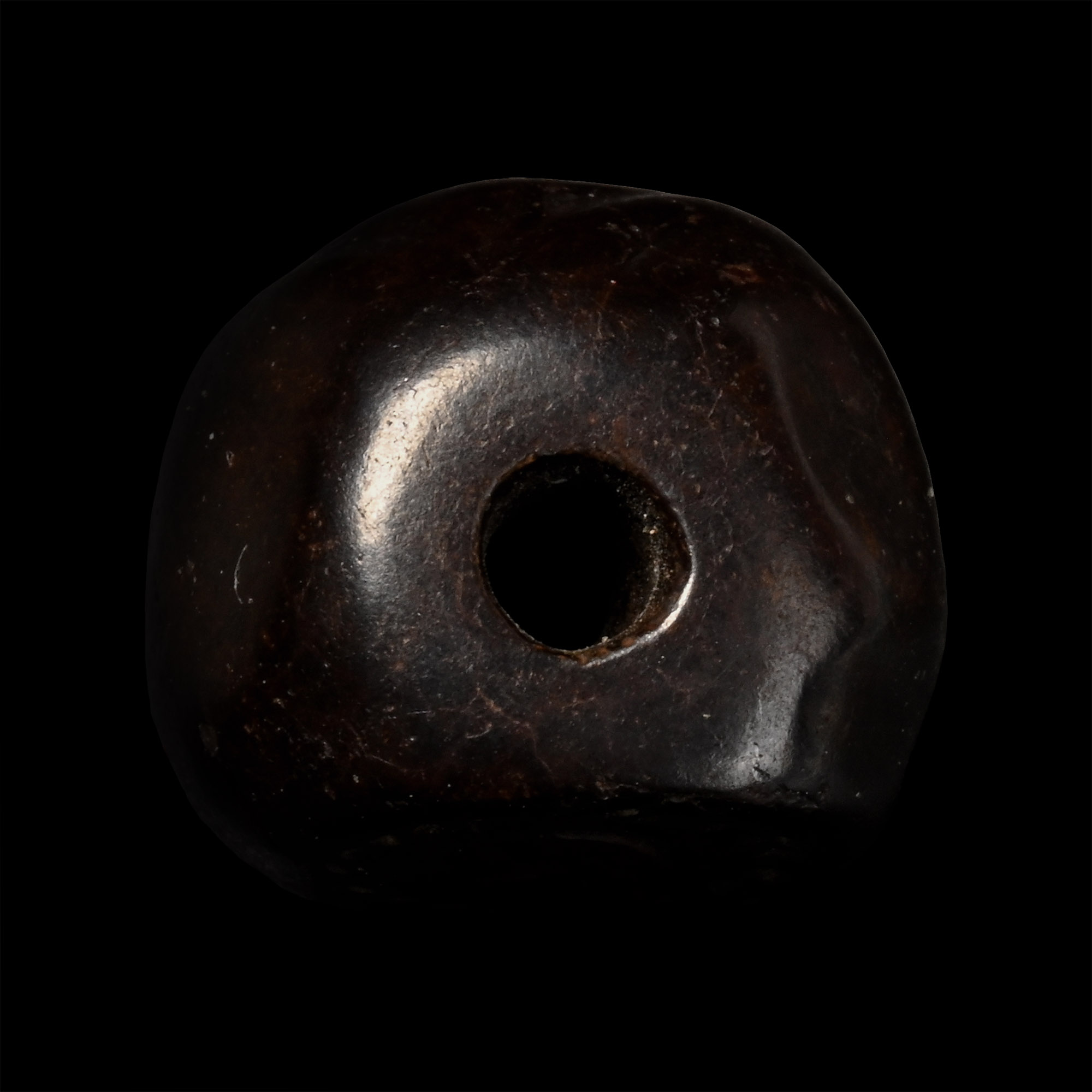
Sasanian Stamp Seal with Crescent Moon within Wreath
CIRCA 3RD-7TH CENTURY A.D.
7/8 - 1 1/8 in. (28.1 grams total, 23-29 mm).
Haematite domed seal with domed top, four flat sides, incuse crescent moon and wreath to underside. [4, No Reserve]
ProvenanceFrom the deceased estate of a specialist collector of seals, Woodbury, Connecticut, USA.
From a private collection acquired in 2006.
TimeLine Auctions follows a vetting process to ensure the authenticity and legality of all items, reinforcing our commitment to integrity and responsible trading. Each antiquity, antique, and coin lot undergoes thorough examination by a vetting committee of at least ten external specialists, professional trade association members, scientists, and archaeologists: Our Vetting Process
AUCTIONS:
TimeLine is a leading auction house specialising in antiquities, ancient art, collectables, natural history, coins, medals, and books. Our auctions offer museums, collectors, historians, and enthusiasts the opportunity to acquire unique and historically significant pieces.
LOT 1580
Sasanian Stamp Seal with Crescent Moon within Wreath
Estimate £40 - 60€46 - 70 (for guidance only)$54 - 81 (for guidance only)
-
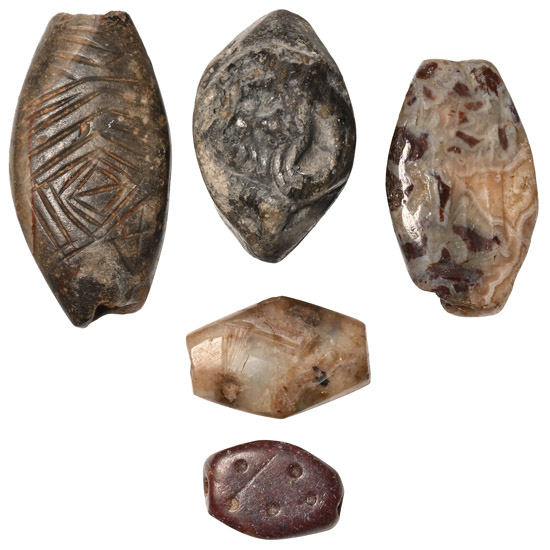
Western Asiatic Engraved Bead Collection
2nd-1st millennium B.C.Estimate: £100 - 140 (+bp*)
Bids: 1 | Current Bid: £5
Including fusiform and other types with concentric lozenges, profile standing figure with staff and other motifs. 20 grams total, 14-31 mm
From the private collection of a European gentleman (1942-2024), formed since the 1970s. -
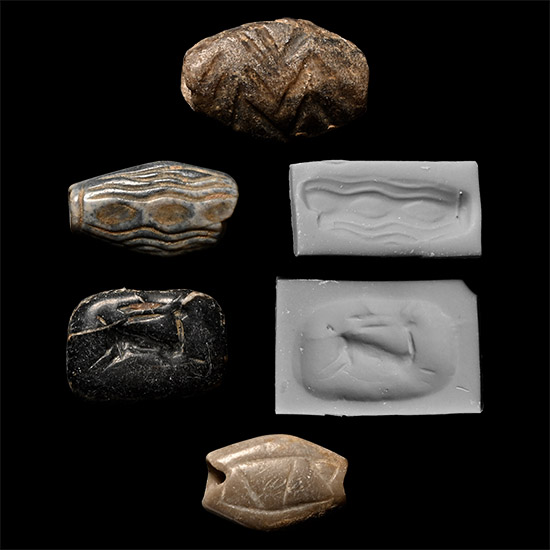
Western Asiatic Engraved Stone Amuletic Bead Group
2nd-1st millennium B.C.Estimate: £50 - 70 (+bp*)
Opening Bid: £5
Including fusiform and other types with running beast, gryphon, and other motifs; three supplied with a museum-quality impression. 7.97 grams total, 16-21 mm
From the private collection of a European gentleman (1942-2024), formed since the 1970s. -
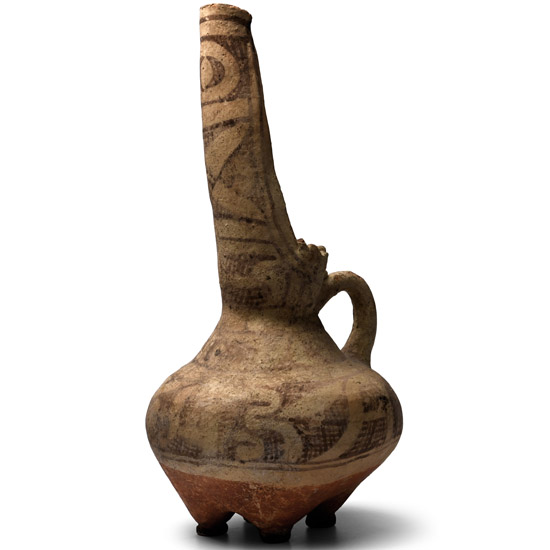
Western Asiatic Painted Terracotta Vessel
9th-8th century B.C.Estimate: £200 - 300 (+bp*)
Opening Bid: £100
Bulbous body with four stub legs, tall neck and internal strainer, tall scooped edge to the rim, loop handle to the rear; body and neck painted with geometric motifs, red paint on the base and legs. 1.16 kg, 32.3 cm
UK collection, 1990s. Acquired on the UK art market, before 2000. Private collection, Mr M.V., a London-based businessman.
Artefacts from Amlash date from the late second millennium B.C. through to the Partho-Sasanian period, with most dated to the 9th and 8th centuries B.C. Zoomorphic drinking or ritual vessels are abundant in Amlash pottery and usually feature depictions of animals common to that region. Such vessels have been recovered across Mesopotamia and Anatolia, and they were known as Bibru. They were produced as ceremonial drinking vessels, dedicated to specific deities, but they might also have served as drinking vessels for the social elite and royal family members.
