
Loading, please wait...
LOT 0258
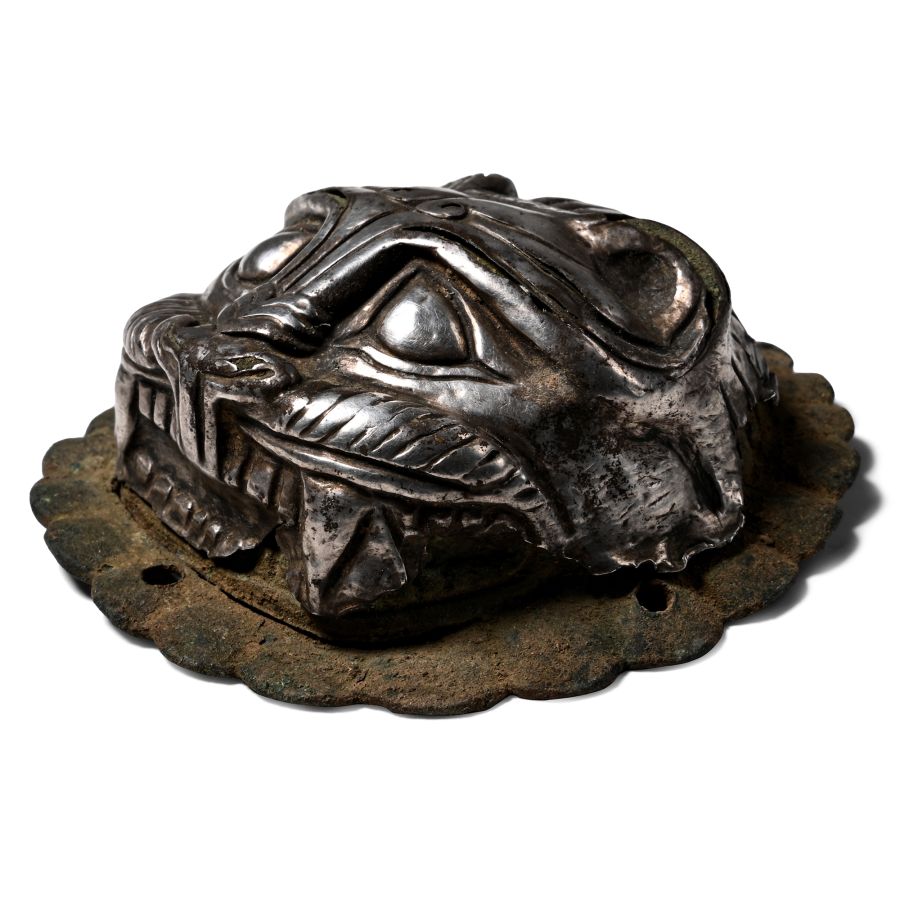
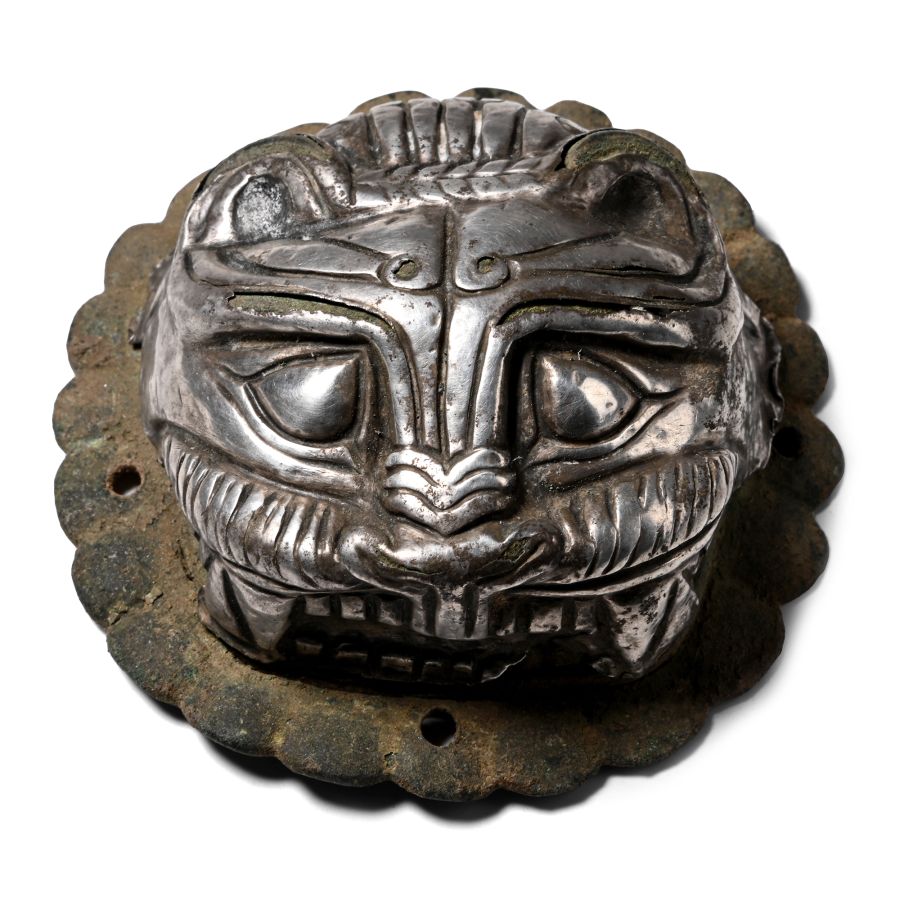
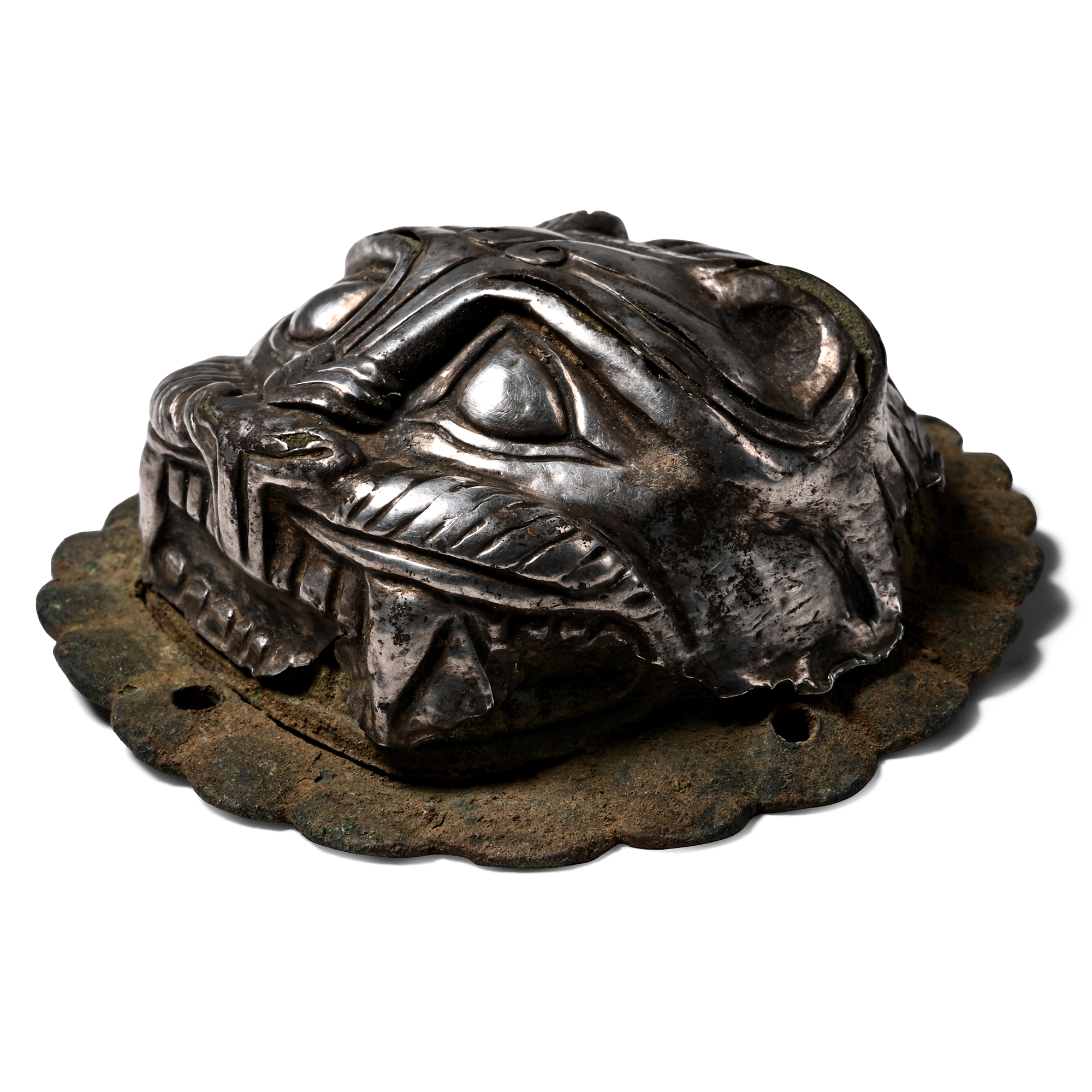
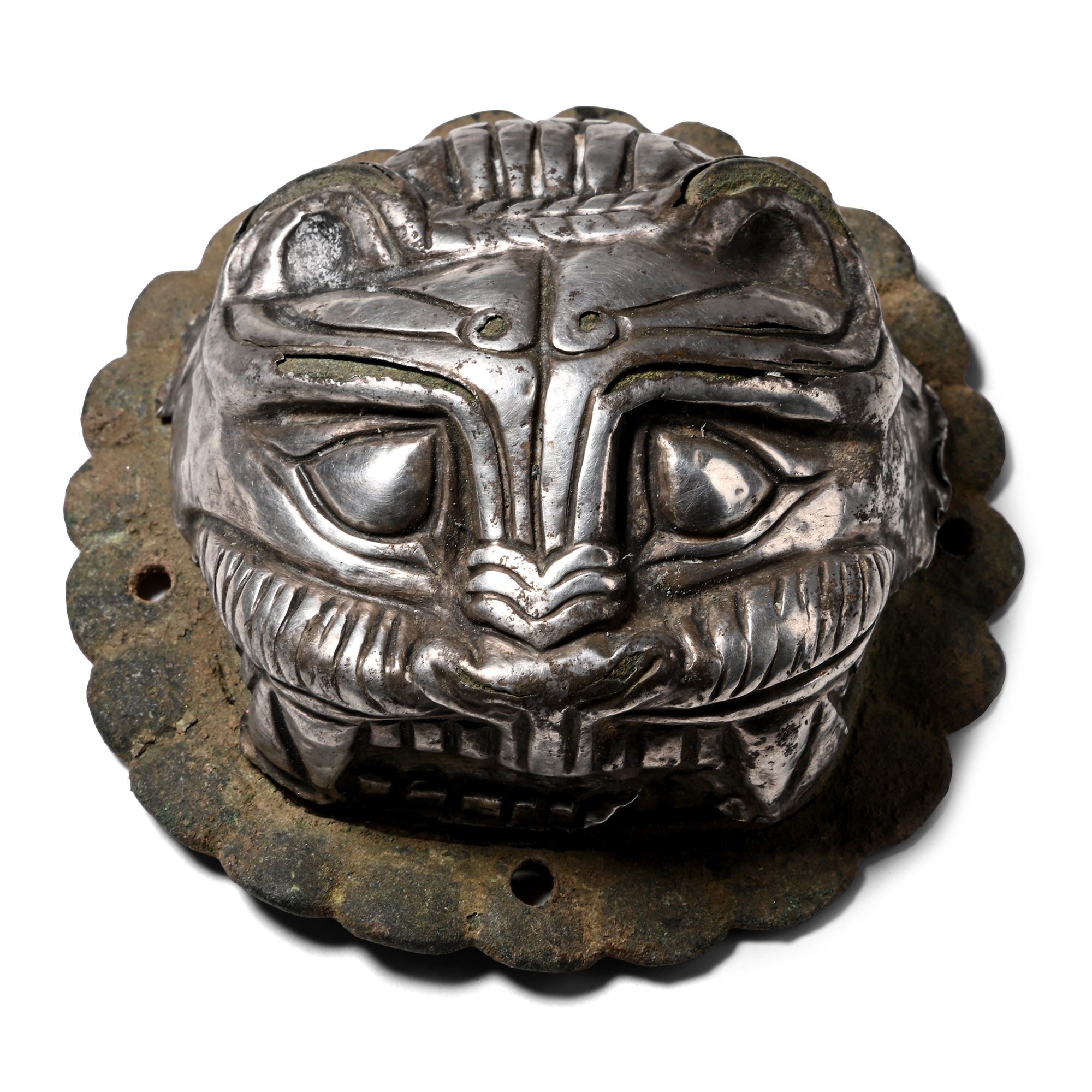
Sasanian Silver-Plated Lion Shield Boss
6TH-7TH CENTURY A.D.
3 in. (80.9 grams, 78 mm).
With stylised repoussé head and face detailing showing two faces, one to the side and the other to the top, the mane represented by a scalloped border; sheet-silver cladding to the head over bronze; pierced for attachment.
ProvenanceEx London, UK, gallery, 1971-early 2000s.
London, UK, collection.
Cf. similar in the British Museum under accession number 134358; cf. Grabar, O., Sasanian Silver: Late Antique and Early Mediaeval Arts of Luxury From Iran, Michigan, 1967, p.129, no.46, for type.
CONDITIONTimeLine Auctions follows a vetting process to ensure the authenticity and legality of all items, reinforcing our commitment to integrity and responsible trading. Each antiquity, antique, and coin lot undergoes thorough examination by a vetting committee of at least ten external specialists, professional trade association members, scientists, and archaeologists: Our Vetting Process
AUCTIONS:
TimeLine is a leading auction house specialising in antiquities, ancient art, collectables, natural history, coins, medals, and books. Our auctions offer museums, collectors, historians, and enthusiasts the opportunity to acquire unique and historically significant pieces.
LOT 0258
Sasanian Silver-Plated Lion Shield Boss
Estimate £1,000 - 1,400€1,160 - 1,620 (for guidance only)$1,350 - 1,890 (for guidance only)
-
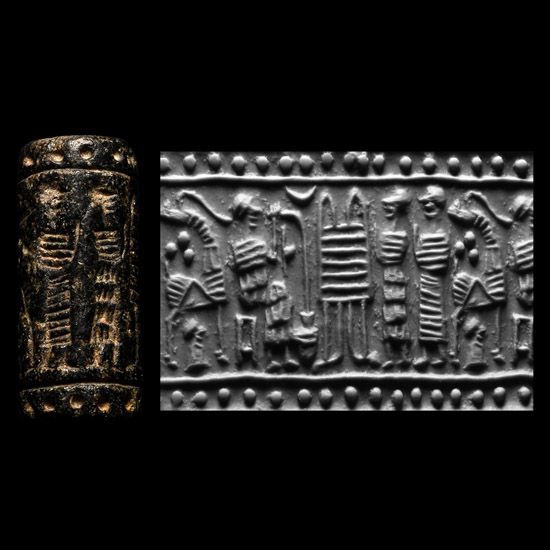
Cappadocian Stone Cylinder Seal with Court Scene
Circa 2000-1900 B.C.Sold for (Inc. bp): £1,040
Frieze including two standing attendants in flounced floor-length robes before a laden table and a seated figure in similar robes, the seated figure drinking from a vessel through a drinking pipe, behind him a stag with a small animal between its legs, a border of pellets above and below; supplied with a museum-quality impression. 21.9 grams, 40 mm
Acquired in the mid 1980s-1990s. Private collection, Switzerland, thence by descent. Private collection, since the late 1990s. -
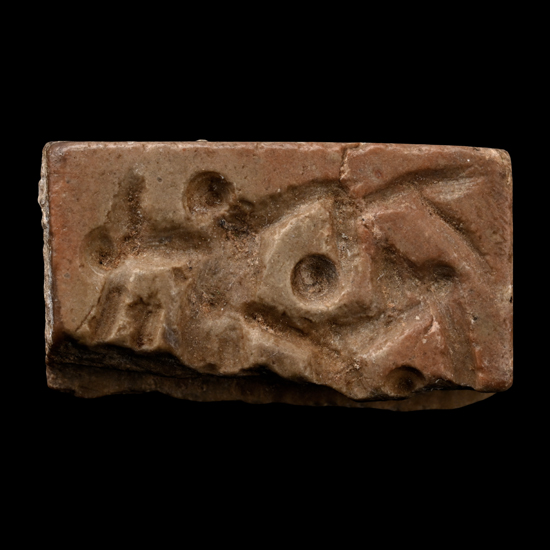
Elamite Brown Stone Stamp Seal Fragment
2nd millennium B.C.Sold for (Inc. bp): £13
Rectangular type with incuse animal frieze to the underside; supplied with a museum-quality impression. 10.45 grams, 30 mm
From the private collection of a European gentleman (1942-2024), formed since the 1970s. -
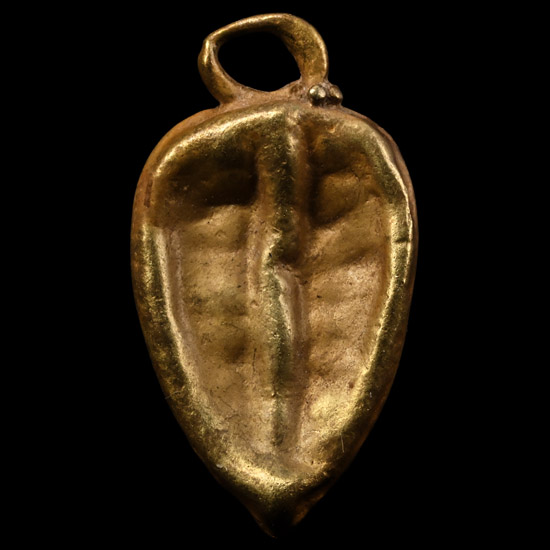
Western Asiatic Gold Heart-Shaped Pendant
1st millennium B.C.Sold for (Inc. bp): £52
Hollow-formed pendant with a raised mid-rib and edge on both sides. 0.56 grams, 13 mm
Ex private British collection, formed in the 1980s. Property of a West Northamptonshire, UK, gentleman.
