
Loading, please wait...


_900x900.jpg "Sasanian Silver-Gilt Jar with Dancing Girls")
_200x200.jpg "Sasanian Silver-Gilt Jar with Dancing Girls")
_900x900.jpg "Sasanian Silver-Gilt Jar with Dancing Girls")
_200x200.jpg "Sasanian Silver-Gilt Jar with Dancing Girls")
_900x900.jpg "Sasanian Silver-Gilt Jar with Dancing Girls")
_200x200.jpg "Sasanian Silver-Gilt Jar with Dancing Girls")
.jpg "Sasanian Silver-Gilt Jar with Dancing Girls")
.jpg "Sasanian Silver-Gilt Jar with Dancing Girls")
.jpg "Sasanian Silver-Gilt Jar with Dancing Girls")
LOT 0253
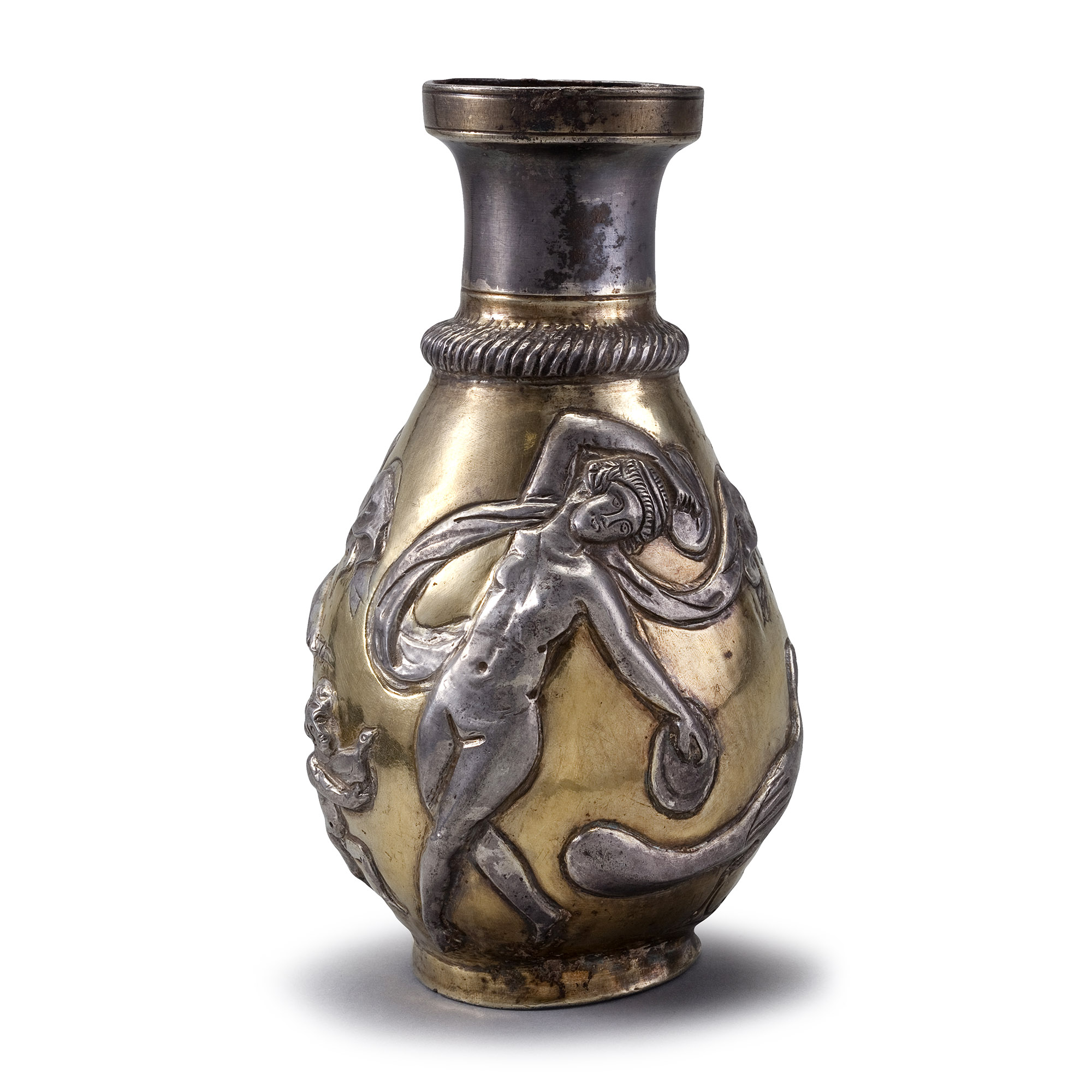
Sasanian Silver-Gilt Jar with Dancing Girls
6TH-7TH CENTURY A.D.
7 3/8 in. (481 grams, 18.7 cm).
Piriform in profile with flared foot, thick ropework collar above the shoulder, socketted rim; repoussé frieze depicting three nude dancing girls in vigorous motion with draped swags of cloth and holding cymbals; between, a peacock, small boy with a vase and another holding a dove; old collector's labels to underside.
ProvenancePrivate collection, 1960s.
Accompanied by a report by Professor François de Blois, Affiliated Researcher at the Faculty of Asian and Middle Eastern Studies, University of Cambridge.
Accompanied by a positive scientific statement from Striptwist Limited, a London-based company run by historical precious metal specialist Dr Jack Ogden, reference number 170163.
Accompanied by an academic report by Dr Raffaele D'Amato.
This lot has been checked against the Interpol Database of stolen works of art and is accompanied by search certificate number no.12482-229825.
This lot has been cleared against the Art Loss Register database, and is accompanied by an illustrated lot declaration signed by the Head of the Antiquities Department, Dr Raffaele D'Amato.
Cf. Godard, A., The art of Iran, Paris, 1962; Ghirsman, R., Persian Art. The Parthian and Sassanian Dynasties, New York, 1962, figs.256, 404 (Italian Edition, 1962) for parallels; Ghirshman, R., ‘Notes Iraniennes V, Scènes de banquet sur l'argenterie sassanide’ in Artibus Asiae, Vol. 16, No.1/2 (1953), pp.4+51-76, figs.5-6-7-9, for further parallels; see also British Museum inv. no.124094 (Province of Mazandaran), in Demange, F., Les Perses sassanides. Fastes d'un empire oublié (224-642), Paris, 2007, cat.38, p.101; Minardi, M., ‘A Four-Armed Goddess from Ancient Chorasmia: History, Iconography and Style of an Ancient Chorasmian Icon,’ in Iran, 51:1, pp.111-143.
CONDITIONTimeLine Auctions follows a vetting process to ensure the authenticity and legality of all items, reinforcing our commitment to integrity and responsible trading. Each antiquity, antique, and coin lot undergoes thorough examination by a vetting committee of at least ten external specialists, professional trade association members, scientists, and archaeologists: Our Vetting Process
AUCTIONS:
TimeLine is a leading auction house specialising in antiquities, ancient art, collectables, natural history, coins, medals, and books. Our auctions offer museums, collectors, historians, and enthusiasts the opportunity to acquire unique and historically significant pieces.
-
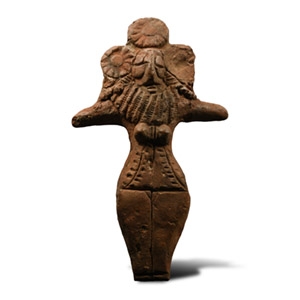
Neo-Hittite Terracotta Fertility Idol
12th-8th century B.C.Sold for (Inc. bp): £468
Standing female with radiating discs flanking the face, elaborate tiered collar. 166 grams, 14.6 cm
Ex London, UK, gallery, 1971-early 2000s. London, UK, collection. This lot has been cleared against the Art Loss Register database, and is accompanied by an illustrated lot declaration signed by the Head of the Antiquities Department, Dr Raffaele D'Amato. -
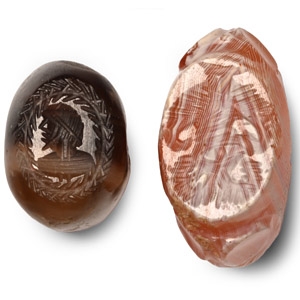
Sasanian Agate Seal Group
3rd-5th century A.D.Sold for (Inc. bp): £390
Comprising: banded agate seal with profile bust within a wreath; pink seal with reserved discs to the flanks. foliage and frond design; accompanied by museum-quality impressions. 7.03 grams total, 14-19 mm
From the collection of a London antiquarian, formed since the 1980s. This lot has been cleared against the Art Loss Register database, and is accompanied by an illustrated lot declaration signed by the Head of the Antiquities Department, Dr Raffaele D'Amato. -
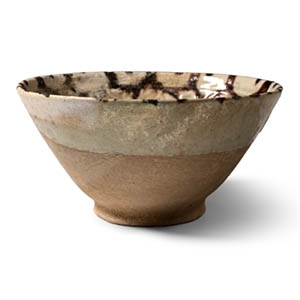
Western Asiatic Decorated White-Glazed Bowl
10th-12th century A.D.Estimate: £300 - 400 (+bp*)
Opening Bid: £150
Part-glazed hemispherical bowl with deep basal ring, iridescent glaze with painted petals to the rim over low-relief palmette motifs, with old inked label with stock number 'CR 336'. 327 grams, 16 cm
Ex London, UK, gallery, 1971-early 2000s. London, UK, collection. This lot has been cleared against the Art Loss Register database, and is accompanied by an illustrated lot declaration signed by the Head of the Antiquities Department, Dr Raffaele D'Amato.
