
Loading, please wait...

LOT 1433
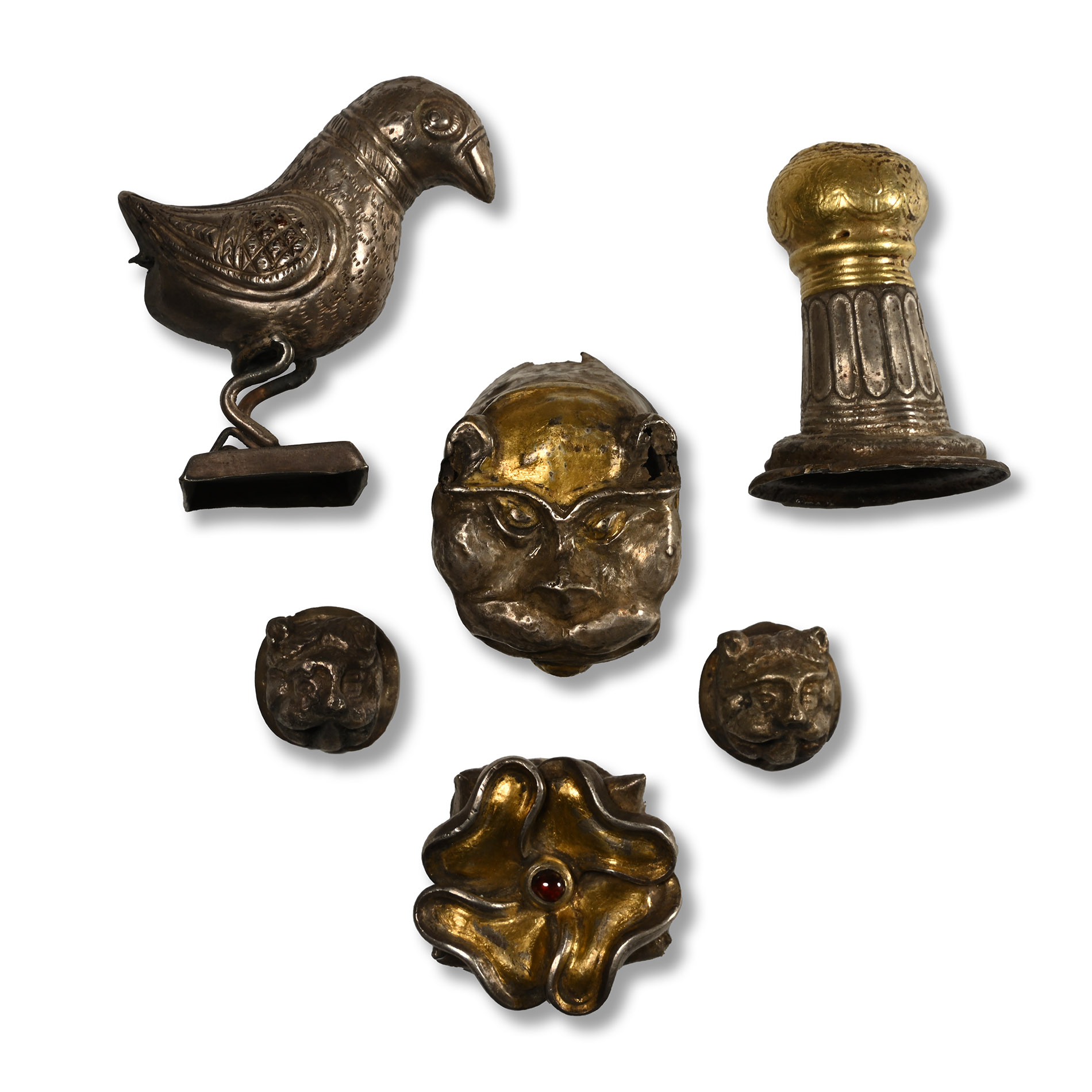
Sasanian Silver Artefact Collection
6TH-7TH CENTURY A.D. AND LATER
3/4 - 2 1/4 in. (138 grams total, 21-58 mm).
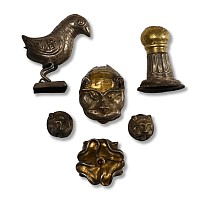
Comprising: hollow-formed bird advancing on a square base; lion-head finial with gilt detailing; fluted finial with gilt knop; quatrefoil finial with central garnet cabochon; two small lion-mask appliqués. [6, No Reserve]
ProvenanceAcquired between 1965-2020.
Private collection, London.
This lot has been cleared against the Art Loss Register database, and is accompanied by an illustrated lot declaration signed by the Head of the Antiquities Department, Dr Raffaele D'Amato.
TimeLine Auctions follows a vetting process to ensure the authenticity and legality of all items, reinforcing our commitment to integrity and responsible trading. Each antiquity, antique, and coin lot undergoes thorough examination by a vetting committee of at least ten external specialists, professional trade association members, scientists, and archaeologists: Our Vetting Process
AUCTIONS:
TimeLine is a leading auction house specialising in antiquities, ancient art, collectables, natural history, coins, medals, and books. Our auctions offer museums, collectors, historians, and enthusiasts the opportunity to acquire unique and historically significant pieces.
-
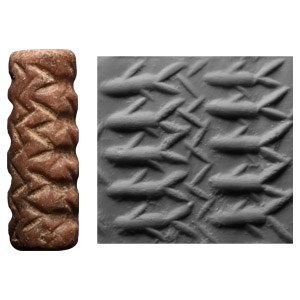
Sumerian Cylinder Seal with Fishes
3rd millennium B.C.Estimate: £300 - 400 (+bp*)
Opening Bid: £150
With frieze of fishes in profile within a field of zigzag lines. 11.5 grams, 37 mm
From the 'S' collection, acquired 1970-1990s. The collection was seen and studied by W.G.Lambert, late Professor of Assyriology at the University of Birmingham, 1970-1993. This lot has been cleared against the Art Loss Register database, and is accompanied by an illustrated lot declaration signed by the Head of the Antiquities Department, Dr Raffaele D'Amato. -
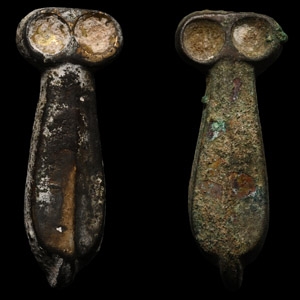
Western Asiatic Silver Phallic Mount Pair
1st millennium B.C.Estimate: £200 - 300 (+bp*)
Opening Bid: £100
Each with leaf-shaped shank and two recessed discs, studs to the reverse. 11.91 grams total, 31 mm each
Acquired before 1983. Ex London gallery, 1990s. This lot has been cleared against the Art Loss Register database, and is accompanied by an illustrated lot declaration signed by the Head of the Antiquities Department, Dr Raffaele D'Amato. -
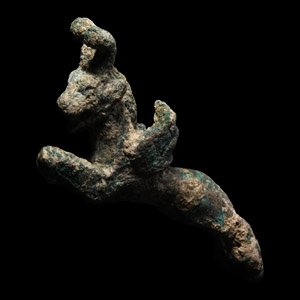
Western Asiatic Bronze Leaping Horned and Winged Lion
Mid 1st millennium B.C.Sold for (Inc. bp): £52
With small wings and curved horns; possibly Kushan. 160 grams, 11.8 cm
Fair condition, one wing chipped.
London collection since the 1980s. Property of a Canadian family. This lot has been cleared against the Art Loss Register database, and is accompanied by an illustrated lot declaration signed by the Head of the Antiquities Department, Dr Raffaele D'Amato.
