
Loading, please wait...
LOT 1678
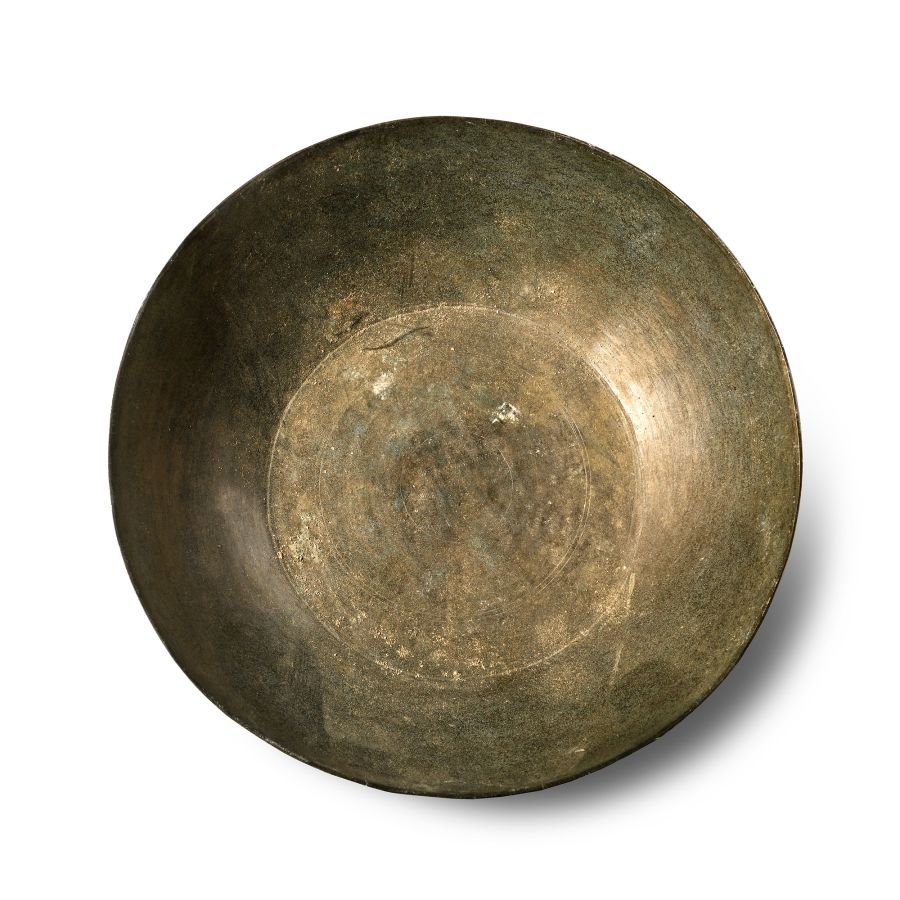
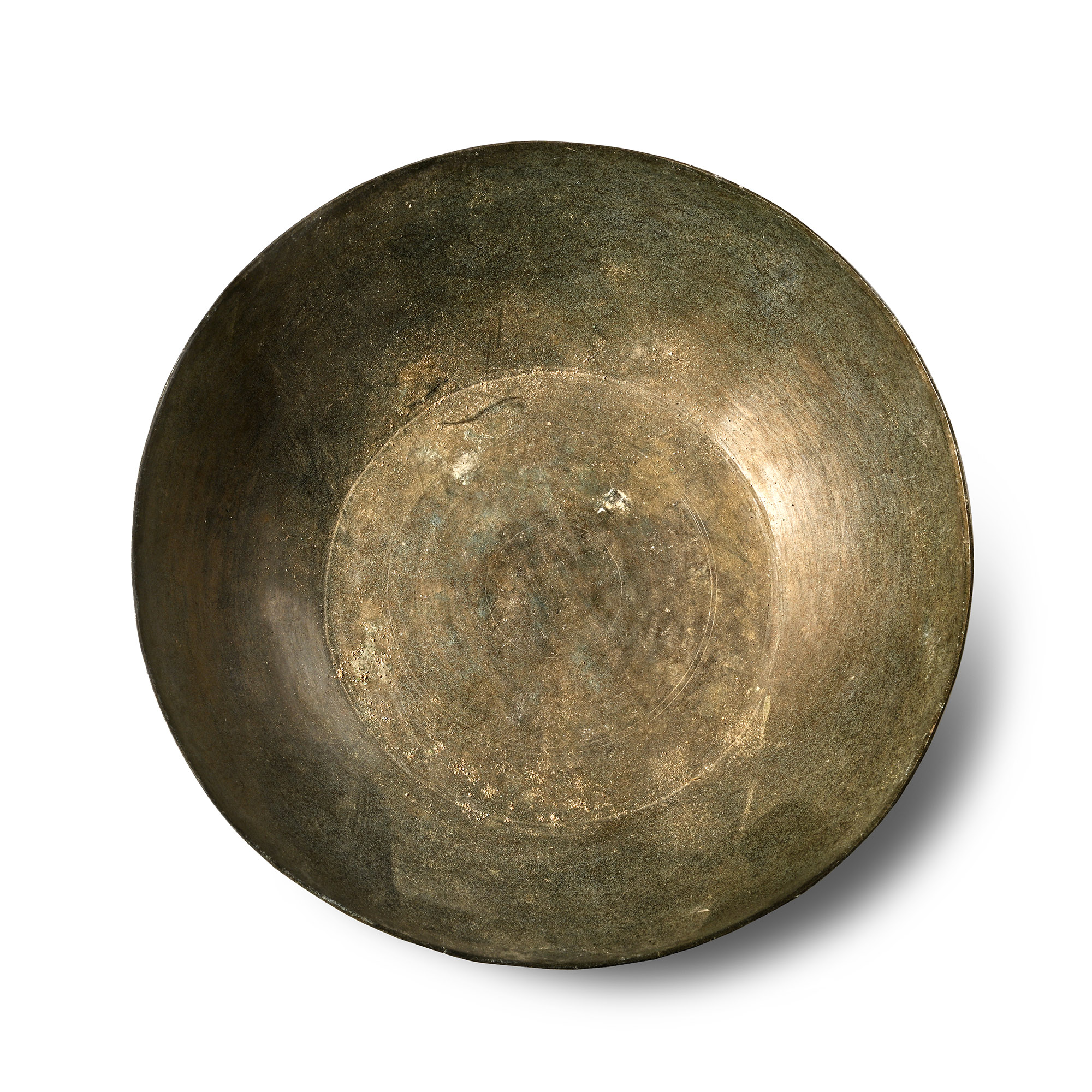
Sasanian Polished Bronze Bowl
3RD-7TH CENTURY A.D.
6 7/8 in. (228 grams, 17.5 cm).
Shallow body with gently sloping walls and flattened base. [No Reserve]
ProvenanceEx Abelita family collection, 1980s-2000s.
CONDITIONTimeLine Auctions follows a vetting process to ensure the authenticity and legality of all items, reinforcing our commitment to integrity and responsible trading. Each antiquity, antique, and coin lot undergoes thorough examination by a vetting committee of at least ten external specialists, professional trade association members, scientists, and archaeologists: Our Vetting Process
AUCTIONS:
TimeLine is a leading auction house specialising in antiquities, ancient art, collectables, natural history, coins, medals, and books. Our auctions offer museums, collectors, historians, and enthusiasts the opportunity to acquire unique and historically significant pieces.
-
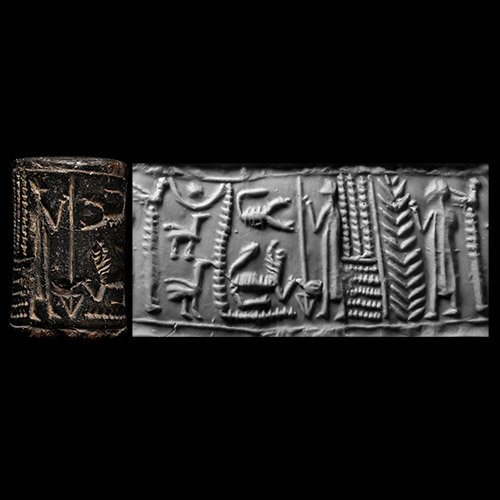
'The Ada Moore' Syrian Black Stone Cylinder Seal with Standing Figure and Scorpion
Syria, 2800-2400 B.C.Sold for (Inc. bp): £1,430
Cylinder seal with frieze; accompanied by an old scholarly note, typed and signed by W.G. Lambert, late Professor of Assyriology, University of Birmingham, 1970-1993, which states: "Cylinder Seal of Soft Black Stone. 37 x 25 mm. There are two standing human-looking figures, both clad in robes reaching to mid-calf level, and both having one hand raised. The one faces a tree or bush, the other standing against a background design of uncertain interpretation seems to hold a long spear downwards. The remaining space is divided up by two notched lines, on the top of one of which a bird is perching, and the remaining space is filled with a scorpion, a lion, a quadruped and another bird, while a lunar crescent and very small star occupy an area in the sky. The whole design is placed between upper and lower rulings. This is a Syrian seal, c. 2000-1800 B.C. done in a crude style but one full of interest. It is large and in fine condition and though the style is known, seals of this large size and with such a varied design are extremely rare.'; supplied with a museum-quality impression. 35 grams, 38 mm
The Collection of Mrs William H. Moore, Eisen, University of Chicago, 1940, no.188. The Ada Moore Collection of Near Eastern Seals, Sotheby's, New York, Thursday, 12 December 1991, no.92. Accompanied by a copy of an old scholarly note, typed and signed by W.G. Lambert, late Professor of Assyriology, University of Birmingham, 1992. -
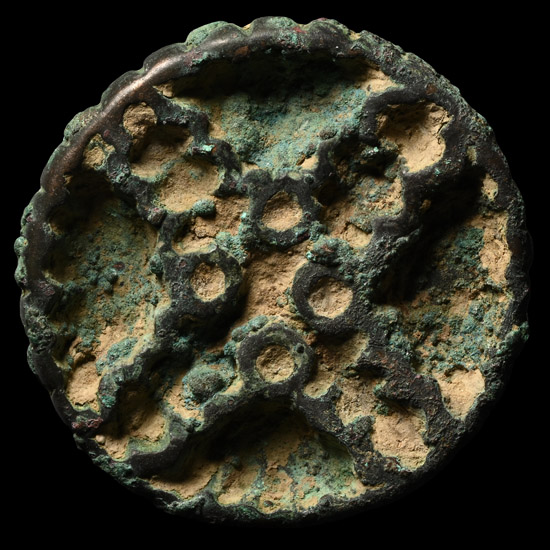
West Central Asian Bronze Stamp Seal with Cross
Circa 2300-2000 B.C.Sold for (Inc. bp): £39
Circular stamp seal with segmented face; accompanied by an old scholarly note, typed and signed by W.G. Lambert, late Professor of Assyriology, University of Birmingham, 1970-1993, which states: 'Stamp Seal of Silver 45 x 45 x 19 mm. This is round with notched outer edge, flat face and flat back on which is mounted a handle of inverted U-shape. The design is compartmented and consists of kind of four-armed cross with four small circles at its centre and more (drilled) circles along the arms, which diminish in width toward the edges. This comes from West Central Asia and dates to c. 2300-2000 B.C. It is heavy and generally in good condition. The incrustation on the surface could be removed.' 67.1 grams, 45.5 mm
Ex London, UK, collection, 1990s. Accompanied by an old scholarly note, typed and signed by Professor W.G. Lambert with reference no.W.861. -
.jpg)
Western Asiatic Bronze Statuette of a Horned Demon
1st millennium B.C.Sold for (Inc. bp): £221
Columnar in form with stub to base, arms bent, bearded face surmounted by a conical cap with lateral lugs. 43.4 grams, 87.5 mm
From the private collection of a European gentleman (1942-2024), formed since the 1970s.
