Loading, please wait...
LOT 1278
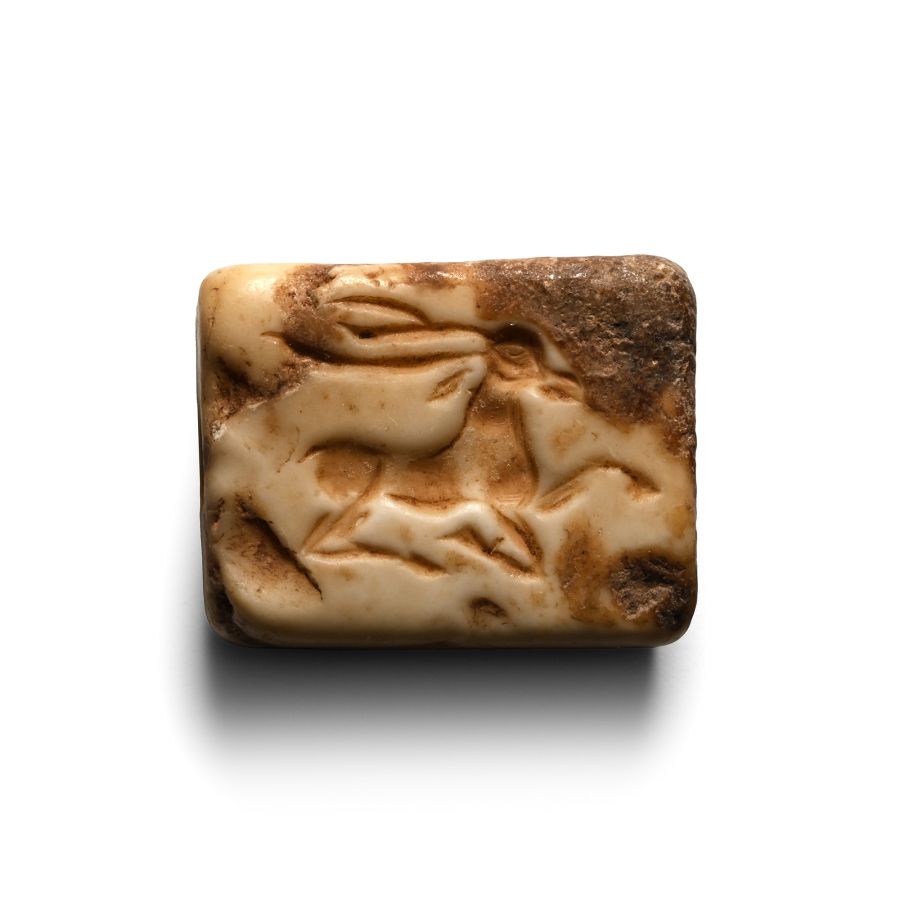
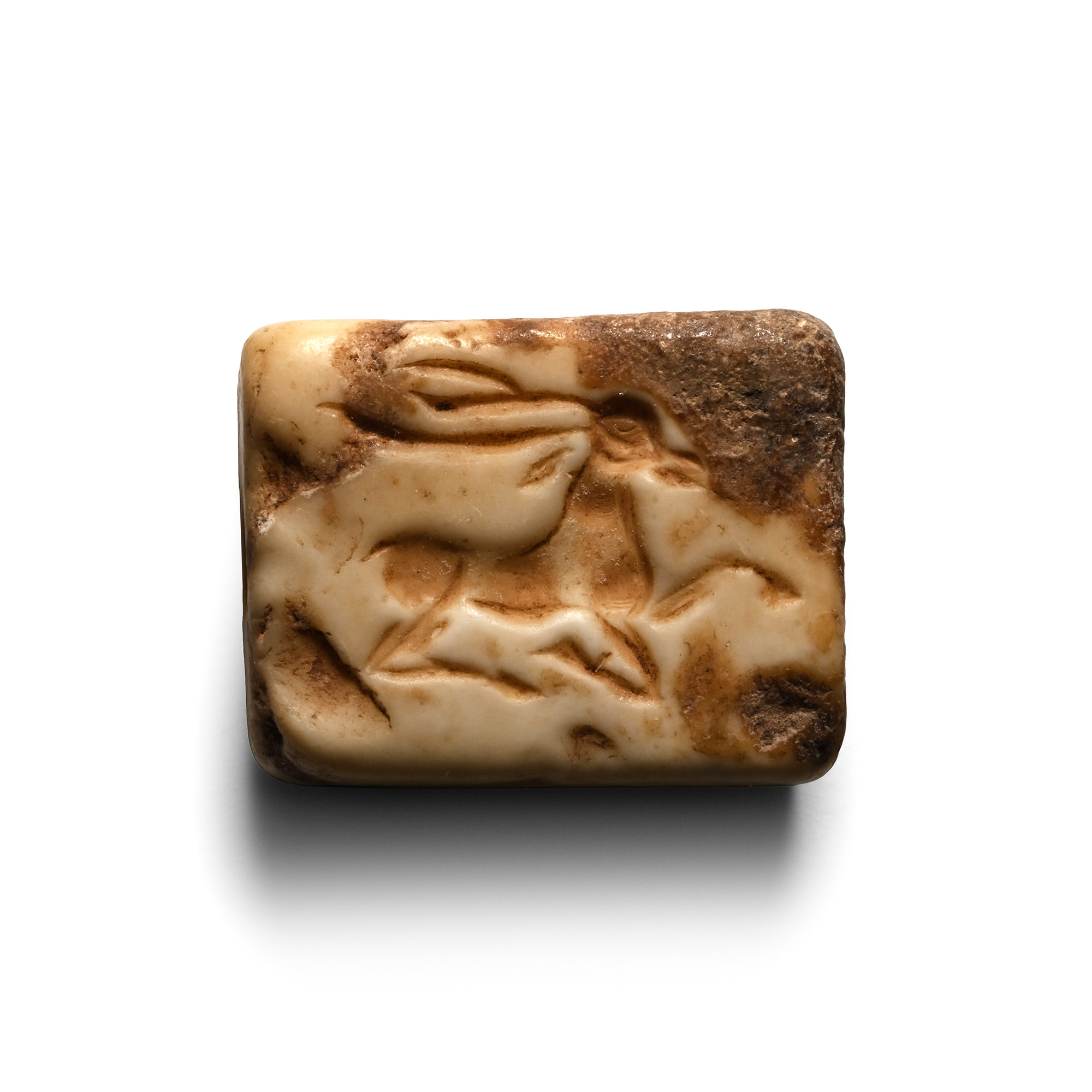
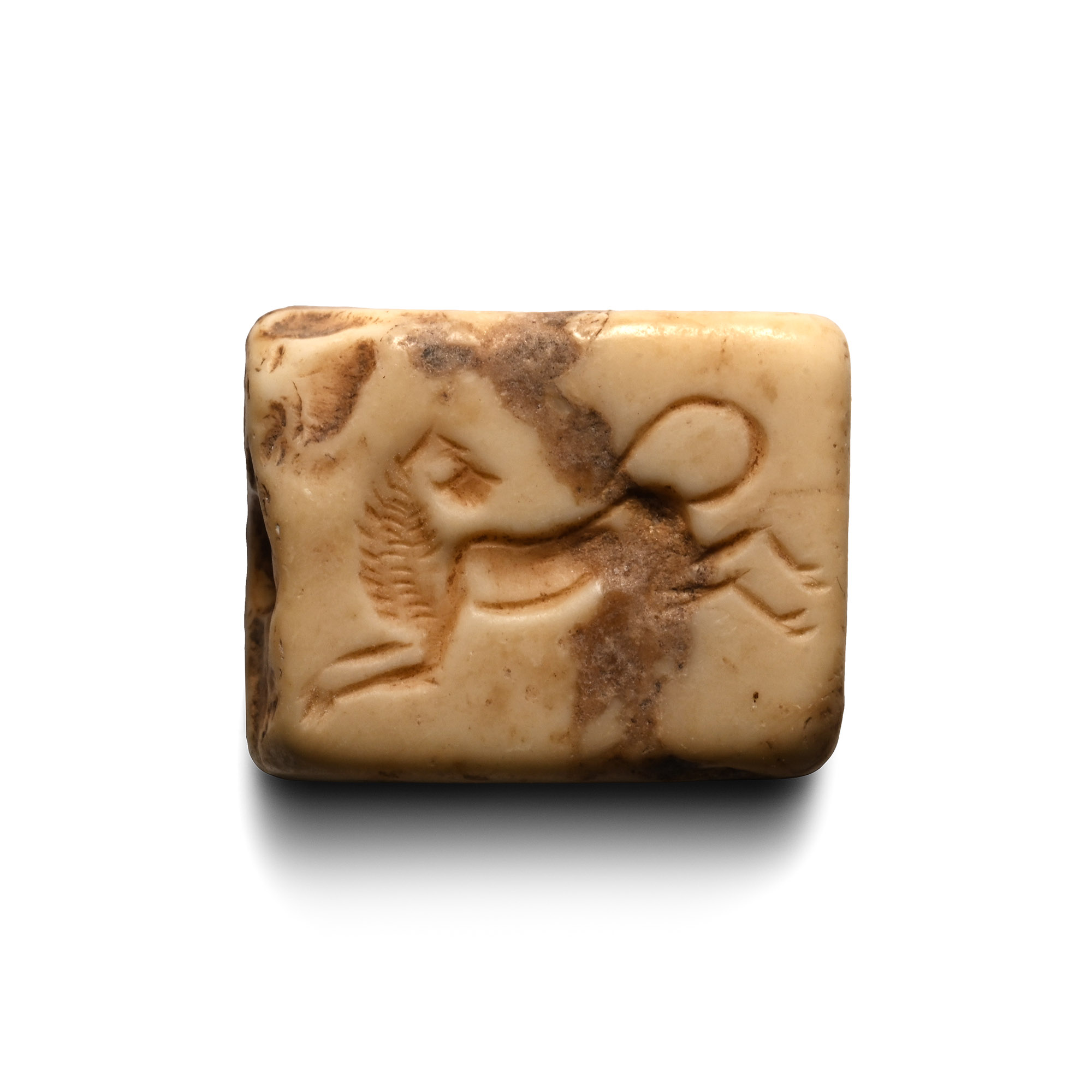
Sasanian Marble Bifacial Amulet with Animals
CIRCA 2ND-6TH CENTURY A.D.
3/4 in. (4.43 grams, 18 mm).
Rectangular in plane with transverse piercing, one side with a leaping lion and the other with a reclining antelope or ibex. [No Reserve]
ProvenanceFrom the private collection of a European gentleman (1942-2024), formed since the 1970s.
LiteratureCf. a seal with similar figure in Errington, E., Charles Masson: Collections from Begram and Kabul Bazaar, Afghanistan, 1833-1838, London, 2021, no.72.3.
CONDITIONTimeLine Auctions follows a vetting process to ensure the authenticity and legality of all items, reinforcing our commitment to integrity and responsible trading. Each antiquity, antique, and coin lot undergoes thorough examination by a vetting committee of at least ten external specialists, professional trade association members, scientists, and archaeologists: Our Vetting Process
AUCTIONS:
TimeLine is a leading auction house specialising in antiquities, ancient art, collectables, natural history, coins, medals, and books. Our auctions offer museums, collectors, historians, and enthusiasts the opportunity to acquire unique and historically significant pieces.
LOT 1278
Sasanian Marble Bifacial Amulet with Animals
Estimate £80 - 100€93 - 116 (for guidance only)$108 - 135 (for guidance only)
-
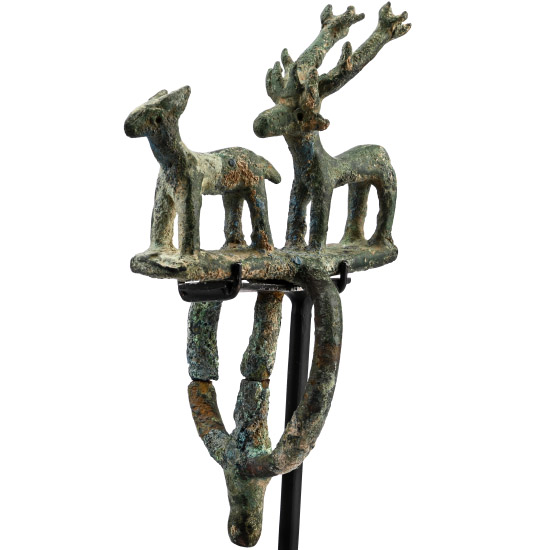
Hittite Bronze Standard Finial with Animal
Circa 13th-10th century B.C.Estimate: £1,500 - 2,000 (+bp*)
Opening Bid: £750
With a central bar with a semi-circle on either side, surmounted by a flat platform with a stag with large, elaborate horns, standing behind a doe; accompanied by a custom-made display stand. 405 grams, 17 cm (922 grams total, 31 cm including stand)
From a private collection, since 1989. Ex West London, UK collection. -
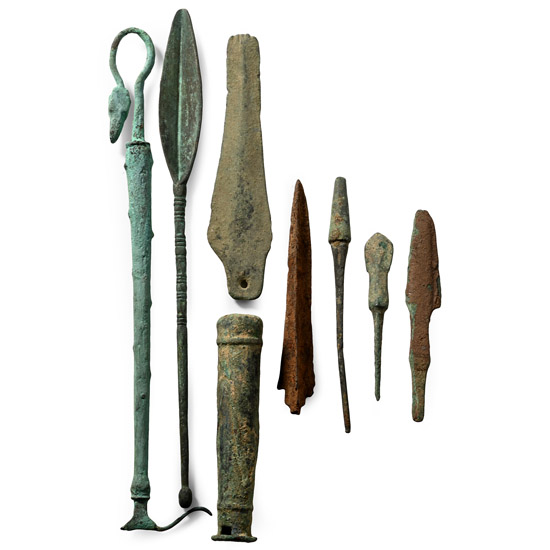
Large Amlash Bronze Spouted Libation Vessel
Circa 1200-1000 B.C.Estimate: £3,000 - 4,000 (+bp*)
Opening Bid: £1,667
One of the largest known examples, comprising a thin-walled body and flaring foot, a separately made long spout rivetted to the body; the U-shaped spout resembling the beak of a bird with stylised linear feather detailing to the gracefully curving neck, eleven domed rivets to the edges; the base of the foot with concentric circle decoration. 735 grams, 46 cm
Believed to have been acquired in the 1960s-1970s. From the collection of Mr Jay Gluck (1927–2000) and Mrs Sumi Hiramoto Gluck. Malter Galleries Inc., Auction 80, The Gluck Collection of Ancient Art, 7 April 2002, no.54. Alexander Ancient Art, Netherlands. Private collection, London, UK. This lot has been checked against the Interpol Database of stolen works of art and is accompanied by search certificate number no.13314-257665.
Jay Gluck (1927–2000) was an American author, art historian, and orientalist who spent much of his life in Japan and the wider Asia-Pacific region. A passionate collector and scholar of Asian art and culture, he is perhaps best known for his landmark publication Japan Inside Out (1964), and later A Survey of Persian Handicrafts (1977), co-authored with his wife Sumi Hiramoto Gluck, a Japanese-born artist and cultural collaborator who shared his deep engagement with Eastern art traditions. Together, the Glucks assembled a distinguished collection reflecting their combined expertise and decades of firsthand engagement with the arts of Asia and the ancient world. Items from their collection are held with great regard for the couple's scholarly rigour and the depth of provenance they represent. -
Large Kushan Gold Pendant with Bust of a Goddess
Circa 4th century A.D.Estimate: £10,000 - 14,000 (‡+bp*)
Opening Bid: £5,000
A late Kushan or Hephthalites Dynasty discoid pendant with a female deity, possibly Nana, at the centre holding a lotus flower in her right hand, hair elaborately dressed and wearing large earrings, necklace and bracelets; enclosed by a border of stylised bull heads and a double-plaited border, the outer edge with raised bosses; later applied polygonal suspension loop with granulated collars and an oval garnet cabochon. 22.11 grams, 71 mm
Acquired by a Swiss family in the mid-1980s to late 1990s, thence by descent. Private collection, Switzerland, since the late 1990s. Accompanied by an academic report by Dr Raffaele D’Amato. This lot has been checked against the Interpol Database of stolen works of art and is accompanied by search certificate number no.13021-246776.
Nana (Kushan Greek: Νανα, Ναναια, Ναναϸαο, Sogdian Nni) was a Bactrian female deity, a variation of the pan-Asian Nana, a fusion of the Sumero-Babylonian Inanna-Ishtar with a local deity, in her Kushan form with the local (Zoroastrian) Harakhvati Aredvi Sura Anahita. Such syncretism was common among Kušan deities. She was an important patron deity in the Kushan Empire and the most important deity worshipped by Emperor Kaniška (c. 127-150 A.D.).