
Loading, please wait...


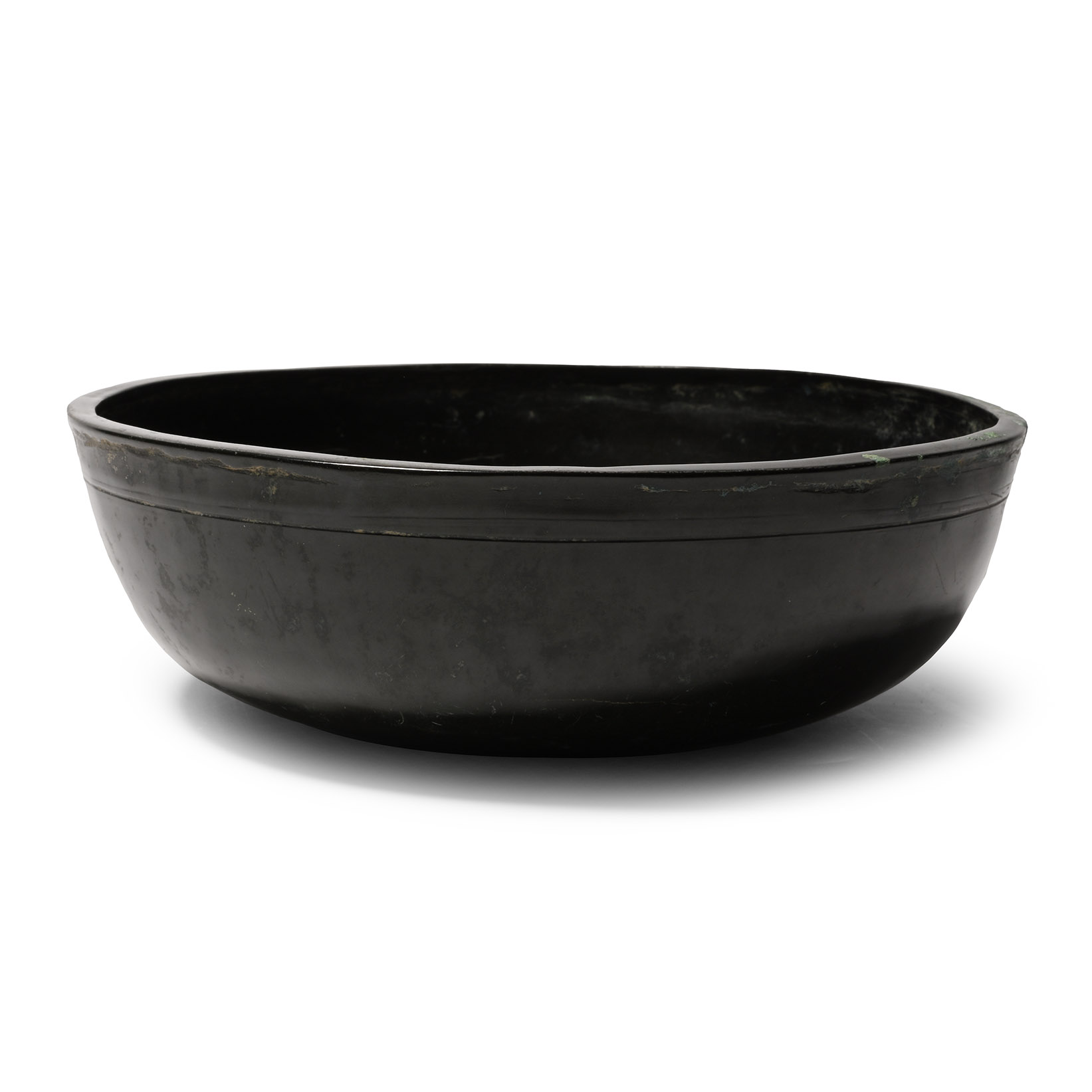
LOT 1284
Sasanian High Tin Bronze Bowl
3RD-7TH CENTURY A.D.
5 7/8 in. (224 grams, 15 cm).
Comprising a rounded base and inverted rim, circumferential band to the rim.
ProvenanceAcquired 1980-2015.
Ex Abelita family collection.
This lot has been cleared against the Art Loss Register database, and is accompanied by an illustrated lot declaration signed by the Head of the Antiquities Department, Dr Raffaele D'Amato.
TimeLine Auctions follows a vetting process to ensure the authenticity and legality of all items, reinforcing our commitment to integrity and responsible trading. Each antiquity, antique, and coin lot undergoes thorough examination by a vetting committee of at least ten external specialists, professional trade association members, scientists, and archaeologists: Our Vetting Process
AUCTIONS:
TimeLine is a leading auction house specialising in antiquities, ancient art, collectables, natural history, coins, medals, and books. Our auctions offer museums, collectors, historians, and enthusiasts the opportunity to acquire unique and historically significant pieces.
-
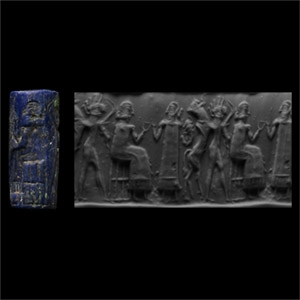
Early Dynastic Lapis Lazuli Cylinder Seal
Circa 2550-2400 B.C.Sold for (Inc. bp): £2,210
Engraved with a religious scene comprising a seated king on a throne-shaped chair, holding a cup and wearing a long garment; standing worshipper or priest before him; before them, a nude hero and a bull-man presented in a contest scene. 4.75 grams, 23 mm
From the 'S' collection, acquired 1970-1990s. The collection was seen and studied by W.G. Lambert, late Professor of Assyriology at the University of Birmingham, 1970-1993. Accompanied by a copy of a report from Assyriologist Hui Li. This lot has been checked against the Interpol Database of stolen works of art and is accompanied by a search certificate number no.12558-231428. This lot has been cleared against the Art Loss Register database, and is accompanied by an illustrated lot declaration signed by the Head of the Antiquities Department, Dr Raffaele D'Amato.
The clearly engraved facial features, the almond-shaped eyes, pointed noses, and abstract outlines shaping the bodies, attest to the iconic glyptic practices of the late Early Dynastic Period. The cup held by the king, containing holy ointment or oil, might have been used as an emblem to signify the elevated rank of a deified king. It may have also been used an alternative religious practice, connecting the secular authority and the divine power during the Early Dynastic Period. -
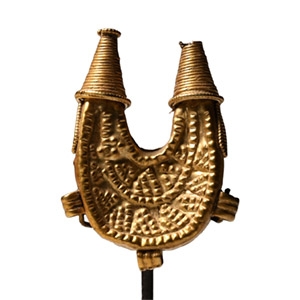
Sarmatian Gold Decorated Earring
9th-early 11th century A.D.Sold for (Inc. bp): £520
Hollow-formed U-shaped body with spiral-wound finial wire cones and granulated collars, repoussé pounced finial with beaded wire lateral loops, ribbed loops to the outer face; complete with custom-made stand. 8.87 grams, 41 mm (20.04 grams total, 68 mm including stand)
Acquired on the London art market, 1990s. Private collection, London. This lot has been cleared against the Art Loss Register database, and is accompanied by an illustrated lot declaration signed by the Head of the Antiquities Department, Dr Raffaele D'Amato. -
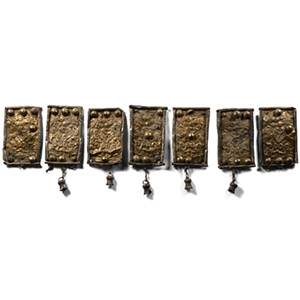
Post Achaemenid Silver Belt Mount Group with Winged Bulls
3rd-2nd century B.C.Sold for (Inc. bp): £286
Each rectangular with rolled edges forming a frame, repoussé central panel with winged bulls and other motifs, applied hollow domed studs. 95 grams total, 68-86 mm
From a deceased family collection formed in the 1980s; thence by descent. This lot has been cleared against the Art Loss Register database, and is accompanied by an illustrated lot declaration signed by the Head of the Antiquities Department, Dr Raffaele D'Amato.
