
Loading, please wait...
LOT 0252
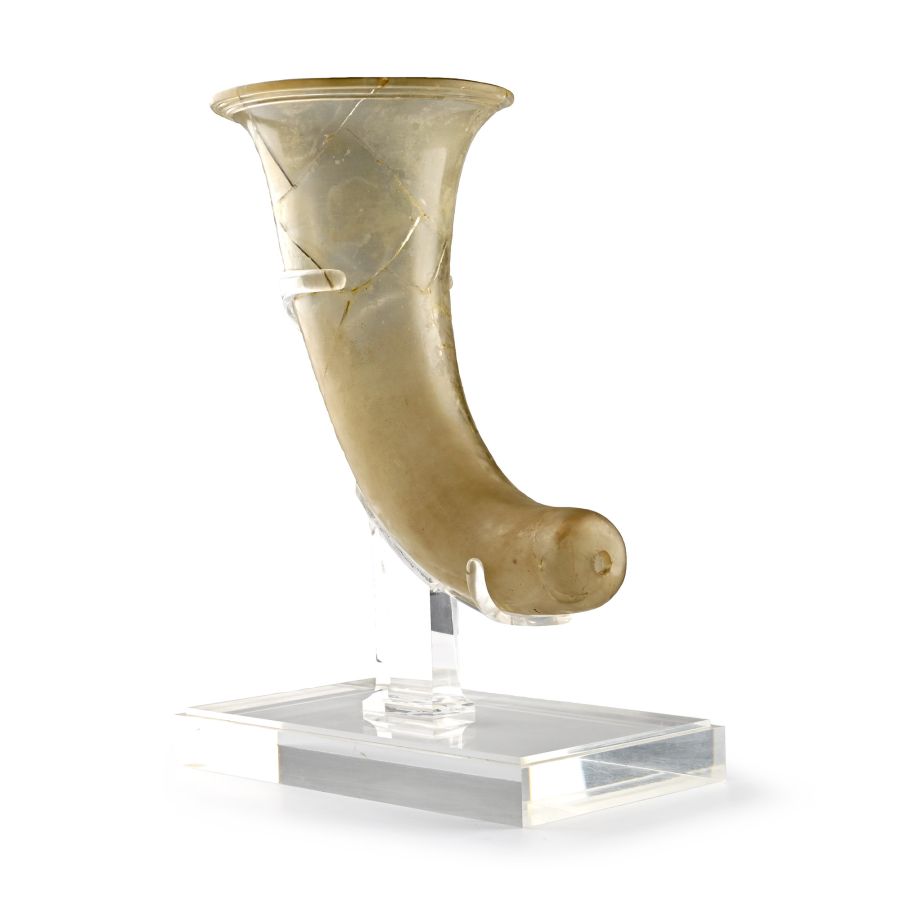
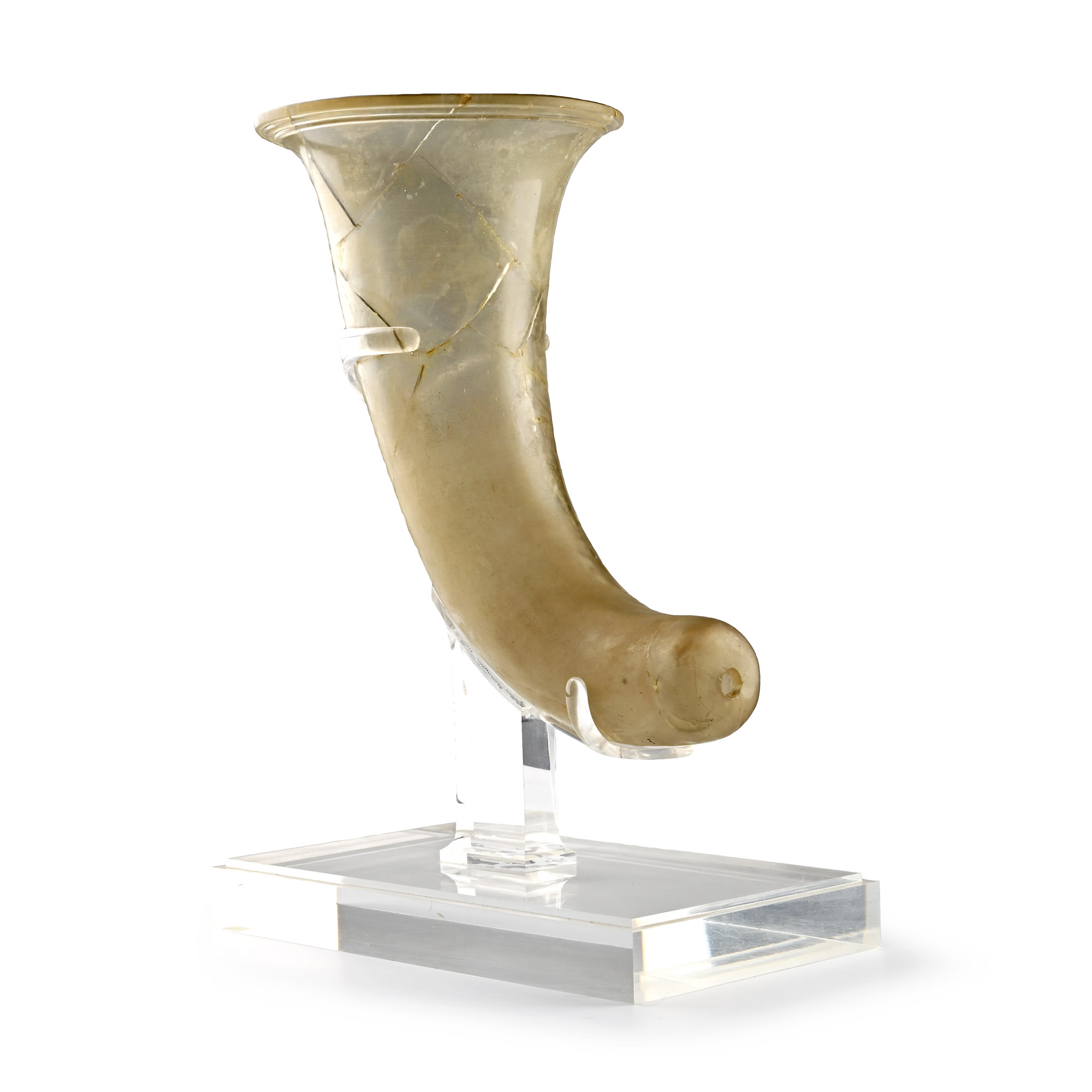
Sasanian Glass Rhyton
3RD-5TH CENTURY A.D.
10 in. (718 grams, 25.5 cm).
With trumpet-shaped broad end, tapering sidewalls and thick pierced finial; mounted in a custom-made wooden case.
ProvenanceJapanese private collection, prior 1979.
with Aaron Gallery, Iran, prior 1970.
with Aaron Gallery, London, 19 September 1980.
This lot has been checked against the Interpol Database of stolen works of art and is accompanied by search certificate number no.12798-241349.
This lot has been cleared against the Art Loss Register database, and is accompanied by an illustrated lot declaration signed by the Head of the Antiquities Department, Dr Raffaele D'Amato.
Cf. a similar Sassanian Rython, but in embossed and in silver, in Carter, Martha L. ‘Three Silver Vessels from Tibet's Earliest Historical Era: A Preliminary Study’ in Cleveland Studies in the History of Art. 3 (1998) 22-47. figs. 1, 5a-9c.
CONDITIONTimeLine Auctions follows a vetting process to ensure the authenticity and legality of all items, reinforcing our commitment to integrity and responsible trading. Each antiquity, antique, and coin lot undergoes thorough examination by a vetting committee of at least ten external specialists, professional trade association members, scientists, and archaeologists: Our Vetting Process
AUCTIONS:
TimeLine is a leading auction house specialising in antiquities, ancient art, collectables, natural history, coins, medals, and books. Our auctions offer museums, collectors, historians, and enthusiasts the opportunity to acquire unique and historically significant pieces.
LOT 0252
Sasanian Glass Rhyton
Estimate £10,000 - 14,000€11,600 - 16,240 (for guidance only)$13,500 - 18,900 (for guidance only)
-
.jpg)
Assyrian Gypsum Relief with Head of a Bearded Man
704-681 B.C.Estimate: £8,000 - 10,000 (‡+bp*)
Opening Bid: £4,000
Rectangular frieze fragment with low-relief carving of a profile bust with short straight hair confined by a brow-band, segmented curls forming the beard, furrowed brow, one arm extended; handwritten label to rear 'from the Koyunjik palace of Sennacherib at Nineveh and incised legend 'KOUYUNJIK' and 'A'; mounted on a custom-made stand. 530 grams total, 11.6 cm including stand
Allegedly found in the Koyunjik Palace of Sennacherib. Ex property of a gentleman, UK, acquired in the 1970s. Ex private collection, Oxfordshire, UK, 1988. Anonymous sale, with Christie's, London, 7 December 1994, no.235. Art market, New York. Ex private collection, Tokyo, Japan. Private European collection, 2009. This lot has been checked against the Interpol Database of stolen works of art and is accompanied by a search certificate number no.12880-241660. This lot has been cleared against the Art Loss Register database, and is accompanied by an illustrated lot declaration signed by the Head of the Antiquities Department, Dr Raffaele D'Amato. -
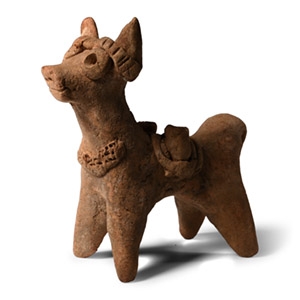
Amorite Terracotta Saddled Animal
1800-1600 B.C.Estimate: £600 - 800 (‡+bp*)
Opening Bid: £333
Modelled in the round with halter to the chest, strap to the brow and saddle with two lateral containers and straps. 88 grams, 85 mm
Acquired in the mid 1980s-1990s. Private collection, Switzerland, thence by descent. Private collection, since the late 1990s. This lot has been cleared against the Art Loss Register database, and is accompanied by an illustrated lot declaration signed by the Head of the Antiquities Department, Dr Raffaele D'Amato. -
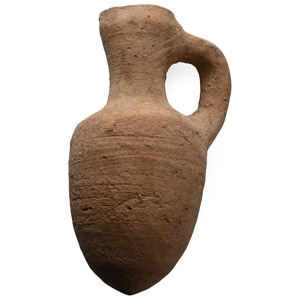
Western Asiatic 'Holy Land' Terracotta Jug
Bronze Age, 3rd-2nd millennium B.C.Sold for (Inc. bp): £78
With tapering rounded bottom, deep shoulder, tall neck pinched to a triangular shape, strap handle to the rear. 160 grams, 12.4 cm
From the collection of an Essex, UK, gentleman. This lot has been cleared against the Art Loss Register database, and is accompanied by an illustrated lot declaration signed by the Head of the Antiquities Department, Dr Raffaele D'Amato.
