
Loading, please wait...
LOT 0047
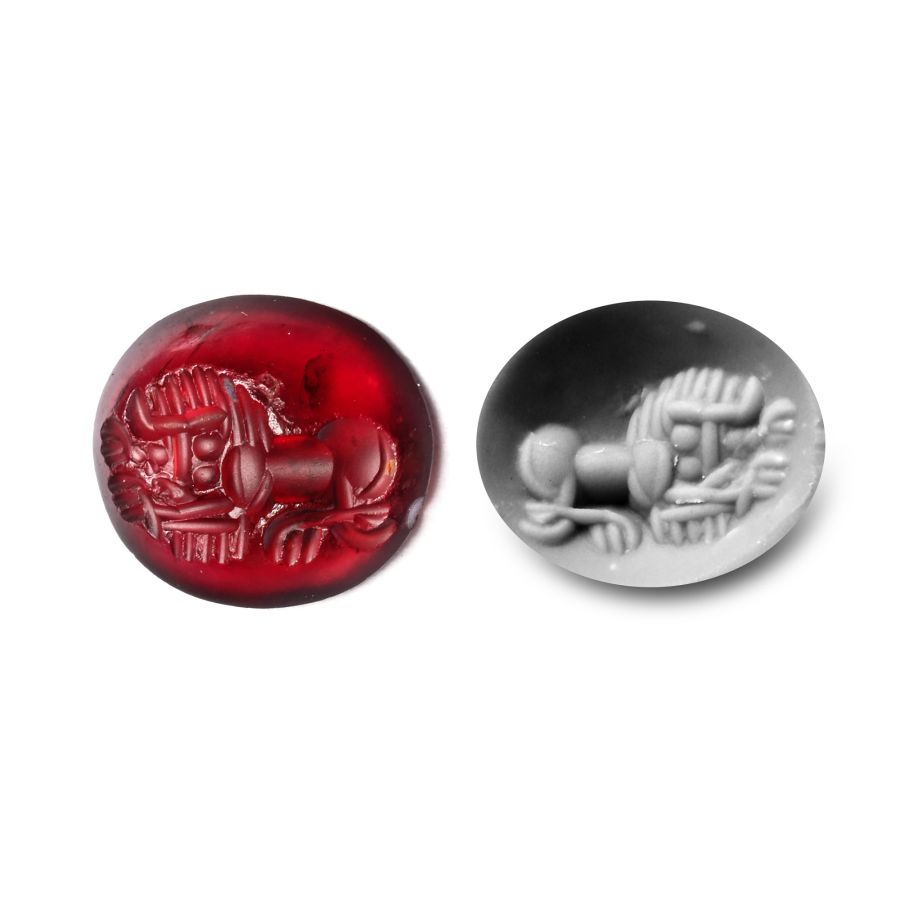
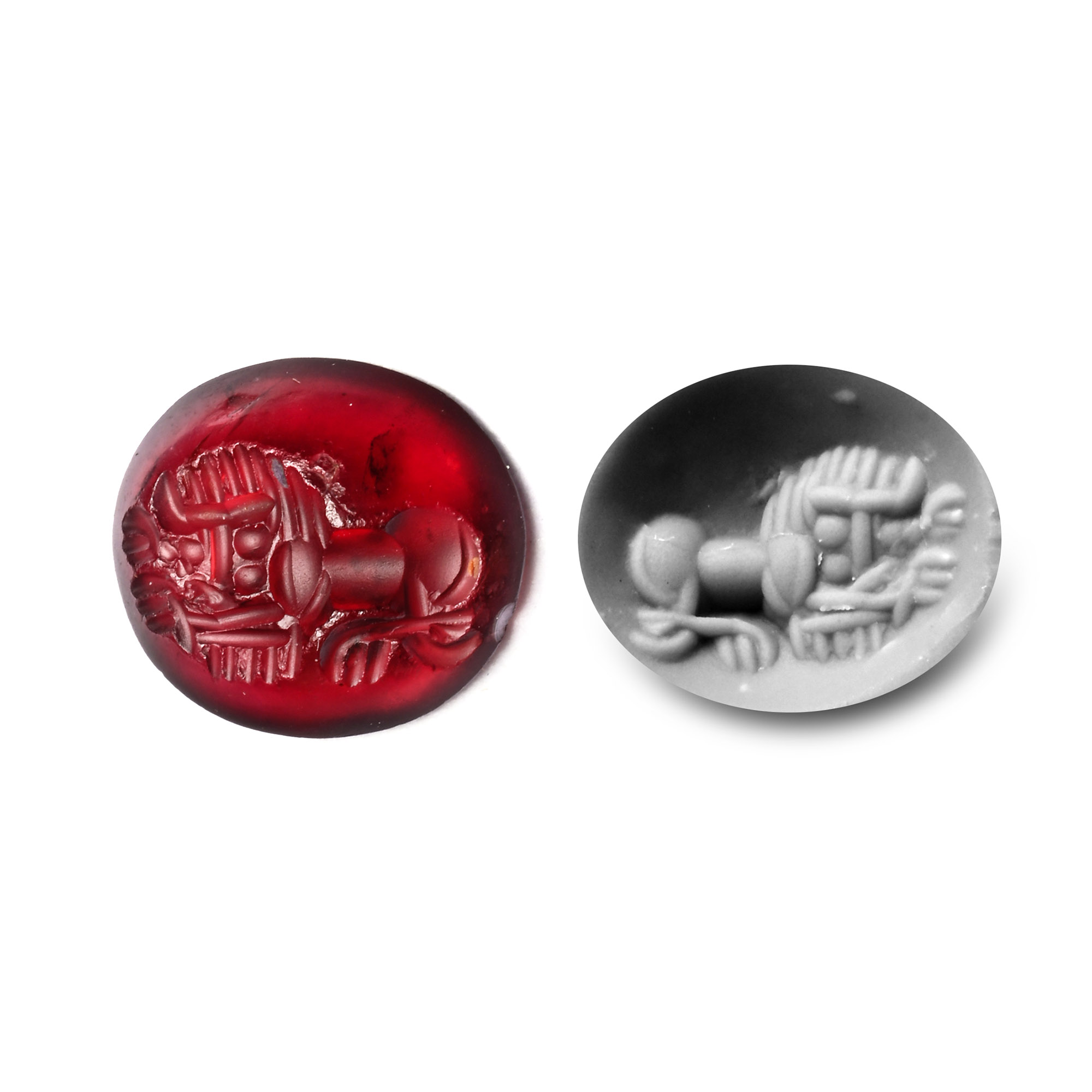
Sasanian Garnet Gemstone of a Lion
5TH-7TH CENTURY A.D.
3/8 in. (0.55 grams, 10 mm).
Plano-convex in section with incuse sleeping lion; supplied with a museum-quality impression.
ProvenancePrivate English collection, formed between the late 1970s and early 1990s.
Private collection, London, UK.
TimeLine Auctions follows a vetting process to ensure the authenticity and legality of all items, reinforcing our commitment to integrity and responsible trading. Each antiquity, antique, and coin lot undergoes thorough examination by a vetting committee of at least ten external specialists, professional trade association members, scientists, and archaeologists: Our Vetting Process
AUCTIONS:
TimeLine is a leading auction house specialising in antiquities, ancient art, collectables, natural history, coins, medals, and books. Our auctions offer museums, collectors, historians, and enthusiasts the opportunity to acquire unique and historically significant pieces.
LOT 0047
Sasanian Garnet Gemstone of a Lion
Estimate £400 - 600€460 - 700 (for guidance only)$540 - 810 (for guidance only)
-
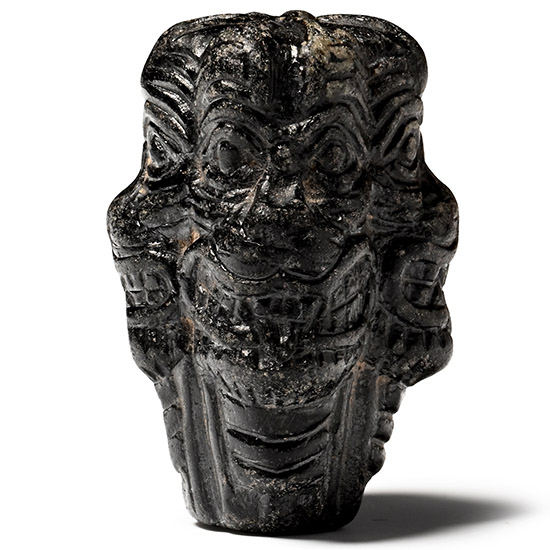
Neo-Assyrian Black Stone Multifacetted Pazuzu Head
Circa 600 B.C.Sold for (Inc. bp): £2,860
Modelled in the round, four addorsed heads, each with snarling mouth and furrowed brow; pierced vertically. 19.94 grams, 34.28 mm
From the 'S' collection, London, UK, 1970-1990s. This lot has been checked against the Interpol Database of stolen works of art and is accompanied by search certificate number no.13286-253337.
Pazuzu, in the Mesopotamian mythology, is described as ‘the son of Hanbu and king of wind demons’. Amulets with images of his full body or, more often, just his head, were common in the early first millennium B.C. Pazuzu was most popular in the Neo-Assyrian and Neo-Babylonian periods, from about the late 8th century B.C. through the 6th century B.C. -
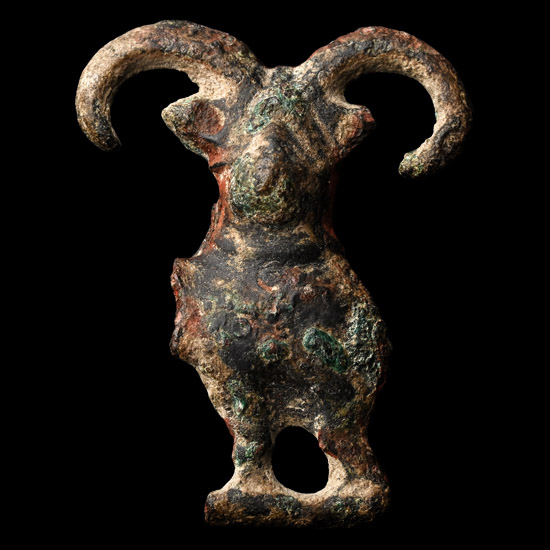
Luristan Bronze Ibex Mount
1st millennium B.C.Sold for (Inc. bp): £91
Modelled frontally with large curving horns. 6.87 grams, 36.2 mm
From the private collection of a European gentleman (1942-2024), formed since the 1970s. -
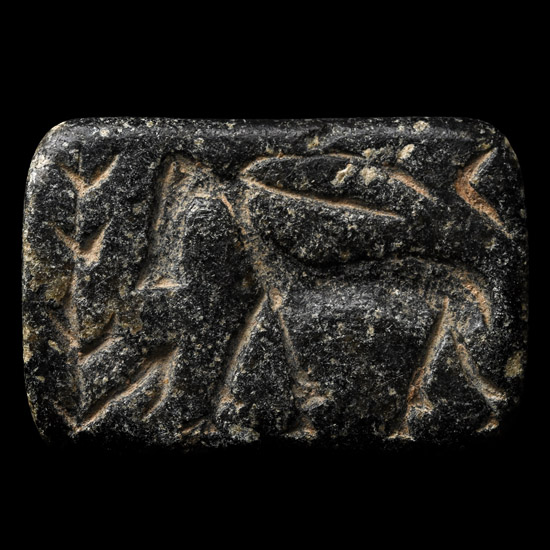
Large Western Asiatic Black Stone Stamp Seal with Animal
2nd millennium B.C.Sold for (Inc. bp): £52
Triangular in section and rectangular in plan with incuse ibex and tree motifs. 13.61 grams, 36 mm
From the private collection of a European gentleman (1942-2024), formed since the 1970s.
