
Loading, please wait...
LOT 1511
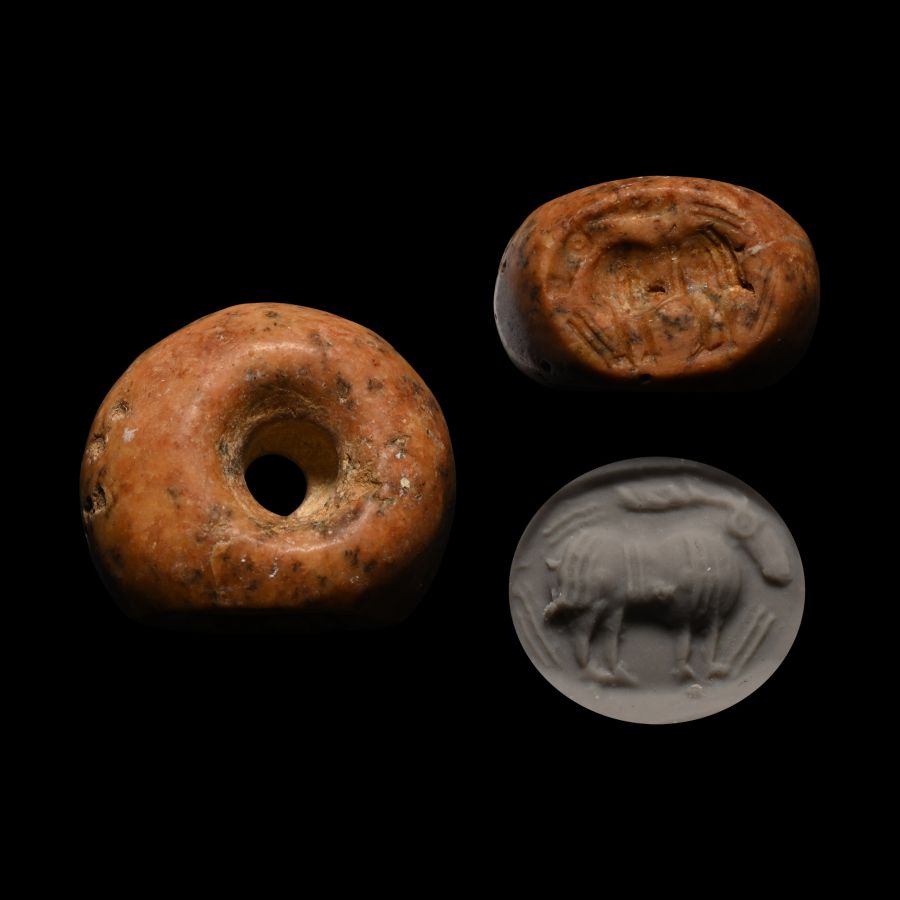
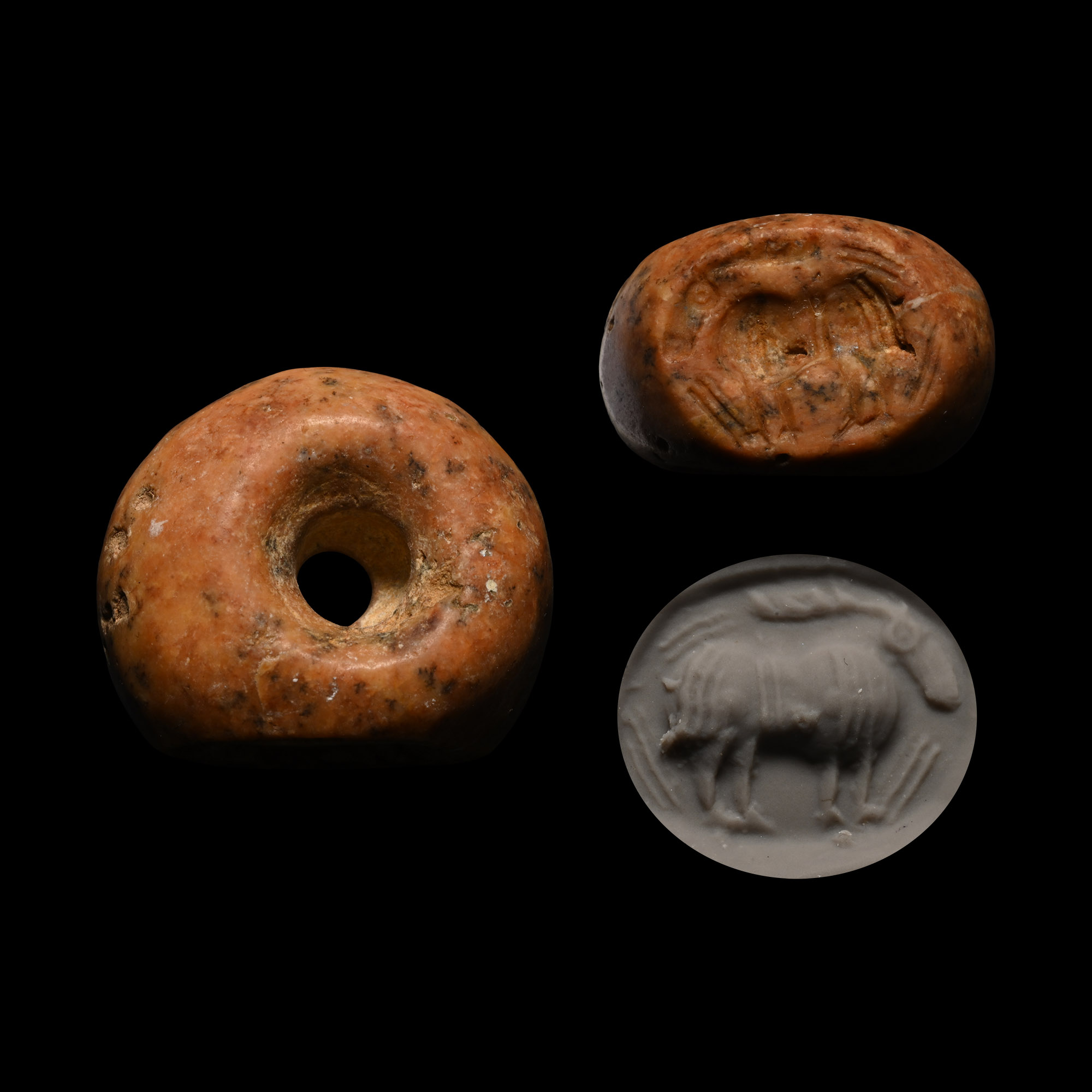
Sasanian Flecked Orange Stone Stamp Seal with Ibex
CIRCA 3RD-7TH CENTURY A.D.
7/8 in. (11.26 grams, 23.44 mm).
Annular in profile with incuse standing ibex motif. [No Reserve]
ProvenanceFrom the private collection of a European gentleman (1942-2024), formed since the 1970s.
CONDITIONTimeLine Auctions follows a vetting process to ensure the authenticity and legality of all items, reinforcing our commitment to integrity and responsible trading. Each antiquity, antique, and coin lot undergoes thorough examination by a vetting committee of at least ten external specialists, professional trade association members, scientists, and archaeologists: Our Vetting Process
AUCTIONS:
TimeLine is a leading auction house specialising in antiquities, ancient art, collectables, natural history, coins, medals, and books. Our auctions offer museums, collectors, historians, and enthusiasts the opportunity to acquire unique and historically significant pieces.
-
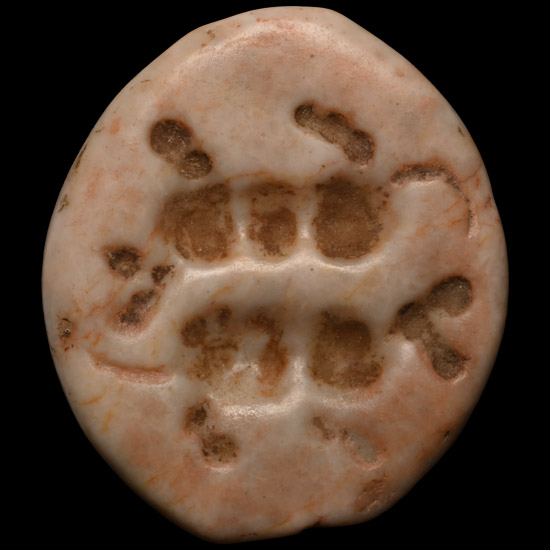
Mesopotamian Cream Stone Stamp Seal with Animals
2nd millennium B.C.Sold for (Inc. bp): £34
Plano-convex in section with drilled motifs to the underside, two horses placed tête-bêche; supplied with a museum-quality impression. 12.98 grams, 32.28 mm
From the private collection of the late Mr W. Magee, Hartlepool, County Durham, UK, 1960s-1990s, thence by descent. Accompanied by a previous cataloguing information card. -
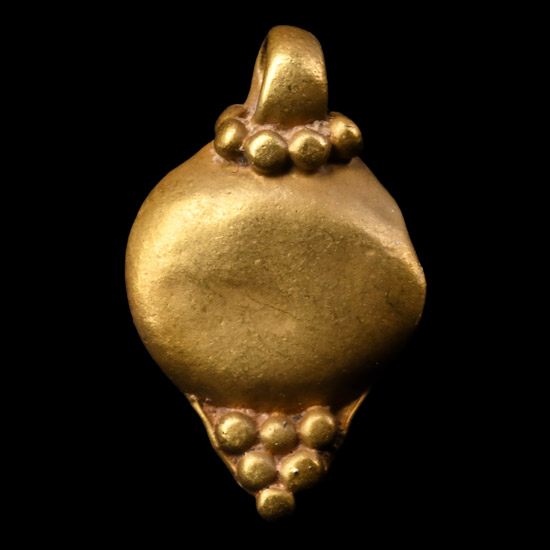
Western Asiatic Gold Grape Pendant
1st millennium B.C.Sold for (Inc. bp): £111
Formed as a domed disc with applied granules above and below. 0.35 grams, 10 mm
Ex private British collection, formed in the 1980s. Property of a West Northamptonshire, UK, gentleman. -
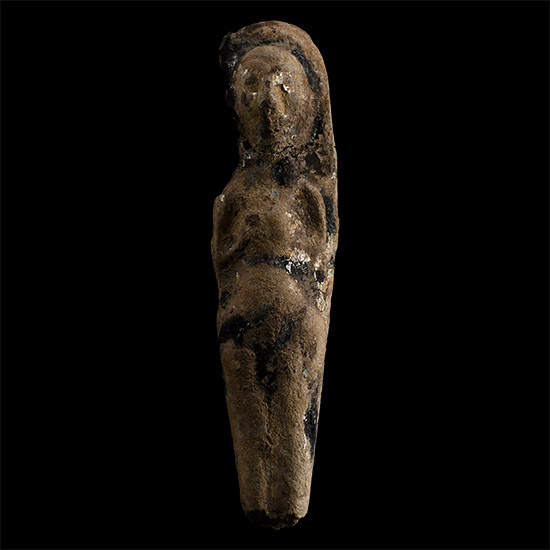
Western Asiatic Glazed Terracotta Fertility Figure
Late 1st millennium B.C.Estimate: £120 - 170 (+bp*)
Opening Bid: £67
Modelled in the half-round; D-shaped in section with applied black pigment detailing to hair and midriff; some iridescence. 23.2 grams, 92 mm
Ex private collection, London, UK, 1969-1999.
