
Loading, please wait...
LOT 1444
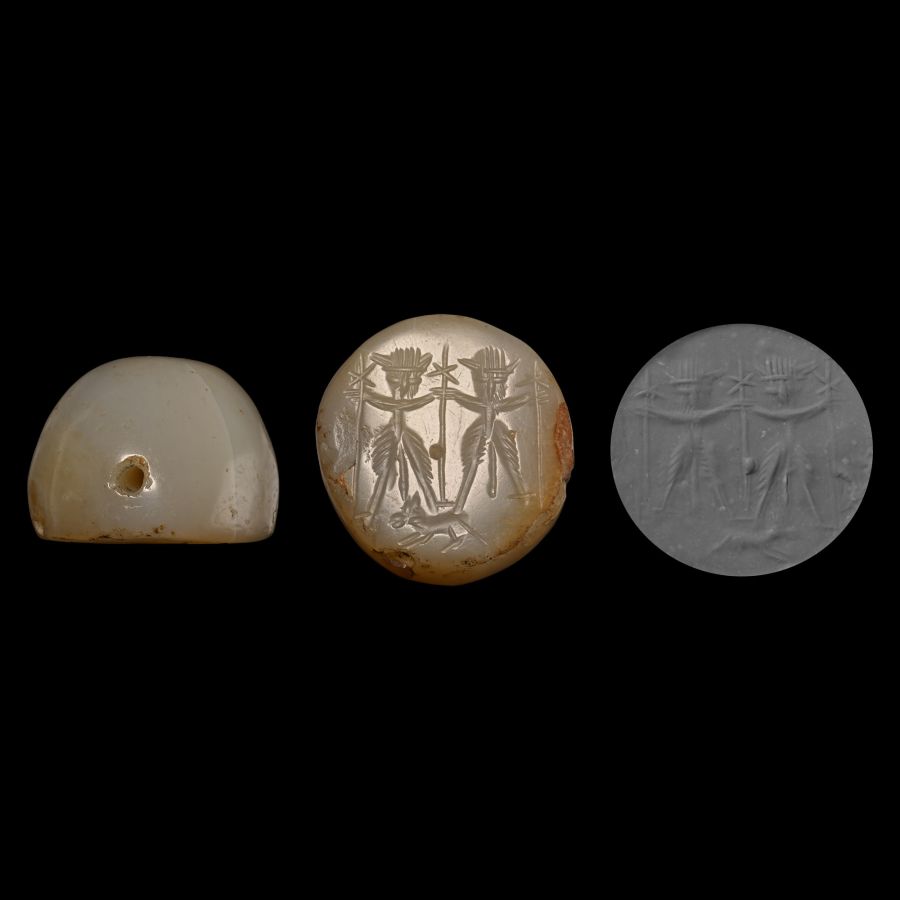
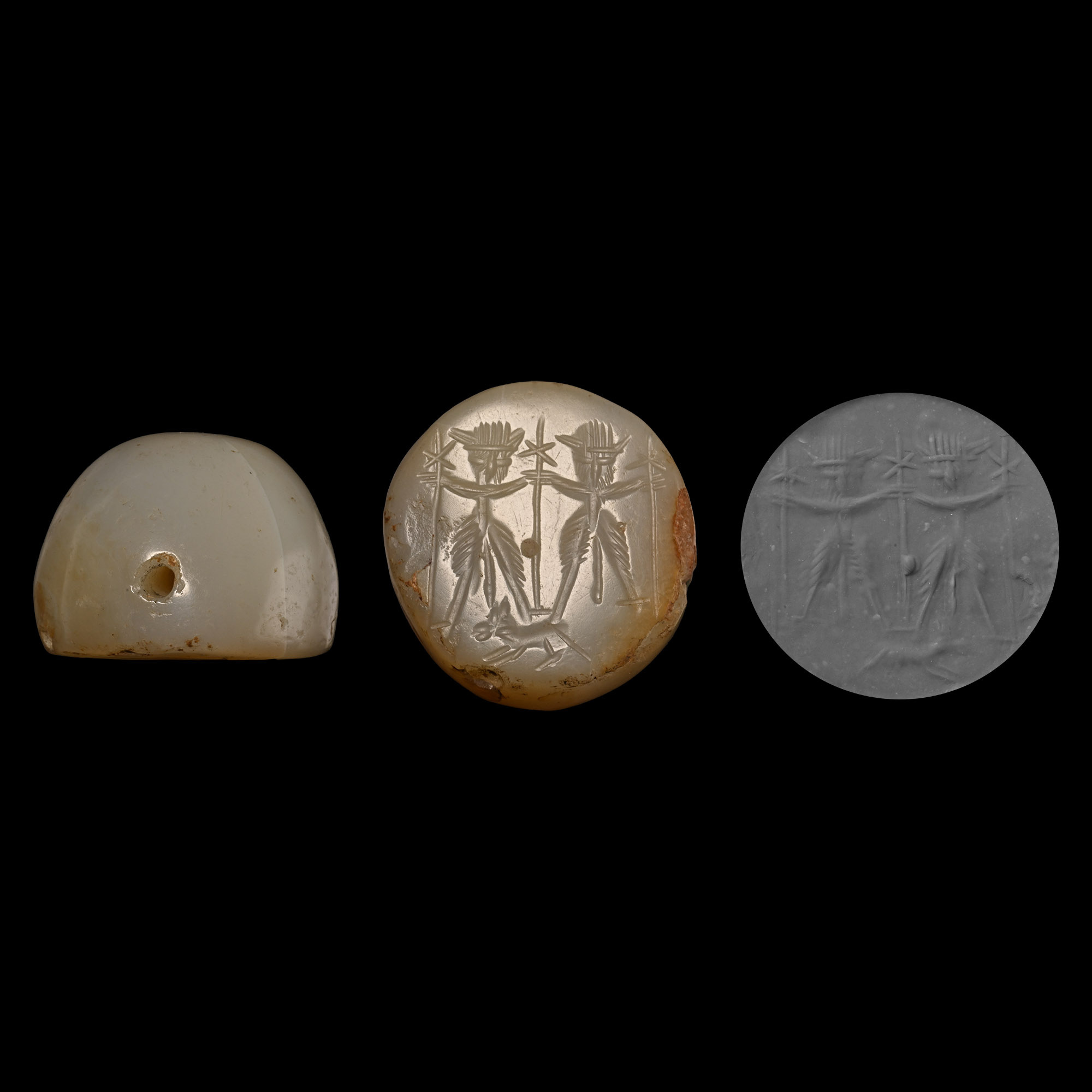
Sasanian Chalcedony Stamp Seal
5TH-7TH CENTURY A.D.
1 1/4 in. (35.8 grams, 32 mm).
Plano-conves in section with suspension hole, incuse image of two nude men holding three spears in their outstretched hands, dog below.
ProvenancePrivate collection, England.
CONDITIONTimeLine Auctions follows a vetting process to ensure the authenticity and legality of all items, reinforcing our commitment to integrity and responsible trading. Each antiquity, antique, and coin lot undergoes thorough examination by a vetting committee of at least ten external specialists, professional trade association members, scientists, and archaeologists: Our Vetting Process
AUCTIONS:
TimeLine is a leading auction house specialising in antiquities, ancient art, collectables, natural history, coins, medals, and books. Our auctions offer museums, collectors, historians, and enthusiasts the opportunity to acquire unique and historically significant pieces.
LOT 1444
Sasanian Chalcedony Stamp Seal
Estimate £300 - 400€350 - 460 (for guidance only)$410 - 540 (for guidance only)
-
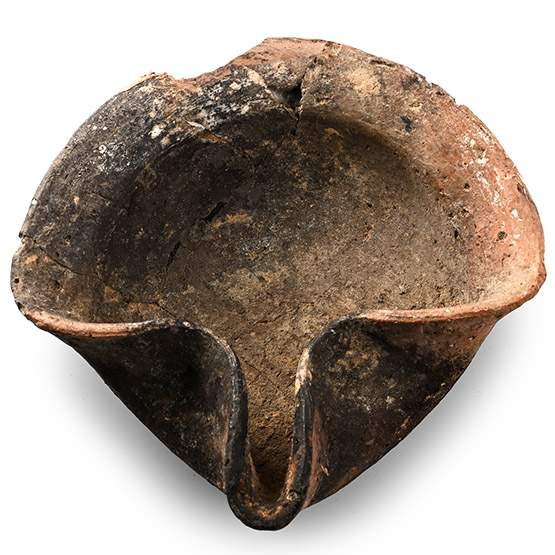
Bronze Age Holy Land Terracotta Pinched Rim Oil Lamp
Kingdom of Judah, circa 930-700 B.C.Sold for (Inc. bp): £104
Discoid in plan with flange rim and sidewall pinched to form a nozzle. 69 grams, 97 mm
From the Lloyd and Jeanne Raport collection, Washington, D.C. and Florida, USA, formed between 1972-2000. Acquired through Bonhams, London, UK. -
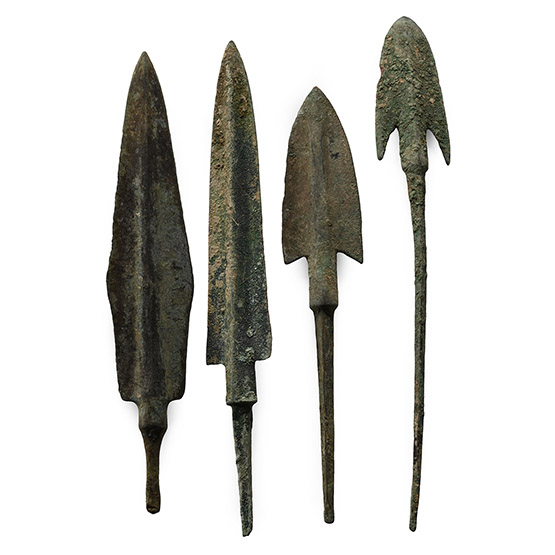
Luristan Bronze Arrowhead Collection
2nd-1st millennium B.C.Sold for (Inc. bp): £130
Comprising: two large tanged arrowheads, mainly of triangular type with mid-rib; two arrowheads with barbed shoulders, midrib and a stop on the blade with a long tang. 122 grams total, 12.7-15 cm
Acquired in the 1990s. Ex Abelita family collection.
One category of the represented arrowheads has a sharp blade, the ends of which extend to form wings or barbs, and a prominent midrib extending into a long tang that has a stop; the blade shape varies from deltoid to more triangular. The other form has no barbs, but it has a prominent midrib extending to the tang, and a rhomboid or tringular blade. Godard claimed that both types of heads, barbed and not barbed, came from Luristan. -
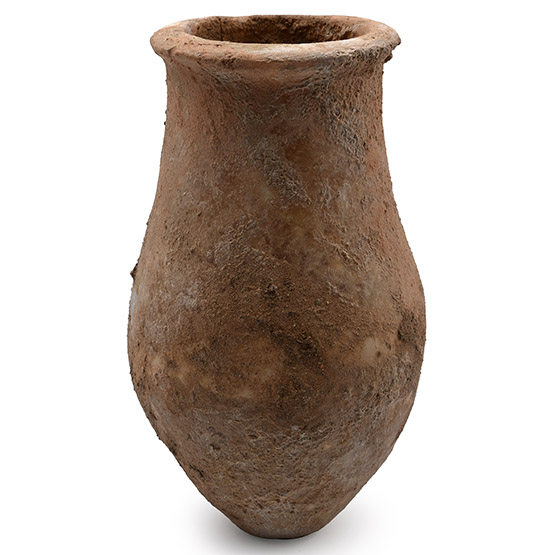
Mesopotamian Stone Vessel
1st millennium B.C.Estimate: £100 - 140 (+bp*)
Opening Bid: £50
Piriform in profile with rounded base, everted rim. 676 grams, 13.7 cm
From a collection formed before 1990. Ex Mayfair, London, UK, gallery, 2000s.
