
Loading, please wait...
LOT 1456
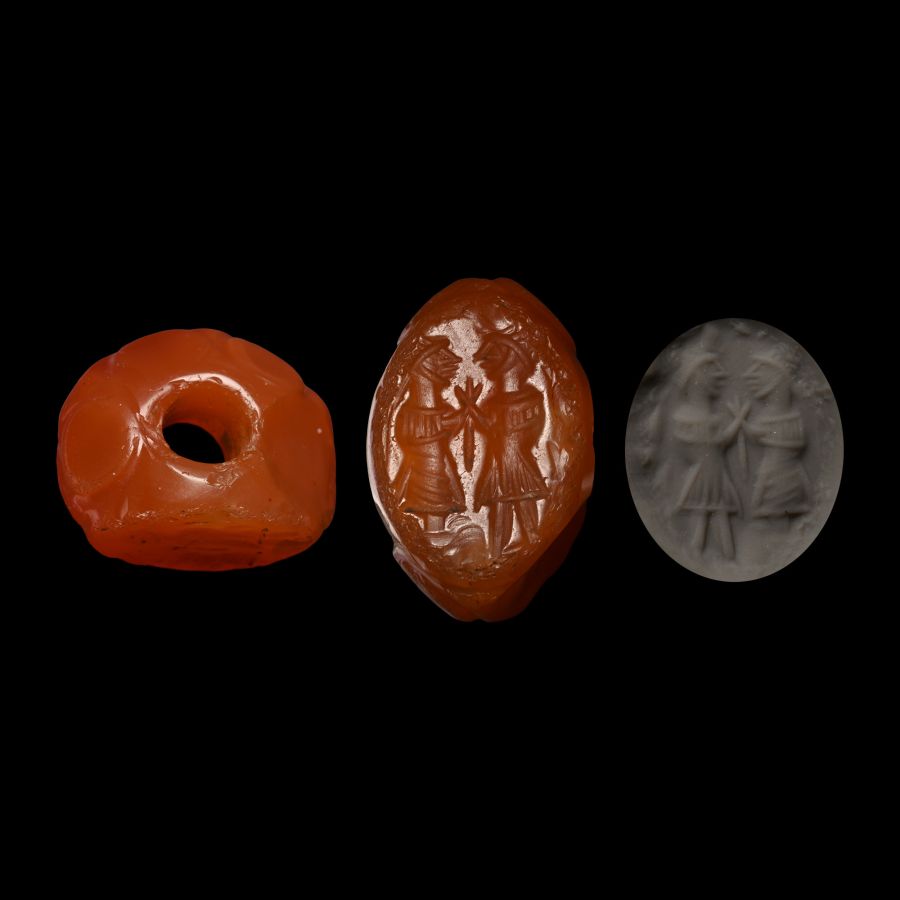
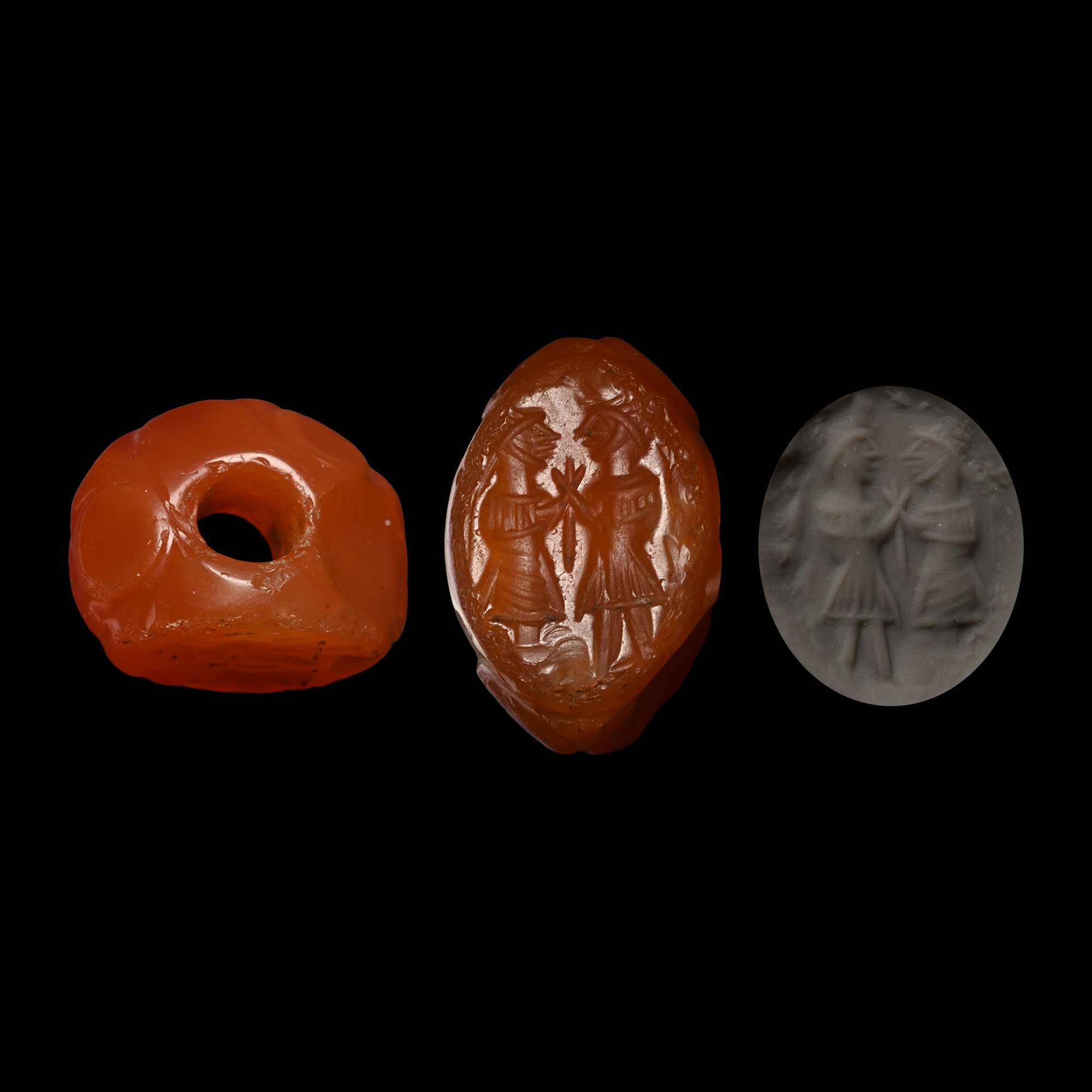
Sasanian Chalcedony Stamp Seal with Two Figures
CIRCA 3RD-7TH CENTURY A.D.
3/4 in. (3.49 grams, 17.67 mm).
With a segmented upper face, the underside with incuse image of two figures holding an object in their conjoined hands. [No Reserve]
ProvenanceFrom the private collection of a European gentleman (1942-2024), formed since the 1970s.
CONDITIONTimeLine Auctions follows a vetting process to ensure the authenticity and legality of all items, reinforcing our commitment to integrity and responsible trading. Each antiquity, antique, and coin lot undergoes thorough examination by a vetting committee of at least ten external specialists, professional trade association members, scientists, and archaeologists: Our Vetting Process
AUCTIONS:
TimeLine is a leading auction house specialising in antiquities, ancient art, collectables, natural history, coins, medals, and books. Our auctions offer museums, collectors, historians, and enthusiasts the opportunity to acquire unique and historically significant pieces.
-
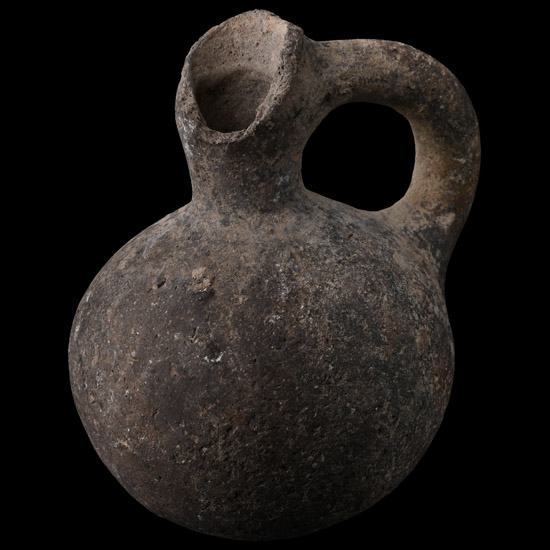
Holy Land Black-Burnished Spouted Vessel
Early Bronze Age, circa 1800-1600 B.C.Sold for (Inc. bp): £65
Comprising a spherical body and a narrow neck with a handle at the rear. 66.6 grams, 76 mm
From the collection of a Yorkshire, UK gentleman, items collected in the Holy Land in the 1960s. -
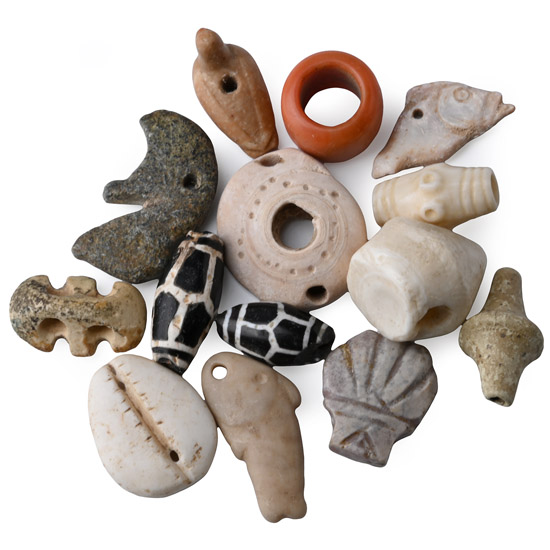
Western Asiatic Stone Amulet and Bead Collection
2nd-1st millennium B.C.Sold for (Inc. bp): £286
A mixed group including: two barrel-shaped with etched decoration, one seashell-shaped, one mother-of-pearl pendant shaped as a fish, another fish-shaped pendant in stone, and others. 33.39 grams total, 15.89-25.69 mm
From the private collection of a European gentleman (1942-2024), formed since the 1970s. -
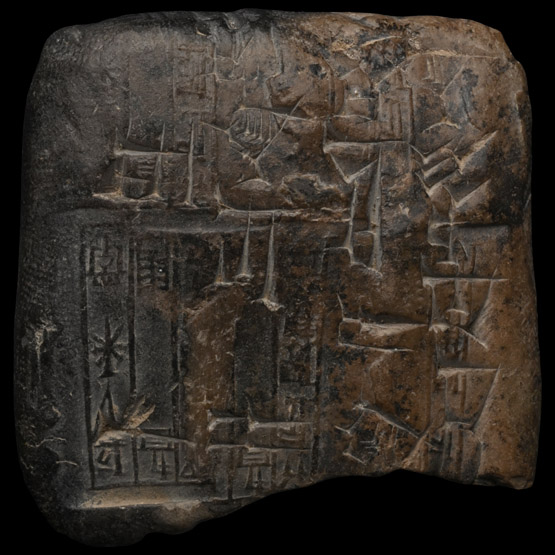
Mesopotamian Cuneiform Tablet with Cylinder Seal Impressions
2nd millennium B.C.Sold for (Inc. bp): £7,020
Pillow-shaped ceramic section with impressed design: obverse with rolled cuneiform impression from a cylinder seal and cuneiform text alongside; reverse with faintly impressed cylinder seal design and flanking cuneiform text. 31.8 grams, 41 mm
Acquired at a London antiques fair in the 1990s. From the private collection of a Devon, UK, lady.
