
Loading, please wait...
LOT 1367
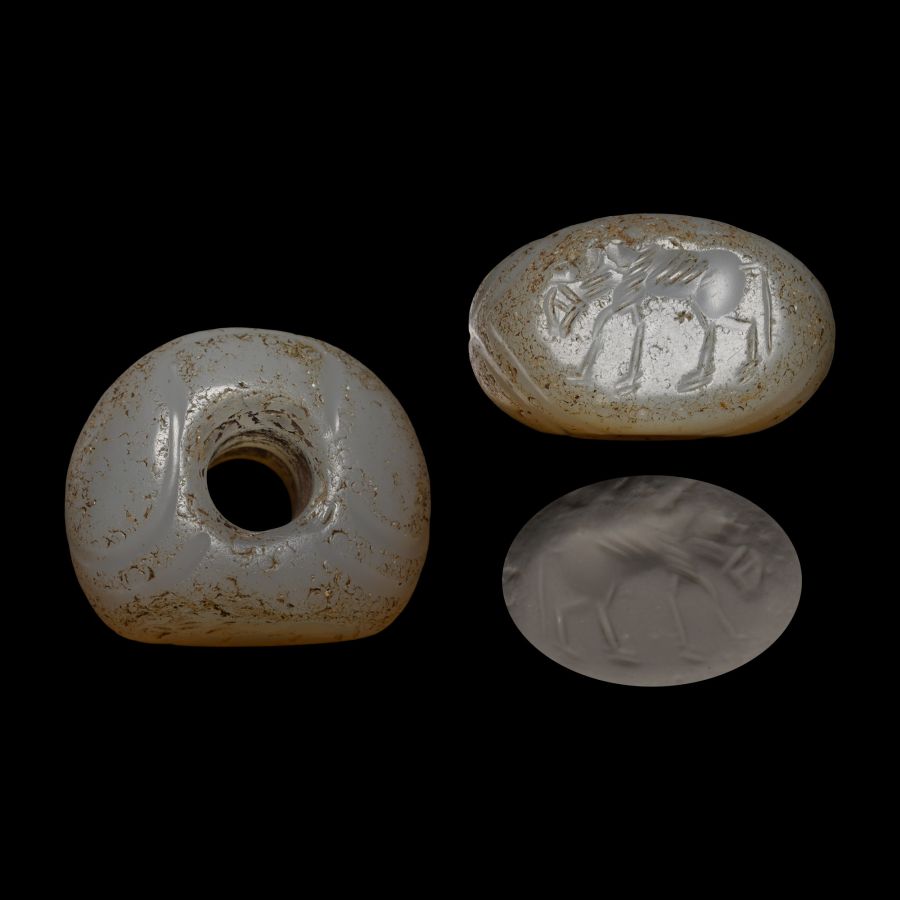
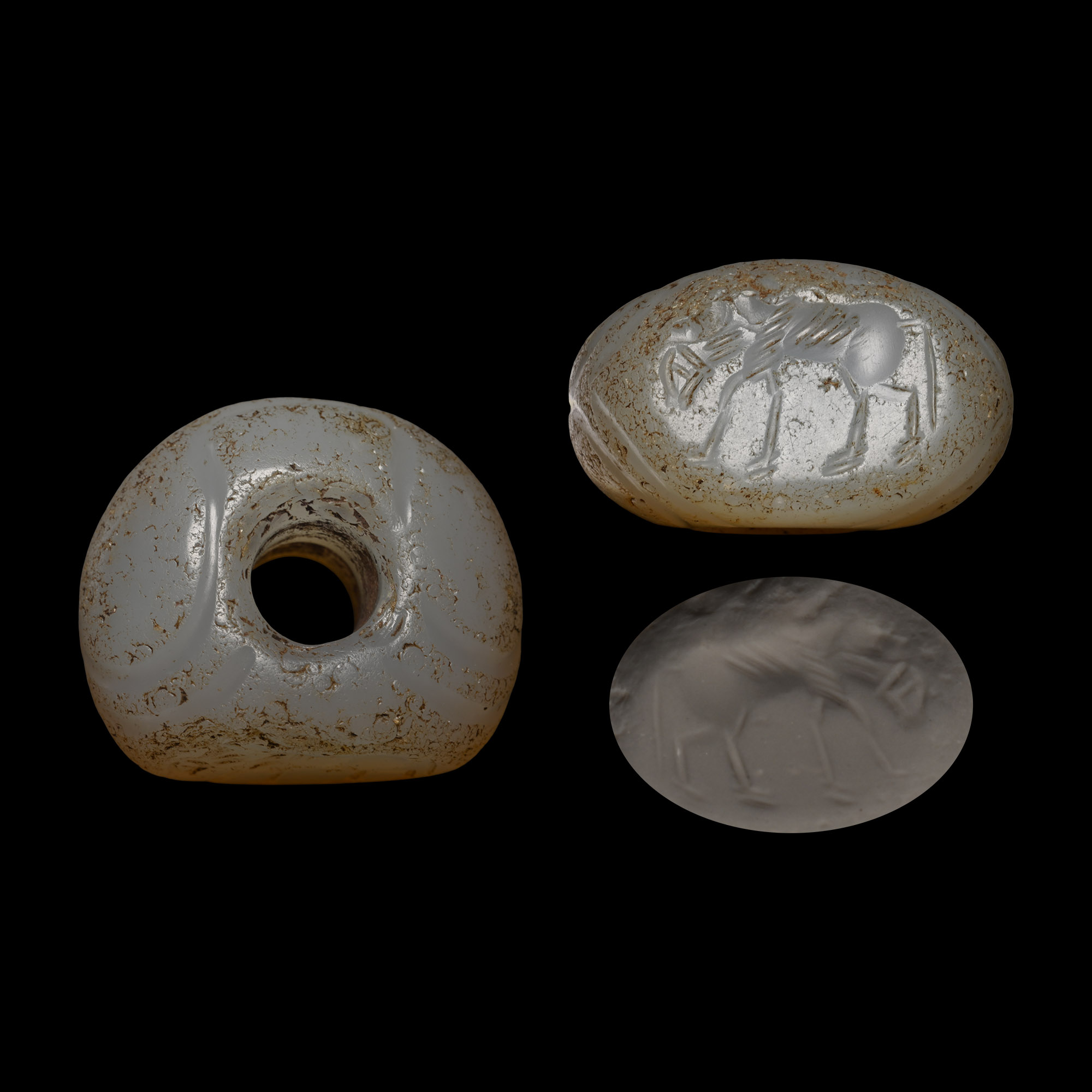
Sasanian Chalcedony Stamp Seal with Animal
CIRCA 3RD-7TH CENTURY A.D.
1 1/8 in. (13.80 grams, 27.01 mm).
With segmented body, incuse quadruped to underside. [No Reserve]
ProvenanceFrom the private collection of a European gentleman (1942-2024), formed since the 1970s.
CONDITIONTimeLine Auctions follows a vetting process to ensure the authenticity and legality of all items, reinforcing our commitment to integrity and responsible trading. Each antiquity, antique, and coin lot undergoes thorough examination by a vetting committee of at least ten external specialists, professional trade association members, scientists, and archaeologists: Our Vetting Process
AUCTIONS:
TimeLine is a leading auction house specialising in antiquities, ancient art, collectables, natural history, coins, medals, and books. Our auctions offer museums, collectors, historians, and enthusiasts the opportunity to acquire unique and historically significant pieces.
-
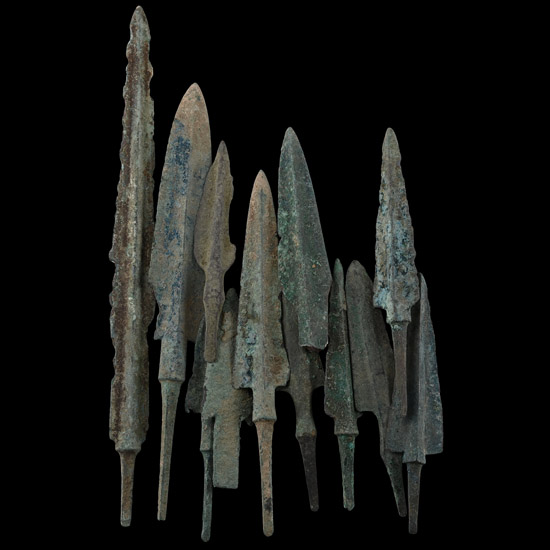
Western Asiatic Bronze Arrowhead Collection
2nd-1st millennium B.C.Sold for (Inc. bp): £169
Comprising eleven tanged triangular arrowheads, most with a raised midrib, and a tanged javelin head. 309 grams total, 8-20.7 cm
London, UK, collection, 1990s.
Most of these blades are bipartite, but the definition of the bipartite type is not absolute, as it brings together weapons of very different and unrelated designs. In fact, some weapons do not have a sufficiently characteristic shape to be interpreted as a javelin or long arrowhead. -
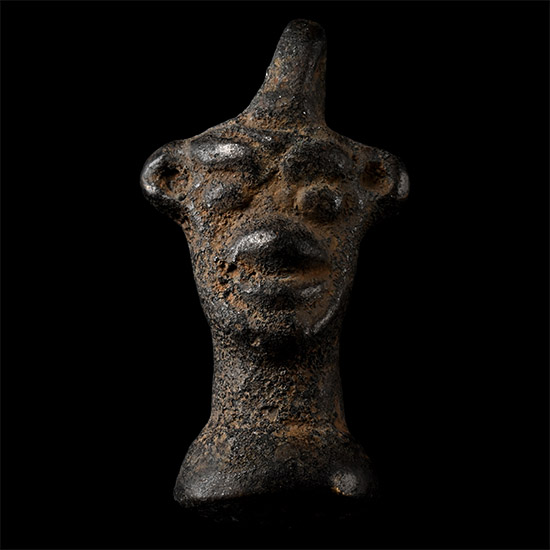
Assyrian Double-Faced Pendant Depicting Pazuzu, King of Wind Demons
8th-6th century B.C.Estimate: £500 - 700 (+bp*)
Opening Bid: £250
Carved in the round with flared base, addorsed faces of the demon with suspension lug above. 50.24 grams, 44 mm
UK private collection before 2000. Acquired on the UK art market. Private collection, London, UK.
The figure described as the 'King of Wind Demons' is commonly identified with Pazuzu, a well-known demon in Assyrian and Babylonian tradition. Despite his fearsome appearance, often shown with a canine face, bulging eyes, a scaly body, and wings, Pazuzu was not simply a malevolent force. He was understood as the ruler of the winds, particularly the hot, destructive winds from the desert, but was also invoked for protection. Most notably, Pazuzu was believed to ward off the demon Lamashtu, who threatened pregnant women and infants. Small amulets and pendants bearing his image were therefore worn or placed in domestic spaces as protective devices. Objects such as this pendant belong to that world of everyday belief, where the boundary between danger and protection was fluid, and where even a demon could serve an apotropaic role. -
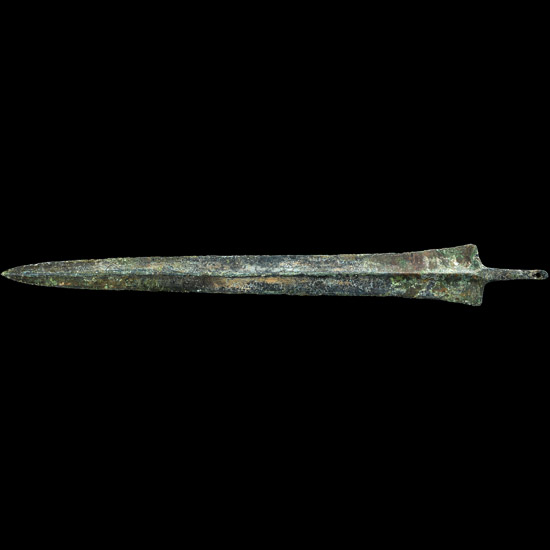
Luristan Bronze Tanged Dirk
Circa 1st millennium B.C.Sold for (Inc. bp): £221
Comprising a slender triangular blade with a raised midrib and a short rectangular-section pierced tang. 192 grams, 38.3 cm
Ex Abelita family collection, 1980s-2000s.
The Luri people produced a quantity of fine metalwork, which according to Dr. Khorasani, could be due to a settled period which arose as a result of the defeat of the Elamites by the Babylonians, leaving the Luristani people in relative peace for a period of time after 1200 B.C. According to Khorasani, 'A culture of innovation and experimentation flourished, and the repertoire of the Luristan smiths expanded in the period between 1150–1050 BC.'
