
Loading, please wait...
LOT 0238
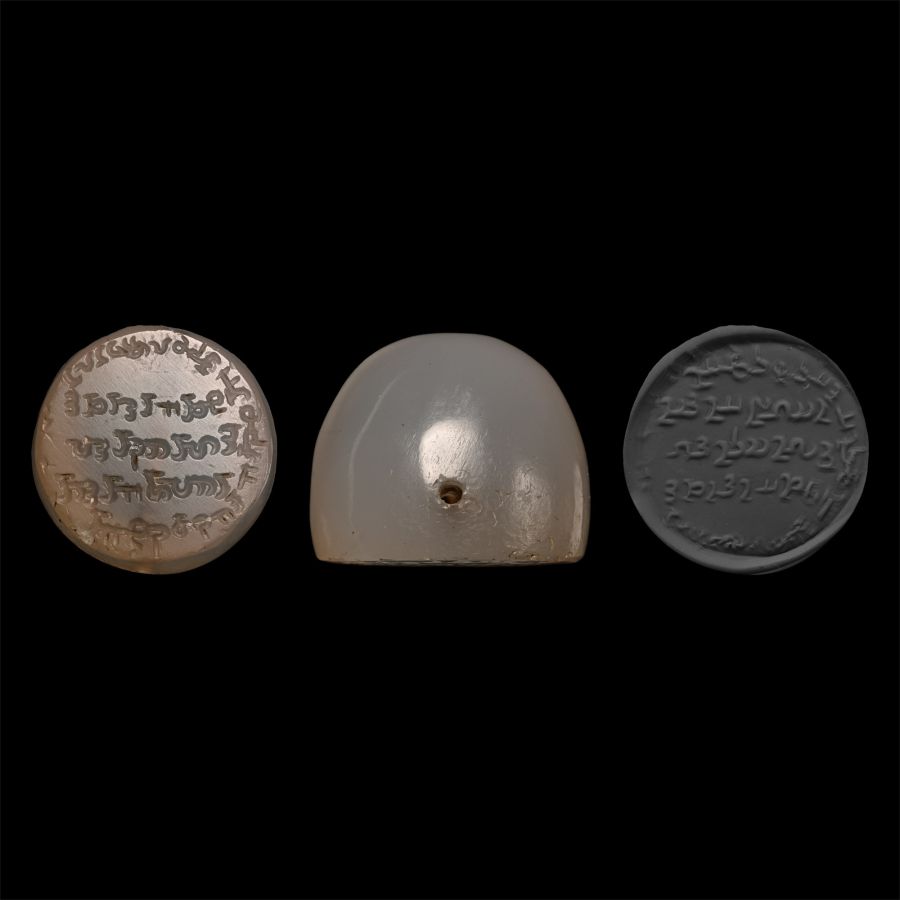
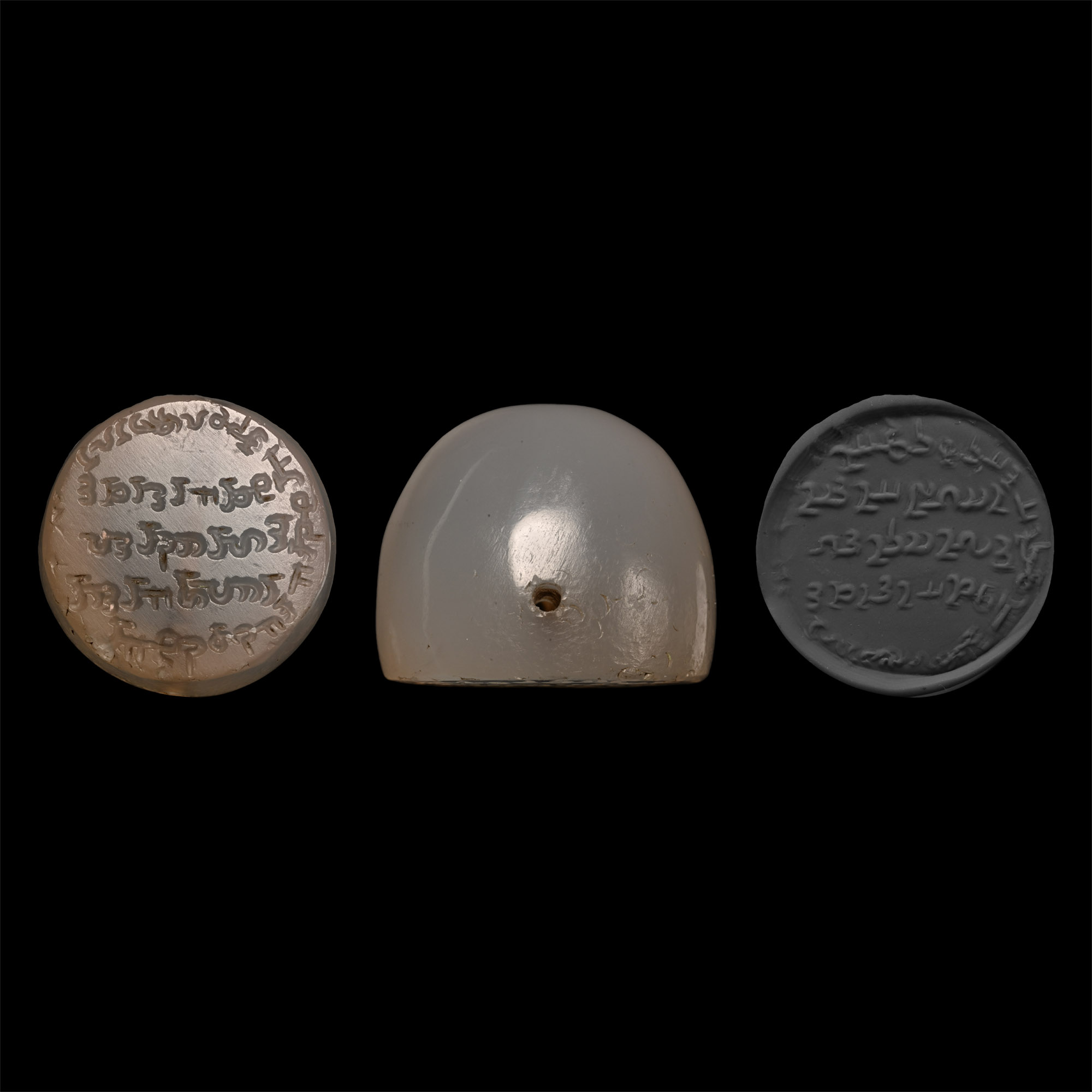
Sasanian Chalcedony Stamp Seal Inscribed with 'Behnam, Overseer of Work for the King of Kings'
224-651 A.D.
7/8 in. (29.9 grams, 23.48 mm high).
Plano-convex in profile with Pahlavi inscription to the underside; transliterated as: 'Vahnām ī shāhānshāh-kārframān' (meaning 'Behnām, Overseer of Work for the King of Kings'); Bivar notes in his summary: 'This specimen represents a previously unrecorded variety of the so-called "administrative seals" which are engraved only with an inscription defining an office, and have no pictorial motif. It is unusual in apparently bearing a personal name, and in designating its bearer as kārframān "Overseer of Work"....'; accompanied by a museum-quality impression.
Provenancewith Christie's, London, 25 April 2001, no.464 [Part].
Accompanied by a copy of a scholarly note typed and signed by A.D.H. (David) Bivar, 9 May 2009.
Accompanied by copies of the relevant Christie's catalogue pages.
This lot has been cleared against the Art Loss Register database, and is accompanied by an illustrated lot declaration signed by the Head of the Antiquities Department, Dr Raffaele D'Amato.
TimeLine Auctions follows a vetting process to ensure the authenticity and legality of all items, reinforcing our commitment to integrity and responsible trading. Each antiquity, antique, and coin lot undergoes thorough examination by a vetting committee of at least ten external specialists, professional trade association members, scientists, and archaeologists: Our Vetting Process
AUCTIONS:
TimeLine is a leading auction house specialising in antiquities, ancient art, collectables, natural history, coins, medals, and books. Our auctions offer museums, collectors, historians, and enthusiasts the opportunity to acquire unique and historically significant pieces.
LOT 0238
Sasanian Chalcedony Stamp Seal Inscribed with 'Behnam, Overseer of Work for the King of Kings'
Sold for (Inc. bp): £5,460
-
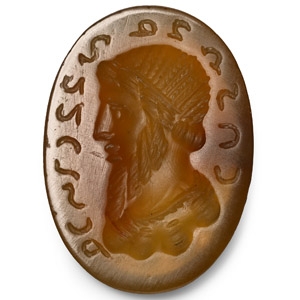
Parthian Agate Gemstone with Bust
Circa 1st century B.C.Sold for (Inc. bp): £156
Ellipsoid carnelian cloison with central intaglio profile bearded bust, epigraphic Pahlavi legend to the rim. 2.12 grams, 23 mm
From the collection of a London antiquarian, formed since the 1980s. This lot has been cleared against the Art Loss Register database, and is accompanied by an illustrated lot declaration signed by the Head of the Antiquities Department, Dr Raffaele D'Amato. -
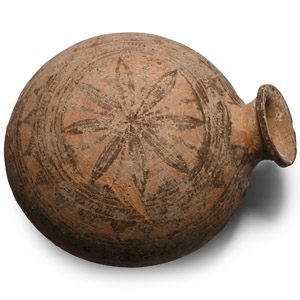
Large Western Asiatic Terracotta Pilgrim's Flask
Iron Age, late 1st millennium B.C.Sold for (Inc. bp): £293
Biconvex in section with trumpet-shaped mouth, concentric geometric bands framing the central rosette. 1.62 kg, 25 cm
Ex London, UK, collection, 1990s. This lot has been cleared against the Art Loss Register database, and is accompanied by an illustrated lot declaration signed by the Head of the Antiquities Department, Dr Raffaele D'Amato. -
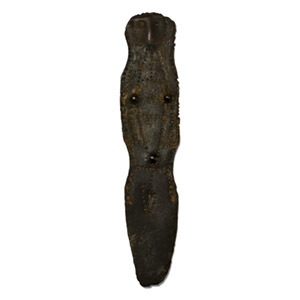
Western Asiatic Bronze Sheet Idol
1st millennium B.C.Sold for (Inc. bp): £117
With repoussé pellets to the outline, facial details, breasts and navel. 7.33 grams, 10.1 cm
UK private collection before 2000. Acquired on the UK art market. Property of a London, UK, gentleman. This lot has been cleared against the Art Loss Register database, and is accompanied by an illustrated lot declaration signed by the Head of the Antiquities Department, Dr Raffaele D'Amato.
