
Loading, please wait...
LOT 0210
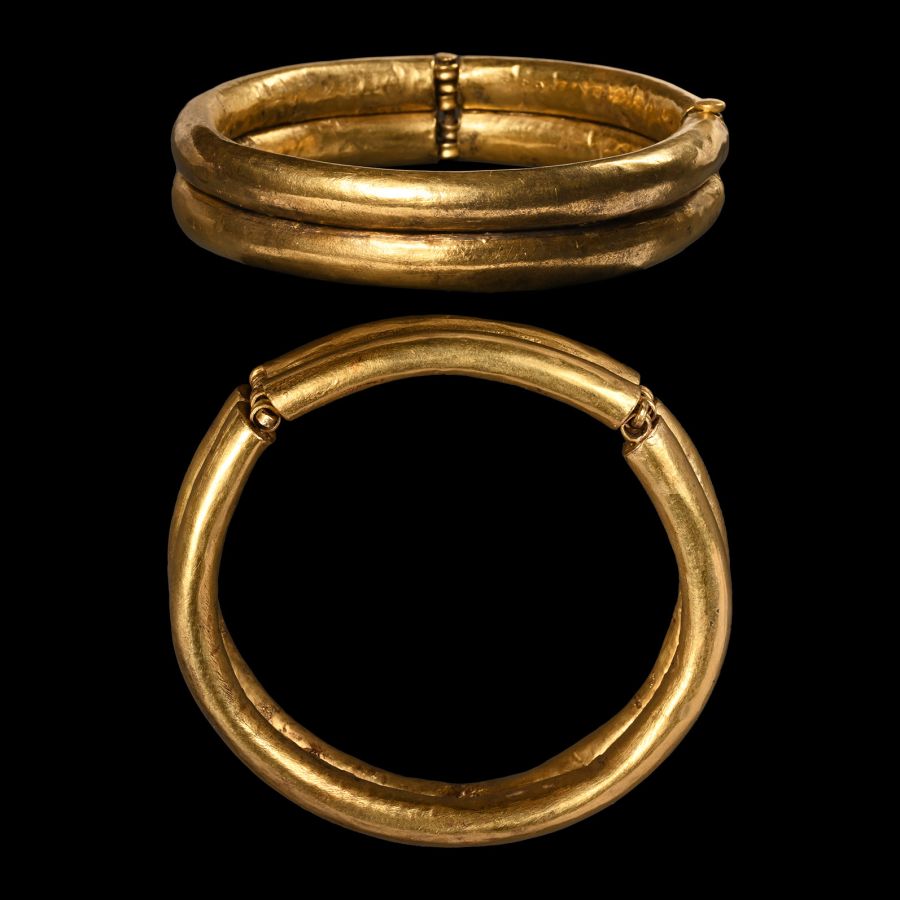
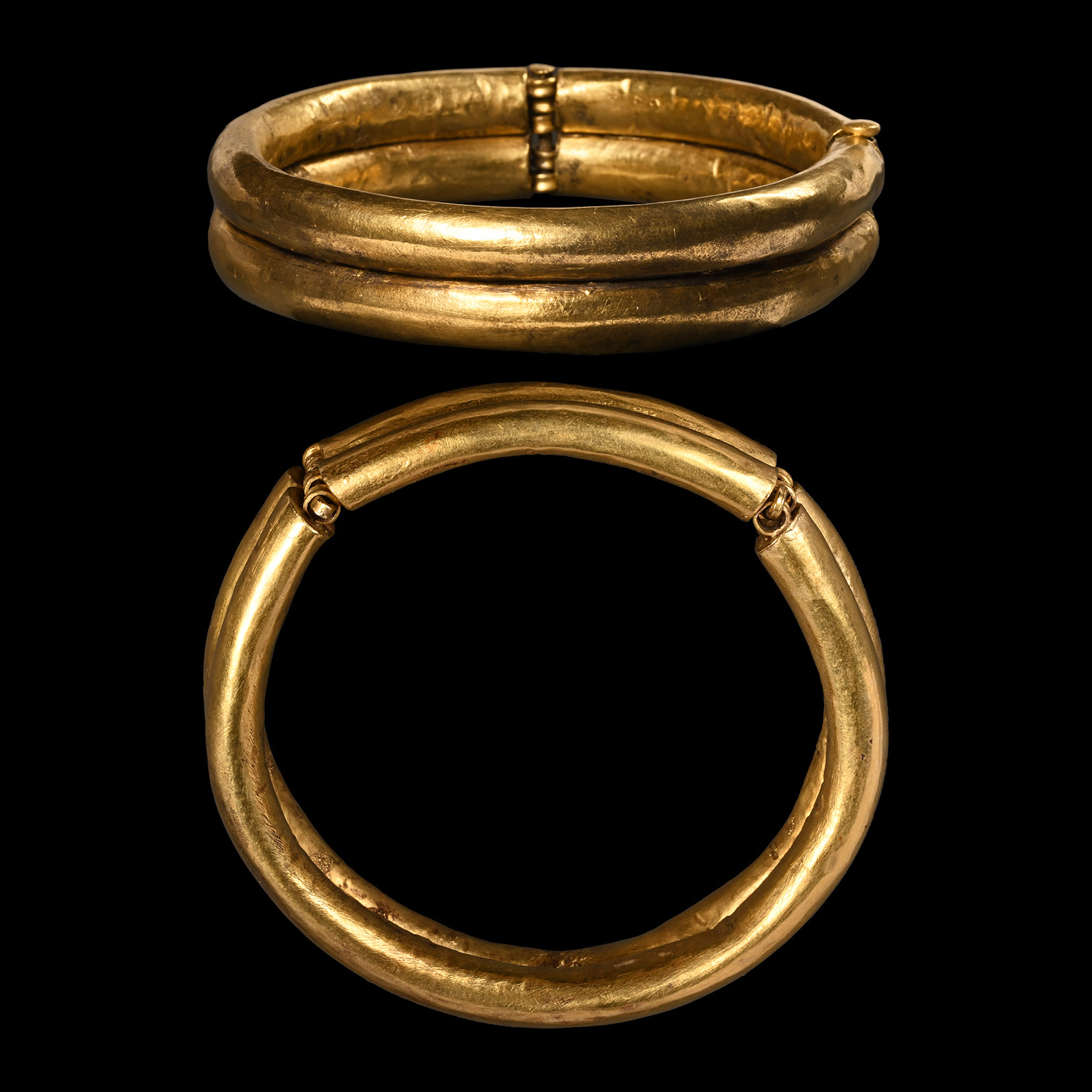
Sarmatian Gold Hinged Bracelet
2ND CENTURY B.C.
3 3/8 in. (65 grams, 85 mm wide).
A substantial gold bangle with hinged clasp, composed of two conjoined oval-section hoops, gusseted loops to each terminal and closure pin.
ProvenanceAcquired 1990s.
London Mayfair gallery, UK.
Ex Dutch collection, 2000s.
This lot has been checked against the Interpol Database of stolen works of art and is accompanied by search certificate no.11645-199207.
TimeLine Auctions follows a vetting process to ensure the authenticity and legality of all items, reinforcing our commitment to integrity and responsible trading. Each antiquity, antique, and coin lot undergoes thorough examination by a vetting committee of at least ten external specialists, professional trade association members, scientists, and archaeologists: Our Vetting Process
AUCTIONS:
TimeLine is a leading auction house specialising in antiquities, ancient art, collectables, natural history, coins, medals, and books. Our auctions offer museums, collectors, historians, and enthusiasts the opportunity to acquire unique and historically significant pieces.
-
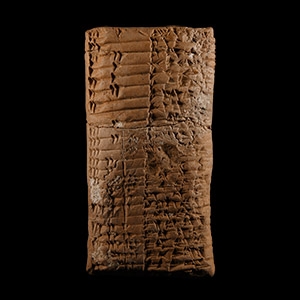
Cuneiform Accounting Tablet Listing a Distribution to a Series of Babylonian Soldiers
Mid 2nd millennium B.C.Sold for (Inc. bp): £1,105
A bifacial rectangular tablet with lentoid cross-section, the two principal faces bearing cuneiform text relating to a distribution for several individuals whose names are recorded in the left-hand column (Sîn-bēl-ilī Masitum, Sinatum, etc.), probably Babylonian soldiers, the document dates to the end of the first Babylonian dynasty; repaired. 353 grams, 13 cm wide
Specialised collection of cuneiform texts, the property of a London gentleman and housed in London before 1992. Thence by descent to family members. Examined by Professor Wilfrid George Lambert FBA (1926-2011), historian, archaeologist, and specialist in Assyriology and Near Eastern archaeology, in the late 1980s and early 1990s. The collection is exceptional for the variety of types, including some very rare and well preserved examples. -
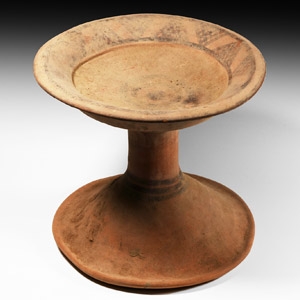
Large Western Asiatic Terracotta Chalice
1st millennium B.C.Sold for (Inc. bp): £176
A terracotta footed vessel comprising a broad carinated bowl with painted hatching to the rim, stepped stem and flared base with rolled rim; painted bands above the base. 3.6 kg, 28 cm wide
Acquired 1980-2015. Ex Abelita family collection. -
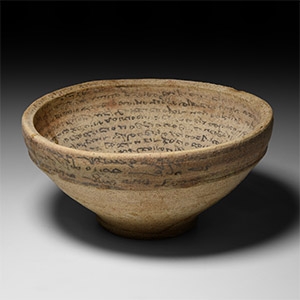
Aramaic Magical Bowl Bearing an Incantation Against Evil Spirits
4th-8th century A.D.Sold for (Inc. bp): £780
A ceramic flat-based bowl, inscribed in spiral from the bottom inner wall to the rim with Aramaic text, and on the outer rim. 692 grams, 19.5 cm wide
Early 1990s London collection. Acquired on the UK art market. From a private collection, Lancashire, UK
Aramaic incantation bowls are particular to the Sassanian period and have been found in the regions of modern Iraq. These simple ceramic bowls, also known as magic bowls, each contain an Aramaic inscription, written in ink, which spirals from the centre. The bowls seem to have played an important part in domestic life. For example, during excavation in Nippur in 1889, one or more incantation bowls were found in each house together with domestic artefacts, most often in doorways or under floorboards in the corner of rooms. The bowls are predominantly apotropaic, and the inscriptions tend to protect their owners from misfortunes such as child-birth, illness and evil spirits.
