
Loading, please wait...
LOT 1426
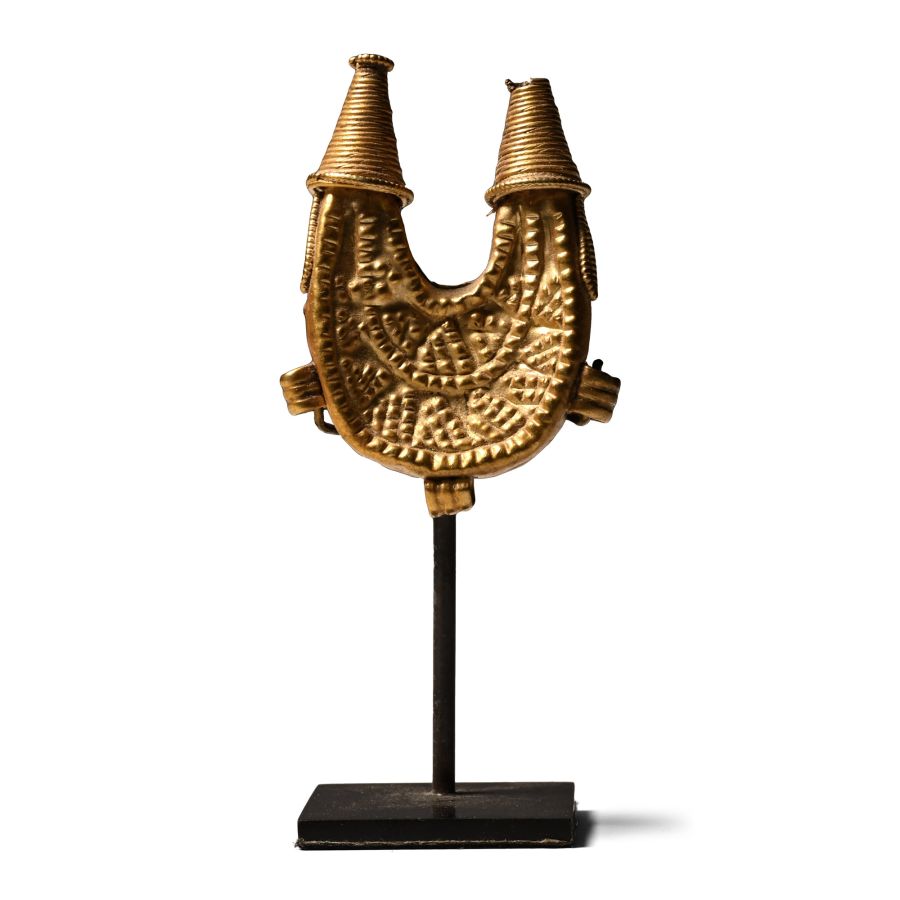
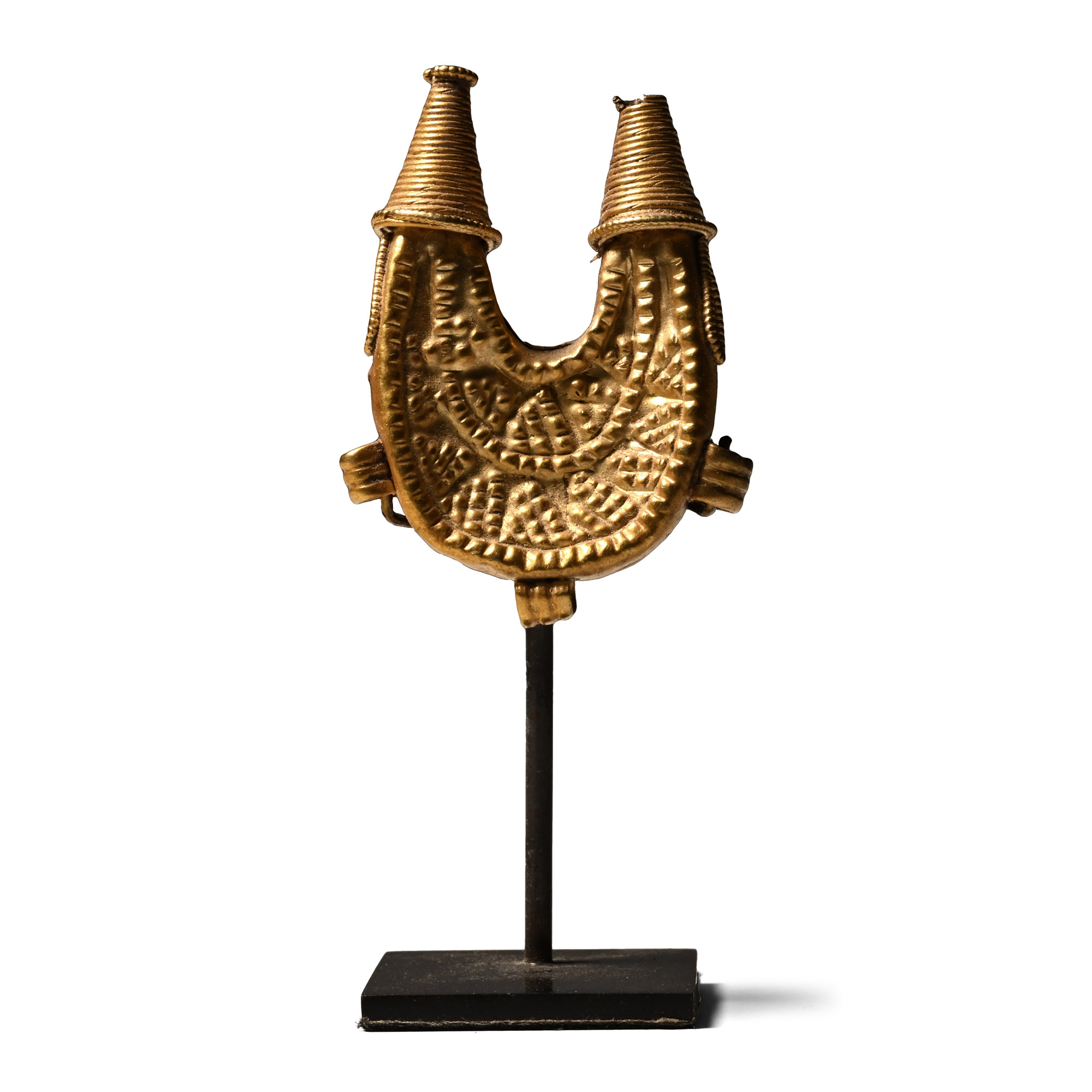
Sarmatian Gold Decorated Earring
9TH-EARLY 11TH CENTURY A.D.
1 5/8 in. (2 5/8 in.) (8.87 grams, 41 mm (20.04 grams total, 68 mm including stand)).
Hollow-formed U-shaped body with spiral-wound finial wire cones and granulated collars, repoussé pounced finial with beaded wire lateral loops, ribbed loops to the outer face; complete with custom-made stand.
ProvenanceAcquired on the London art market, 1990s.
Private collection, London.
This lot has been cleared against the Art Loss Register database, and is accompanied by an illustrated lot declaration signed by the Head of the Antiquities Department, Dr Raffaele D'Amato.
See Williams, D. and Ogden, J., Greek Gold, Jewelry of the Classical World, MMA, 1994, item 77, for type.
CONDITIONTimeLine Auctions follows a vetting process to ensure the authenticity and legality of all items, reinforcing our commitment to integrity and responsible trading. Each antiquity, antique, and coin lot undergoes thorough examination by a vetting committee of at least ten external specialists, professional trade association members, scientists, and archaeologists: Our Vetting Process
AUCTIONS:
TimeLine is a leading auction house specialising in antiquities, ancient art, collectables, natural history, coins, medals, and books. Our auctions offer museums, collectors, historians, and enthusiasts the opportunity to acquire unique and historically significant pieces.
-
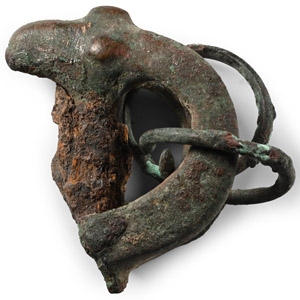
Luristan Bronze Mouflon Head with Rings
13th-7th century B.C.Sold for (Inc. bp): £59
Formed with curved horns meeting the shoulder, two bronze rings attached. 35.6 grams, 40 mm
Acquired 1980-2015. Ex Abelita family collection. This lot has been cleared against the Art Loss Register database, and is accompanied by an illustrated lot declaration signed by the Head of the Antiquities Department, Dr Raffaele D'Amato. -
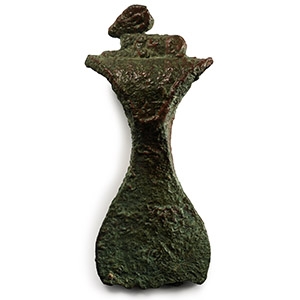
Mesopotamian Bronze Axehead with a Reclining Ibex
3rd-2nd millennium B.C.Sold for (Inc. bp): £468
With a paddle-shaped blade and short neck, round-section socket expanding at the rear with a reclining ibex, the quadruped modelled in a relaxed attitude with its right foreleg and hindleg positioned away from the body, erect head and large curving horns. 143 grams, 10.4 cm
UK private collection before 2000. Acquired on the UK art market. Property of a London gentleman. This lot has been cleared against the Art Loss Register database, and is accompanied by an illustrated lot declaration signed by the Head of the Antiquities Department, Dr Raffaele D'Amato. -
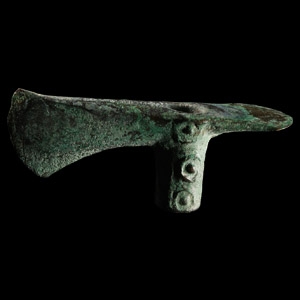
Holy Land Bronze Axehead with Adze
2nd millennium B.C.Estimate: £150 - 200 (‡+bp*)
Opening Bid: £75
The cylindrical socket displaying three raised dot-in-ring motifs running vertically to both faces, crescentic adze-head to one side, axehead to the other with channel to upper face and slightly flared blade. 621 grams, 16.5 cm
Ex architect Moshe Kaufman collection, Tel Aviv. This lot has been cleared against the Art Loss Register database, and is accompanied by an illustrated lot declaration signed by the Head of the Antiquities Department, Dr Raffaele D'Amato.
