
Loading, please wait...


LOT 0438
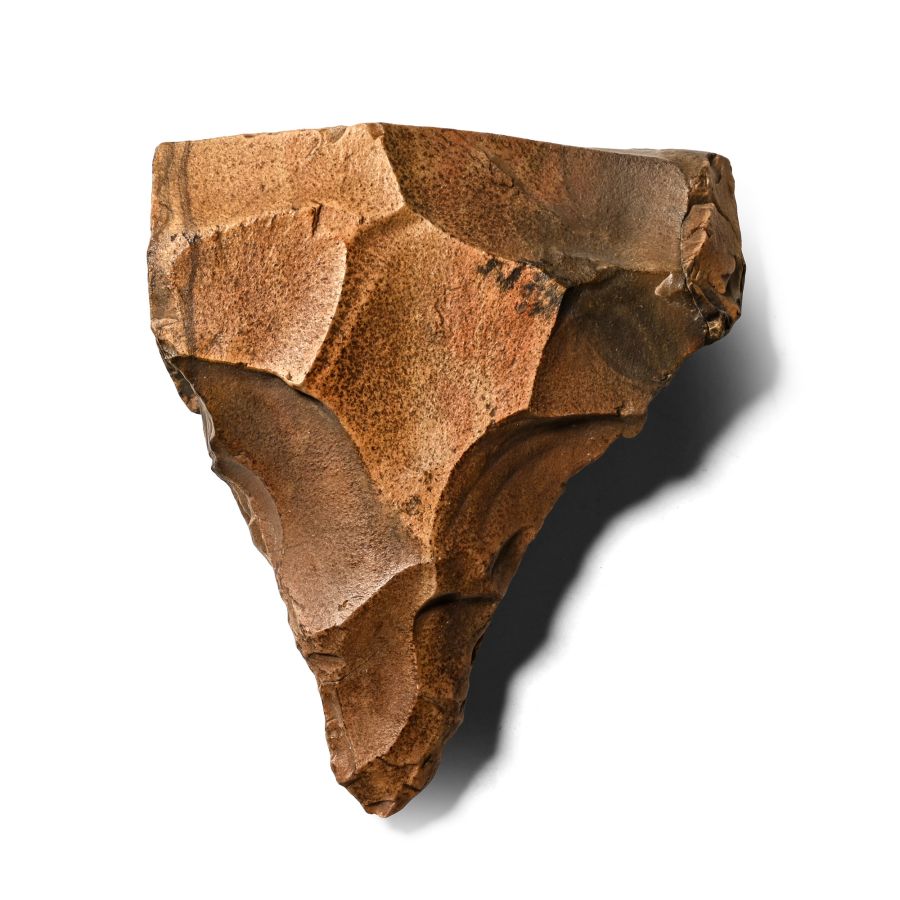
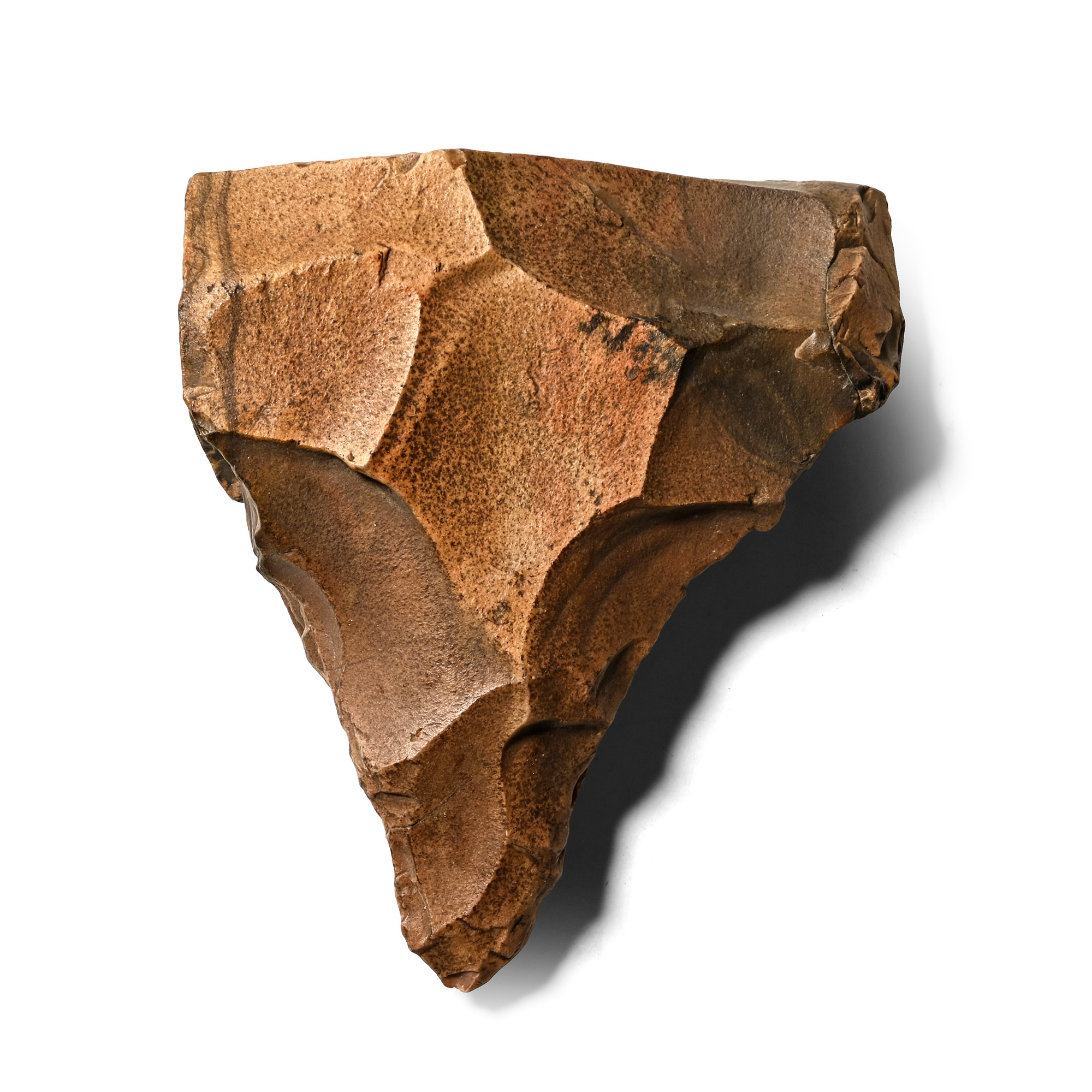
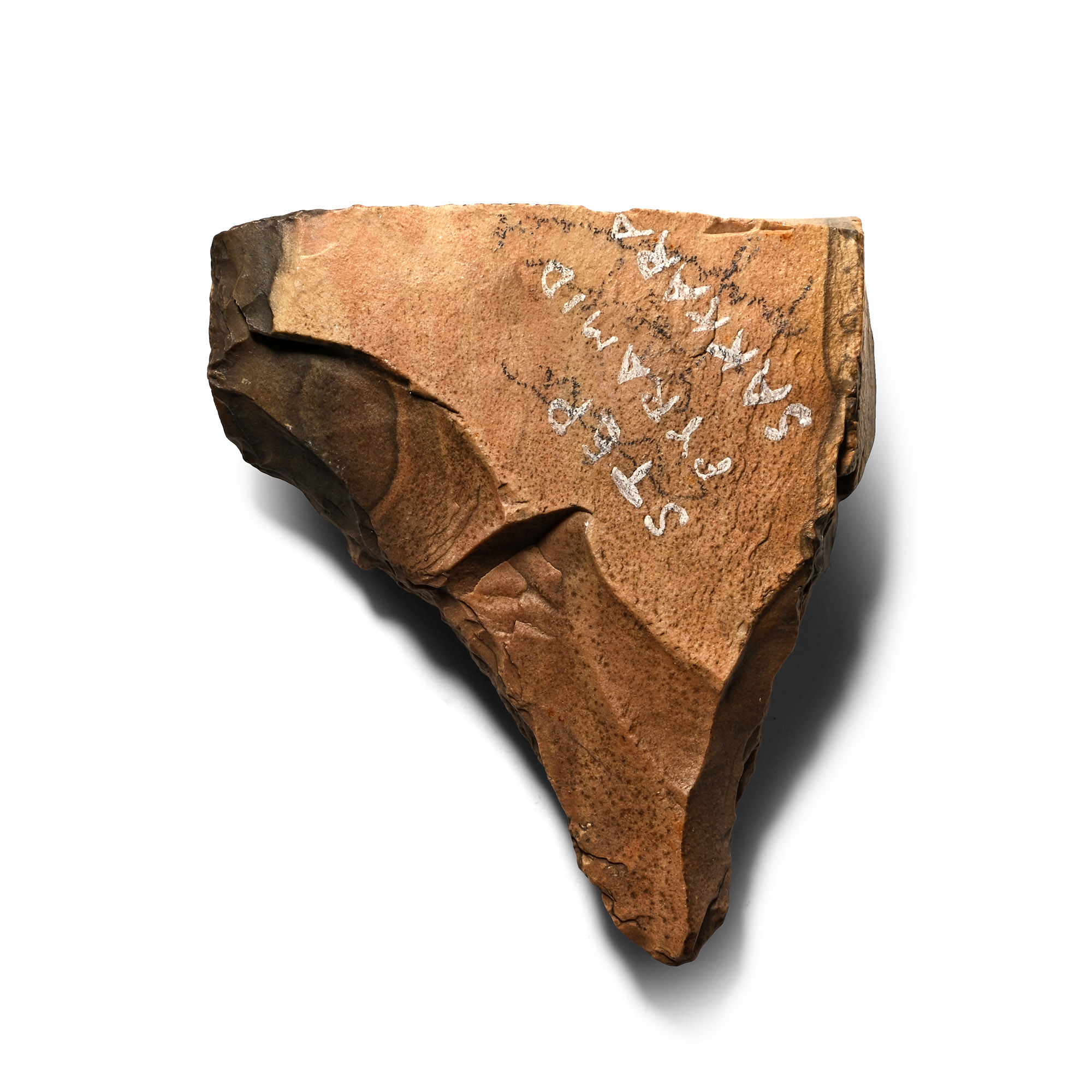
'Saqqara' Egyptian Stone Age Knapped Boring Tool
NEOLITHIC PERIOD, CIRCA 6,000 B.P.
3 1/4 in. (90 grams, 83 mm).
Triangular in plan with flat butt; inked 'Step Pyramid Sakkara' findspot. [No Reserve]
ProvenanceFound near the Step Pyramid, Saqqara, Egypt.
Acquired from Sotheby's, 16 June 1959 (part), £4.10.
From the private collection of Peter Clayton, FCILIP, Dip, Arch, FSA, FRNS, Hemel Hempstead, Hertfordshire, UK; formed since the late 1950s.
Accompanied by a copy of an old handwritten identification card written by Peter Clayton.
TimeLine Auctions follows a vetting process to ensure the authenticity and legality of all items, reinforcing our commitment to integrity and responsible trading. Each antiquity, antique, and coin lot undergoes thorough examination by a vetting committee of at least ten external specialists, professional trade association members, scientists, and archaeologists: Our Vetting Process
AUCTIONS:
TimeLine is a leading auction house specialising in antiquities, ancient art, collectables, natural history, coins, medals, and books. Our auctions offer museums, collectors, historians, and enthusiasts the opportunity to acquire unique and historically significant pieces.
LOT 0438
'Saqqara' Egyptian Stone Age Knapped Boring Tool
Estimate £50 - 70€58 - 81 (for guidance only)$68 - 95 (for guidance only)
-
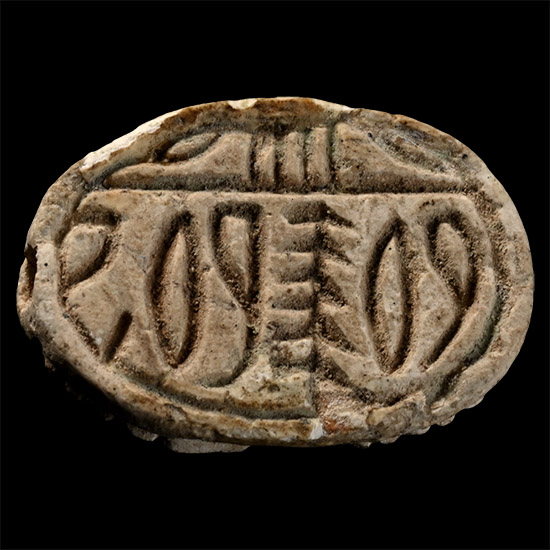
Egyptian Steatite Scarab with Hieroglyphs
Second Intermediate Period, circa 1782-1550 B.C.Estimate: £40 - 60 (+bp*)
Bids: 1 | Current Bid: £5
With incised anatomical detailing on the body, the underside bears the hieroglyphs rꜤ-n-rꜤ. 2.04 grams, 17 mm
Acquired from various London-based, UK, antiquity dealers. From a Derbyshire gentleman's private museum formed from the late 1970s-early 1980s. -
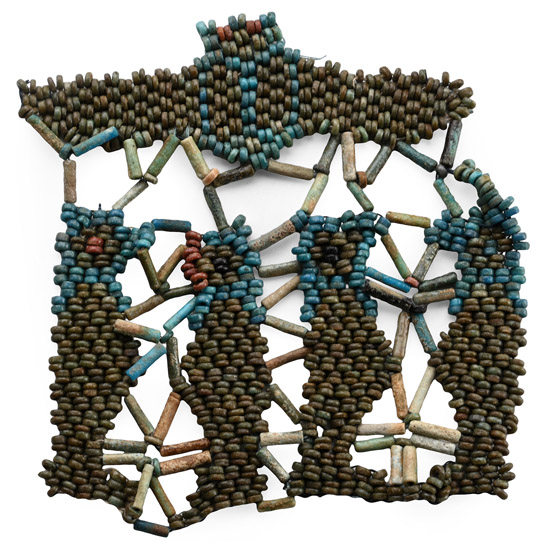
Egyptian Mummy Bead Winged Scarab and Four Sons of Horus
Late Period-Ptolemaic Period, circa 664-30 B.C.Estimate: £100 - 140 (+bp*)
Opening Bid: £50
Comprising a beaded winged scarab with the Four Sons of Horus beneath. 24.2 grams, 10.5 cm
Ex Art Shop Windsor, 1990s. From a private UK collection.
Winged scarabs were often used as funerary amulets and were believed to symbolise the deceased's rebirth and regeneration. The Four Sons of Horus were deities who safeguarded the deceased's internal organs. The human-headed Imsety protected the liver, the baboon-headed Hapy the lungs, the jackal-headed Duamutef the stomach, and the falcon-headed Qebehsenuef the intestines. -
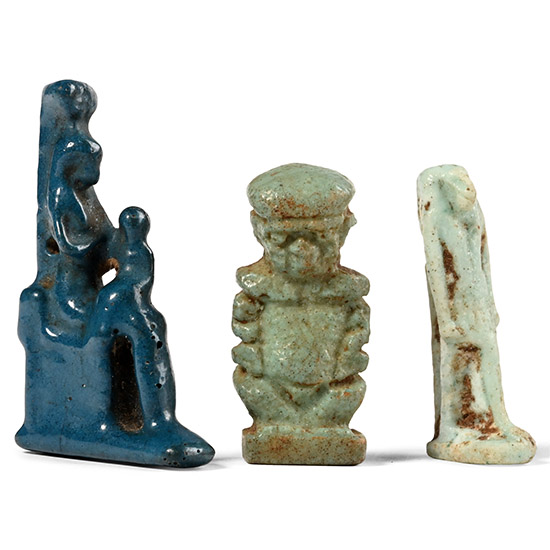
Egyptian Faience Amulet Group
Late-Ptolemaic Period, circa 664-30 B.C. and laterEstimate: £300 - 400 (+bp*)
Bids: 1 | Current Bid: £100
Comprising a glassy faience Isis Lactans, depicted with Nephthys's headdress; a bandy-legged nude Pataikos; and a striding anthropomorphic Thoth. 6.59 grams total, 25-32 mm
Ex Chris Belton Artefacts, 1980s.
