
Loading, please wait...

LOT 1073
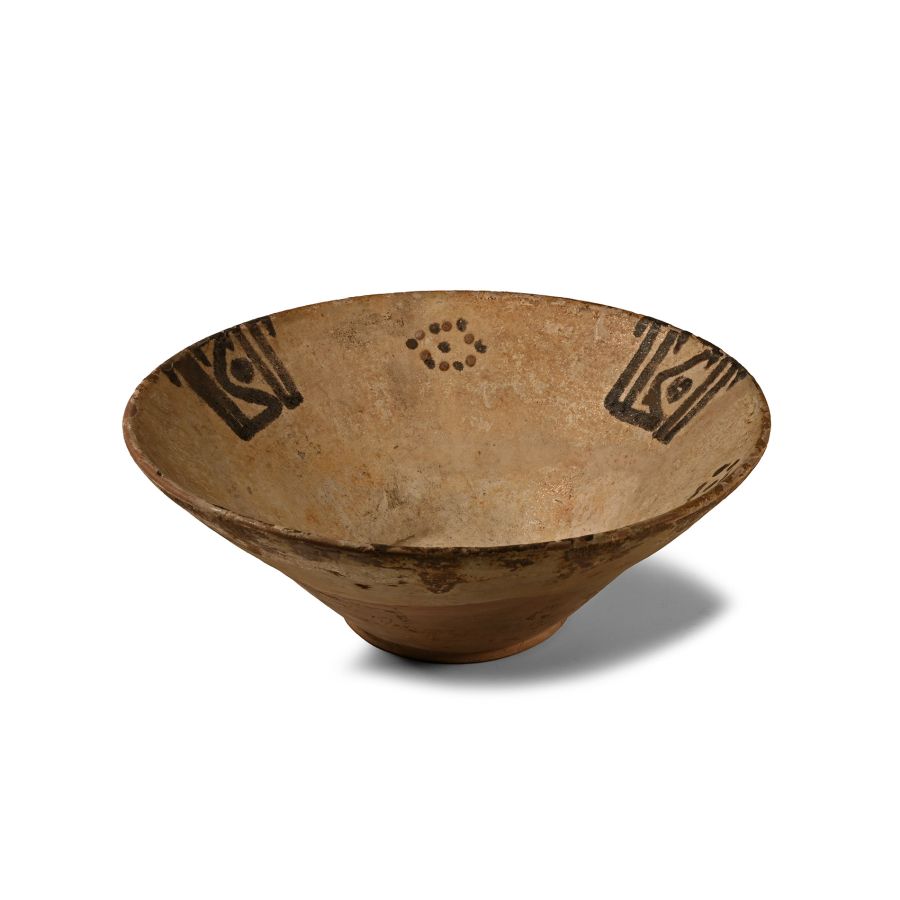
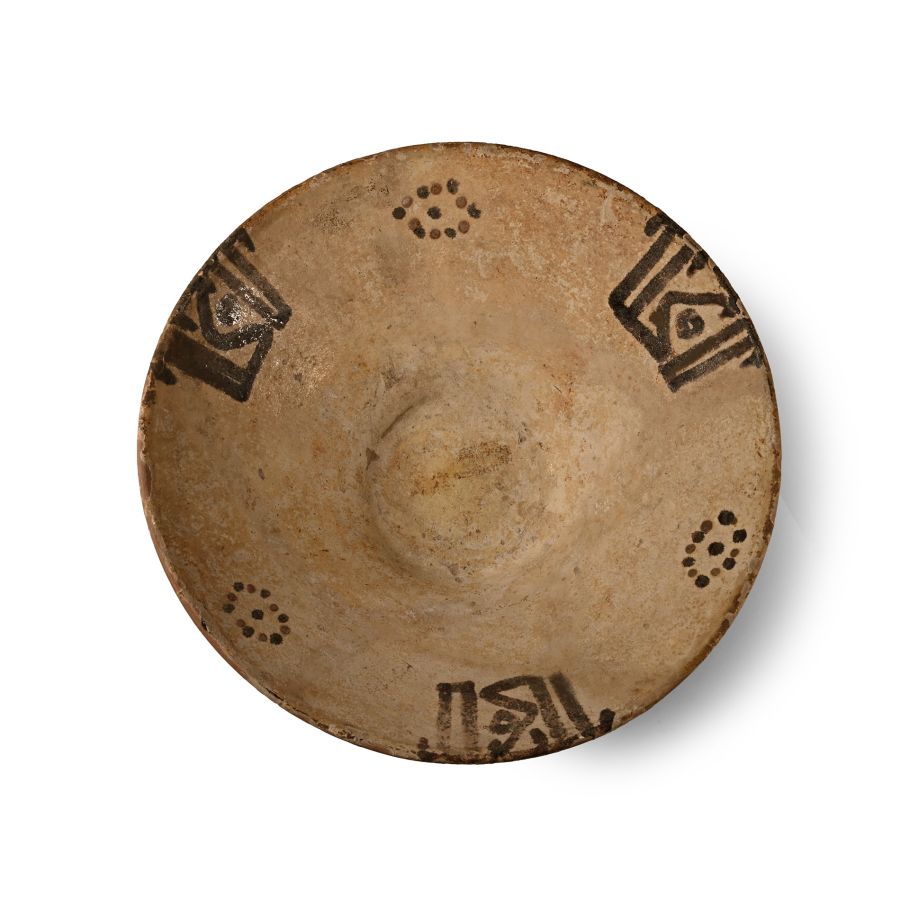
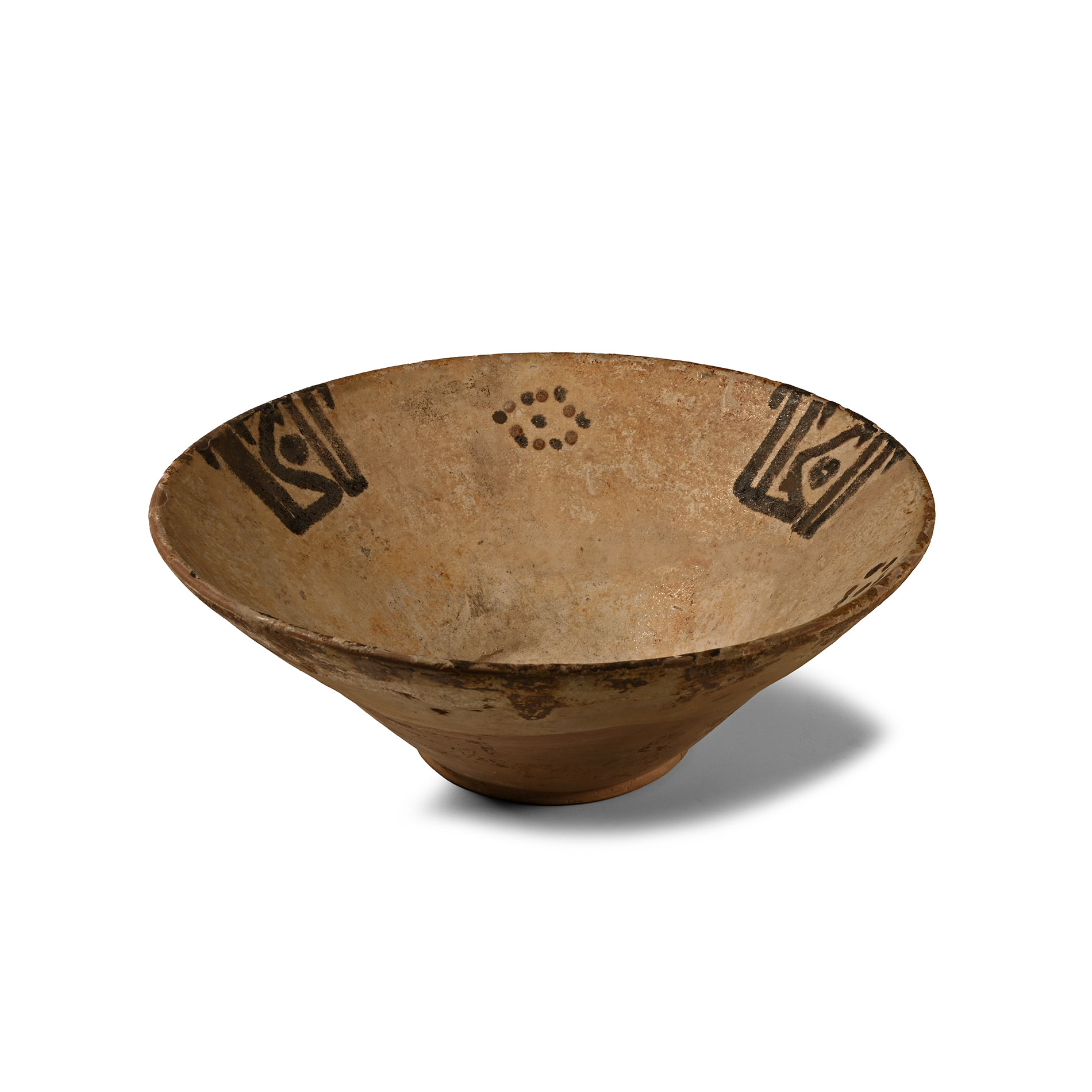
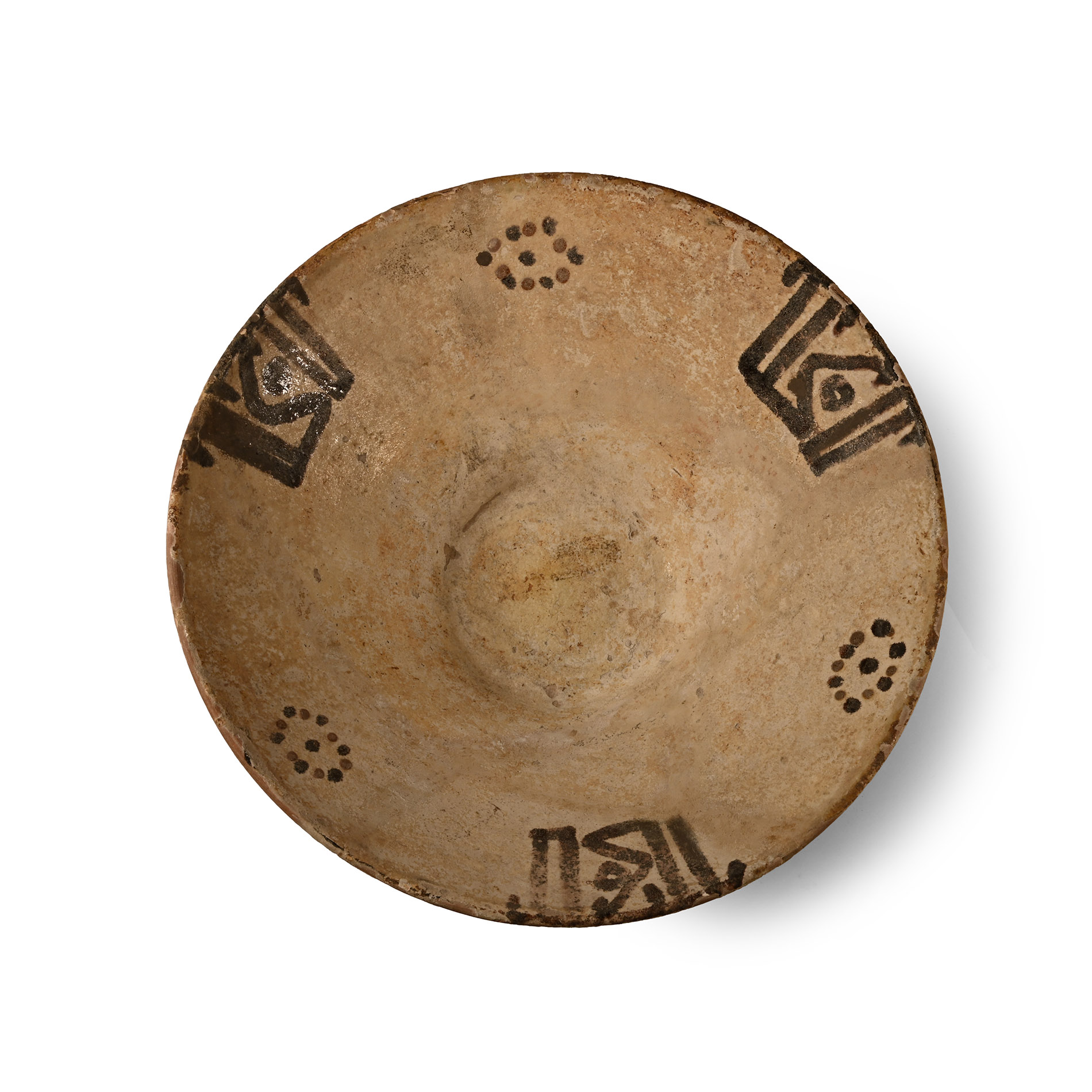
Samarkand Ware Calligraphic Ceramic Bowl
CIRCA 10TH CENTURY A.D.
8 5/8 in. (620 grams, 22 cm diameter).
Conical with low foot, slip-painted with chestnut brown band to the rim, three calligraphic panels to the inner face below the rim with interstitial red and black rosettes. [No Reserve]
ProvenanceFrom the Steel family collection, 1950s-late 1990s.
LiteratureCf. Lane, A., Early Islamic Pottery: Mesopotamia, Egypt & Persia, London, 1947, pl.15, for type.
CONDITIONTimeLine Auctions follows a vetting process to ensure the authenticity and legality of all items, reinforcing our commitment to integrity and responsible trading. Each antiquity, antique, and coin lot undergoes thorough examination by a vetting committee of at least ten external specialists, professional trade association members, scientists, and archaeologists: Our Vetting Process
AUCTIONS:
TimeLine is a leading auction house specialising in antiquities, ancient art, collectables, natural history, coins, medals, and books. Our auctions offer museums, collectors, historians, and enthusiasts the opportunity to acquire unique and historically significant pieces.
-

Neo Babylonian Duck Weight
7th-6th century B.C.Sold for (Inc. bp): £124
Carved in the round with head reversed, arched neck forming a loop. 4.1 grams, 20 mm wide
From the collection of a gentleman, acquired on the London art market in the 1990s. -

Western Asiatic Red Jasper Stamp Seal with Wolf
1st millennium B.C.Sold for (Inc. bp): £85
Pyramidal in profile with stylised intaglio figure of a wolf in profile, crouching with exaggerated claws. 5.18 grams, 16 mm
UK private collection before 2000. Acquired on the UK art market. Property of a London gentleman. -

Aramaic Lead Magical Text Scroll
2nd-8th century A.D.Sold for (Inc. bp): £468
A rectangular sheet-lead panel with columns of lightly incised Aramaic text; the sheet originally rolled tightly. 25.2 grams, 14.5 cm
Fine condition.
Acquired 1979-1999. London collection of the late Mr S.M., thence by descent.
The item was possibly meant to be a defixio or curse tablet on which the malediction was recorded and then shut away (by being tightly rolled up) so that the victim could not find it or negate it.
