
Loading, please wait...
LOT 0972
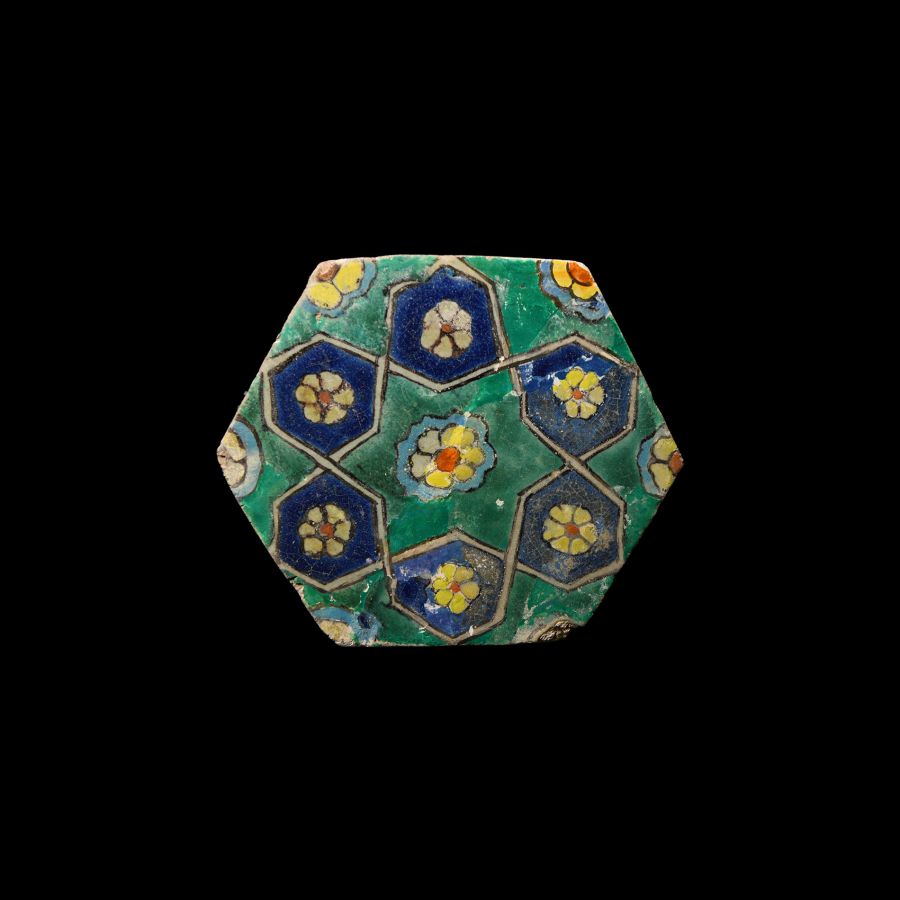
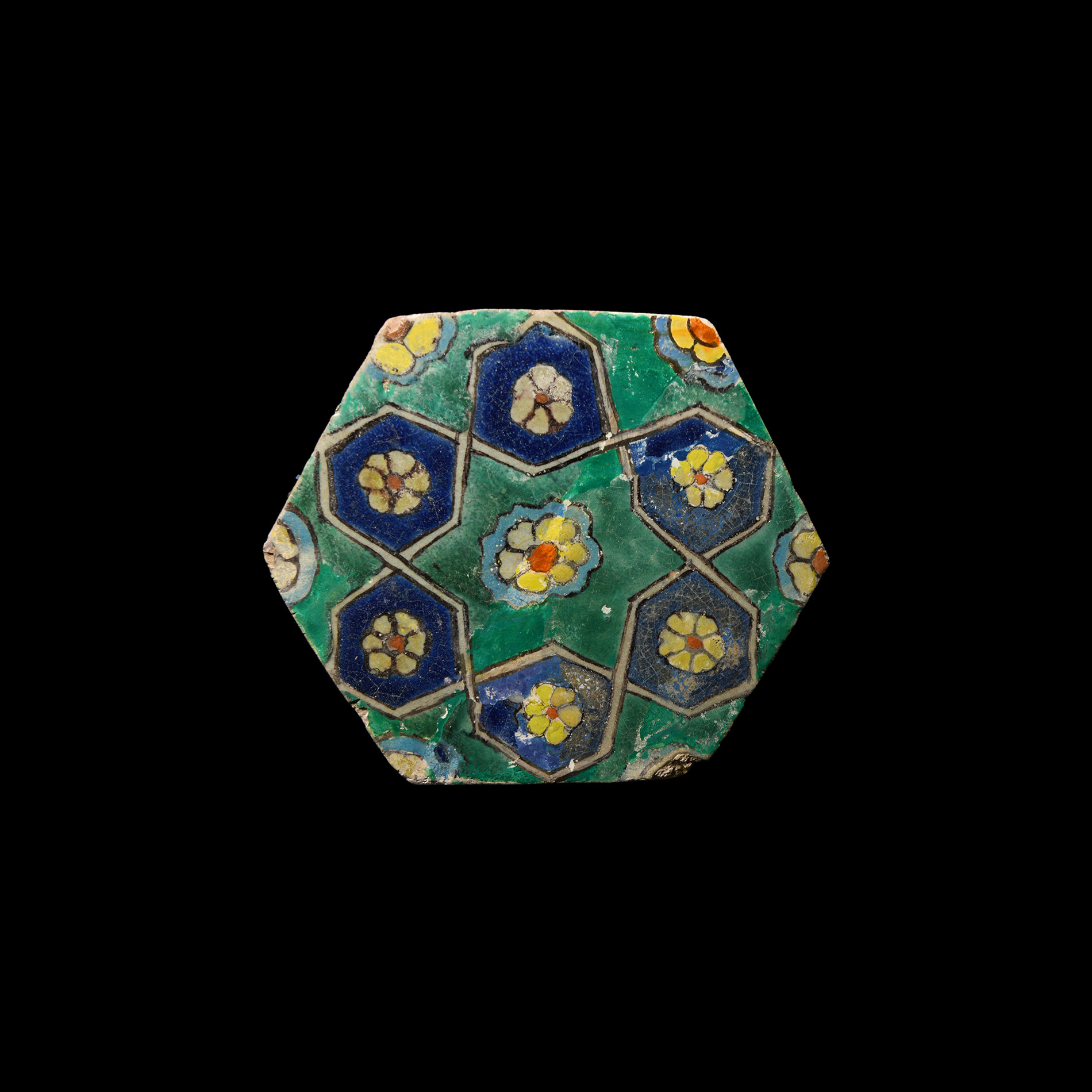
Safavid Ceramic Tile with Flowers
17TH CENTURY A.D.
8 1/4 in. (968 grams, 21 cm).
Decorated with a polychrome design composed of a central star formed from a ring of small hexagons, each with a stylised flower head at the centre; partial flower to each of the six corners of the tile; remains of glaze; restored.
ProvenanceAquired from the UK art market.
Private Scottish collection.
TimeLine Auctions follows a vetting process to ensure the authenticity and legality of all items, reinforcing our commitment to integrity and responsible trading. Each antiquity, antique, and coin lot undergoes thorough examination by a vetting committee of at least ten external specialists, professional trade association members, scientists, and archaeologists: Our Vetting Process
AUCTIONS:
TimeLine is a leading auction house specialising in antiquities, ancient art, collectables, natural history, coins, medals, and books. Our auctions offer museums, collectors, historians, and enthusiasts the opportunity to acquire unique and historically significant pieces.
-

Western Asiatic Rock Crystal Cylinder Seal with Mythical Animals
2nd-1st millennium B.C.Sold for (Inc. bp): £715
Carved with a winged figure flanked by birds and animals. 3.24 grams, 23 mm
Acquired 1970s-1996. Property of a North American collector, collection no.23. London collection, 2016. -

Western Asiatic Chalcedony Cylinder Seal with Presentation Scene
2nd-1st millennium B.C.Sold for (Inc. bp): £390
With incised frieze of a seated figure extending his hand to a standing figure in floor-length pleated garment, second figure behind him in a fringed robe and a third holding a sceptre in a fringed robe. 6.27 grams, 20 mm
Acquired 1970s-1996. Property of a North American collector; collection no.026. London collection, 2016. -

Assyrian Bronze Arm and Hand Type Brooch
Circa 7th-5th century B.C.Sold for (Inc. bp): £52
The bow decorated with circumferential grooves, one arm ending with the partially preserved wire coil; the catchplate in the form of a hand engraved with an X; accompanied by a display frame with information ticket. 186 grams total, 10 x 10.3 cm including frame
Ex Robin Symes Gallery, London, UK, 1990s. From a Leicestershire, UK, collection.
Fibulae with triangular bows (type 3 of Curtis classification) were the most common in Assyria. At least 66 bronze examples have been found at Nimrud, 32 in the graves and tombs at Ashur, 14 at Kouyunjik (some of them represented only by fragments), three at Nebbi Yunus, six at Khorsabad, three at Sharif Khan, all fragmentary, and single examples at Tell Billa and Tell al Rimah.
