
Loading, please wait...


LOT 0366
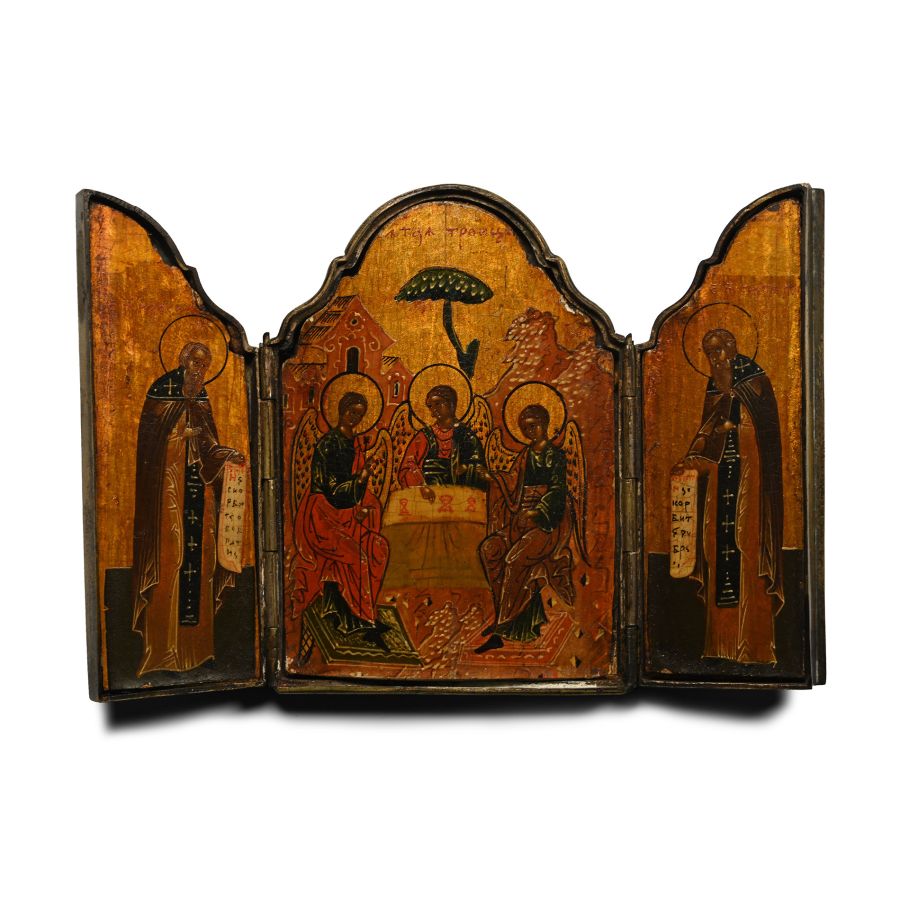
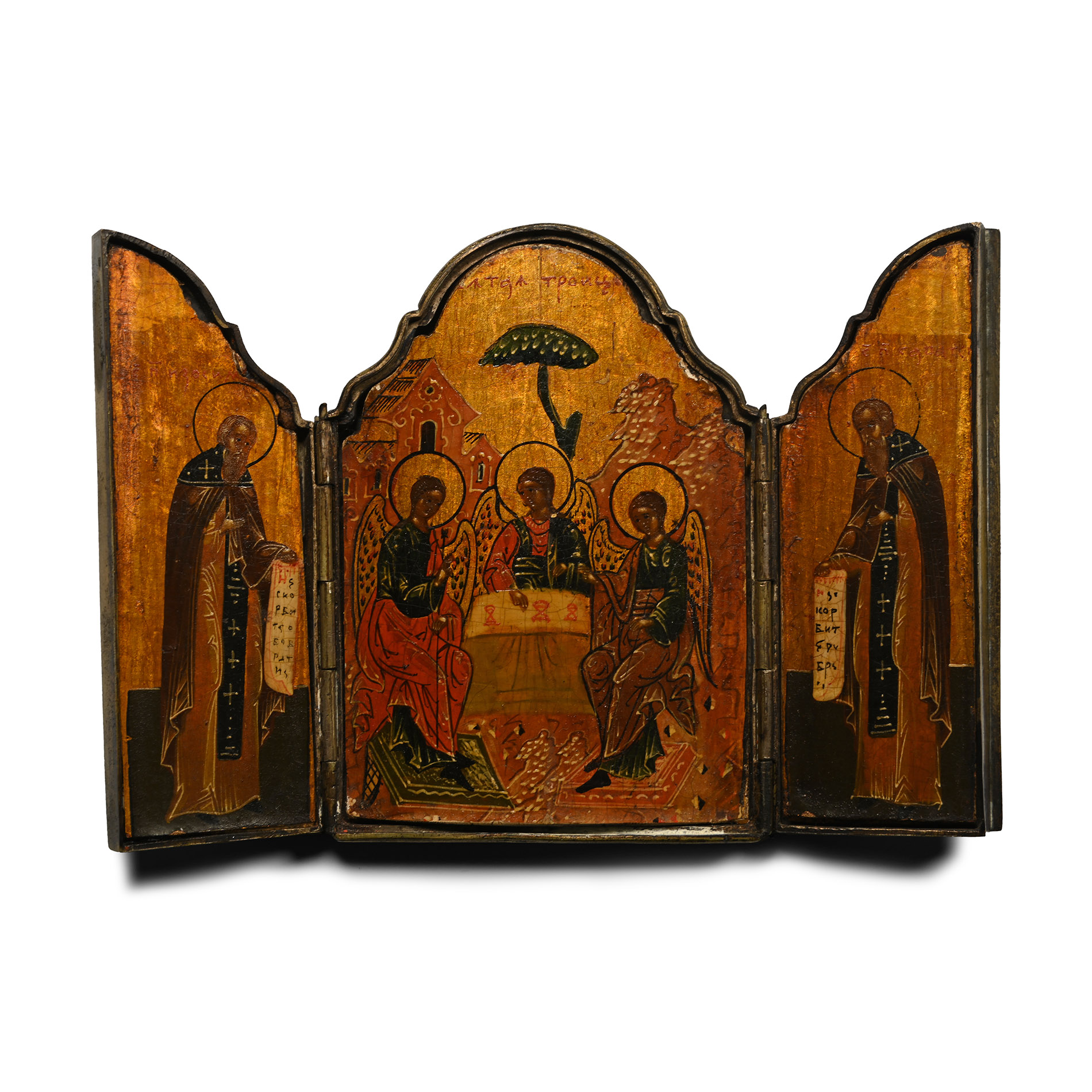
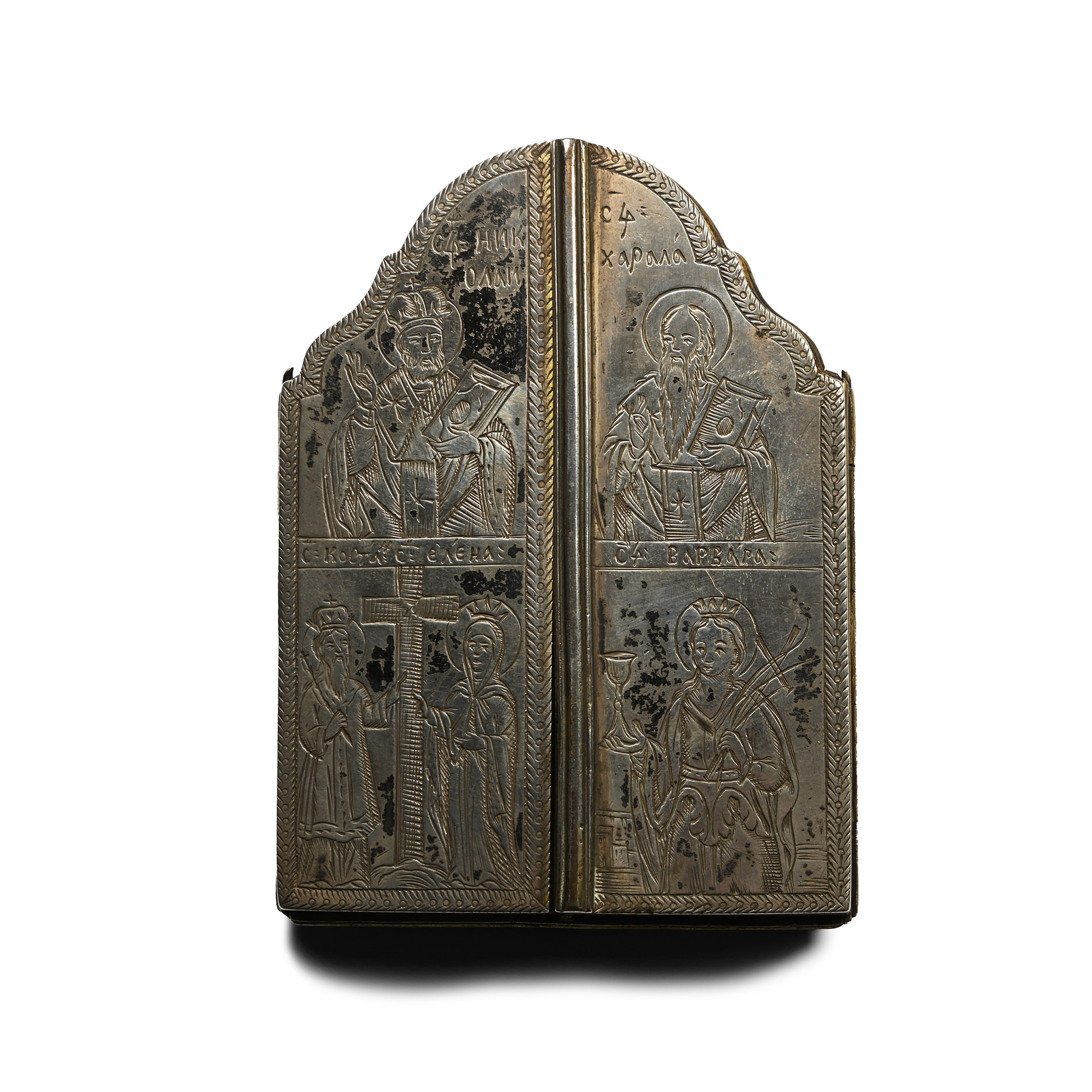
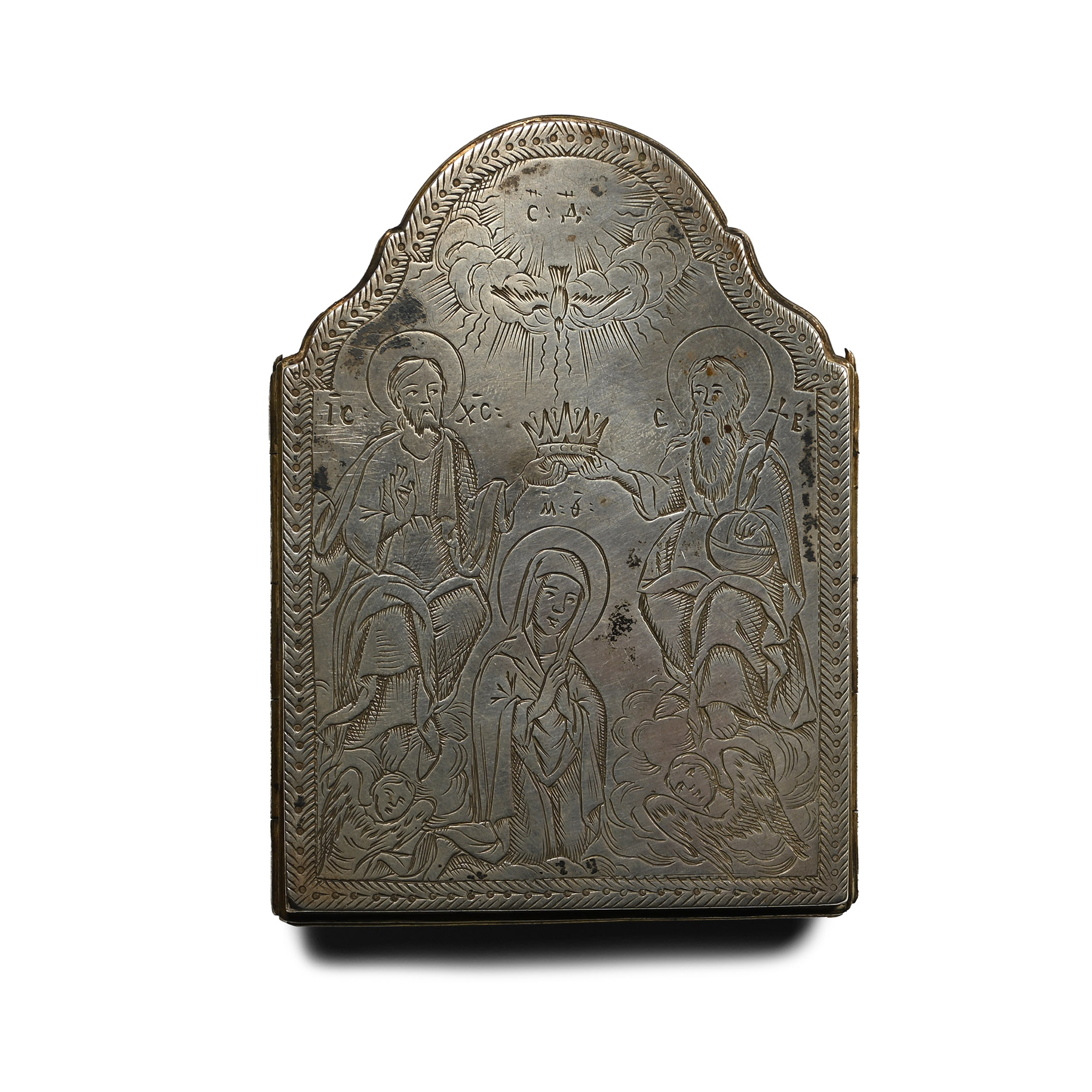
Russian Travelling Triptych Icon with Silver Mounts
CIRCA 1800 A.D.
4 5/8 x 3 5/8 in. (331 grams total, 11.8 x 9.4 cm including case).
Comprising: wooden triptych with gilt field and painted figures of St Nikolas and St Charalambos in the lateral panels and SS Konstantine, Helen and Barbara in the central panel, each with red lettering above; house in a purpose-made silver case with engraved scene to the central panel of Maria Theotokos flanked by celestial figures holding a crown above her head; front panels with facing figures of SS Nikolas, Barbara, Konstantine, Helena and Charalambos; in a custom-made wooden travelling case with hooked fastener.
ProvenanceEx Iconastas, London SW1, UK, in 1997.
Property of a London, UK, gentleman collector.
Accompanied by a copy of the Iconastas invoice no.7463 dated 7 April 1997.
This lot is accompanied by an illustrated lot declaration signed by the Head of the Antiquities Department, Dr Raffaele D’Amato.
TimeLine Auctions follows a vetting process to ensure the authenticity and legality of all items, reinforcing our commitment to integrity and responsible trading. Each antiquity, antique, and coin lot undergoes thorough examination by a vetting committee of at least ten external specialists, professional trade association members, scientists, and archaeologists: Our Vetting Process
AUCTIONS:
TimeLine is a leading auction house specialising in antiquities, ancient art, collectables, natural history, coins, medals, and books. Our auctions offer museums, collectors, historians, and enthusiasts the opportunity to acquire unique and historically significant pieces.
LOT 0366
Russian Travelling Triptych Icon with Silver Mounts
Estimate £1,000 - 1,400€1,160 - 1,620 (for guidance only)$1,350 - 1,890 (for guidance only)
-
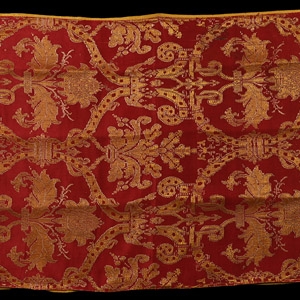
Tudor Period Embroidered Fragment
Late 16th century A.D.Sold for (Inc. bp): £247
Rectangular swatch of red and gold fabric with embroidered vegetal motifs. 188 grams, 55 x 132 cm
Private collection, Chateau de Frechou, France. Daguerre Societe de Ventes Volontaires, 21 March 2016, no.9 [Part]. This lot is accompanied by an illustrated lot declaration signed by the Head of the Antiquities Department, Dr Raffaele D’Amato. -
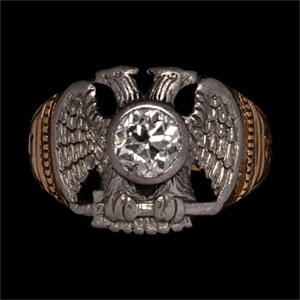
Scottish Masonic 32nd Degree Gold and Platinum Ring with 1 Carat Diamond
20th century A.D.Sold for (Inc. bp): £1,950
Comprising a wide D-shaped 14 carat yellow gold hoop expanding at the shoulders, pelletted band above a triangle to each shoulder, one with '32' and the other with Hebrew letter 'yod'; openwork platinum bezel formed as a double-headed eagle gripping a perch and with its wings spread, the body set with a one carat brilliant cut diamond (small chip); stamped to the inner face '14 KT PLAT'. 14.67 grams, 25.80 mm overall, 20.21 mm internal diameter (approximate size British R 1/2, USA 8 3/4, Europe 19.38, Japan 18)
Acquired on the UK art market. Ex Property of a County Durham collector. This lot has been checked against the Interpol Database of stolen works of art and is accompanied by search certificate no.12490-230251. This lot has been cleared against the Art Loss Register database, and is accompanied by an illustrated lot declaration signed by the Head of the Antiquities Department, Dr Raffaele D’Amato.
There is no officially mandated design for 32nd degree Scottish Rite rings beyond the double-headed eagle, hence they can vary greatly in appearance. Common symbols include the number 32, triangles, the Hebrew letter yod (as in this example), and the square and compasses. Since the 32nd degree ring is a reflection of its owner's Masonic journey, the rings can sometimes also contain symbols from other Masonic orders. -

'Nuestra Senora de la Luz' Shipwreck Fork and Spoon Set
Sunk 1752 A.D.Sold for (Inc. bp): £117
Comprising a four-pronged table fork and a spoon with ovoid bowl. 66 grams total, 16.6-18.6 cm
Salvaged by Ruben Collado Amatriain in 1992. Accompanied by original signed declarations in both English and Spanish from Ms Mariana Faine Collado, daughter of Mr Ruben Collado Amatriain. This lot is accompanied by an illustrated lot declaration signed by the Head of the Antiquities Department, Dr Raffaele D’Amato.
