
Loading, please wait...
LOT 2284
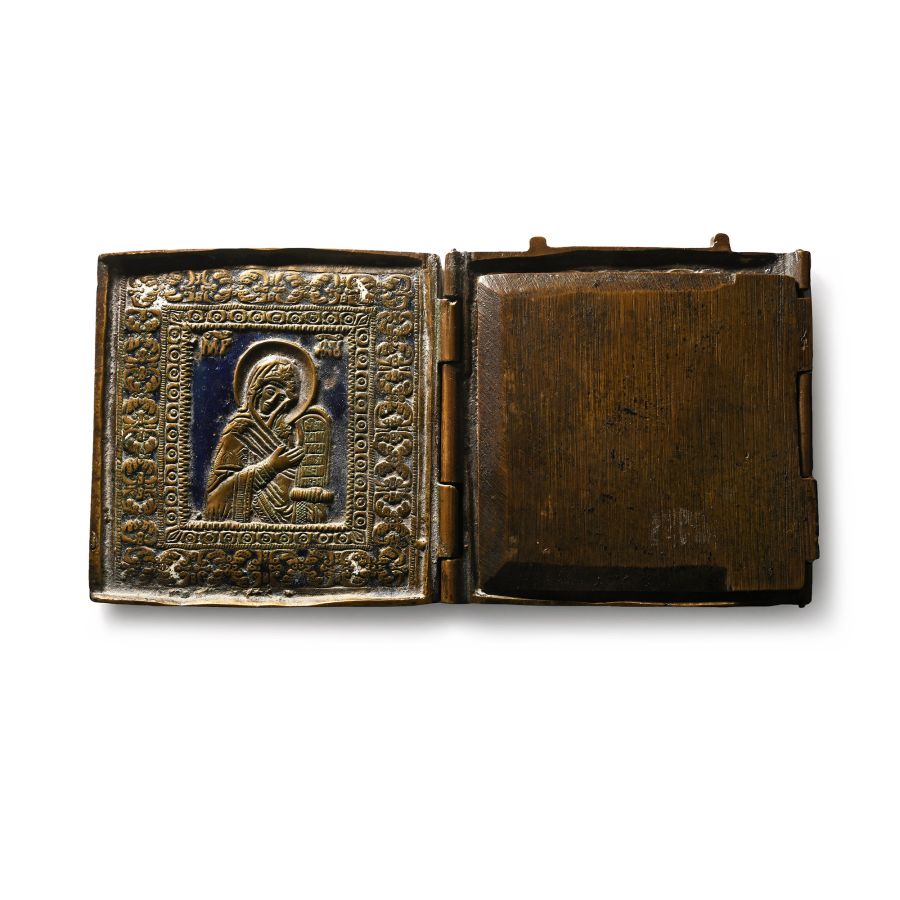
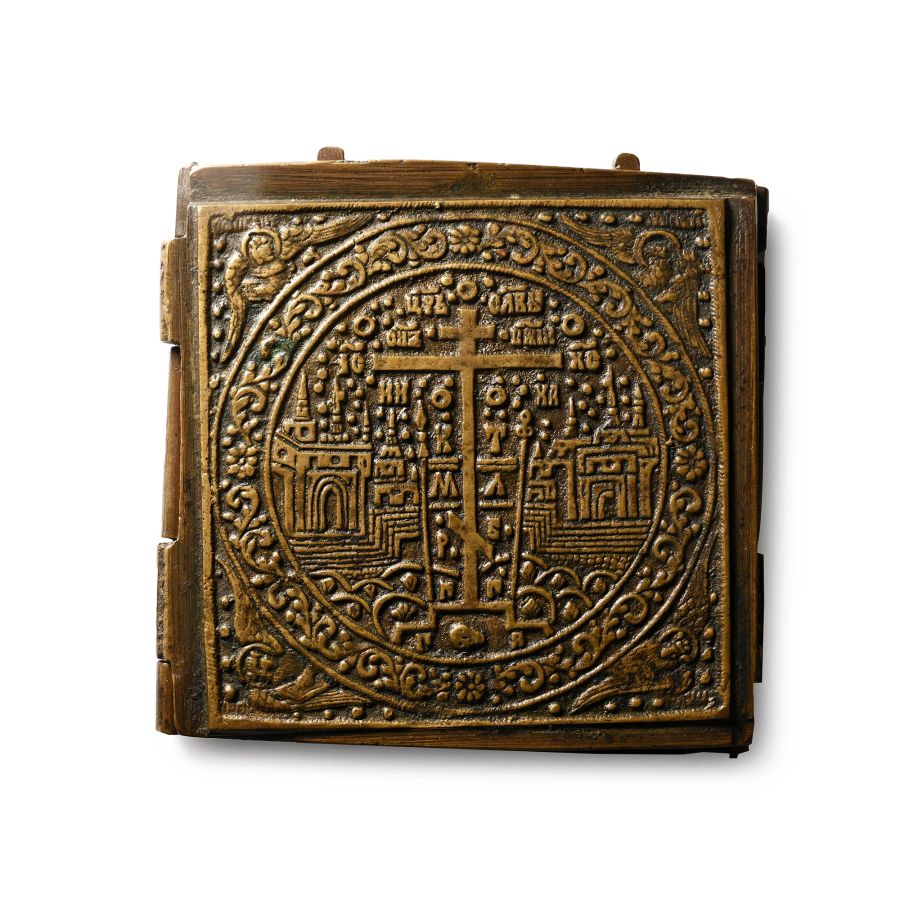
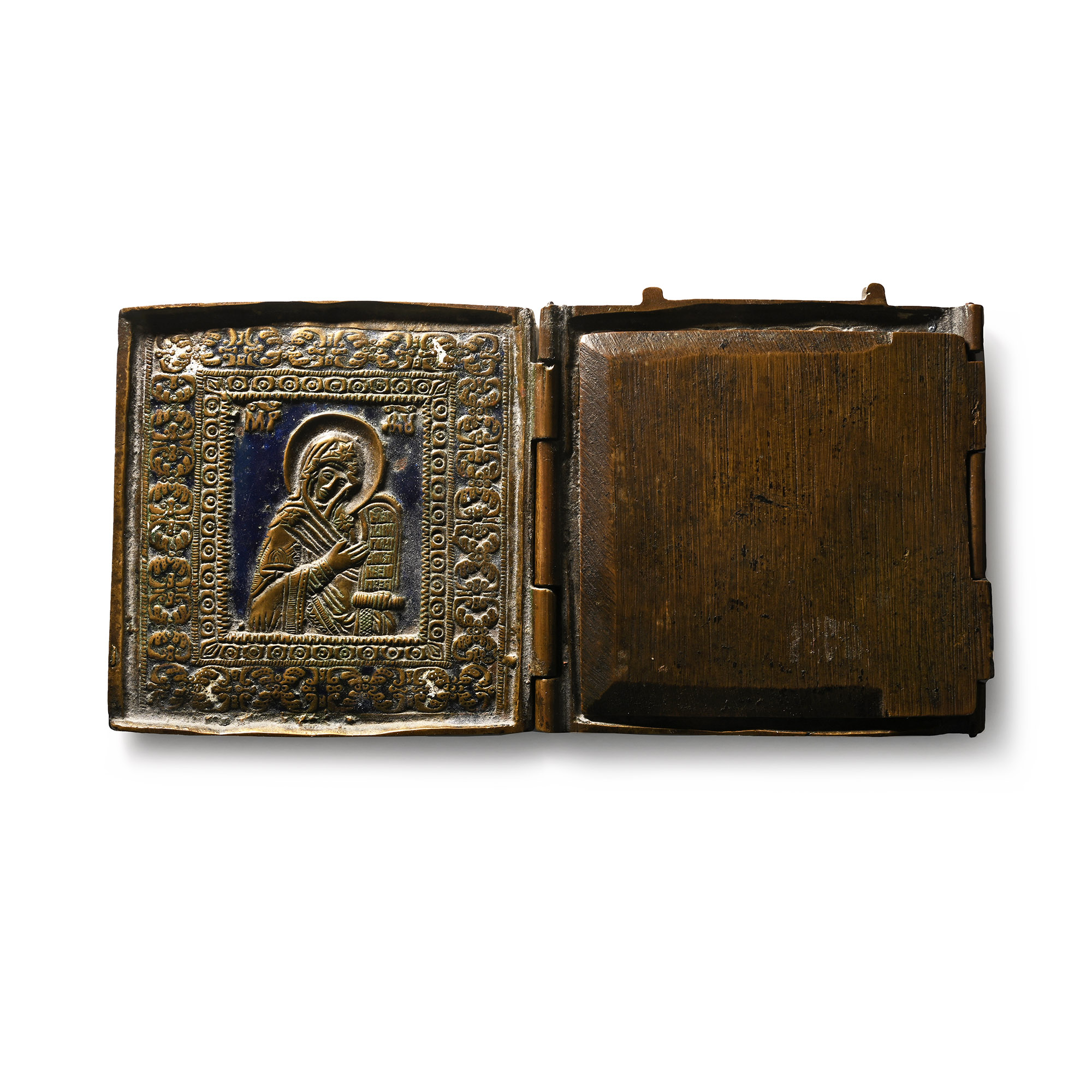
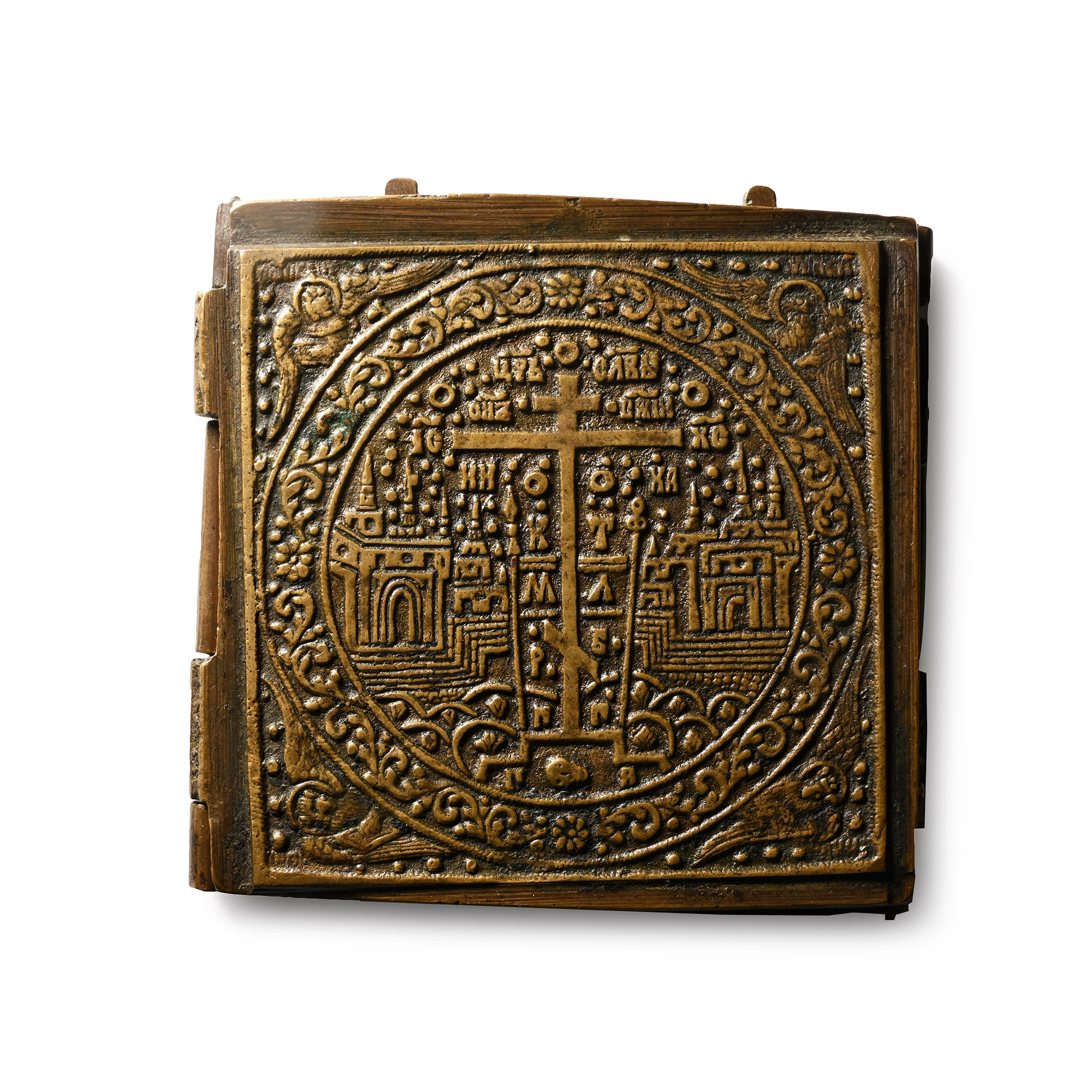
Russian Orthodox Enamelled Bronze Triptych Icon with Christ, Virgin Mary and Saint John
CIRCA 1820 A.D.
4 in. (553 grams, 10 cm).
Depicting the Deesis divided in three panels, with Jesus Christ at the centre, Saint Mary on the left panel and Saint John the Baptist on the right; God holding the Gospel in his left hand and raising his right hand in blessing; Mary with veiled head and mantle, wearing a maphorion mantle over an embroidered robe and holding a scroll; Saint John, portrayed as an elderly man, wearing a camel-skin robe, winged and holding a bowl containing an infant with flexed legs and raised right hand, the saint’s right hand pointing toward the infant Jesus, his left hand holding a scroll with the prophecy of Isaiah, while the right hand is raised in blessing gesture; Old Slavic inscription around the figures: 'ΙC ΧΡ' (Jesus Christ); 'ΜΡ ϴΥ'(Mother of God), ‘Saint John the Precursor’ (Иоа́нн Предте́ча); the images framed by a pseudo-vegetal and abstract decorations; the instruments of the Passion and the city of Jerusalem on the cover.
ProvenanceEx David Miller, Hemel Hempstead, London, UK.
From the private collection of a West London, UK, gentleman, formed since the early 2000s.
Cf. Eighme Ahlborn, R., Beaver-Bricken Espinola, V., Russian Copper Icons and crosses from the Kunz Collection: Castings of Faith, Washington, 1991, nos.25819.083, p.50, 25819.142 and 143, pp.63ff., for similar iconography.
FootnotesThe Deisis or Deesis (Деисус, Gk. for “supplication”) was the depiction of the Virgin, John the Baptist and possibly many more saints interceding with Christ on behalf of mankind.
CONDITIONTimeLine Auctions follows a vetting process to ensure the authenticity and legality of all items, reinforcing our commitment to integrity and responsible trading. Each antiquity, antique, and coin lot undergoes thorough examination by a vetting committee of at least ten external specialists, professional trade association members, scientists, and archaeologists: Our Vetting Process
AUCTIONS:
TimeLine is a leading auction house specialising in antiquities, ancient art, collectables, natural history, coins, medals, and books. Our auctions offer museums, collectors, historians, and enthusiasts the opportunity to acquire unique and historically significant pieces.
LOT 2284
Russian Orthodox Enamelled Bronze Triptych Icon with Christ, Virgin Mary and Saint John
Estimate £350 - 450€410 - 520 (for guidance only)$470 - 610 (for guidance only)
-
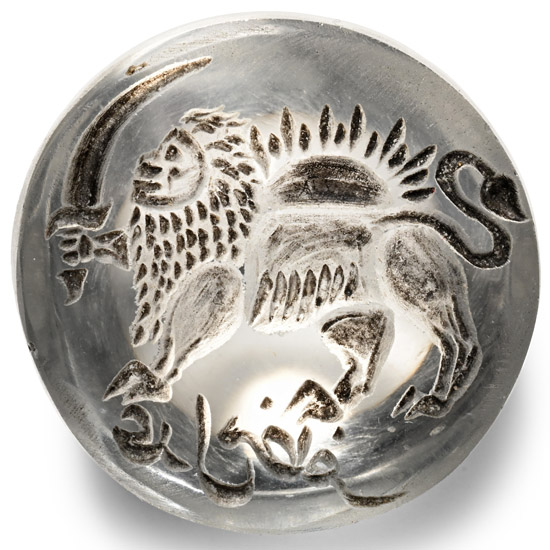
Qajar Rock Crystal Seal with Lion and Sun Motif and Almosassa Calligraphic Inscription
19th-20th century A.D.Sold for (Inc. bp): £59
Domed body carved from transparent quartz, underside engraved with a standing lion holding a curved sword in its raised paw with a rising sun behind and an inscription below. 32.15 grams, 31 mm
Private collection, UK. -
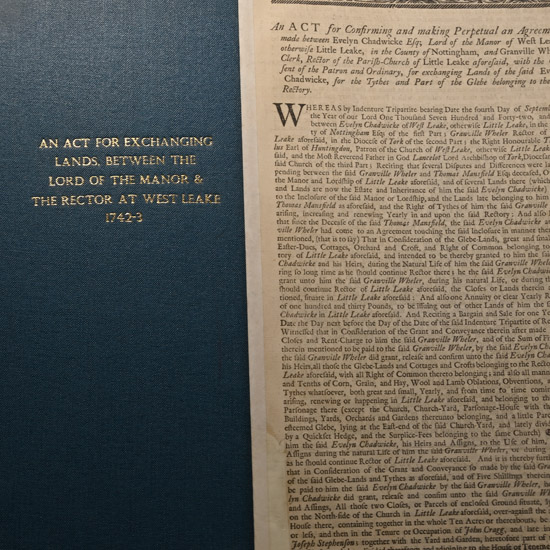
Original King George II Printed Act
Nottinghamshire, 1742-1743 A.D.Sold for (Inc. bp): £7
Agreement between Evelyn Chadwicke, Lord of the Manor of West Leake, and Granville Wheler, Rector of the Parish Church of Little Leak, both in Nottinghamshire, relating to an exchange of lands; 4 pages, printed on two large folio leaves. 260 grams, 39 x 21.9 cm
Originally held in Nottingham Central Library, purchased directly by Ian Wilkinson in 2020. Ian Wilkinson collection, Nottinghamshire, UK, formed since 1985.
Over 280 years old, in very good condition. -
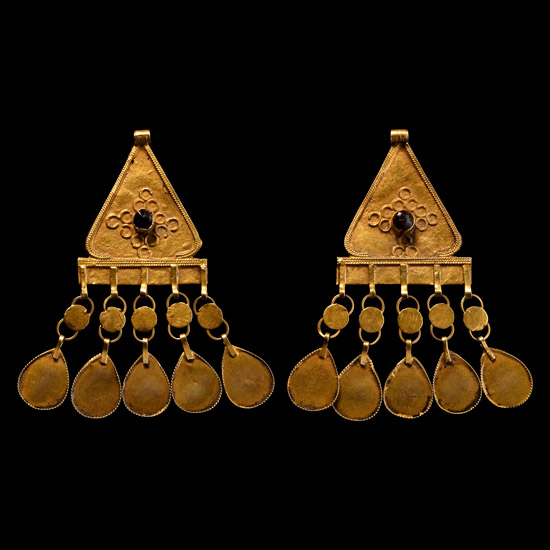
Roman Style Gold Earring Pair with Garnets
20th century A.D.Sold for (Inc. bp): £286
Each a triangular plaque with filigree border, central cell with inset garnet cabochon surrounded by applied filigree annulets, transverse bar below with discoid dangles. 4.04 grams total, 49 mm
with Archaeologia, Switzerland, before 1983. Ex private North American collection. London private collection, 2016.
