
Loading, please wait...
LOT 1959
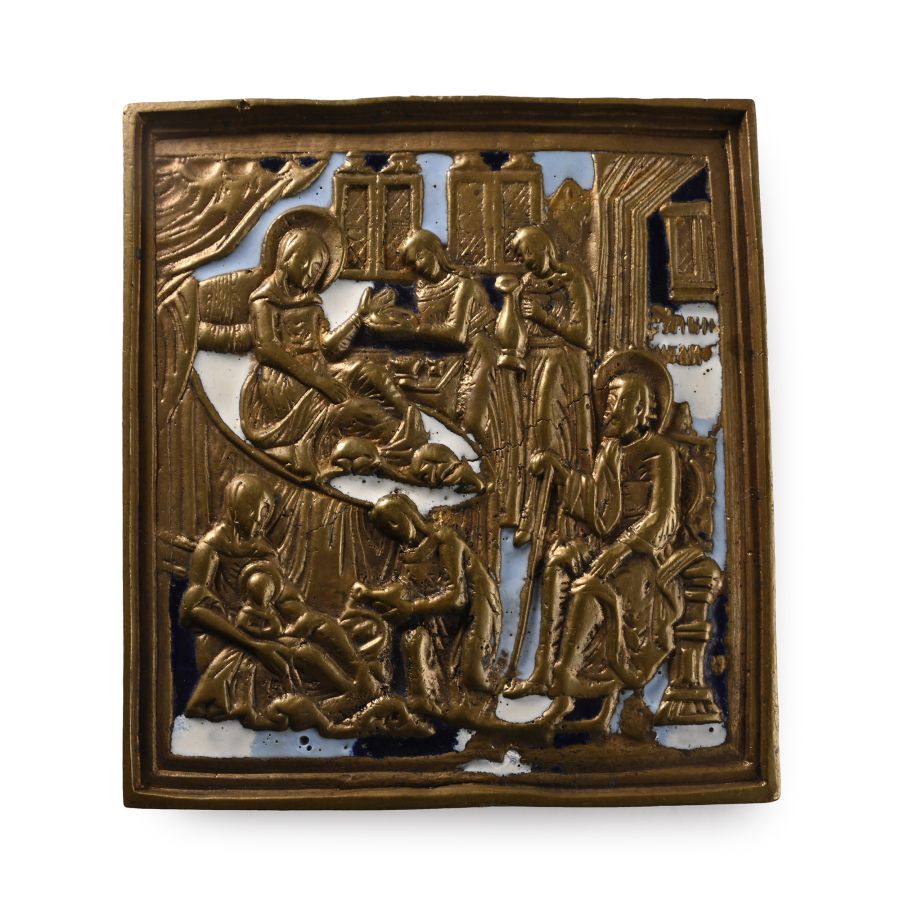
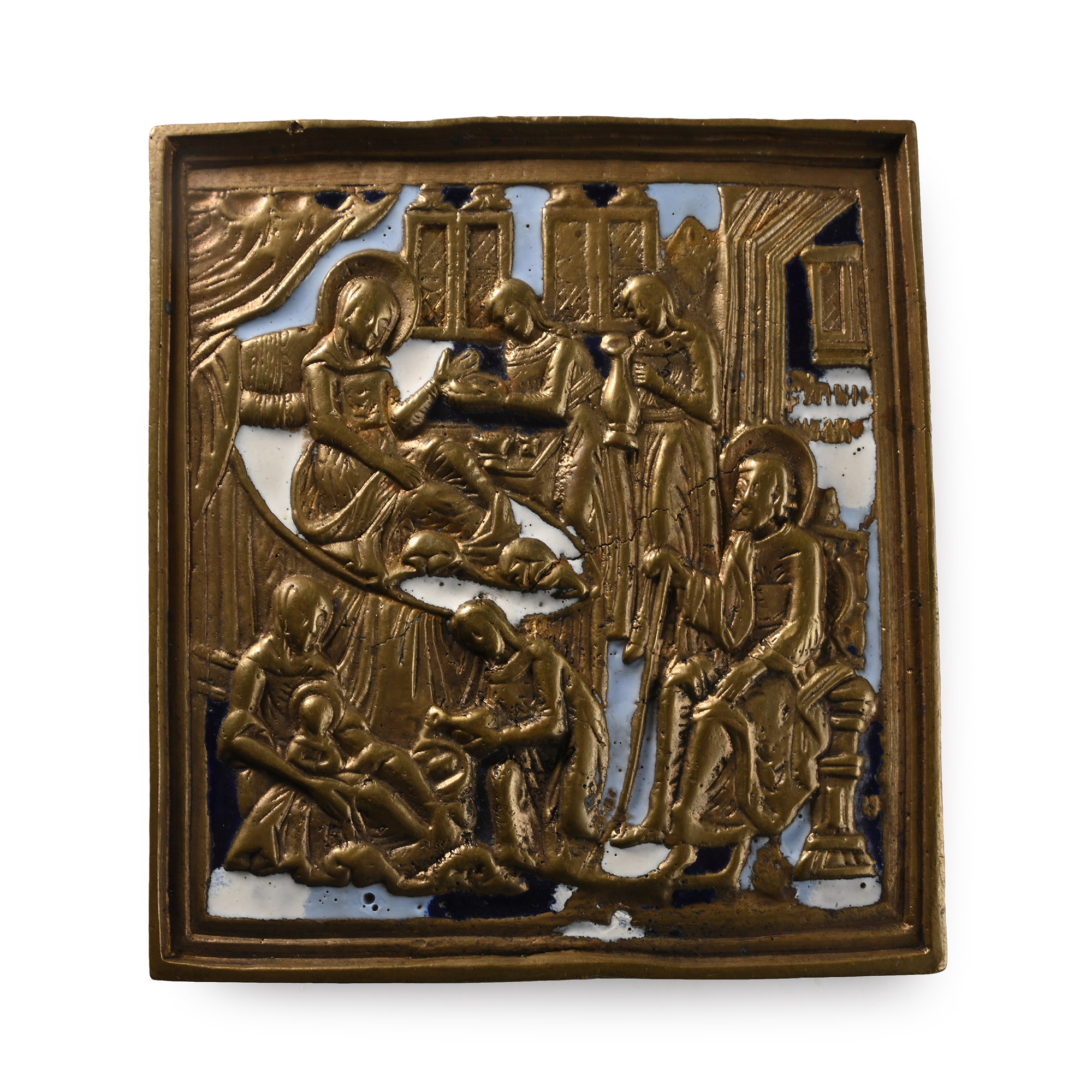
Russian Orthodox Enamelled Bronze Travel Icon with the Birth of the Virgin
19TH CENTURY A.D.
3 7/8 in. (230 grams, 98 mm).
Presenting an architectural setting with figures in two chambers framed with cornices, columns and furnitures; the upper chamber showing Saint Anna in birthing bed with two attendants; the lower room with two attendants bathing an infant; on the right Saint Joachim seated upon a cathedra; Old Slavonic inscription reciting ‘The birth of the most holy mother of God’.
ProvenanceAcquired from Chris Martin-Zakheim, Iconastas, 5 Piccadilly Arcade, London SW1.
From the private collection of a West London, UK, gentleman, formed since the early 2000s.
Cf. Eighme Ahlborn, R., Beaver-Bricken Espinola, V., Russian Copper Icons and crosses from the Kunz Collection: Castings of Faith, Washington, 1991, nos.25819.174 and 25819.251, pp.68,75, for similar iconography.
FootnotesAccording to the Protoevangelium of James, Mary's parents were called Anna and Joachim and conceived Mary at a late age.
CONDITIONTimeLine Auctions follows a vetting process to ensure the authenticity and legality of all items, reinforcing our commitment to integrity and responsible trading. Each antiquity, antique, and coin lot undergoes thorough examination by a vetting committee of at least ten external specialists, professional trade association members, scientists, and archaeologists: Our Vetting Process
AUCTIONS:
TimeLine is a leading auction house specialising in antiquities, ancient art, collectables, natural history, coins, medals, and books. Our auctions offer museums, collectors, historians, and enthusiasts the opportunity to acquire unique and historically significant pieces.
LOT 1959
Russian Orthodox Enamelled Bronze Travel Icon with the Birth of the Virgin
Sold for (Inc. bp): £494
-
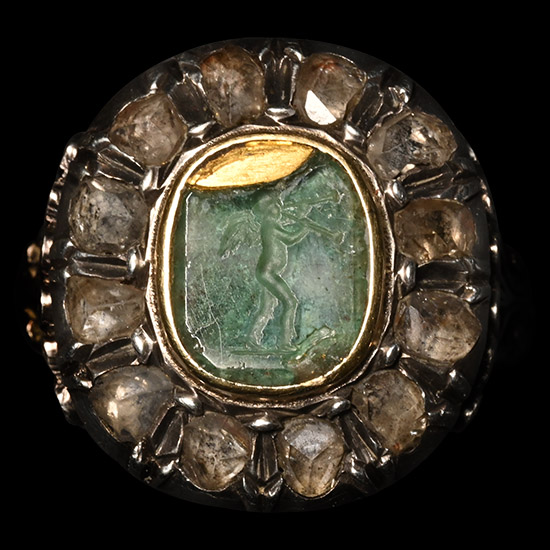
Diamond Locket Ring Set with Emerald Intaglio of Amor, God of Love, Playing Diaulos
Late 19th century A.D.Sold for (Inc. bp): £3,380
Comprising a segmented hoop with scroll-shaped shoulders, a hinged oval bezel with a secret compartment, and a bezel decorated with twelve cut diamonds around a central green stone intaglio of a winged Amor standing on a prora playing a diaulos. 5.82 grams, 23.60 mm overall, 16.50 mm internal diameter (approximate size British L 1/2, USA 6, Europe 11.87, Japan 11)
Private collection, Europe. Acquired on the English art market. -
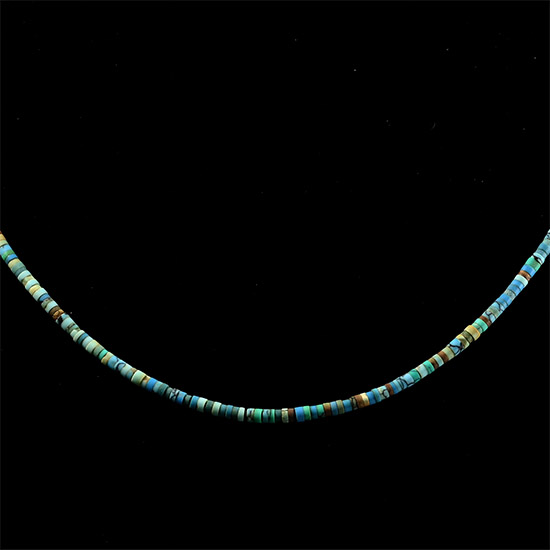
Egyptian Style Stone Bead Necklace String
20th century A.D.Sold for (Inc. bp): £13
Composed of small annular turquoise and other beads. 4.48 grams, 36 cm
Acquired in the 1990s. Ex London, UK, collection. -
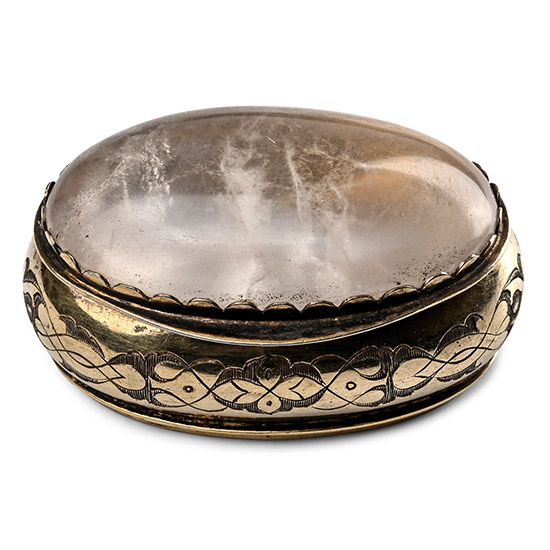
Post Medieval Engraved Silver-Gilt Rock Crystal Set Box
Germany, 18th century A.D.Estimate: £700 - 900 (+bp*)
Opening Bid: £350
Lid set with a large rock crystal cabochon; gilded interior; sides engraved with a continual Renaissance interlace and similar to the base; small French duty mark to the front of the base of the box and to the rim of the lid. 65 grams, 59 mm
Private collection, Europe. Acquired on the English art market.
