
Loading, please wait...
LOT 2139
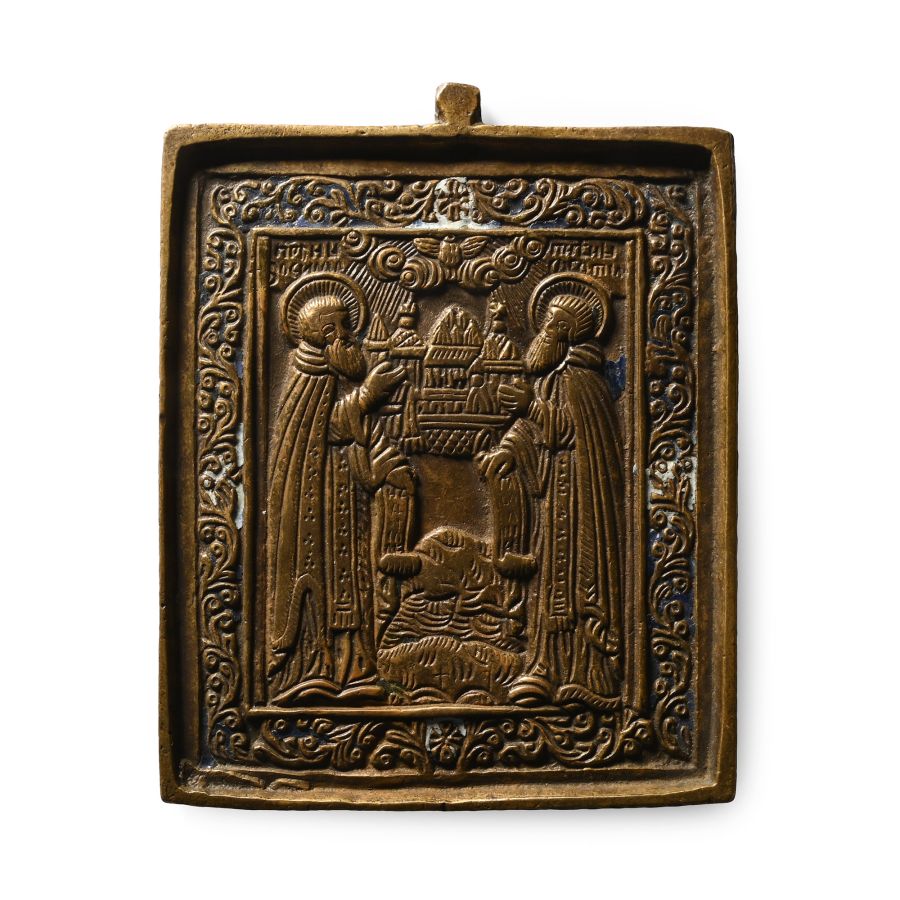
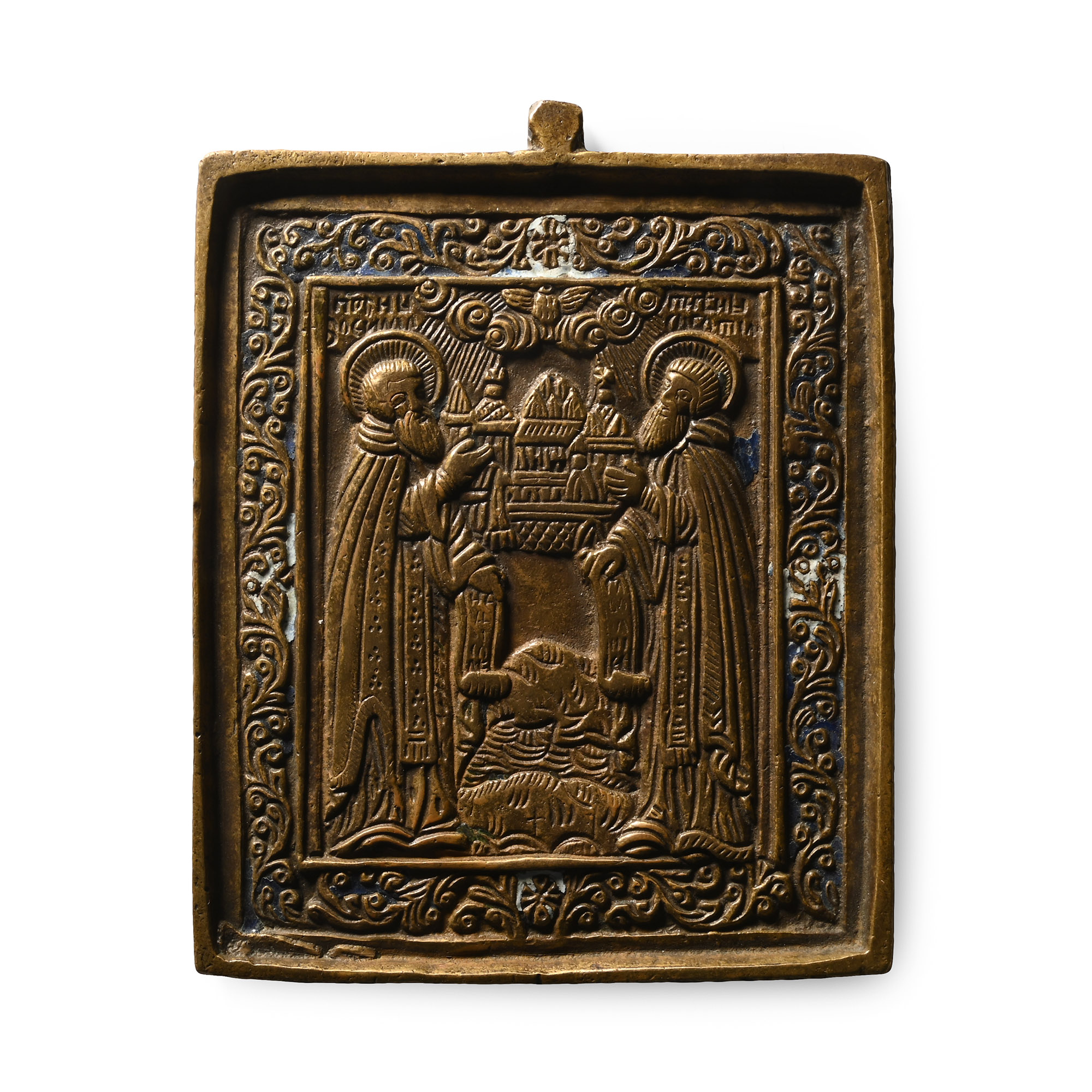
Russian Orthodox Enamelled Bronze Travel Icon with Saints Zosima and Sabbas
CIRCA 1820 A.D.
3 1/2 in. (108 grams, 88 mm).
Depicting Saint Zosima and Saint Sabbas in front of the Solovetsky Monastery, both nimbate and dressed in the Abbot’s garments, holding the model of the monastery offered to God, represented in the sky as a dove upon a cloud; arabesque frame; inscriptions in Old Slavonic with the names of the saints.
ProvenanceAcquired from Chris Martin-Zakheim, Iconastas, 5 Piccadilly Arcade, London SW1.
From the private collection of a West London, UK, gentleman, formed since the early 2000s.
Cf. Matthieson, S., Morrison, G., Heavenly Beings, Icons of the Christian Orthodox World, Auckland, 2022, p.66, for a similar icon.
FootnotesSaints Zosima and Sabbas or Sabbatius were highly venerated Orthodox saints, founders of the Solovetsky Monastery, a fortified monastery located in the White Sea in Northern Russia. This double portrait shows Zosima and Sabbas holding up a model of their religious institution, which resembles a small medieval city. Solovetsky Monastery obtained big investments from the city of Novgorod and established itself as one of the richest monasteries in Russia.
CONDITIONTimeLine Auctions follows a vetting process to ensure the authenticity and legality of all items, reinforcing our commitment to integrity and responsible trading. Each antiquity, antique, and coin lot undergoes thorough examination by a vetting committee of at least ten external specialists, professional trade association members, scientists, and archaeologists: Our Vetting Process
AUCTIONS:
TimeLine is a leading auction house specialising in antiquities, ancient art, collectables, natural history, coins, medals, and books. Our auctions offer museums, collectors, historians, and enthusiasts the opportunity to acquire unique and historically significant pieces.
LOT 2139
Russian Orthodox Enamelled Bronze Travel Icon with Saints Zosima and Sabbas
Estimate £100 - 140€120 - 160 (for guidance only)$140 - 190 (for guidance only)
-
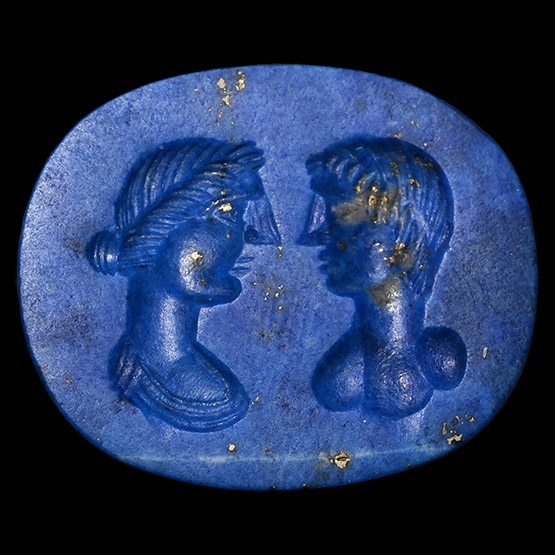
Post-Classical Lapis-Coloured Gem with Facing Busts
19th century A.D. or earlierEstimate: £200 - 300 (+bp*)
Opening Bid: £100
Sub-rectangular in plan with an intaglio female bust in profile with hair drawn up in a chignon and a male bust with Julian hairstyle; supplied with a museum-quality impression. 1.63 grams, 23 mm
Private collection, England. -
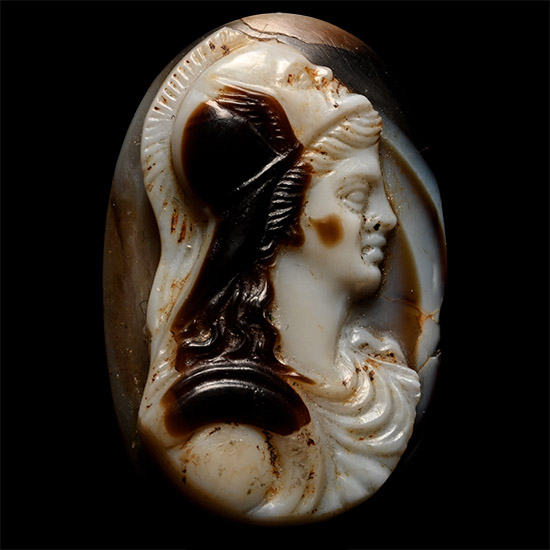
Post-Classical Sardonyx Cameo with Helmetted Bust of Athena
18th-19th century A.D.Estimate: £500 - 700 (+bp*)
Opening Bid: £250
Ellipsoid in plan with a reserved bust wearing a crested helmet and cuirass. 7.47 grams, 35 mm
Private collection, England. -
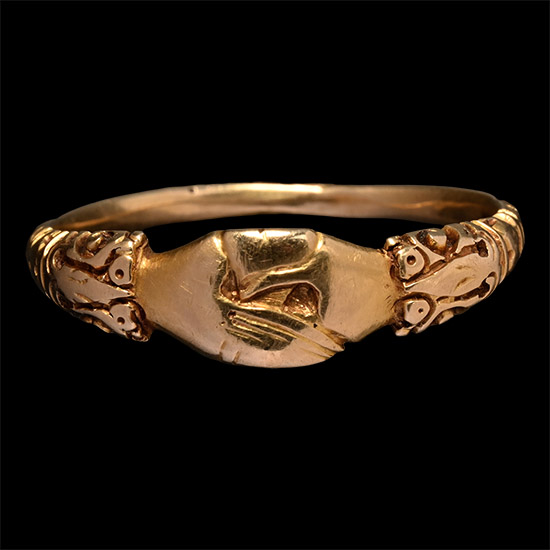
Post Medieval Gold Fede Ring
England, 16th-17th century A.D.Sold for (Inc. bp): £1,690
Slender shank and expanding shoulders formed as lace cuffs, the bezel a pair of clasped hands gripping a heart. 3.71 grams, 23.07 mm overall, 20.14 mm internal diameter (approximate size British T, USA 9 1/2, Europe 21.26, Japan 20)
Private collection, Europe. Acquired on the English art market.
The two clasping hands with elaborate cuffs clutch a heart. This ring features the ancient fede motif of two hands clasped together, however in their grasp is a heart. These symbols represented love and fidelity. The ring was likely a token of love symbolising everlasting devotion, or possibly a betrothal ring. The word Fede takes its name from the Italian word for faith or trust with the two clasped hands symbolising an attachment that usually led to marriage. The motif of the two clasped hands was already in use in ancient Rome, it was a symbol of pledging of vows, which derives from the Roman ‘dextarum iunctio’ (right hand joined). Fede rings remained popular throughout Europe until well into the 19th century with their peak of manufacture during the Middle Ages and the Renaissance.
