
Loading, please wait...
LOT 2015
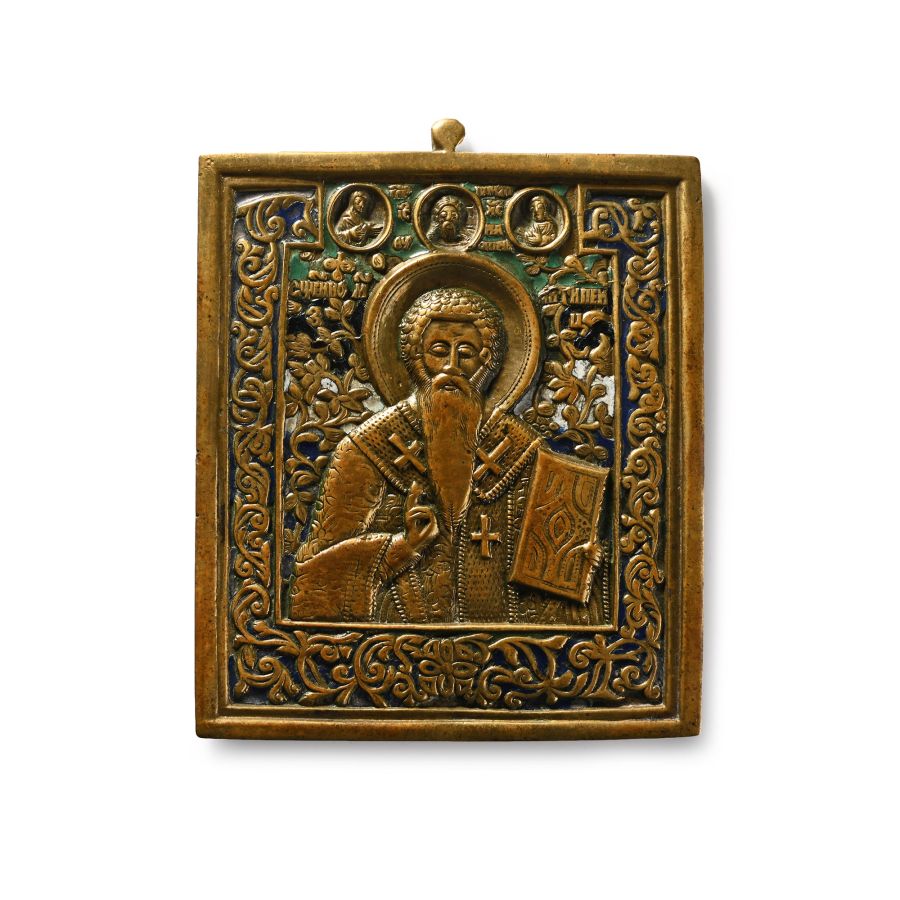
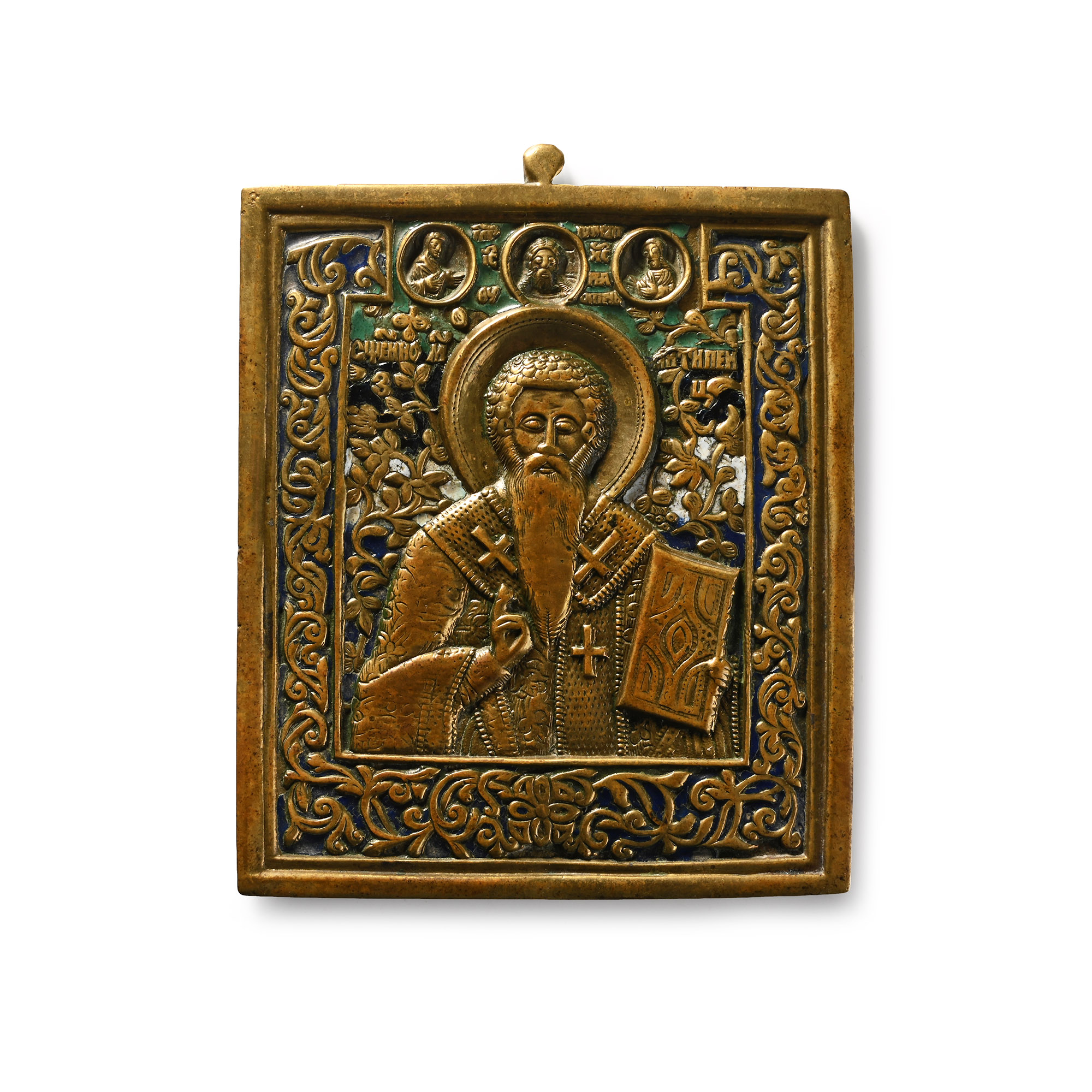
Russian Orthodox Enamelled Bronze Travel Icon with Saint Antipas of Pergamum
19TH CENTURY A.D.
4 3/8 in. (238 grams, 11.3 cm).
Representing Saint Antipas with a Gospel in his left hand and making the gesture of blessing with his right, dressed as a bishop, with sticharion, covered by omophorion, and surmounted by an epitrachelion; the Mandylion at the centre above the saint, Saint Mary on the left panel and Jesus on the right; Old Slavic inscription around the figures: 'ΙC ΧΡ' (Jesus Christ); 'ΜΡ ϴΥ'(Mother of God); Saint Antipas of Pergamum (Св Анти́па Перга́мский).
ProvenanceAcquired from Chris Martin-Zakheim, Iconastas, 5 Piccadilly Arcade, London SW1.
From the private collection of a West London, UK, gentleman, formed since the early 2000s.
Cf. Eighme Ahlborn, R., Beaver-Bricken Espinola, V., Russian Copper Icons and crosses from the Kunz Collection: Castings of Faith, Washington, 1991, nos.25819.133, p.58, for similar iconography.
FootnotesThe icon features meticulous craftsmanship typical of Orthodox iconography. Saint Antipas was popularly held to be a healer of tooth problems. He was martyred by burning in a brazen bull-shaped altar under the Emperors Nero or Domitian.
CONDITIONTimeLine Auctions follows a vetting process to ensure the authenticity and legality of all items, reinforcing our commitment to integrity and responsible trading. Each antiquity, antique, and coin lot undergoes thorough examination by a vetting committee of at least ten external specialists, professional trade association members, scientists, and archaeologists: Our Vetting Process
AUCTIONS:
TimeLine is a leading auction house specialising in antiquities, ancient art, collectables, natural history, coins, medals, and books. Our auctions offer museums, collectors, historians, and enthusiasts the opportunity to acquire unique and historically significant pieces.
LOT 2015
Russian Orthodox Enamelled Bronze Travel Icon with Saint Antipas of Pergamum
Estimate £250 - 350€290 - 410 (for guidance only)$340 - 470 (for guidance only)
-
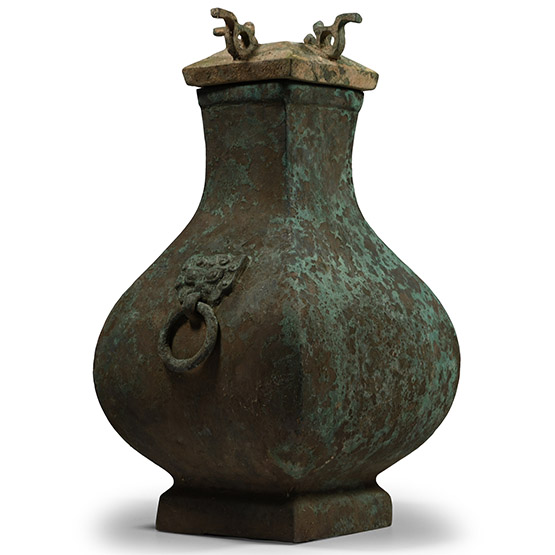
Chinese Archaic Style Bronze Vessel
20th century A.D.Sold for (Inc. bp): £26
Square in section and piriform in profile with taotie masks supporting drop handles, domed lid with four dragon appliqués. 3.2 kg, 34 cm high
Ex West Country, UK, collection, 1990s, and Desmond Morris. -
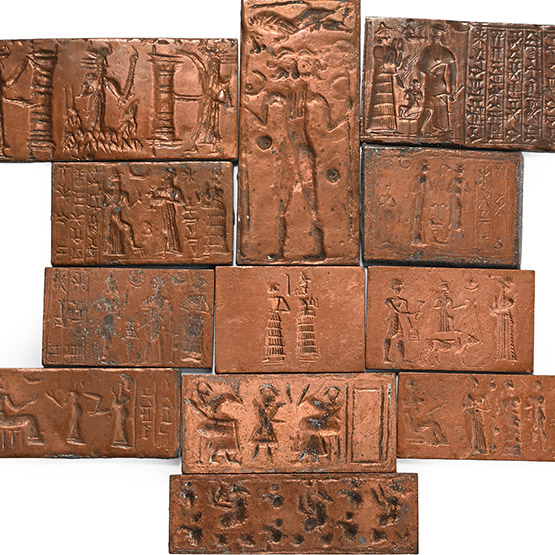
Large Cylinder Seal Electrotype Group
Late 19th-early 20th century A.D.Sold for (Inc. bp): £195
Of academic interest, copper-coated lead seal impressions including presentation scenes, court scenes, bull-headed man in a frame; some with cuneiform text. 433 grams total, 39-72 mm
Possibly made by the British Museum. From a West Country, UK, private collection. -
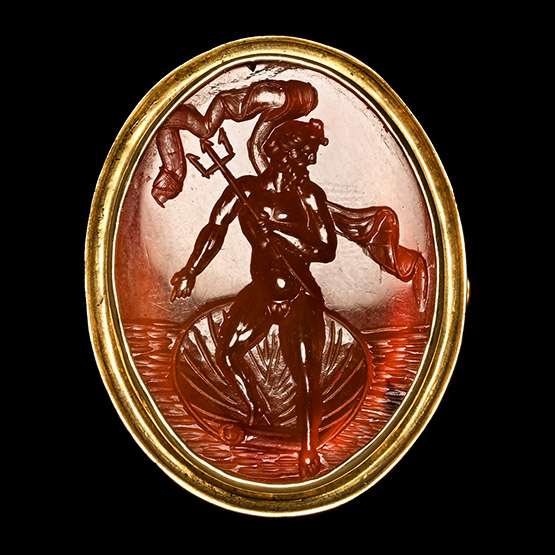
Post Medieval Gold Ring with Carnelian Gemstone Depicting the Roman God Neptune
Italy, 19th century A.D.Sold for (Inc. bp): £2,340
Depicting Neptune advancing nude from a scallop shell, holding a trident in one hand and pointing with the other; billowing banner to his rear; supplied with a museum-quality impression. 15.19 grams, 31.43 mm overall, 19.60 mm internal diameter (approximate size British R, USA 8 1/2, Europe 18 3/4, Japan 18)
Private collection, Europe. Acquired on the English art market. This lot has been checked against the Interpol Database of stolen works of art and is accompanied by search certificate number no.13053-248373.
Throughout Europe, and far beyond, talented gem-cutters were at work in the 19th century. Neptune was appreciated by Neoclassical cutters, as shown by a carnelian gemstone with the profile of Neptune, his face serene amidst a storm, by the American engraver George Hewitt Cushman (1814-1876).
