
Loading, please wait...
LOT 2316
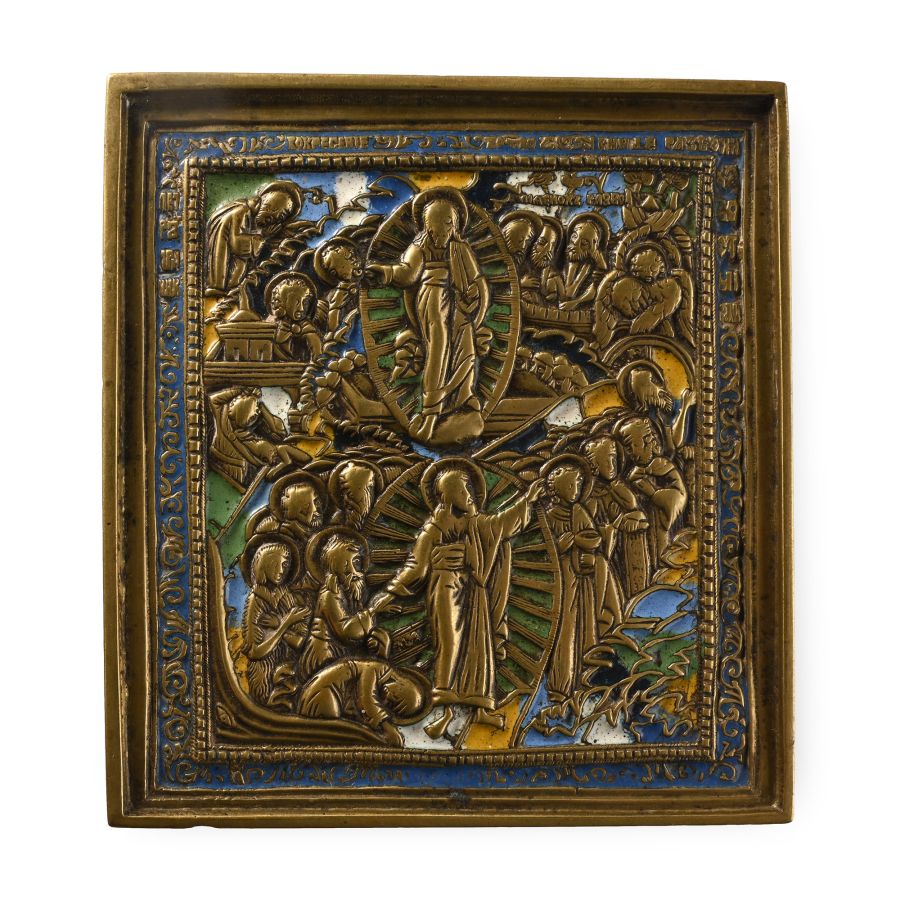
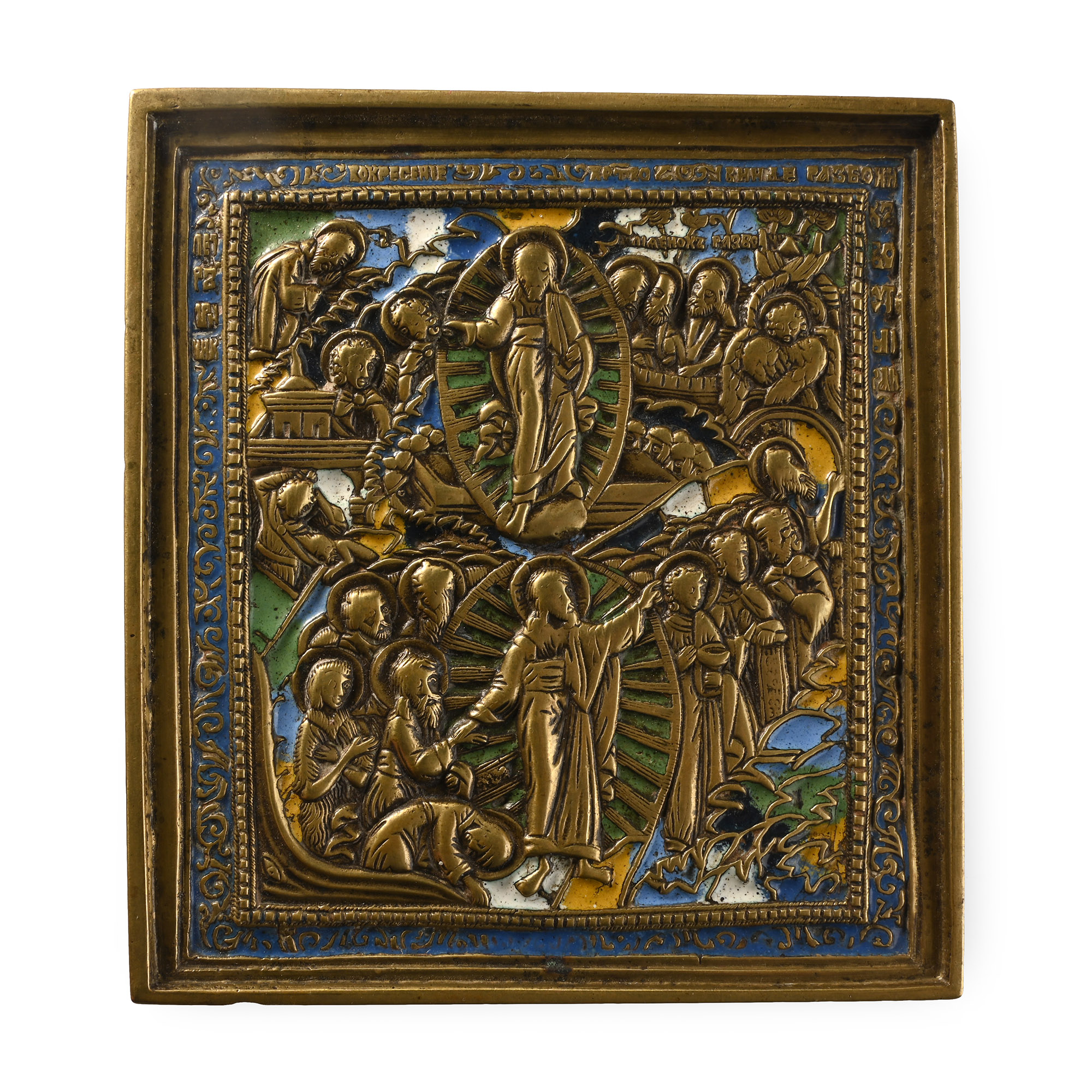
Russian Orthodox Enamelled Bronze Travel Icon with Anastasis
19TH CENTURY A.D.
4 3/8 in. (200 grams, 11 cm).
With blue, yellow, white and green enamel, representing the Anastasis (Resurrection of Christ); the Saviour represented on two registers, in the upper one (Resurrection) emerging from the grave, surrounded by the hesychastic light, with the Roman soldiers falling asleep, and the apostles and a cherub beside him; in the lower register (Descent into Hades) Christ surrounded by the same divine light, leading the people from the Limbo, Adam and Eve, King David and Salomon and other souls to heaven; the frame decorated with gilt arabesques on blue enamel, inscriptions in Old Slavonic at the top.
ProvenanceAcquired from Chris Martin-Zakheim, Iconastas, 5 Piccadilly Arcade, London SW1.
From the private collection of a West London, UK, gentleman, formed since the early 2000s.
Cf. Eighme Ahlborn, R., Beaver-Bricken Espinola, V., Russian Copper Icons and crosses from the Kunz Collection: Castings of Faith, Washington, 1991, nos.25819.006, p.43; 055 p.47; 057 p.48, for similar iconography.
FootnotesThe iconography is typical of the Anastasis or Resurrection of Christ, with the gates of Hades broken under the feet of Christ, echoing the phrase: 'Christ is Risen From the Dead, Trampling Down Death by Death, and Upon Those in the Tombs Bestowing Life!'
CONDITIONTimeLine Auctions follows a vetting process to ensure the authenticity and legality of all items, reinforcing our commitment to integrity and responsible trading. Each antiquity, antique, and coin lot undergoes thorough examination by a vetting committee of at least ten external specialists, professional trade association members, scientists, and archaeologists: Our Vetting Process
AUCTIONS:
TimeLine is a leading auction house specialising in antiquities, ancient art, collectables, natural history, coins, medals, and books. Our auctions offer museums, collectors, historians, and enthusiasts the opportunity to acquire unique and historically significant pieces.
LOT 2316
Russian Orthodox Enamelled Bronze Travel Icon with Anastasis
Sold for (Inc. bp): £169
-
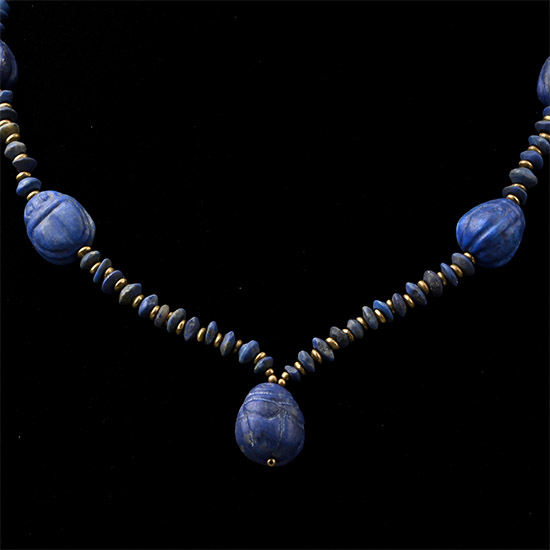
Western Asiatic Style Lapis Lazuli Bead Necklace String
20th century A.D.Sold for (Inc. bp): £13
Composed of biconical beads interspersed with metal collars, five scarab-shaped feature beads. 41.9 grams, 43 cm
Ex London, UK, art market 1990s. -
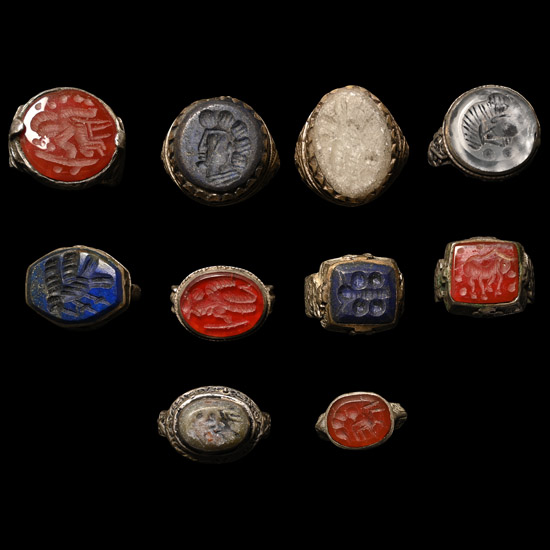
Bedouin Silver-Coloured Metal Ring Group
20th century A.D.Sold for (Inc. bp): £156
Comprising ten rings with decorative hoops, each set with a carved intaglio. 96 grams total, 25-32 mm
Ex North West London collection, 2000s. -
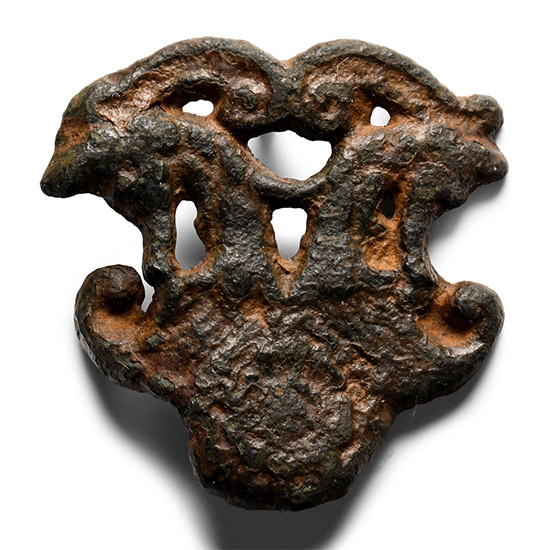
Post-Medieval Bronze Pilgrim's Badge
Circa 16th-17th century A.D.Sold for (Inc. bp): £7
Openwork plaque with rosette supported on scrolled leaves and stems, scrolled band beneath; baroque style. 9.15 grams, 33 mm
From a retired Lincolnshire, UK, gentleman's collection, a long time member of the Pewter Society.
