
Loading, please wait...
LOT 1539
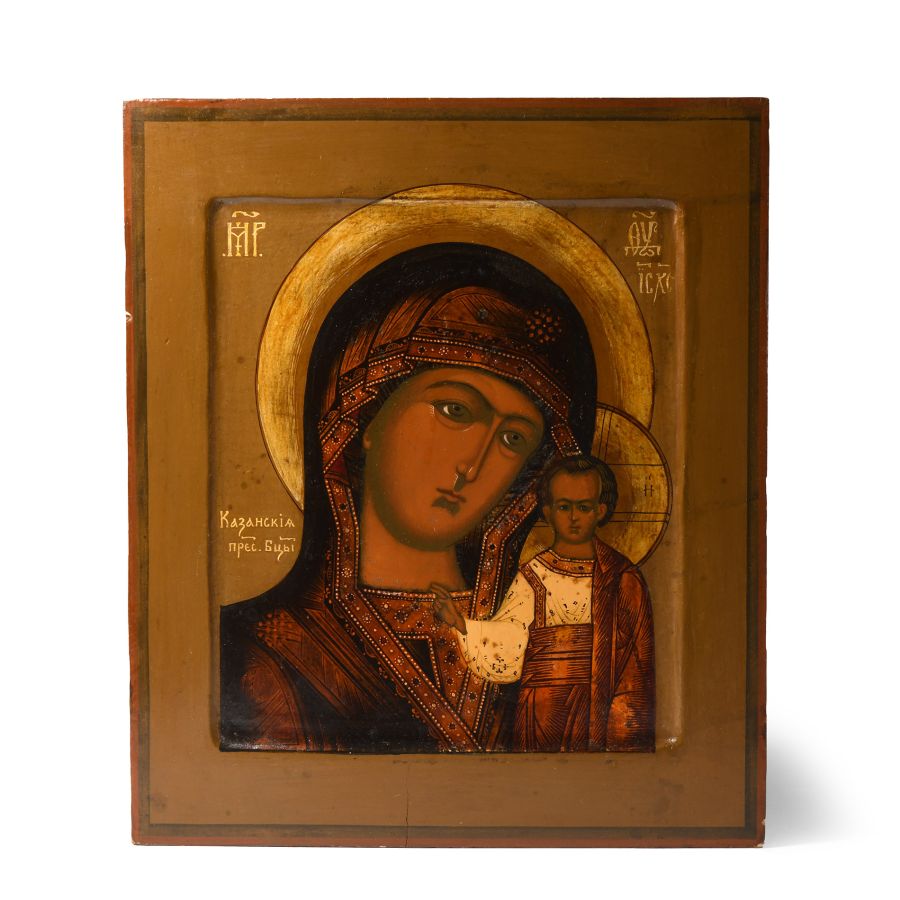
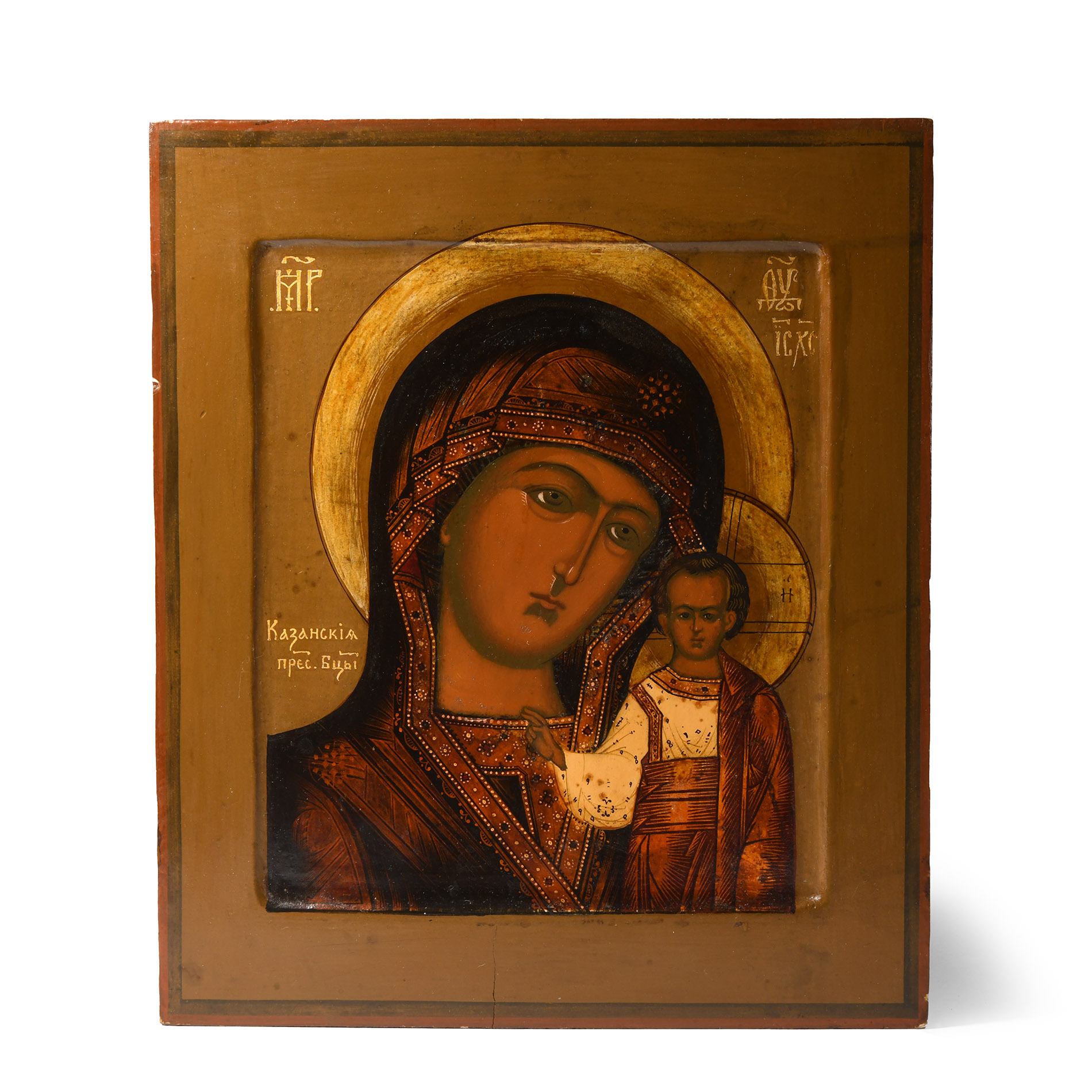
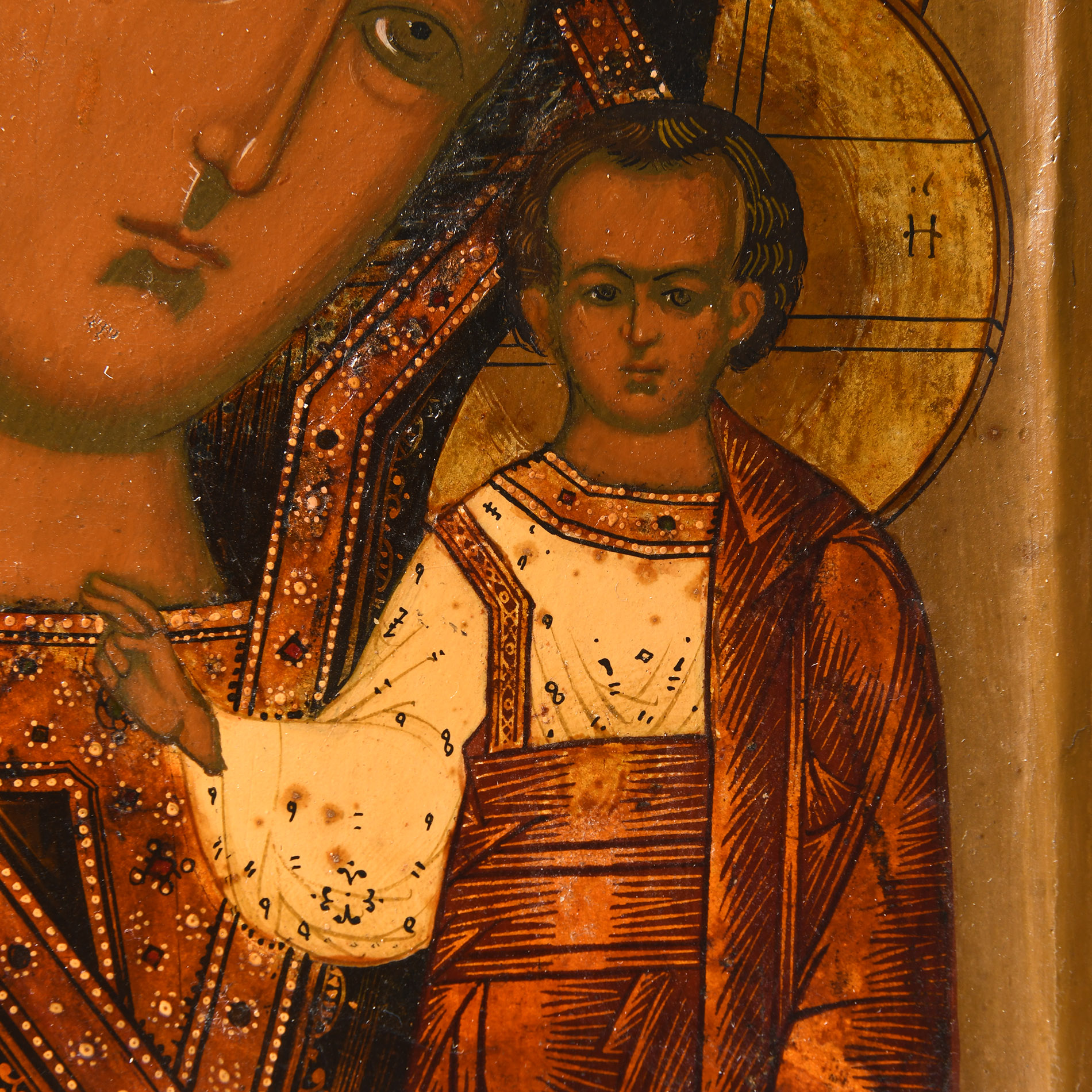
Russian Icon with Virgin of Kazan with the Blessing Child
19TH-20TH CENTURY A.D.
12 1/4 in. (968 grams, 31 cm high).
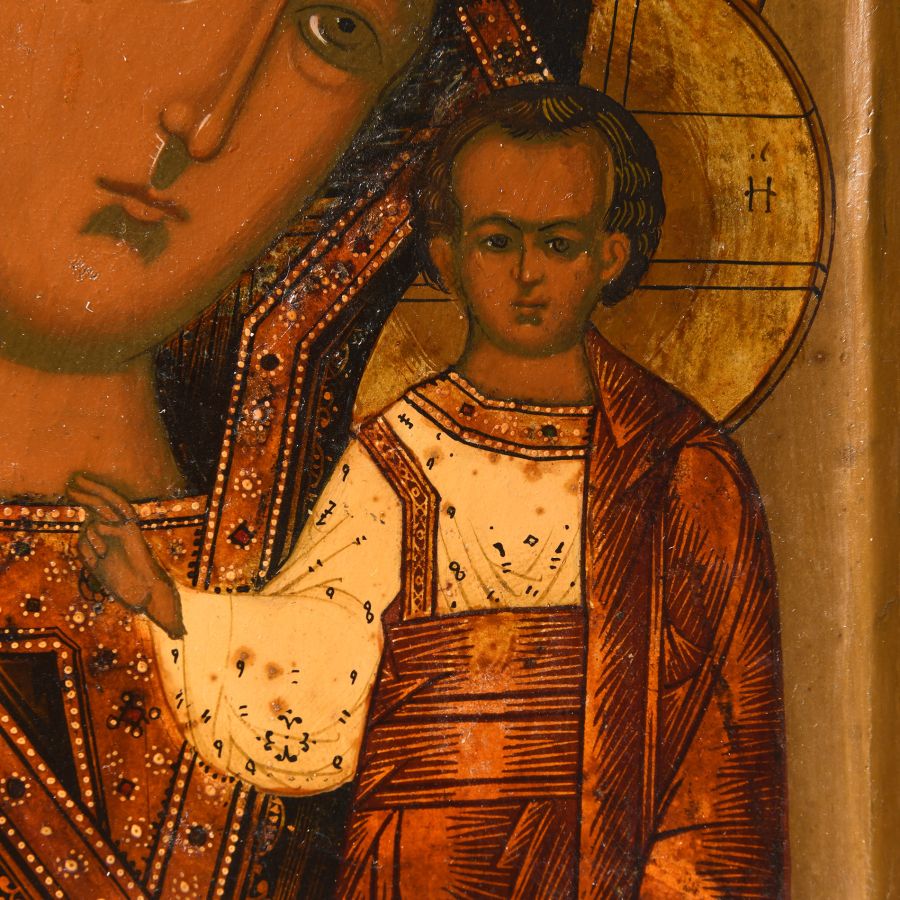
Painted on a wooden board with mounting slots and panels to the reverse, gessoed surface with painting of the Virgin of Kazan, head of Mary with gilded nimbus and russet-coloured veil, standing infant Jesus similarly nimbate with right hand raised in the pax gesture; gilt monograms to the upper corners and title to the lower left corner.
ProvenanceEx property of a London lady, part of her family's collection.
LiteratureSee Preobrazhensky, A., ‘The icon of the Virgin of Kazan: new data on the early history of its veneration and the most ancient copies (in Russian)’ in Чудотворный Казанский образ Богородицы в судьбах России и мировой цивилизации. Сборник докладов участников научно-просветительских чтений, (Miraculous Kazan image of the Mother of God in the fate of Russia and world civilization. Collection of reports of participants of scientific and educational readings, in Russian), Казань, 2018, pp.295-429.
FootnotesThe original icon, also known as the Theotokos of Kazan, is thought to have originated in Constantinople in the 13th century before it was taken to Russia. When the Turks took over Kazan in 1438, the icon was most probably hidden to keep it safe. Ivan the Terrible liberated Kazan in 1552, and the town was destroyed by fire in 1579, after which the icon was found and brought to the Church of Saint Nicholas. It was subsequently stolen in 1904 and never found again, though there are many copies in existence.
CONDITIONTimeLine Auctions follows a vetting process to ensure the authenticity and legality of all items, reinforcing our commitment to integrity and responsible trading. Each antiquity, antique, and coin lot undergoes thorough examination by a vetting committee of at least ten external specialists, professional trade association members, scientists, and archaeologists: Our Vetting Process
AUCTIONS:
TimeLine is a leading auction house specialising in antiquities, ancient art, collectables, natural history, coins, medals, and books. Our auctions offer museums, collectors, historians, and enthusiasts the opportunity to acquire unique and historically significant pieces.
LOT 1539
Russian Icon with Virgin of Kazan with the Blessing Child
Estimate £500 - 700€580 - 810 (for guidance only)$680 - 950 (for guidance only)
-
Large Egyptian Revival Painted Stone Plaque
20th century A.D.Sold for (Inc. bp): £72
A substantial decorative designer tongue-shaped stele with low-relief tiered frieze: upper register: three seated figures, one with a sceptre, facing a standing kilted figure addressing them; middle register: the gods Thoth with jackal-head and Nekhbet with vulture-head weighing souls on scales; lower register: four seated gods with accompanying symbols facing a kneeling robed figure with hands raised; curved top with opposed jackals, Osiris's wedjat eye and scarab with spread wings, hieroglyphs in the field; after the antique. 22.8 kg, 65 cm
From a French collection, Paris. Ex Parisian gallery, France; latterly with a London, UK, gallery. -

Elizabethan Period Ceramic Fire Brick Group
Circa 16th century A.D.Estimate: £120 - 170 (+bp*)
Opening Bid: £60
Comprising four bricks with raised designs: scrolling vegetation; two monograms, one a merchant's mark, in roundels divided by an object with tiered base and billeted border; male and female facing busts within dot-dash border; worn crowned shield issuing flowering vegetation. 6.4 kg total, 13-14 cm
Acquired 1990s-early 2000s. East Anglian private collection.
These glazed stove or floor tiles are similar to the ones of the great hall and the Tudor kitchens at Hampton Court Palace, made of ceramic, with a glaze to make it hard-wearing and washable. Not just the furnishings, but the palaces themselves were multi-coloured, with brick walls painted red, and exposed timbers in yellow, red, green and white -
Post Medieval Octagonal Lead Tobacco Jar
Mid 17th-18th century A.D.Sold for (Inc. bp): £13
With deep body resting on a wide base with spherical feet (two absent). 465 grams, 11.8 cm wide
Found Somerset, UK. Accompanied by a letter from Bristol Museum dated 26th July 1990 identifying the object.
