
Loading, please wait...
LOT 2022
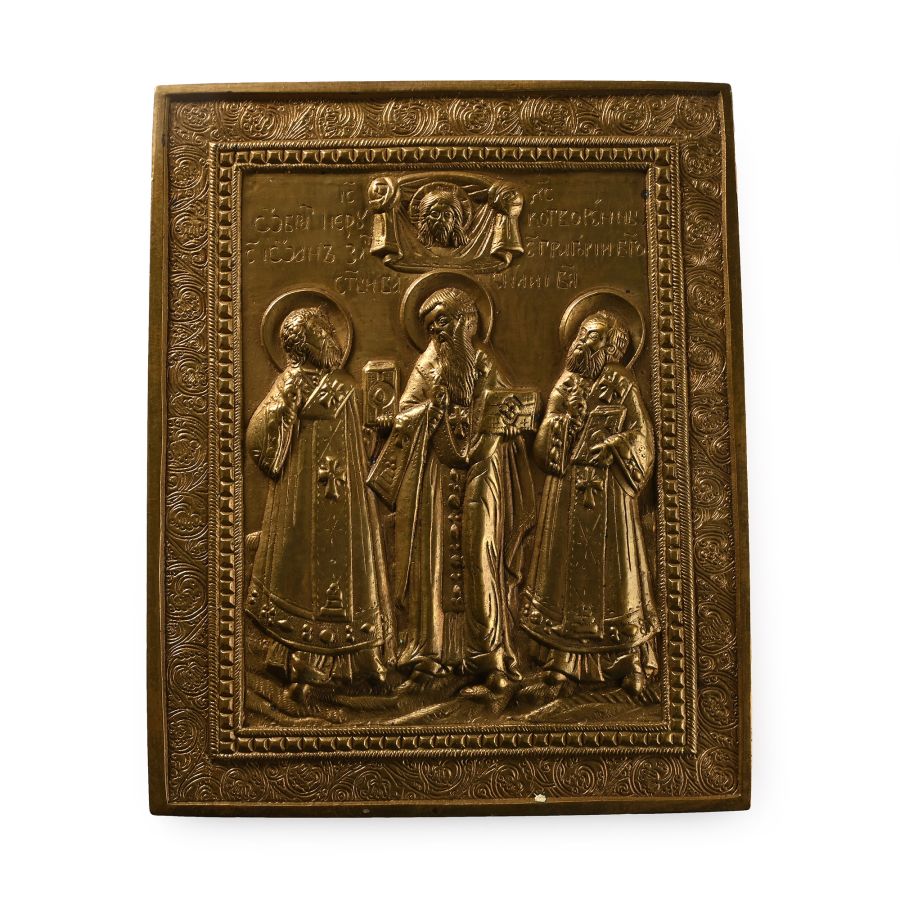
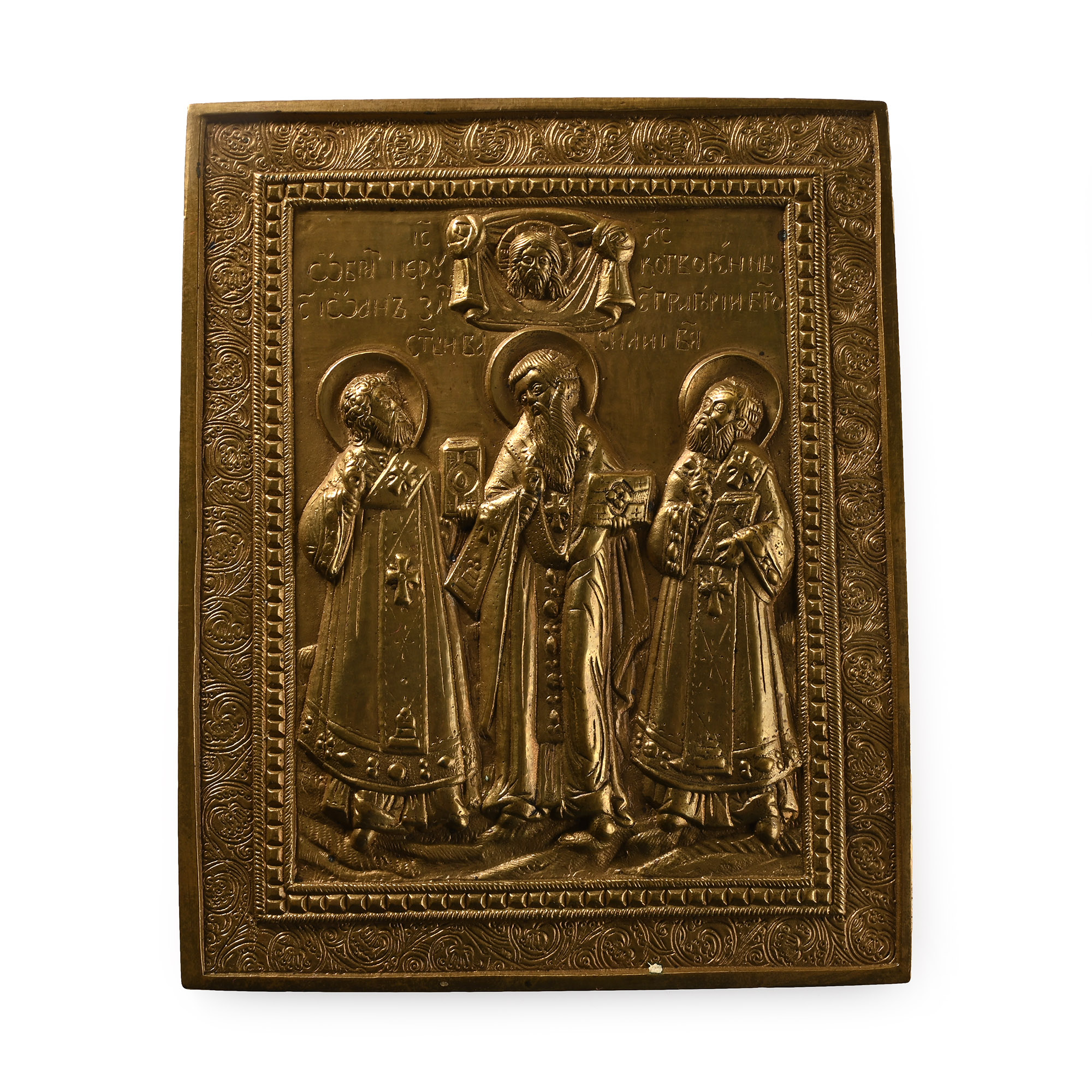
Russian Bronze Travel Icon with the Three Hierachs of Orthodoxy
19TH CENTURY A.D.
4 1/2 in. (270 grams, 11.5 cm).
Depicting Saint Basil the Great, Saint Gregory the Theologian and Saint John Chrysostomus, all nimbate and holding their holy writings, under the vision of the Holy Mandylion; Saint Basil wearing a bishop's sakkos, the other two wearing the usual orthodox priest's garb, phelonia; all three wearing a brocade band, omophorion, with four crosses; inscriptions in Old Slavonic with the names of the Saints, on the Nimbus of Jesus, the letters 'O Ѡ N' (‘I AM’); names of the Saints in the background in Old Slavonic; framed by double moulding, the first decorated with crenellated elements, the second with arabesques. [No Reserve]
ProvenanceAcquired from Chris Martin-Zakheim, Iconastas, 5 Piccadilly Arcade, London SW1.
From the private collection of a West London, UK, gentleman, formed since the early 2000s.
Cf. Melnik, L. Yu., Enamel Icons in the State Catalog: Iconography of Saints in Rostov Museum Communications (in Russian), in Issue XXIV, Rostov, 2019, fig. 51, pp.178-277, for a similar icon.
FootnotesThe icon is the so-called icon of the three hierarchs, Saint Gregory the Theologian (Gregory of Nazianzus), Saint Basil the Great (Basil of Caesarea) and Saint John Chrysostom, archbishop of Constantinople. All three were important fathers of the church who strove to clarify and crystallise Dogma, for the unity of the faith, of the Liturgy and the needs of philosophy and letters.
CONDITIONTimeLine Auctions follows a vetting process to ensure the authenticity and legality of all items, reinforcing our commitment to integrity and responsible trading. Each antiquity, antique, and coin lot undergoes thorough examination by a vetting committee of at least ten external specialists, professional trade association members, scientists, and archaeologists: Our Vetting Process
AUCTIONS:
TimeLine is a leading auction house specialising in antiquities, ancient art, collectables, natural history, coins, medals, and books. Our auctions offer museums, collectors, historians, and enthusiasts the opportunity to acquire unique and historically significant pieces.
LOT 2022
Russian Bronze Travel Icon with the Three Hierachs of Orthodoxy
Sold for (Inc. bp): £221
-
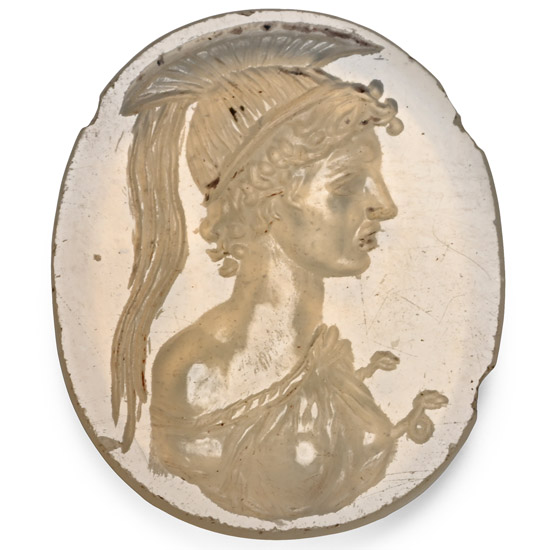
Post Medieval Chalcedony Gemstone with Bust of Minerva
18th century A.D.Sold for (Inc. bp): £117
Translucent cameo with the profile bust of Goddess Minerva wearing a crested helmet. 1.5 grams, 20 mm
Acquired on the European art market. -
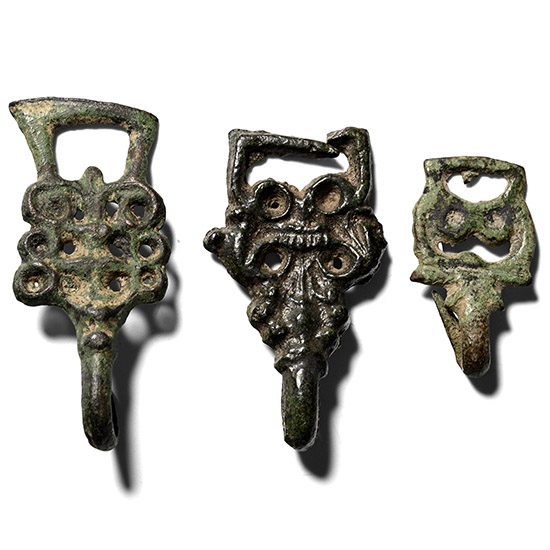
Tudor Period Bronze Hook Fastener Group
Circa 16th century A.D.Sold for (Inc. bp): £26
Comprising three openwork hook fasteners with scrolls. 7.44 grams total, 22-34 mm
From the private collection of Graham Slater (1927-2024), Cambridge, UK; formed 1980s-1990s. -
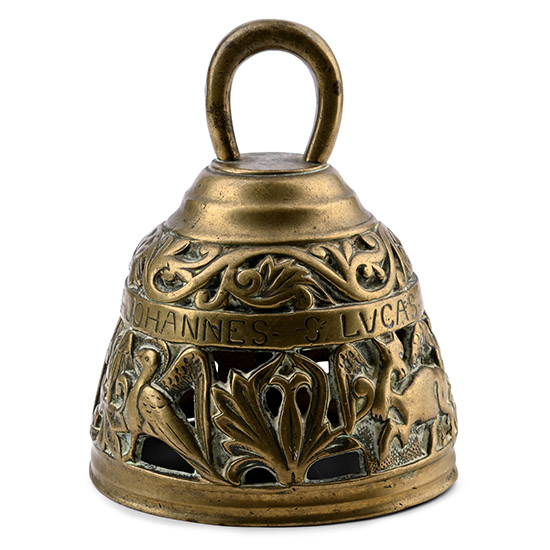
Post Medieval Reproduction Brass Bell
19th-20th century A.D.Sold for (Inc. bp): £13
Openwork domed body with a large loop above, a circumferential band naming the four Evangelists with their symbols below. 551 grams, 11.6 cm
Acquired on the UK art market. Property of a Suffolk, UK, gentleman.
