
Loading, please wait...
LOT 1516
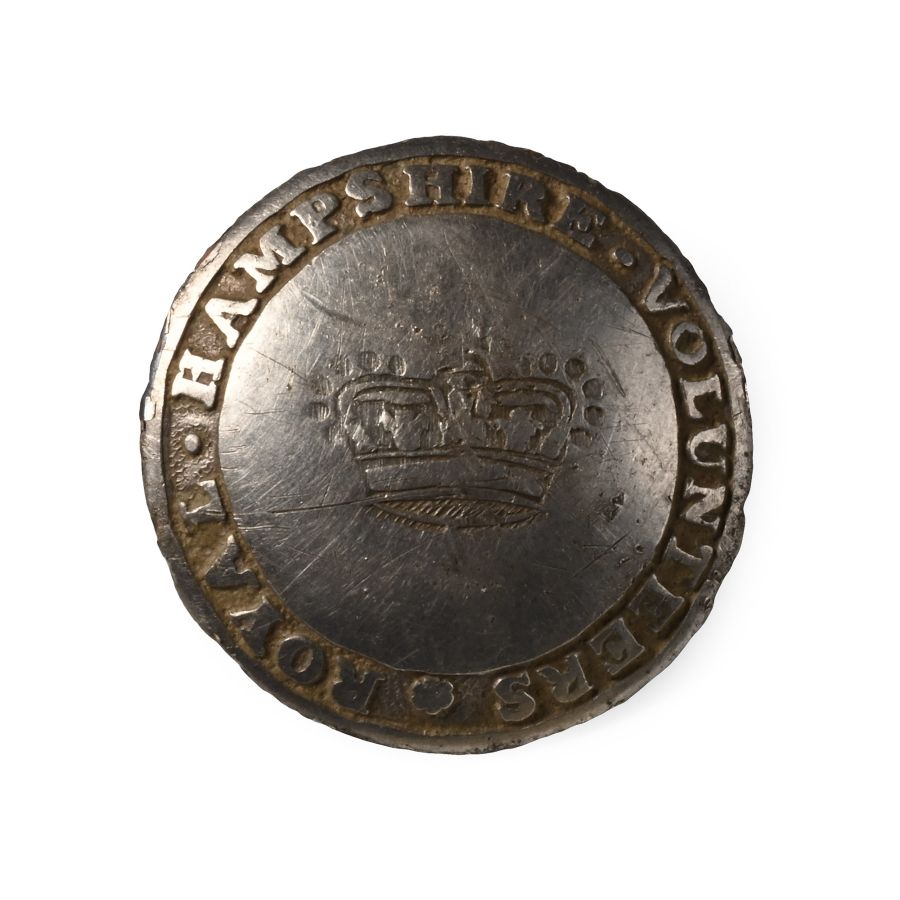
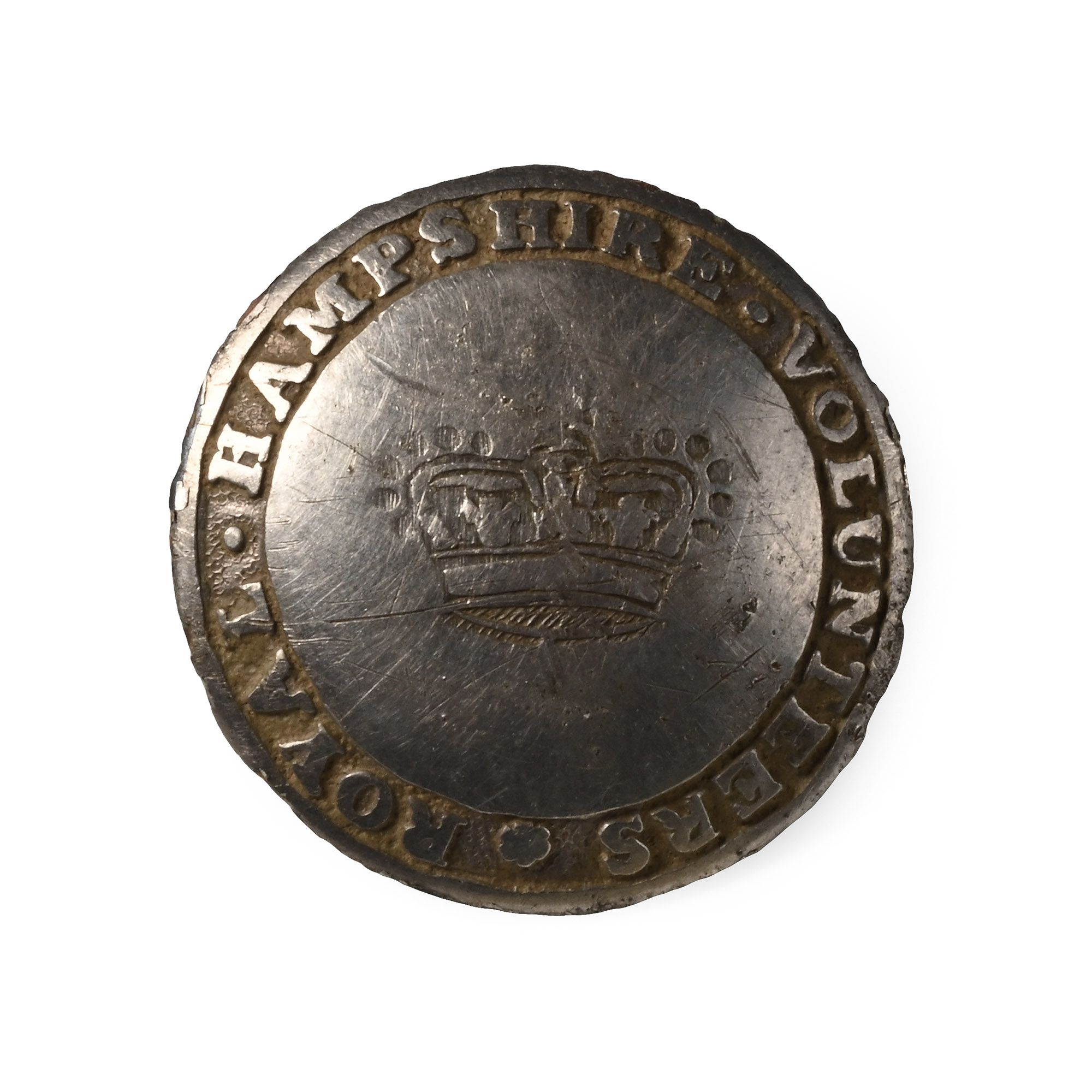
Royal Hampshire Volunteers Silver-Plated Button
19TH CENTURY A.D.
5/8 in. (2.18 grams, 17 mm).
Silver-plated military button bearing the legend 'ROYAL HAMPSHIRE VOLUNTEERS' around a crown; loop to reverse. [No Reserve]
ProvenanceFound Waltham St.
Lawrence, Windsor and Maidenhead, UK.
Accompanied by a copy of the British Museum's Portable Antiquities Scheme (PAS) report no.BERK-0A5A9A.
From the PAS Report: 'Similar recorded examples have 'I. Nutting' backmark (without '& Son') which indicates a manufacture date of c.1794-1802 ('& Son' being added in 1803, dropped again c1820 when the father died).'
The story of the unit is difficult to determine. 'The Volunteer & Militia lists for 1794,1796, 1797, 1799, 1800 & 1801 have all been checked and no unit of this title is listed. Also the Parliamentary Return for December 9th & 13th, 1803 which lists many units that didn't make it into the April 1804 War Office List have been searched, again no such unit is listed. There were a few infantry volunteer regiments raised c1780-1783 as so many of the regular regiments were fighting in the War of American Independence, 'Royal Lancasters Volunteers' was one such that is listed, but there is no mention of one for Hampshire.'
TimeLine Auctions follows a vetting process to ensure the authenticity and legality of all items, reinforcing our commitment to integrity and responsible trading. Each antiquity, antique, and coin lot undergoes thorough examination by a vetting committee of at least ten external specialists, professional trade association members, scientists, and archaeologists: Our Vetting Process
AUCTIONS:
TimeLine is a leading auction house specialising in antiquities, ancient art, collectables, natural history, coins, medals, and books. Our auctions offer museums, collectors, historians, and enthusiasts the opportunity to acquire unique and historically significant pieces.
-
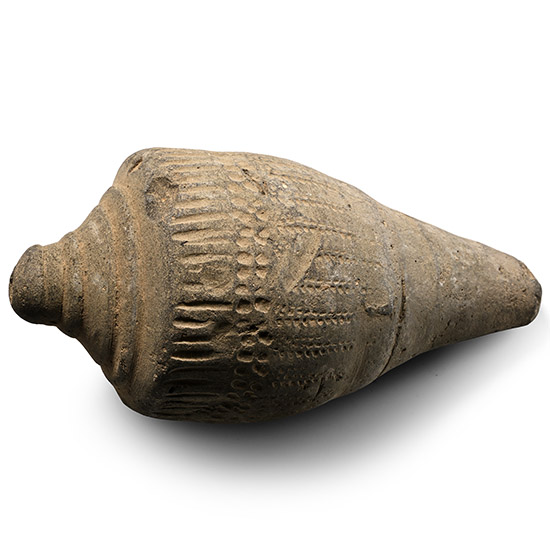
Turco-Mongol 'Greek Fire' Ceramic Bomb or Hand Grenade
14th-15th century A.D.Sold for (Inc. bp): £111
Piriform in profile with a domed mouth and a stepped neck, incised decoration; intended to be filled with explosive liquid and a wick, and used as a hand grenade. 460 grams, 16.5 cm
From a specialist collection, London, UK, 1990-2000s.
Apart from the use of siphons or manual flame-throwers called cheirosiphona, special corps of Roman soldiers employed terracotta grenades, in the form of small jars, abundantly evidenced in archaeological excavations. They were called μεσαία kακαβιά or κυτροκακάβια, where the former had a bulbous shape and the latter a more cylindrical form. -
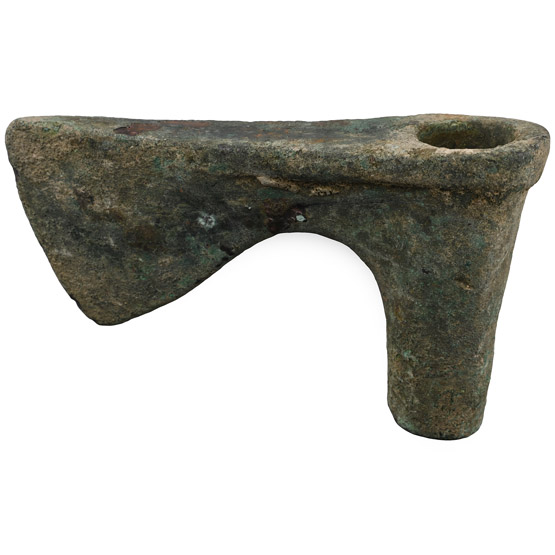
Luristan Bronze Socketted Axehead
2nd-1st millennium B.C.Estimate: £100 - 140 (+bp*)
Opening Bid: £50
With a short socketted shaft and flange to the mouth, broadening blade towards the cutting edge. 367 grams, 12 cm
Ex Abelita family collection, 1980s-2000s. -
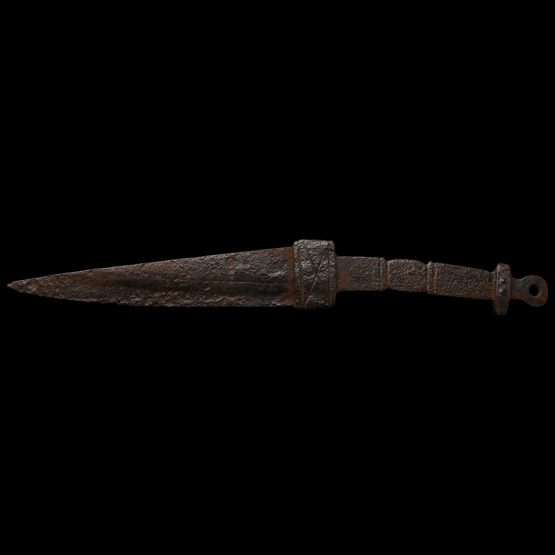
Thracian Iron Dagger
Circa 5th-1st century B.C.Sold for (Inc. bp): £1,430
Single-edged curving upper blade, rectangular guard with incised saltire, segmented grip and upper guard fixed with pins, loop finial; rhomphaia type. 276 grams, 34.7 cm
Ex North American collection, 1970s.
