
Loading, please wait...


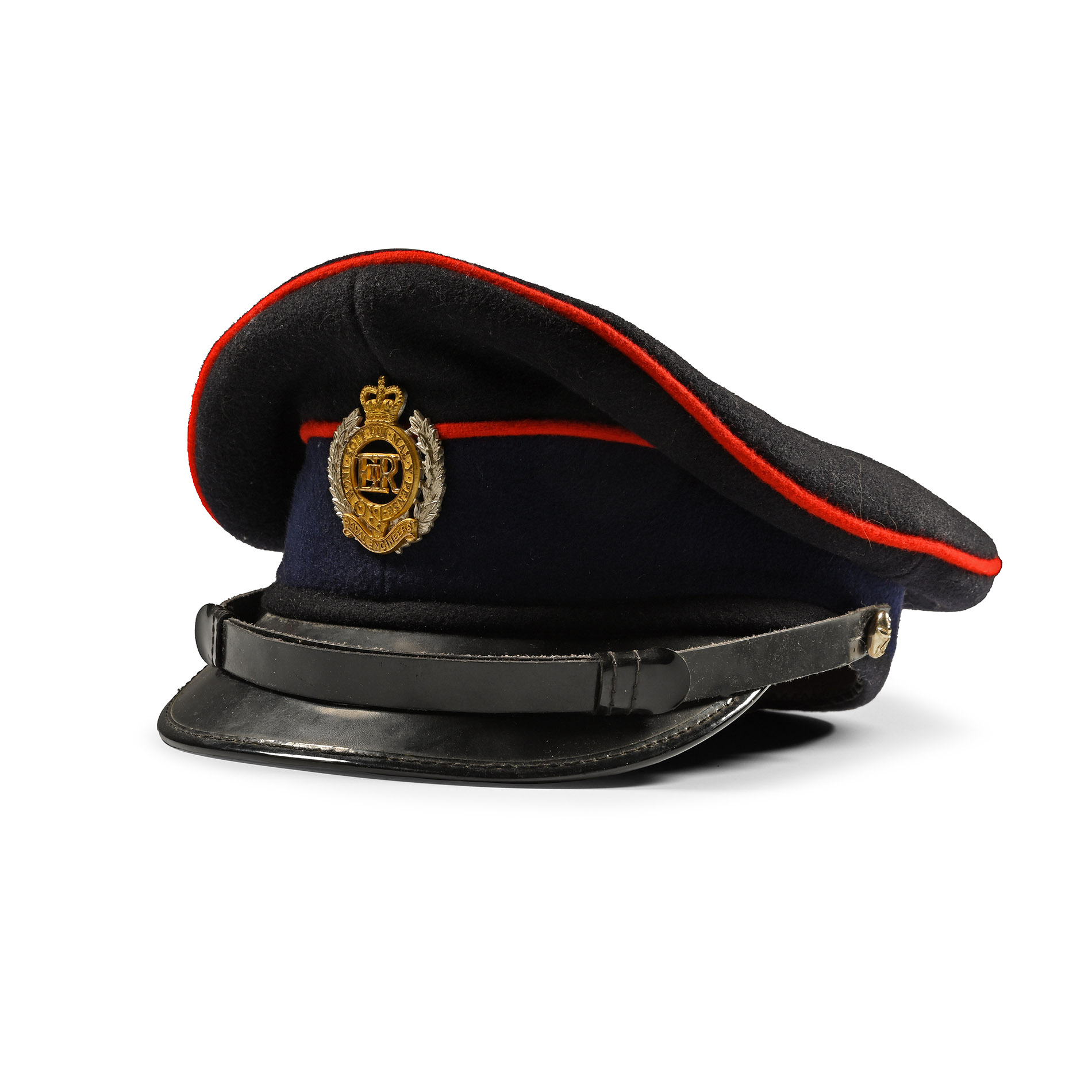
LOT 1628
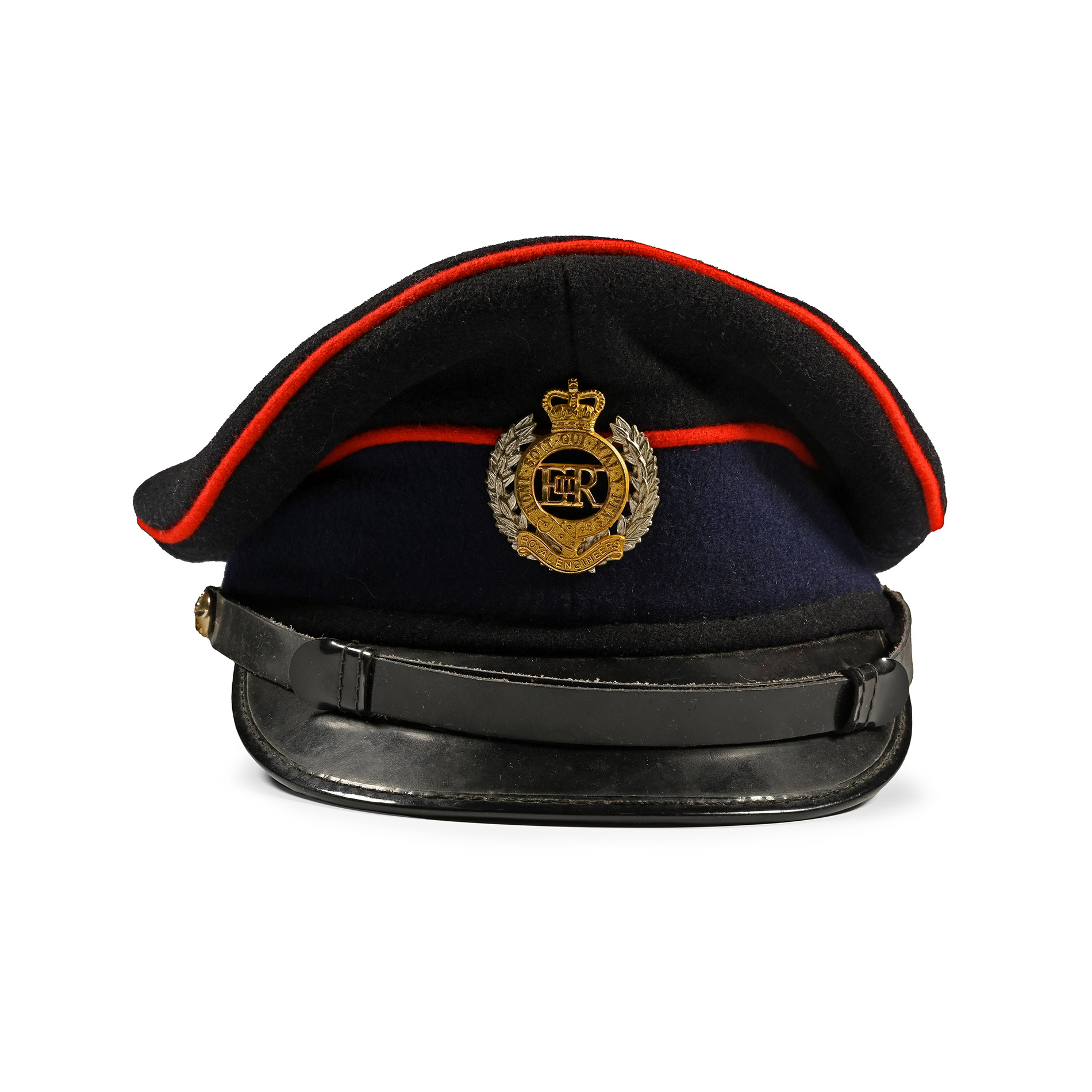
Royal Engineers Officer's Cap
1938-1945 A.D.
11 1/4 in. (280 grams, 28.5 cm).
Army Cap No.1 - British Army, Royal Engineers Officers' Dress Cap with Royal Engineers gilt badge fitted, 'G.D. Golding' maker's label inside; side buttons silver-coloured with Gurkha regiment insignia. [No Reserve]
ProvenanceFrom a Cambridgeshire, UK, collection.
This lot is accompanied by an illustrated lot declaration signed by the Head of the Antiquities Department, Dr Raffaele D’Amato.
TimeLine Auctions follows a vetting process to ensure the authenticity and legality of all items, reinforcing our commitment to integrity and responsible trading. Each antiquity, antique, and coin lot undergoes thorough examination by a vetting committee of at least ten external specialists, professional trade association members, scientists, and archaeologists: Our Vetting Process
AUCTIONS:
TimeLine is a leading auction house specialising in antiquities, ancient art, collectables, natural history, coins, medals, and books. Our auctions offer museums, collectors, historians, and enthusiasts the opportunity to acquire unique and historically significant pieces.
-
Luristan Bronze Spearhead Blade
14th-10th century B.C.Estimate: £250 - 350 (+bp*)
Opening Bid: £130
With rounded shoulders and square-sectioned mid-rib running to the blade tip; short tang with fastening hole. 45 grams, 46.5 cm
Acquired 1980-2015. Ex Abelita family collection. This lot is accompanied by an illustrated lot declaration signed by the Head of the Antiquities Department, Dr Raffaele D’Amato.
The spearhead belongs to the type VI spearhead of the Khorasani classification. It is characterised by a long blade and short tang, slightly rounded shoulders and pronounced midrib. Similar weapons were excavated by Prof. Negahban in the royal cemetery of Marlik. -
Byzantine 'Greek Fire' Ceramic Fire Bomb or Hand Grenade
9th-11th century A.D.Sold for (Inc. bp): £182
A piriform missile with domed filler-hole, raised vertical ribs and impressed teardrop-shaped motifs to the body, intended to be filled with explosive liquid and wick, used as a hand grenade. 547 grams, 15.3 cm
From an important specialist collection, London, UK, 1990s onwards. Accompanied by an academic paper by military specialist Dr Raffaele D'Amato, dated 15 July 2019 and titled 'Eastern Roman Empire - Greek Fire Bomb or Hand Grenade (μεσαίον kακάβιον) 9th-11th century AD'. This lot is accompanied by an illustrated lot declaration signed by the Head of the Antiquities Department, Dr Raffaele D’Amato. -
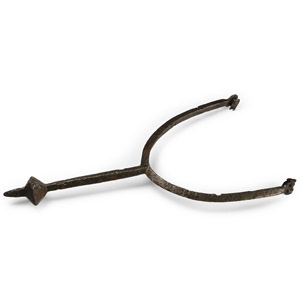
Norman Iron Prick Spur
11th-12th century A.D.Sold for (Inc. bp): £78
With rectangular finials, D-section frame, lozenge-section shank, facetted bulb and conical prick. 75 grams, 19.5 cm
Acquired from Coincraft, London, UK. From the private collection of Kenneth Machin (1936-2020), Buckinghamshire, UK; with collection no.M35; his collection of antiquities and natural history was formed since 1948; thence by descent. Accompanied by an original certificate of authenticity from Coincraft. This lot is accompanied by an illustrated lot declaration signed by the Head of the Antiquities Department, Dr Raffaele D’Amato.
