
Loading, please wait...


LOT 0216
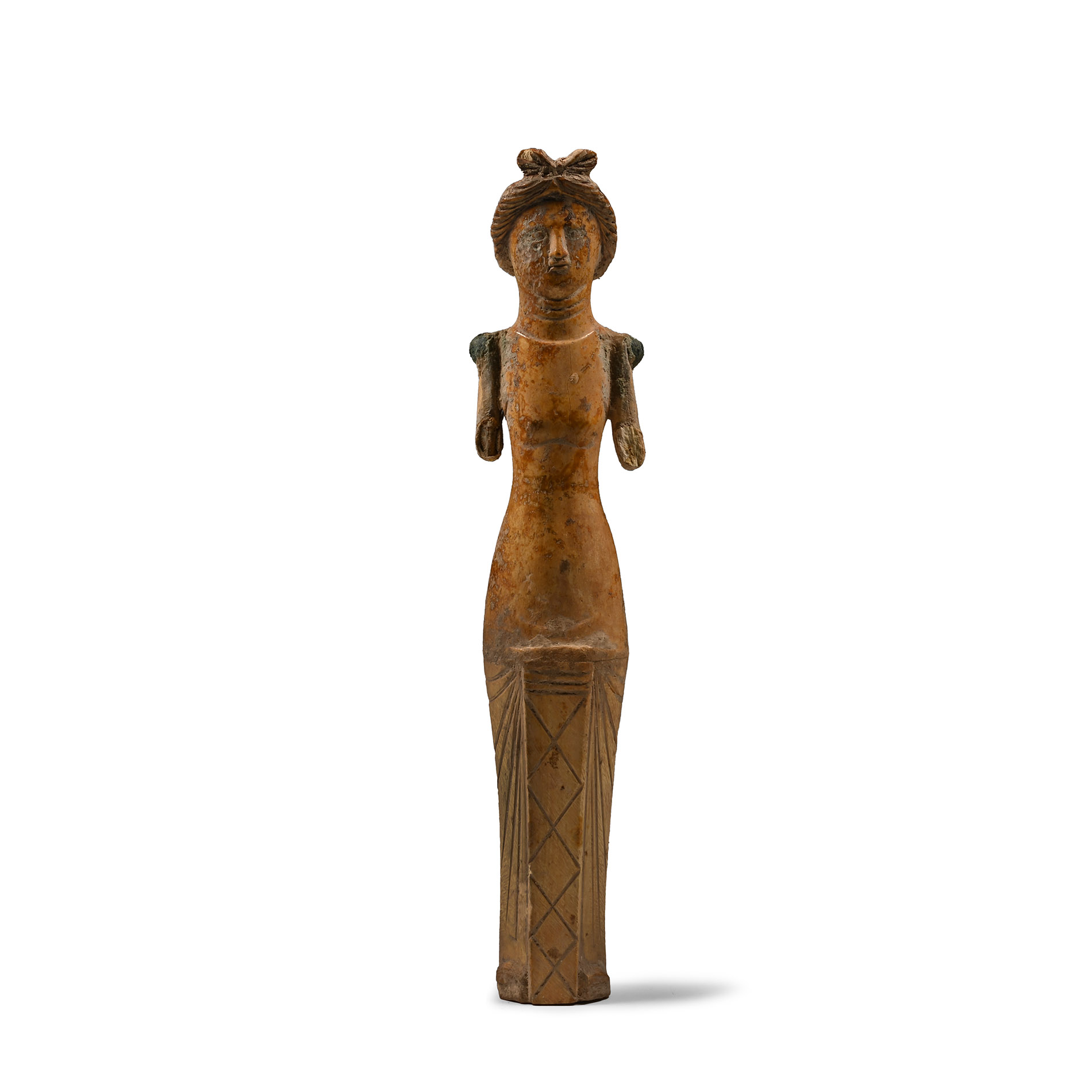
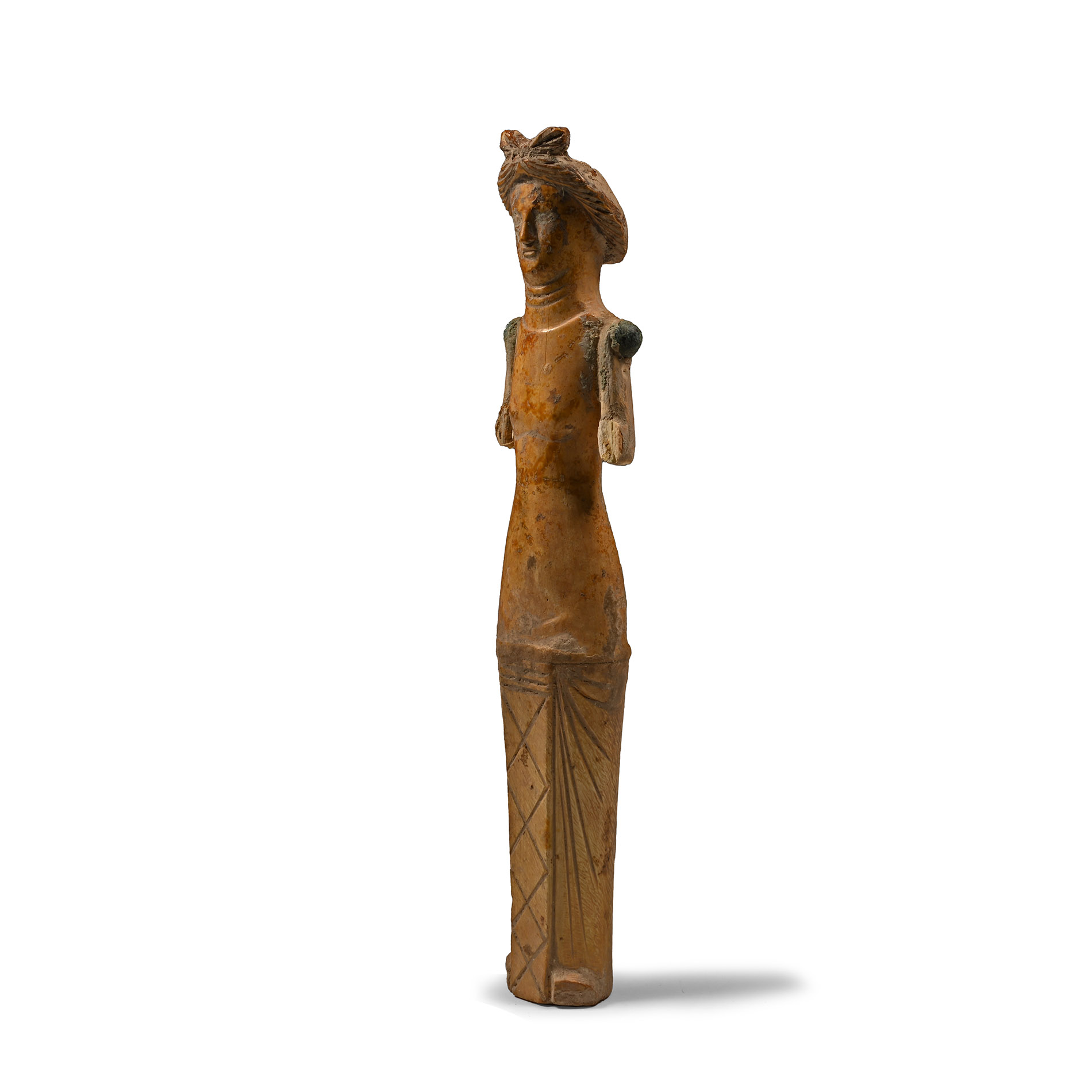
Romano-Parthian Bone Idol of a Female
EASTERN ROMAN, 3RD CENTURY B.C.-2ND CENTURY A.D.
7 1/2 in. (77 grams, 19 cm high).
Depicting a female figure with elaborately tied hairstyle, semi-naturalistic facial and anatomical detailing and geometric detailing to the garment wrapped around her lower body; stub arms; copper-alloy rivets to the shoulders.
Provenancewith a London, UK gallery, 1971-early 2000s.
LiteratureSee The British Museum, museum number 1853,1219.60, for a comparable (partial) figure.
CONDITIONTimeLine Auctions follows a vetting process to ensure the authenticity and legality of all items, reinforcing our commitment to integrity and responsible trading. Each antiquity, antique, and coin lot undergoes thorough examination by a vetting committee of at least ten external specialists, professional trade association members, scientists, and archaeologists: Our Vetting Process
AUCTIONS:
TimeLine is a leading auction house specialising in antiquities, ancient art, collectables, natural history, coins, medals, and books. Our auctions offer museums, collectors, historians, and enthusiasts the opportunity to acquire unique and historically significant pieces.
-
Roman Bronze Nymph Riding a Phallus
2nd-3rd century A.D. or laterSold for (Inc. bp): £520
Figurine modelled in the round of a phallus supported on two zoomorphic legs with a smaller phallus to the rear, ridden by a nude female with her left hand gripping a separate object (absent), possibly a wine-cup; mounted on a custom-made stand. 42 grams total, 62 mm including stand
From a collection acquired on the UK art market from various auction houses and collections mostly before 2000. From an important Cambridgeshire estate; thence by descent.
Based on the amuletic tintinnabulum winged and two-legged phallus. -
Roman Agate Gemstone with Lion
2nd-3rd century A.D.Sold for (Inc. bp): £143
Ellipsoid in plan with intaglio standing lion to obverse; remains of ferrous setting to one edge. 0.7 grams, 15 mm
From the collection of a gentleman, acquired on the London art market in the 1990s. -
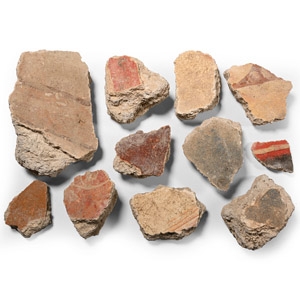
Roman Fresco Wall Plaster Collection
1st century A.D.Sold for (Inc. bp): £98
Fragments of wall plaster with rendered surface painted with mainly red and brown detailing; some with impression of timber laths to the reverse. 1.01 kg total, 3.8-12.6 cm
Acquired in the 19th century. Ex Jeger collection, Switzerland. UK gallery, early 2000s.
These small fragments, for analogies with the fragments of Pompeii, seems to belong to the second style of Roman painting, red panels representing highlight and shadow, decorated with vegetal interlaces. Some panels were probably framed by a red grenade fillet. A fragment shows alternate blue and red colour over a cream background, maybe pertinent to a socle.
