
Loading, please wait...
LOT 0113
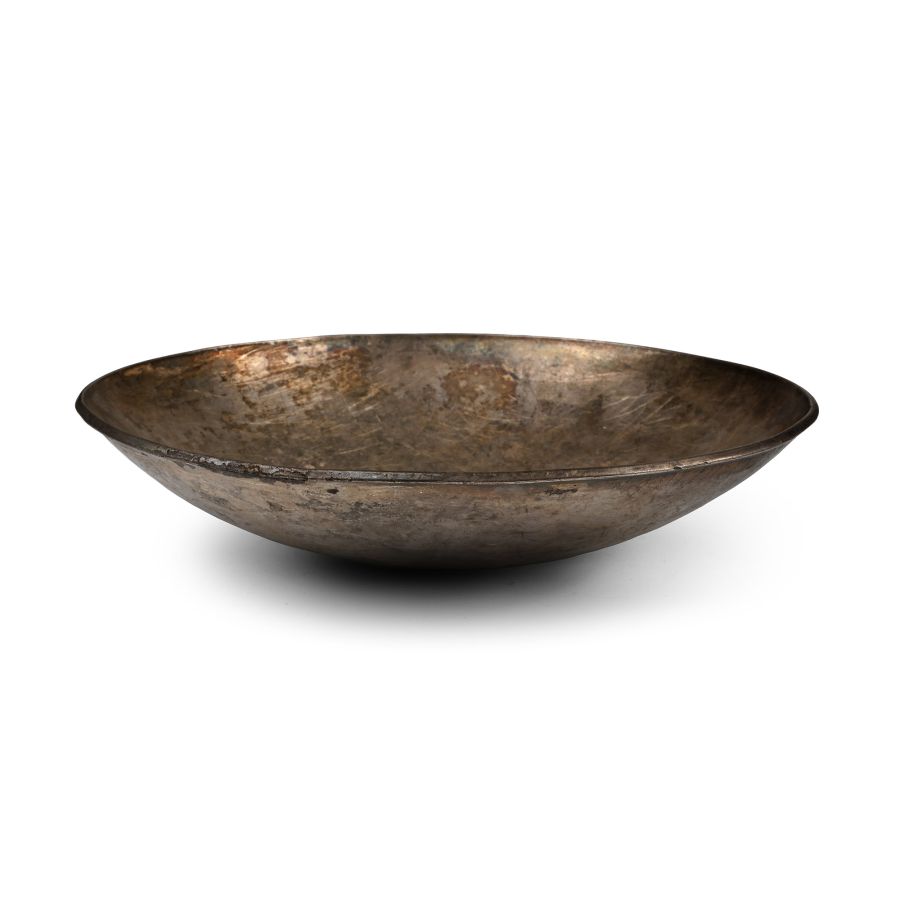
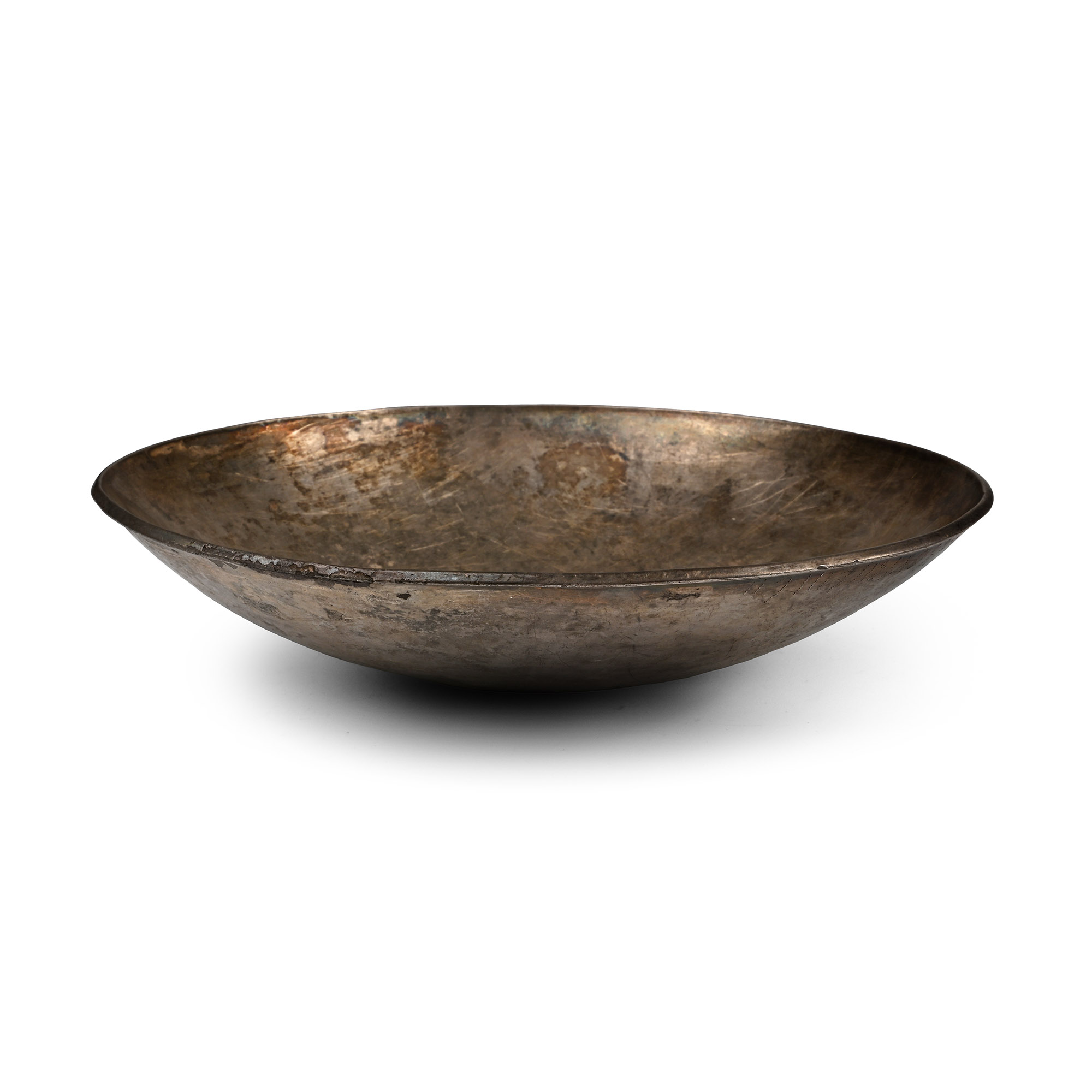
Romano-Gandharan Silver Phiale with Pointille Karoshti Inscription
1ST CENTURY B.C.-1ST CENTURY A.D.
8 1/8 in. (281 grams, 20.7 cm wide).
Broad dished body with carinated rim; legend to the exterior rim, the inscription meaning '(Property) of Virghosa, sadera 15, drachma 2, dhanea 3, a(NDikA)2.'
ProvenanceAcquired from a private UK collection prior to 1979.
Ex Julian Sherrier collection, a leading figure in Gandharan art.
Ex Christie's, New York, 14th September 2010, no.35 (part).
This lot has been cleared against the Art Loss Register database, and is accompanied by an illustrated lot declaration signed by the Head of the Antiquities Department, Dr Raffaele D'Amato.
Cf. Barratte, F., East and West, A Central Asia Silver hoard from the Parthian East, 2002, p.45, fig.28.
CONDITIONTimeLine Auctions follows a vetting process to ensure the authenticity and legality of all items, reinforcing our commitment to integrity and responsible trading. Each antiquity, antique, and coin lot undergoes thorough examination by a vetting committee of at least ten external specialists, professional trade association members, scientists, and archaeologists: Our Vetting Process
AUCTIONS:
TimeLine is a leading auction house specialising in antiquities, ancient art, collectables, natural history, coins, medals, and books. Our auctions offer museums, collectors, historians, and enthusiasts the opportunity to acquire unique and historically significant pieces.
LOT 0113
Romano-Gandharan Silver Phiale with Pointille Karoshti Inscription
Sold for (Inc. bp): £2,860
-
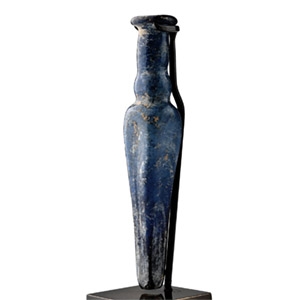
Roman Fine Blue Glass Flask
2nd-3rd century A.D.Sold for (Inc. bp): £364
Iridescent square-section vessel with dimpled sides, tall neck and everted rim; mounted on a custom-made stand. 82 grams total, 14.3 cm including stand
Ex Mayfair, London, UK, gallery, 1990s-2000s. From an important collection of glass, the property of a London gentleman. This lot is accompanied by an illustrated lot declaration signed by the Head of the Antiquities Department, Dr Raffaele D'Amato. -
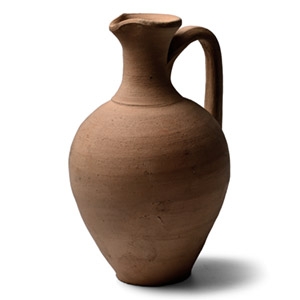
Roman Buffware Piriform Jug
2nd-3rd century A.D.Sold for (Inc. bp): £169
Piriform in profile with discoid foot, deep shoulder, neck with pinched and everted rim; applied strap handle to rear. 251 grams, 14 cm
From the private collection of a Canadian gentleman living in Essex, UK, formed since the 1920s-circa 1990. Property of an Essex lady until the late 1990s; thence by descent. From the private collection of an Essex gentleman since the late 1990s. This lot is accompanied by an illustrated lot declaration signed by the Head of the Antiquities Department, Dr Raffaele D'Amato. -
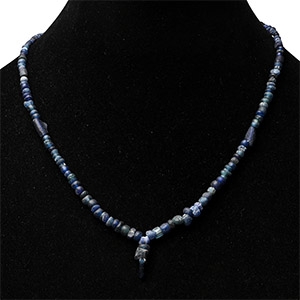
Roman Blue Glass Bead Necklace String
1st-4th century A.D. and laterSold for (Inc. bp): £98
Composed mainly of oblate and annular beads, restrung to a Y-shape. 11.96 grams, 41 cm
From the London, UK, art market in the 1990s. This lot is accompanied by an illustrated lot declaration signed by the Head of the Antiquities Department, Dr Raffaele D'Amato.
Such necklaces testify to the popularity of glass ornaments across the Roman Empire. Roman jewellery at first followed trends set by the Etruscans, using gold and glass beads, but with the extension of the Empire and the adoption of different styles from Greece, Egypt and North Africa, jewellery designs became increasingly various and elaborate. Each bead of this beautiful necklace is unique in shape, lustre and speckling, creating a mosaic like impression. Blue glass beads are distinguished by the scholars in opaque mid-blue and deep translucent cobalt blue.
