
Loading, please wait...
LOT 0115
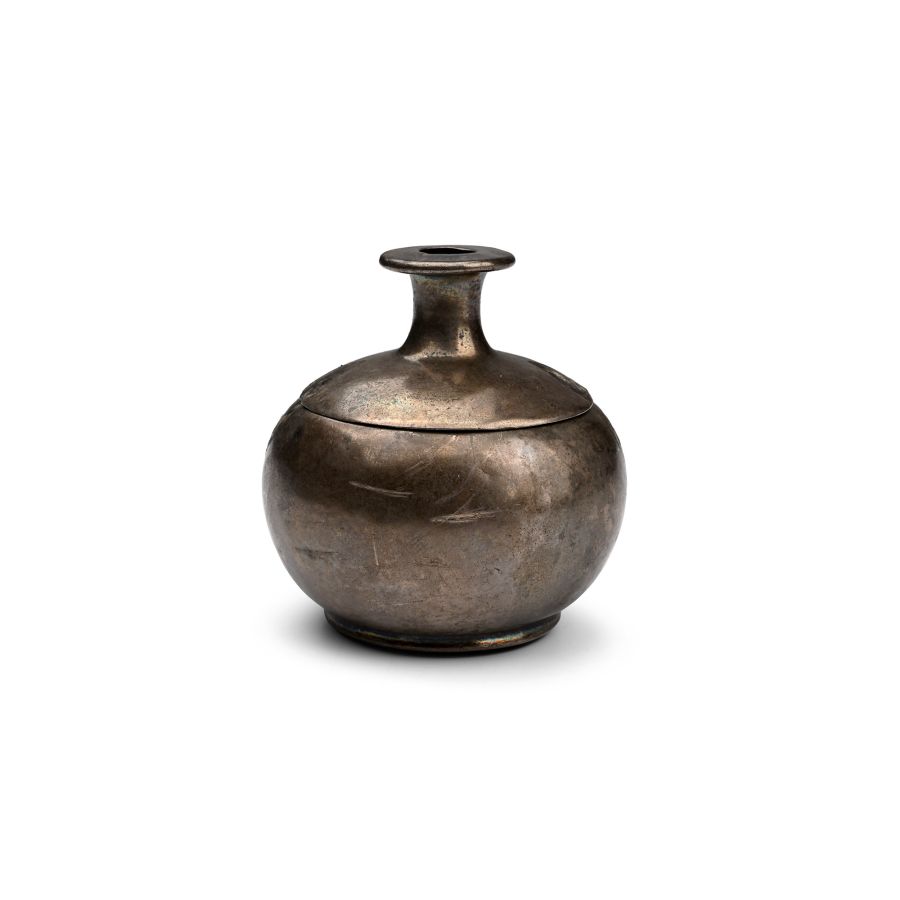
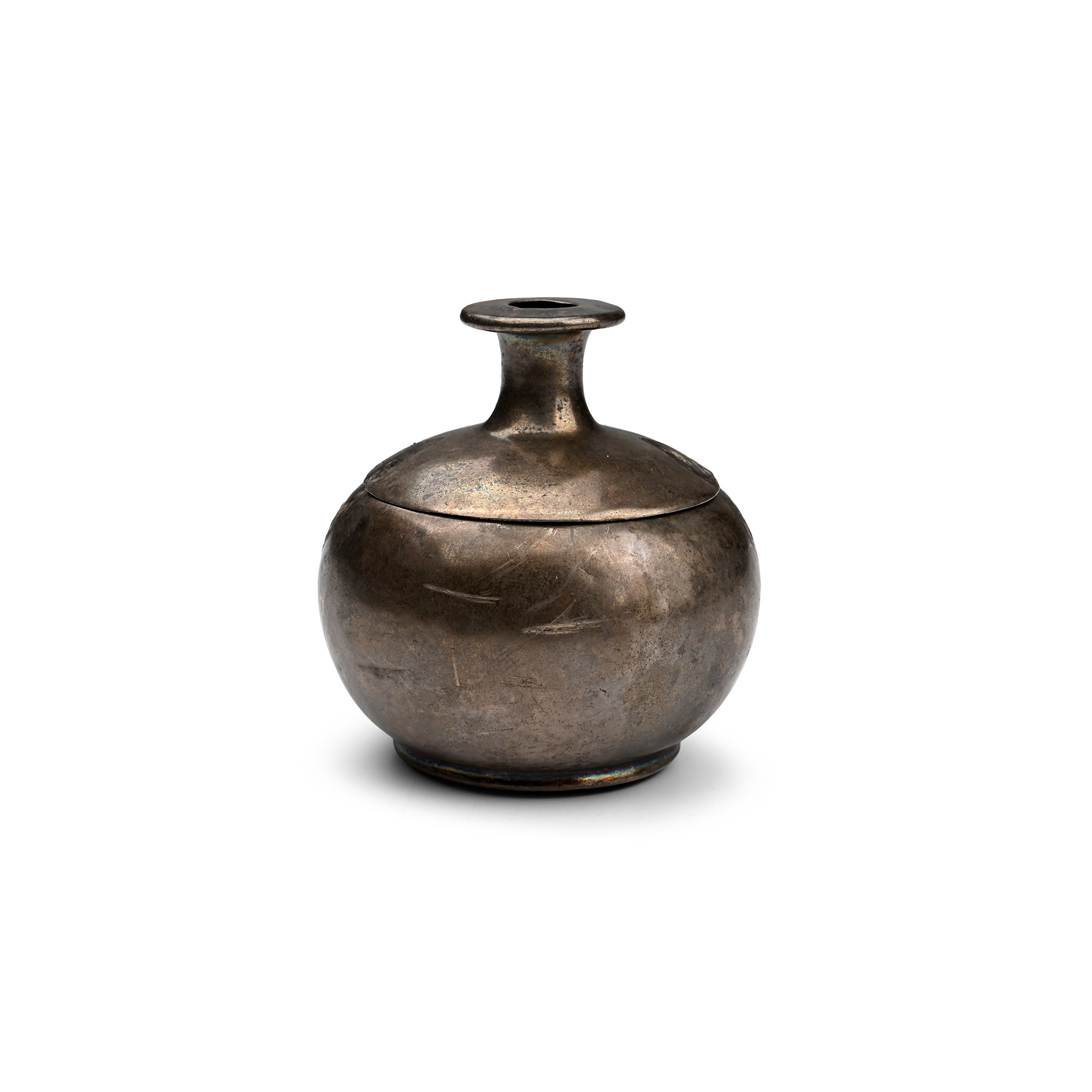
Romano-Gandharan Silver Aryballos with Cover
1ST CENTURY B.C.-1ST CENTURY A.D.
2 3/4 in. (80 grams, 71 mm high).
Squat in profile with discoid base, separate inset lid with trumpet-shaped handle.
ProvenanceAcquired from a private UK collection prior to 1979.
Ex Julian Sherrier collection, a leading figure in Gandharan art.
Ex Christie's, New York, 14th September 2010, no.40 (part).
This lot is accompanied by an illustrated lot declaration signed by the Head of the Antiquities Department, Dr Raffaele D'Amato.
Cf. Barratte, F., East and West, A Central Asia Silver hoard from the Parthian East, 2002, p.39, fig.19.
CONDITIONTimeLine Auctions follows a vetting process to ensure the authenticity and legality of all items, reinforcing our commitment to integrity and responsible trading. Each antiquity, antique, and coin lot undergoes thorough examination by a vetting committee of at least ten external specialists, professional trade association members, scientists, and archaeologists: Our Vetting Process
AUCTIONS:
TimeLine is a leading auction house specialising in antiquities, ancient art, collectables, natural history, coins, medals, and books. Our auctions offer museums, collectors, historians, and enthusiasts the opportunity to acquire unique and historically significant pieces.
-
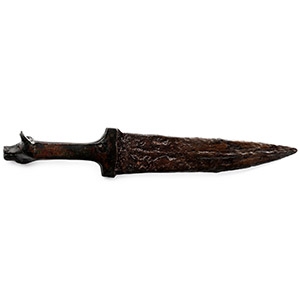
Roman Sacrificial Iron Dagger with Bronze Bull-Headed Hilt
1st-2nd century A.D.Sold for (Inc. bp): £1,105
Comprising a single-edged triangular blade, with midrib; integral baluster and grip with bull-head finial; the blade tip restored. 218 grams, 28 cm
Ex German art market, 2000s. Acquired from an EU collector living in London. From the collection of a Surrey, UK, gentleman. This lot is accompanied by an illustrated lot declaration signed by the Head of the Antiquities Department, Dr Raffaele D'Amato. -
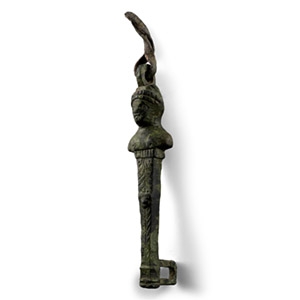
Roman Bronze Figural Lock Hasp
1st-2nd century A.D.Sold for (Inc. bp): £85
A lock hasp in the shape of a herm wearing a headdress, genitalia on the column, the shoulders forming lateral lugs, suspension ring above with separate strap, stepped base below, openwork rectangular plate to the underside. 41.2 grams, 11.9cm
Fine condition.
Property of a European lady living in London; from her father's family collection formed before 1978. From the private collection of John Meredith, acquired since the 1990s; thence by descent. This lot is accompanied by an illustrated lot declaration signed by the Head of the Antiquities Department, Dr Raffaele D'Amato. -
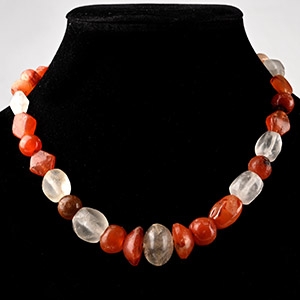
Roman Rock Crystal and Carnelian Bead Necklace String
1st-4th century A.D. and laterSold for (Inc. bp): £124
A short designer necklace composed of spherical, biconical, barrel and other bead types. 85 grams, 47 cm
From the private collection of a London gentleman, from his grandfather's collection formed before the early 1970s. This lot is accompanied by an illustrated lot declaration signed by the Head of the Antiquities Department, Dr Raffaele D'Amato.
