
Loading, please wait...
LOT 0657
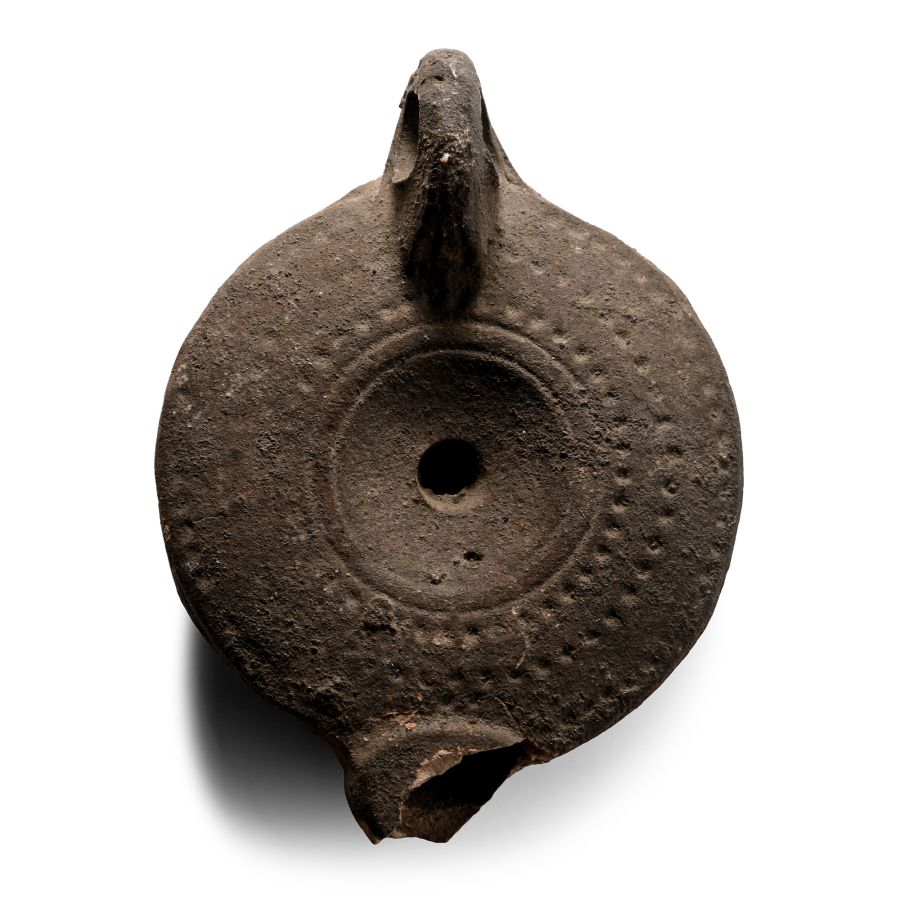
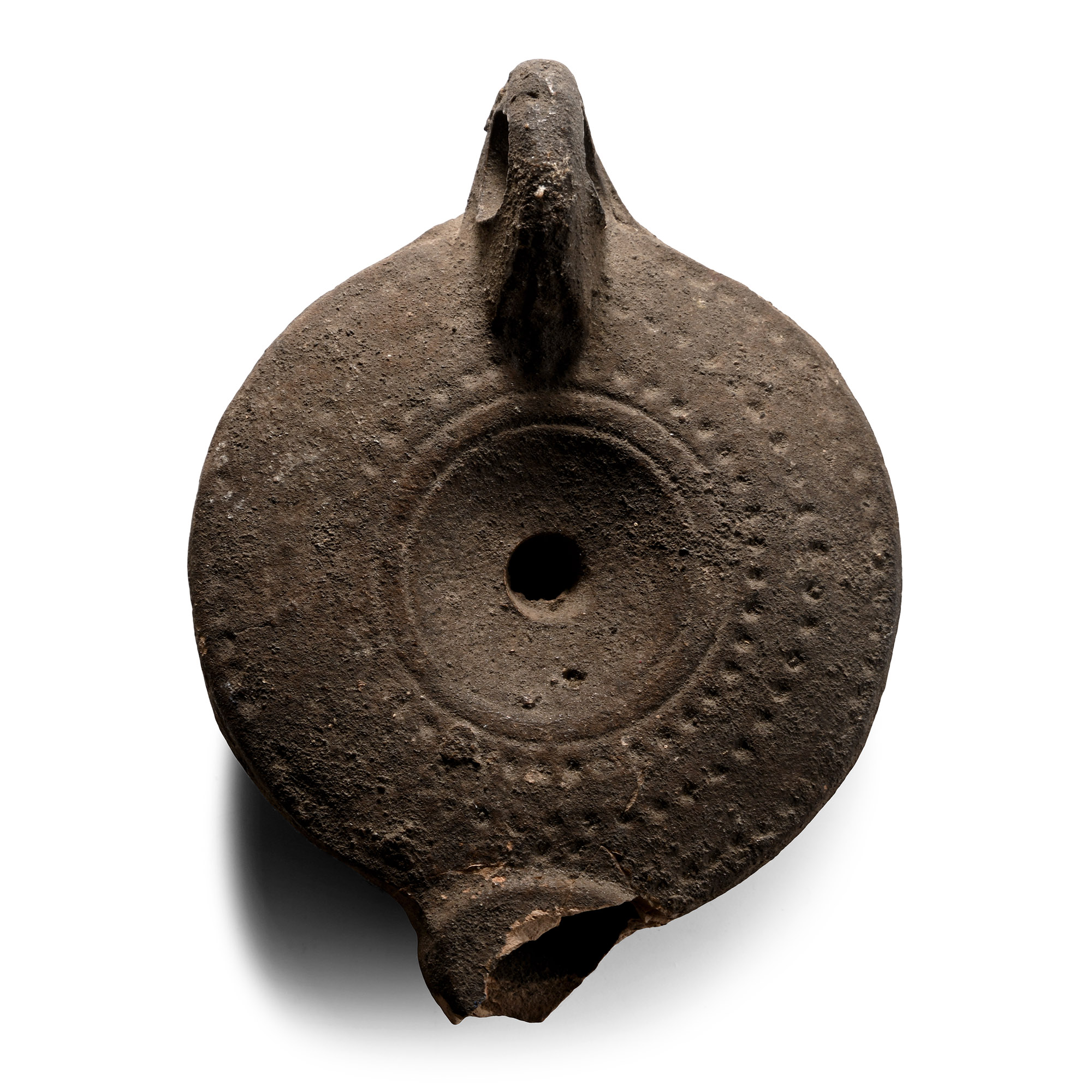
Romano-Egyptian Terracotta Toad Oil Lamp
ROMAN PERIOD, 3RD CENTURY A.D.
4 1/2 in. (97 grams, 11.3 cm).
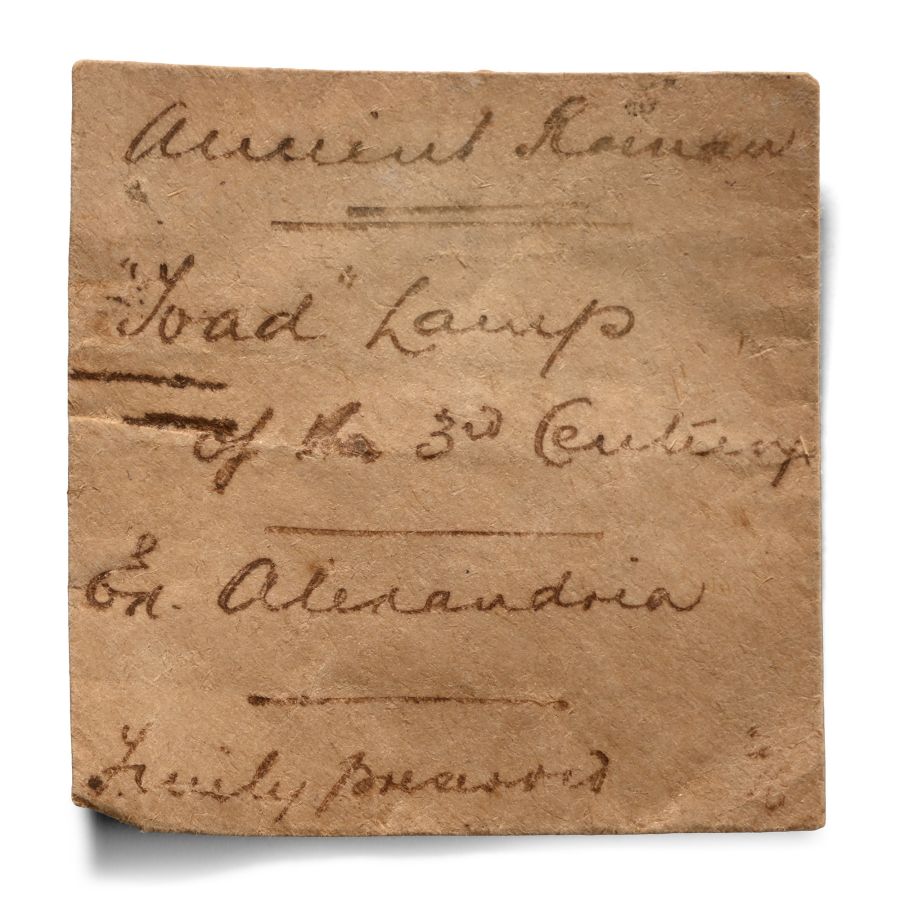
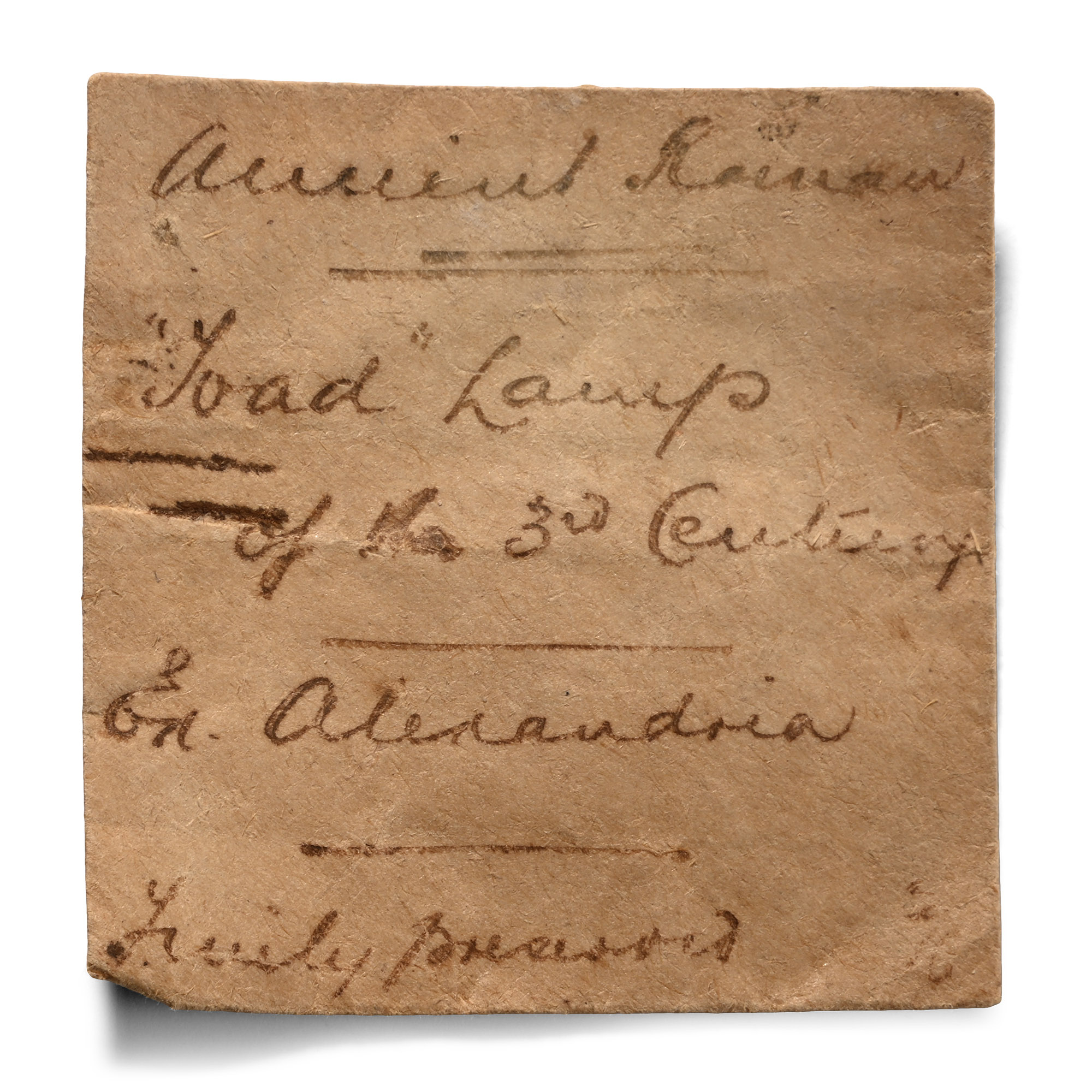
Squat in profile and discoid in plan, with a central perforation on the upper face and a pierced lug handle at the rear; concentric bands of pointillé ornament on the upper face and incised rings on the base; nozzle broken; supplied with an old handwritten collector's record slip made from an envelope. [No Reserve]
ProvenanceFound Alexandria, Egypt.
From the estate of a deceased Sussex private collector since the early 20th century.
Accompanied by an old original handwritten information slip.
TimeLine Auctions follows a vetting process to ensure the authenticity and legality of all items, reinforcing our commitment to integrity and responsible trading. Each antiquity, antique, and coin lot undergoes thorough examination by a vetting committee of at least ten external specialists, professional trade association members, scientists, and archaeologists: Our Vetting Process
AUCTIONS:
TimeLine is a leading auction house specialising in antiquities, ancient art, collectables, natural history, coins, medals, and books. Our auctions offer museums, collectors, historians, and enthusiasts the opportunity to acquire unique and historically significant pieces.
LOT 0657
Romano-Egyptian Terracotta Toad Oil Lamp
Estimate £40 - 60€46 - 70 (for guidance only)$54 - 81 (for guidance only)
-
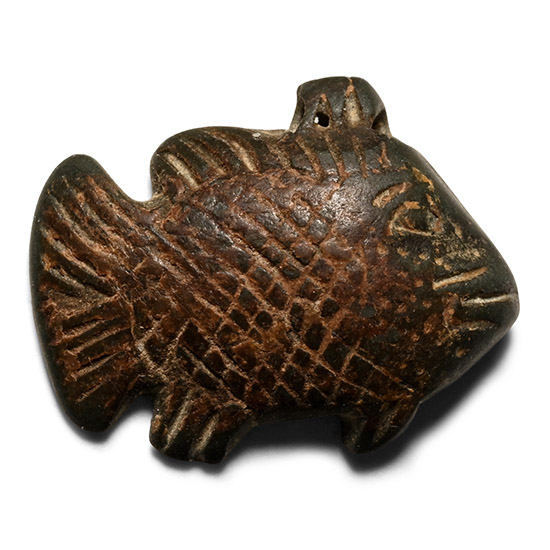
Egyptian Brown Stone Fish Amulet
Ptolemaic Period, circa 332-30 B.C.Estimate: £100 - 140 (+bp*)
Bids: 1 | Current Bid: £5
Plano-convex in section with eye, mouth and scale detailing. 1.76 grams, 19 mm
Ex Chris Belton Artefacts, 1980s. -
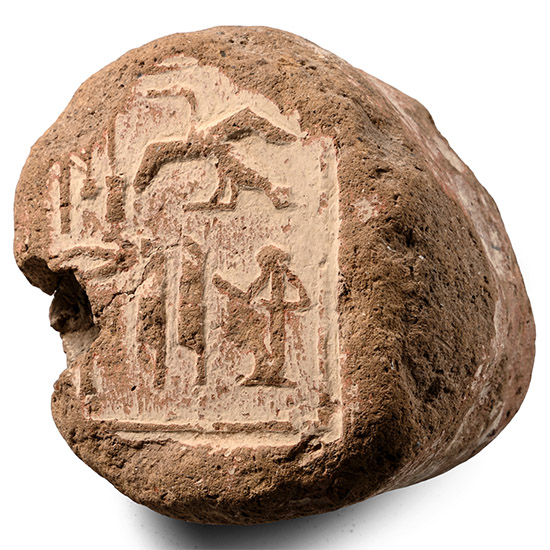
Egyptian Terracotta Funerary Cone for Paroy
New Kingdom, 18th Dynasty, circa late 15th-early 14th century B.C.Estimate: £200 - 300 (+bp*)
Bids: 3 | Current Bid: £80
Front portion of a tapering cone with the circular flat end impressed with a square-bordered design consisting of two short horizontal lines of inscription, reading: 'Scribe, Paroy'. 240 grmas, 75 mm
Acquired from Abdoul Rassoul on the West Bank at Luxor, 1974-1980 when a guest lecturer. From the private collection of Peter Clayton, FCILIP, Dip, Arch, FSA, FRNS, Hemel Hempstead, Hertfordshire, UK; formed since the late 1950s.
It is suggested that this cone comes from the Theban tomb of Thutmose, also known as Paroy (TT 295). However, the titles of the latter individual (Head of the Secrets in the Chest of Anubis, Sem-priest in the Good House, and Embalmer) differ from those of the person named on this cone. -
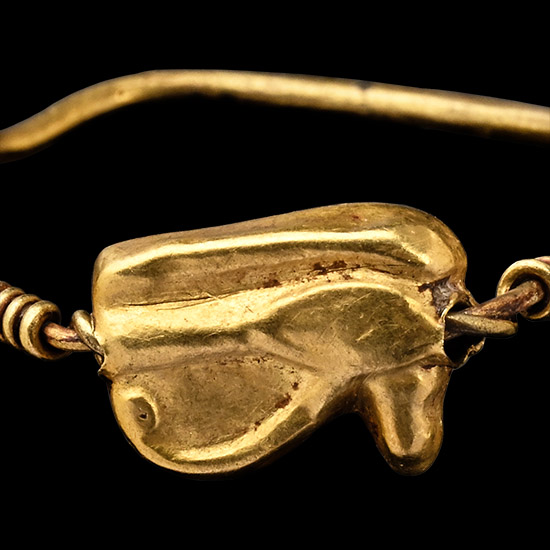
Graeco-Egyptian Gold Swivel Ring with Wedjat-eye
Circa 2nd-1st century B.C.Estimate: £1,000 - 1,400 (‡+bp*)
Opening Bid: £500
Slender wire hoop with ends coiled round the shank; swivel-mounted hollow-formed wedjat-eye forming the bezel. 1.10 grams, 22.15 mm overall, 18.22 x 18.65 mm internal diameter (approximate size British O 1/2, USA 7 1/4, Europe 15.61, Japan 15)
Acquired from Derek Content, 1 October 1983. Private collection of Kal Noselson, New York, acquired between 1976 and the late 1990s; thence by descent. Accompanied by an original invoice from Derek Content, dated 1 October 1983.
The wedjat-eye amulet represents the healed eye of the god Horus and embodies both human and falcon features. The name wedjat in ancient Egyptian means ‘the one that is sound’. According to Egyptian mythology, the god Seth wounded or took Horus' eye, and Thoth later restored it. The wedjat-eye amulet was believed to protect its wearer and bestow healing and regenerative qualities. It was a popular amuletic symbol worn by both the living and the dead and was reproduced in precious metals, stone, and faience.
