
Loading, please wait...


LOT 0582
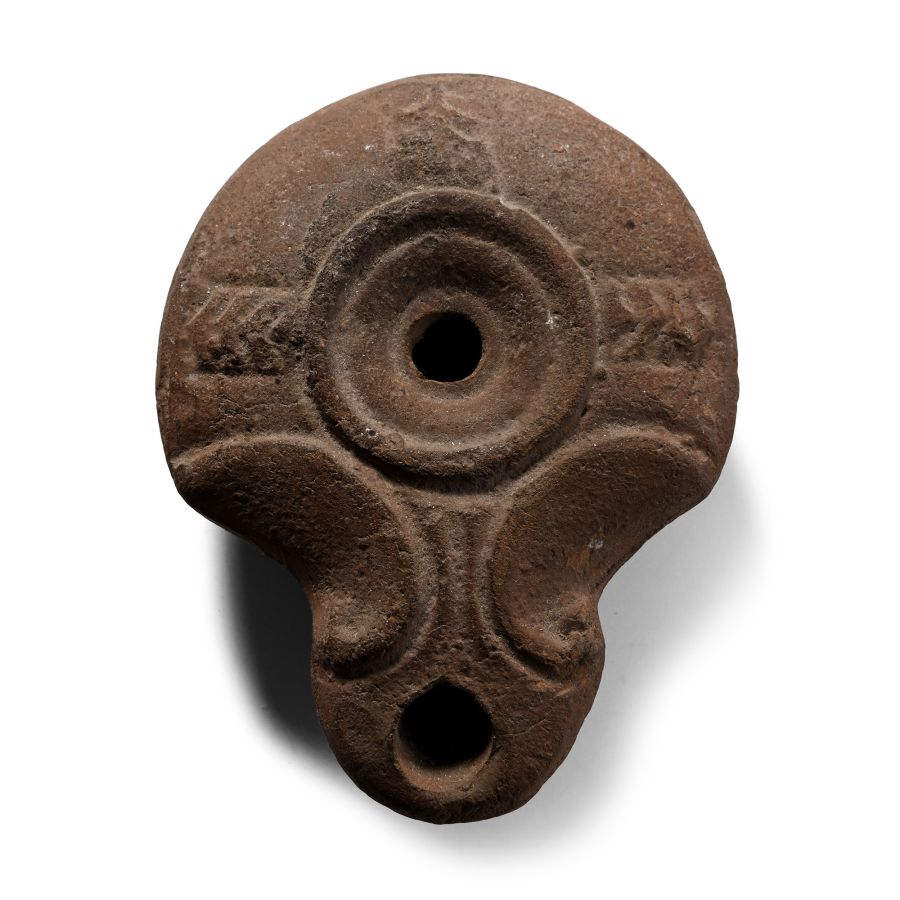
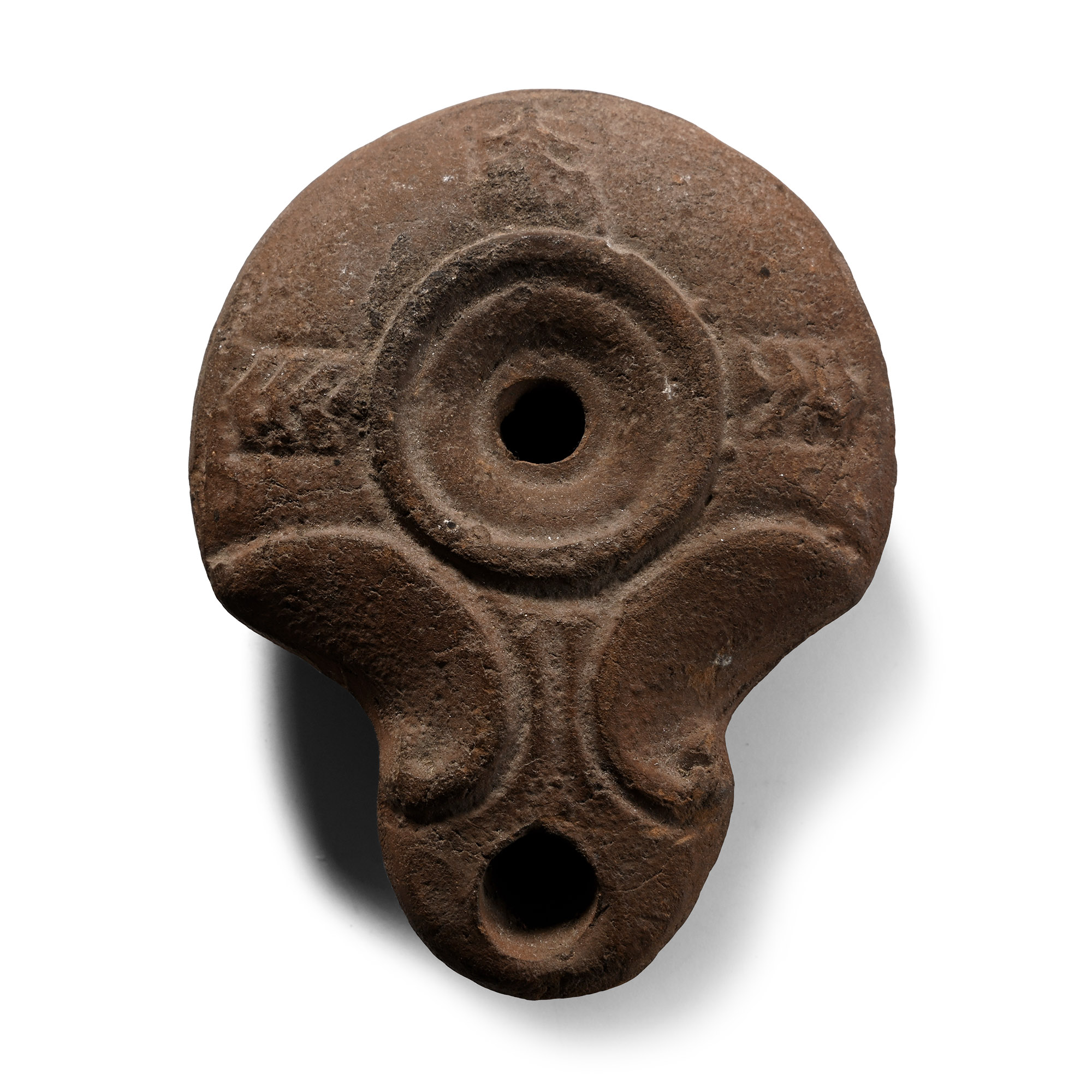
Romano-Egyptian Terracotta Toad Oil Lamp
ROMAN PERIOD, 2ND-EARLY 3RD CENTURY A.D.
3 in. (51.6 grams, 77 mm).
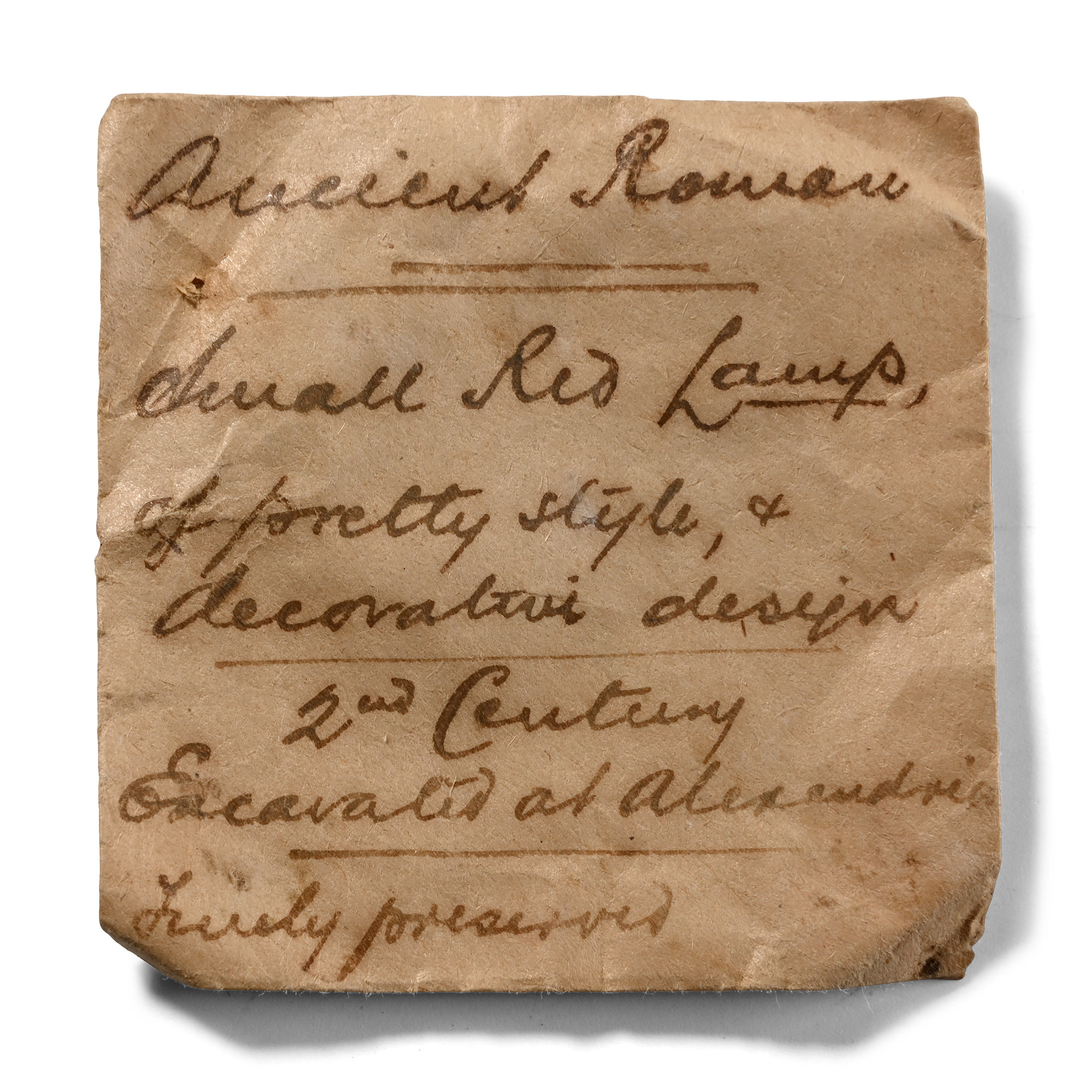
Biconvex in section with volute detailing to the shoulders and nozzle, central discus and three chevron bands to the shoulder; old collector's ticket 'Ancient Roman small red lamp of pretty style & decorative design. 2nd century. Excavated at Alexandria. Finely preserved.' [No Reserve]
ProvenanceFrom Alexandria, Egypt.
From the estate of a deceased Sussex private collector since the early 20th century.
Accompanied by an old, original handwritten collector's ticket.
TimeLine Auctions follows a vetting process to ensure the authenticity and legality of all items, reinforcing our commitment to integrity and responsible trading. Each antiquity, antique, and coin lot undergoes thorough examination by a vetting committee of at least ten external specialists, professional trade association members, scientists, and archaeologists: Our Vetting Process
AUCTIONS:
TimeLine is a leading auction house specialising in antiquities, ancient art, collectables, natural history, coins, medals, and books. Our auctions offer museums, collectors, historians, and enthusiasts the opportunity to acquire unique and historically significant pieces.
LOT 0582
Romano-Egyptian Terracotta Toad Oil Lamp
Estimate £40 - 60€46 - 70 (for guidance only)$54 - 81 (for guidance only)
Opening Bid
£5 (EUR 6; USD 7) +BP*
-
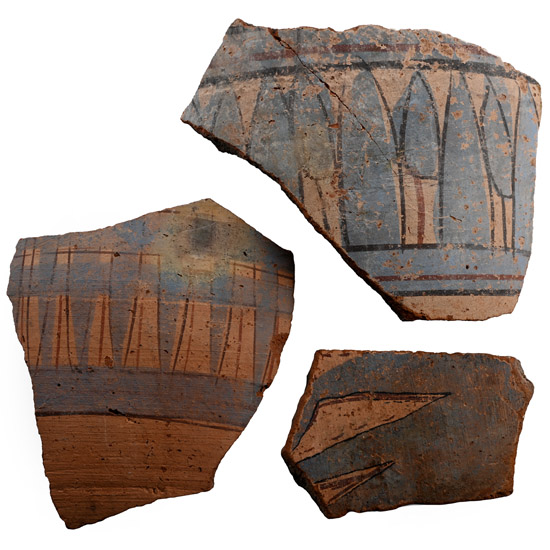
Large Egyptian Painted Bowl Fragments
New Kingdom, 18th Dynasty, Amarna Period, 1379-1362 B.C.Estimate: £80 - 100 (+bp*)
Opening Bid: £5
Three substantial fragments from blue-painted vessels, two with stylised floral motifs and one with a fragment of figurative decoration. 300 grams total, 8.3-13.2 cm
Acquired circa 1979. From the private collection of Peter Clayton, FCILIP, Dip, Arch, FSA, FRNS, Hemel Hempstead, Hertfordshire, UK; formed since the late 1950s.
The distinctive blue colour on these pottery fragments derives from a cobalt-and-aluminium slip that reacts during firing. The designs could incorporate floral, geometric, and figurative motifs (for an illustrated discussion of the technical production of blue-painted pottery, see Seyfried, F. (ed.), In the Light of Amarna: 100 Years of the Nefertiti Discovery, Berlin, 2012, pp. 132-135. -
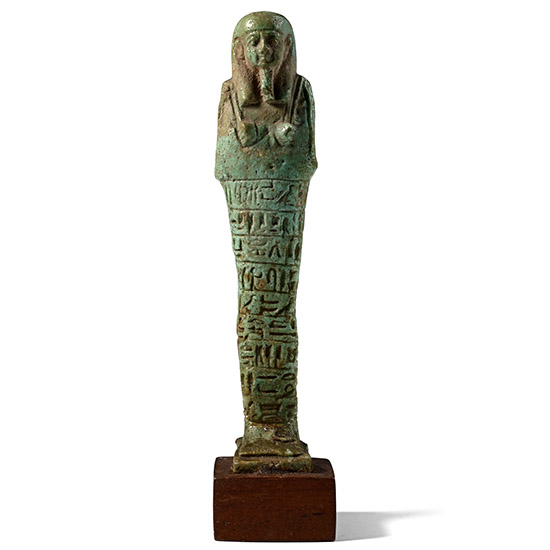
Egyptian Blue-Glazed Faience Shabti for Hornakht, Born of Nefertyti
Late Period, 664-332 B.C.Estimate: £600 - 800 (+bp*)
Bids: 2 | Current Bid: £10
Slender olive-green mummiform shabti wearing a lappet wig and a false beard, with arms crossed, the left hand holding a pick and the right a hoe and the cord of a seed bag, which hangs from the back shoulder; with nine horizontal bands of deeply incised hieroglyphs on the lower body, giving the Book of the Dead spell and the names of the owner, Hornakht, and his mother, Nefertyti; supplied with a two-page printed report covering the transliteration and translation of the text; mounted on a custom-made stand with an old 'Ancient Egyptian B.C.900' label. 80.9 grams total, 16 cm high including stand
From the estate of a deceased Sussex private collector since the early 20th century. Accompanied by a copy of an illustrated academic report with translation by Simone Musso. -
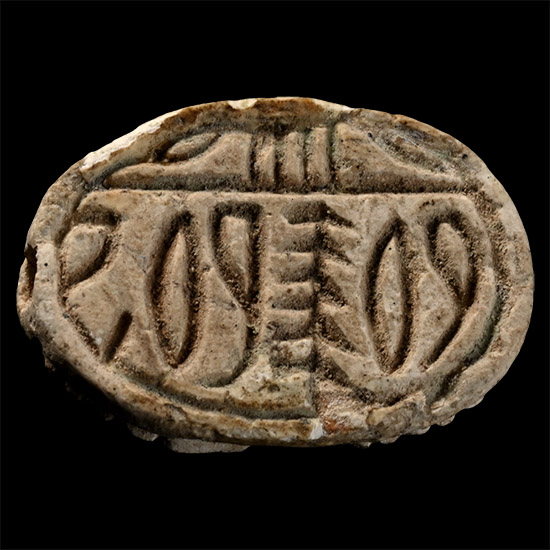
Egyptian Steatite Scarab with Hieroglyphs
Second Intermediate Period, circa 1782-1550 B.C.Estimate: £40 - 60 (+bp*)
Opening Bid: £5
With incised anatomical detailing on the body, the underside bears the hieroglyphs rꜤ-n-rꜤ. 2.04 grams, 17 mm
Acquired from various London-based, UK, antiquity dealers. From a Derbyshire gentleman's private museum formed from the late 1970s-early 1980s.
